

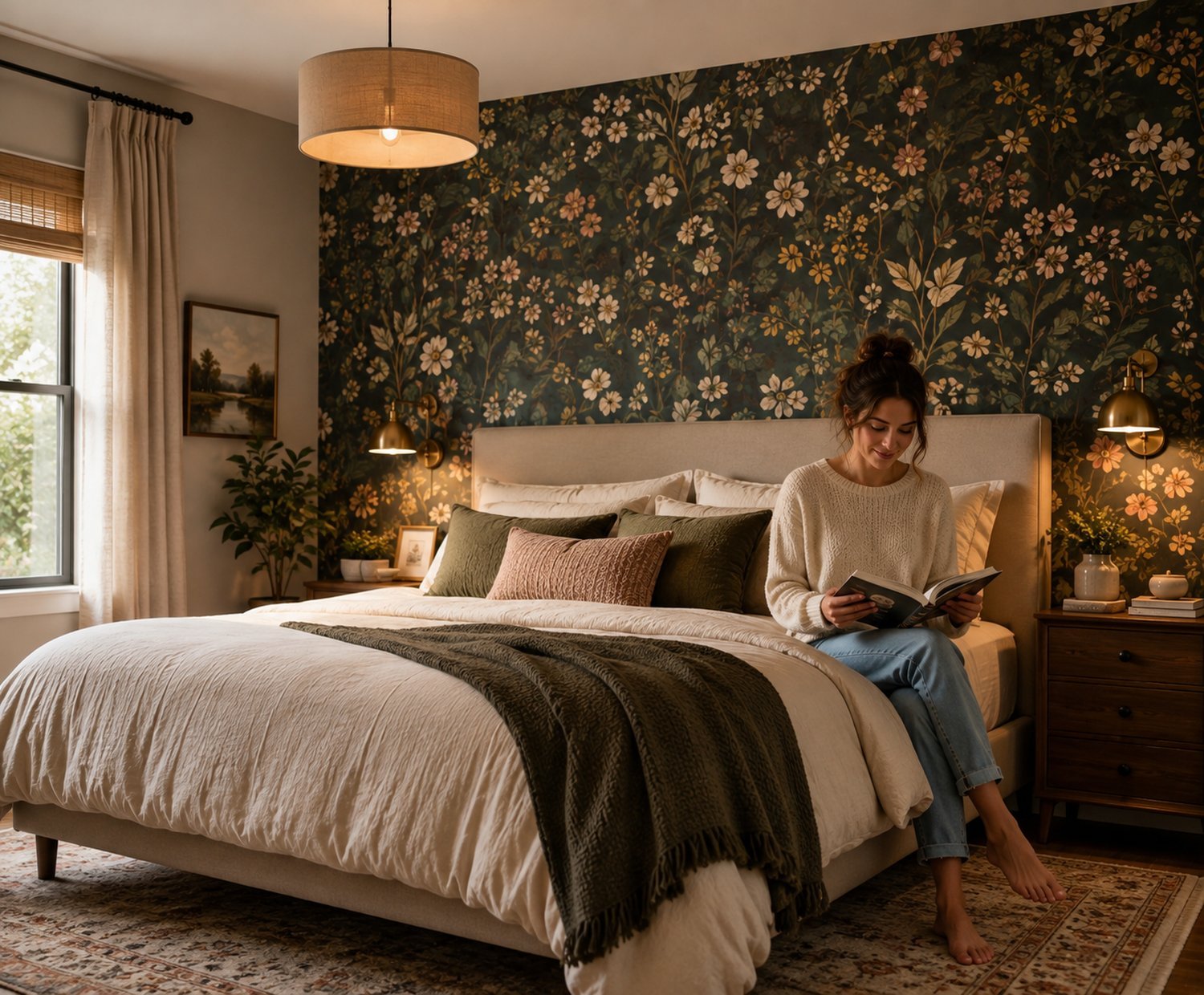
Somewhere between “just paint it beige” and “gut the whole room,” there’s a middle path, and it’s cheaper than either extreme. A bedroom wallpaper accent wall is that middle path — one surface gets the drama, the rest of the room stays calm, and you’re not redoing four walls if the pattern loses its charm in two years.
People assume it’s a bigger job than it is, or that it’ll look dated by autumn. Neither holds up if you pick the wall and the texture with care. This isn’t a trend piece — it’s what a bedroom wallpaper accent wall actually looks like once the excitement wears off.
Bedroom Wallpaper Accent Wall Beats Painting Every Wall the Same Color
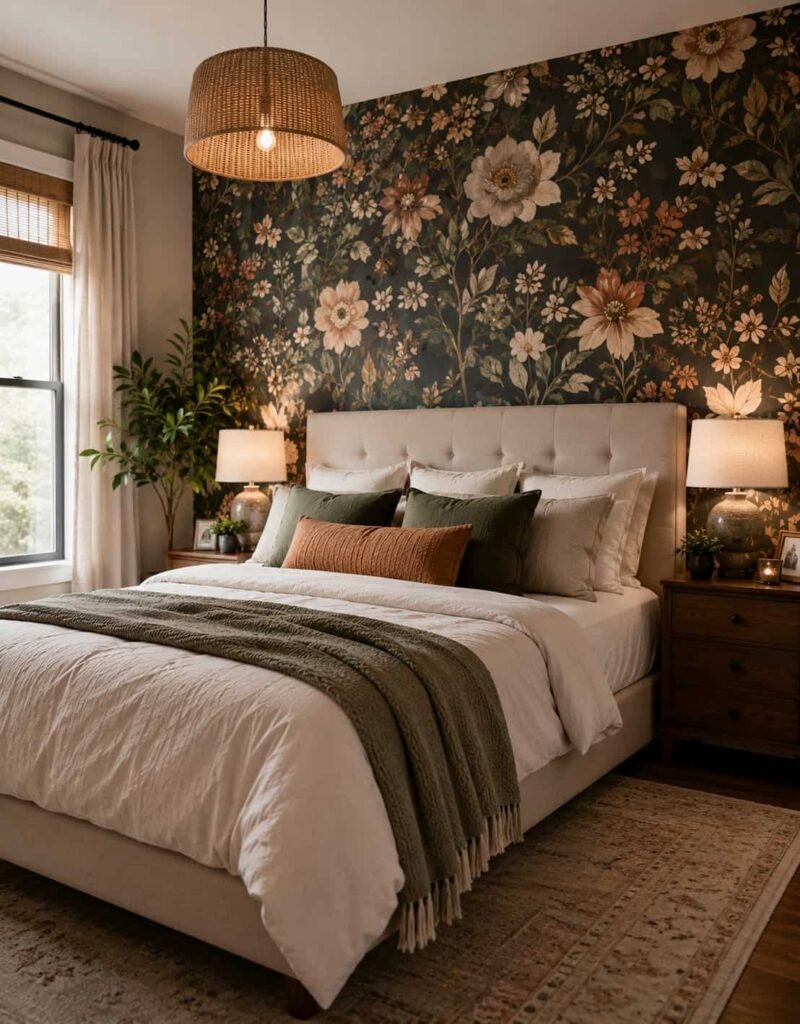
Paint is fine. Paint is also everywhere, on every wall, in every rental unit from here to wherever. Wallpaper on one wall does something flat color can’t — it adds depth you can actually feel when the light hits it sideways in the evening.
Here’s the thing nobody says out loud: four wallpapered walls in a bedroom can feel like sleeping inside a gift box. One wall, though? That’s a focal point, not a costume. Your eye lands somewhere on purpose instead of bouncing around a room with no anchor.
There’s also a practical angle. Committing to a full room of pattern is expensive and hard to undo. A single wall lets you go bold — really bold, the kind of print you’d never trust on all four sides — without betting the whole bedroom on it.
Picking the Right Spot Before You Touch a Single Roll
Most people default to the wall behind the bed. It’s not wrong, exactly, but it’s not automatic either.
Ask yourself what you see first when you walk in. That’s usually the better candidate. A headboard wall works because you see the pattern when you’re awake, not just when you’re lying down staring at the ceiling.
Walls with windows, closet doors, or a lot of switch plates are harder to wallpaper cleanly and honestly not worth the extra cutting. Pick a wall that’s mostly uninterrupted. Don’t default to the obvious wall just because it’s the biggest one in the room — an unexpected surface, like a reading nook or a shallow alcove, often carries pattern better than a wide, busy stretch ever could.
If your bedroom is oddly shaped or has an alcove, that alcove is often the best hidden option — nobody talks about it, but it frames itself.
Wallpaper Styles That Actually Hold Up in a Bedroom
Not every print survives daily life in a bedroom. Some patterns look incredible in a showroom photo and exhausting six months in.
Botanical prints and soft geometrics tend to age the best because they don’t scream for attention every time you walk past. High-contrast, busy patterns can start to feel loud once the initial thrill fades — worth thinking about before committing to something with 47 colors on it.
Texture, weirdly, does more heavy lifting than the print sitting on top of it. Grasscloth stays quiet. Linen-look stays quiet. Embossed finishes stay quiet too, no matter how saturated the dye underneath happens to be. Want a wall that still has weight to it five years from now? Chase true accent wall style through texture first — pattern is the part that fades from fashion, texture rarely does.
Bold Colors vs Soft Tones — What Nobody Tells You
Bold gets lumped in with dark and moody by default. Lazy assumption, that.
Try this instead: a saturated yellow or a loud coral carries just as much punch as navy ever could, minus the gloom — the room reads warmer, almost sunburned in a good way. Flip to sage or a dusty blue and watch the opposite happen. Energy drops. The room exhales instead of holding its breath.
Sleep science barely gets mentioned in wallpaper articles, which is strange, because color does more to a bedroom’s rest quality than most furniture choices combined. Blues and greens skew calming. Warmer shades skew cozy, sometimes edging toward restless if pushed too far. Anyone chasing a print purely on looks should glance at the Sherwin-Williams color psychology guide first — five minutes, no harm done.
Opinion time, unpopular or not: muted usually wins the bedroom fight. A third of your life happens horizontal in that room, eyes shut half of it. Save the volume for a hallway that doesn’t need to lull anyone to sleep.
| Wallpaper Type | Best For | Ease of Removal | Typical Lifespan |
| Peel-and-stick | Renters, quick refreshes | Easy | 2–4 years |
| Traditional pasted | Long-term homeowners | Difficult | 8–15 years |
| Grasscloth/textured | Texture-focused rooms | Moderate | 6–10 years |
| Mural/scenic panel | Statement single walls | Difficult | 8–12 years |
The Wall You Should Never Wallpaper (Even Though Everyone Does)
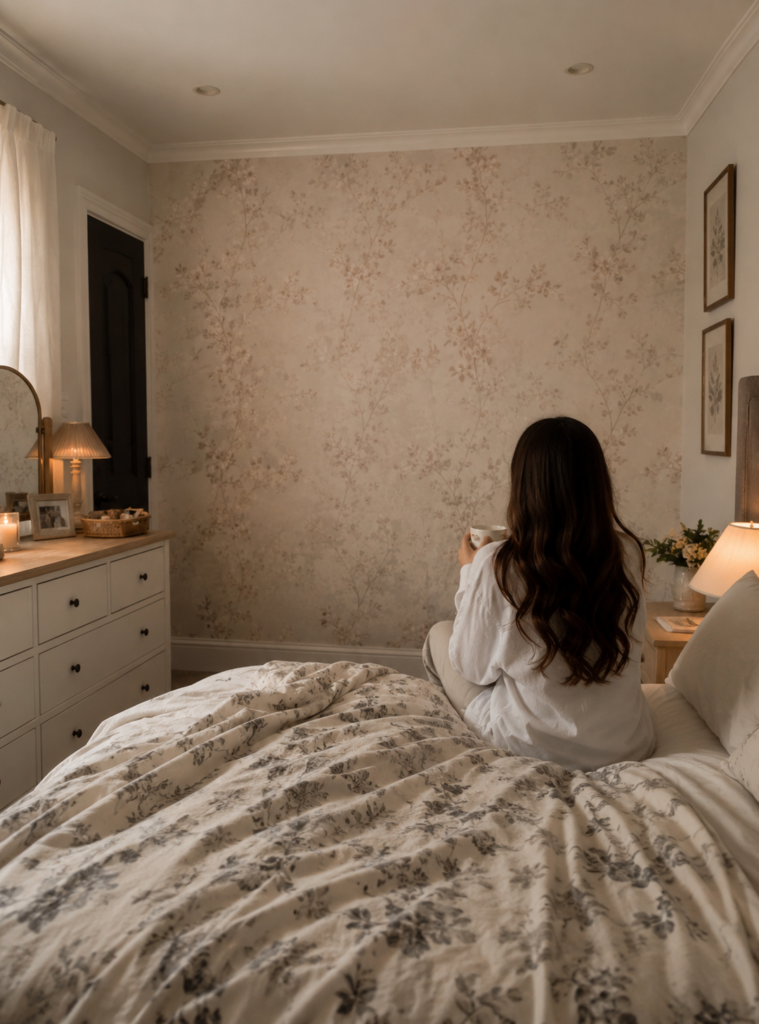
The wall directly opposite the bed gets picked constantly, and honestly, it’s usually a mistake.
You stare at that wall right before you fall asleep and right when you open your eyes. A busy print there can genuinely feel like visual noise at the wrong moments, especially with anything high-contrast or metallic.
The exception is a soft, low-contrast pattern — something closer to texture than statement. If romance and softness is the goal rather than drama, a softer romantic wall option tends to sit easier on that particular wall than anything loud would.
Small Bedroom? Here’s How the Accent Wall Trick Still Works
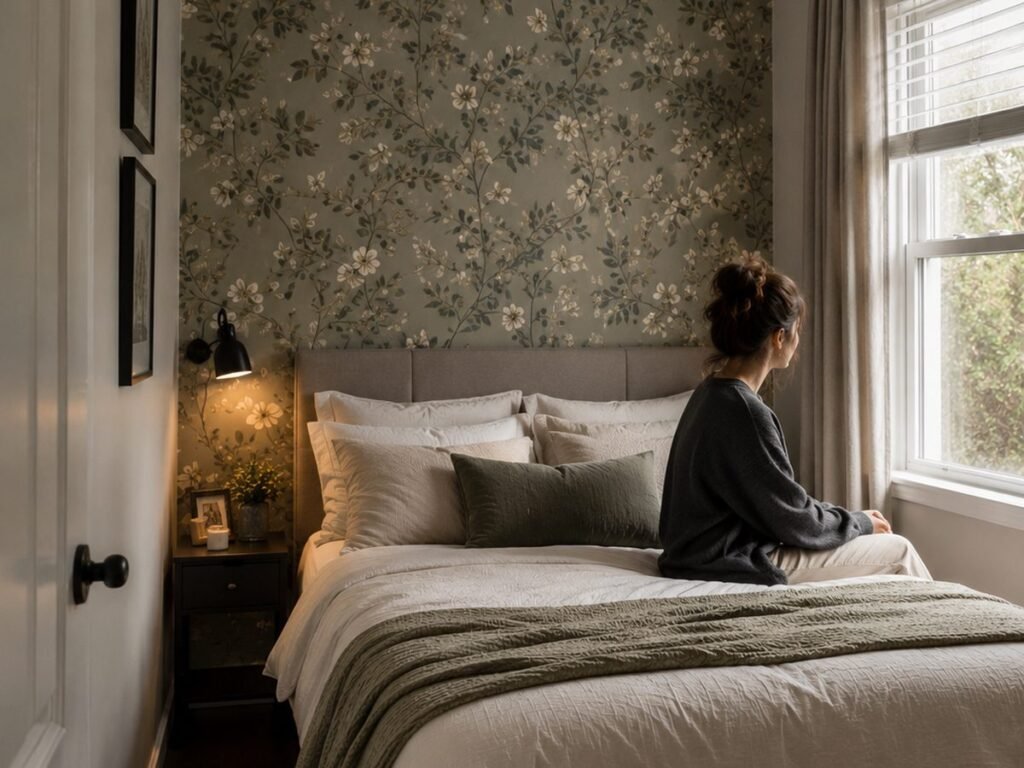
Small rooms get nervous about pattern, and that’s backwards thinking, honestly.
Cramped quarters, oddly enough, benefit more from a patterned wall than spacious ones do. Four boxed-in surfaces give the eye nowhere to land; one wallpapered wall fixes that instantly, offering a destination instead of a maze. Stripes running vertical, or a botanical print stretched tall, drag the ceiling upward in a way most people underestimate until they see it done.
Big, sprawling repeats don’t belong on a narrow wall — the print needs room to breathe that a small space simply won’t hand it, and the result ends up looking sliced off mid-pattern.
Something else worth knowing: a bedroom wallpaper accent wall covers sins paint can’t hide. Uneven plaster, an old patch job, a stubborn bump by the closet frame — pattern swallows all of it whole, no sanding required.
Mixing Patterns Without It Looking Like a Mistake
Bedding already loud? Curtains already busy? Wallpaper doesn’t need to fight for attention in that case — it steps back instead, letting one thing lead.
Pick a scale and stick with it. Big wallpaper print, small or solid textiles. Quiet wallpaper, and suddenly pillows and throws get permission to go bigger.
Forget matching outright — chase a shared color family instead. Lift one or two shades straight out of the wallpaper and drop them into the rest of the room. Everything ties together without looking like a paint chip was handed to a decorator with zero imagination.
Rooms with more furniture and more layers benefit from studying a richer master suite look, where pattern, texture, and scale have to earn their place next to real furniture instead of an empty mockup room.
Installation Shortcuts That Save You a Weekend
Skip the professional for most single-wall jobs. Patience does the heavy lifting here, along with a level you actually trust.
Peel-and-stick has improved enough to handle most flat, primed walls without drama. Paste-the-wall products still win on longevity, though, for anyone settling in past a decade.
Seams matter more than the paper itself, oddly enough. A crooked plumb line at the start ruins everything that follows, no matter how expensive the roll was. The step-by-step hanging tutorial from Homes & Gardens walks through exactly where that first line should sit, which solves most of the mistakes people make on attempt one.
Nervous about wasting a full roll? Test one-wall wallpaper approach thinking on a smaller stretch first — a closet interior, a nook — before committing to the whole surface.
Budget Talk — What This Actually Costs
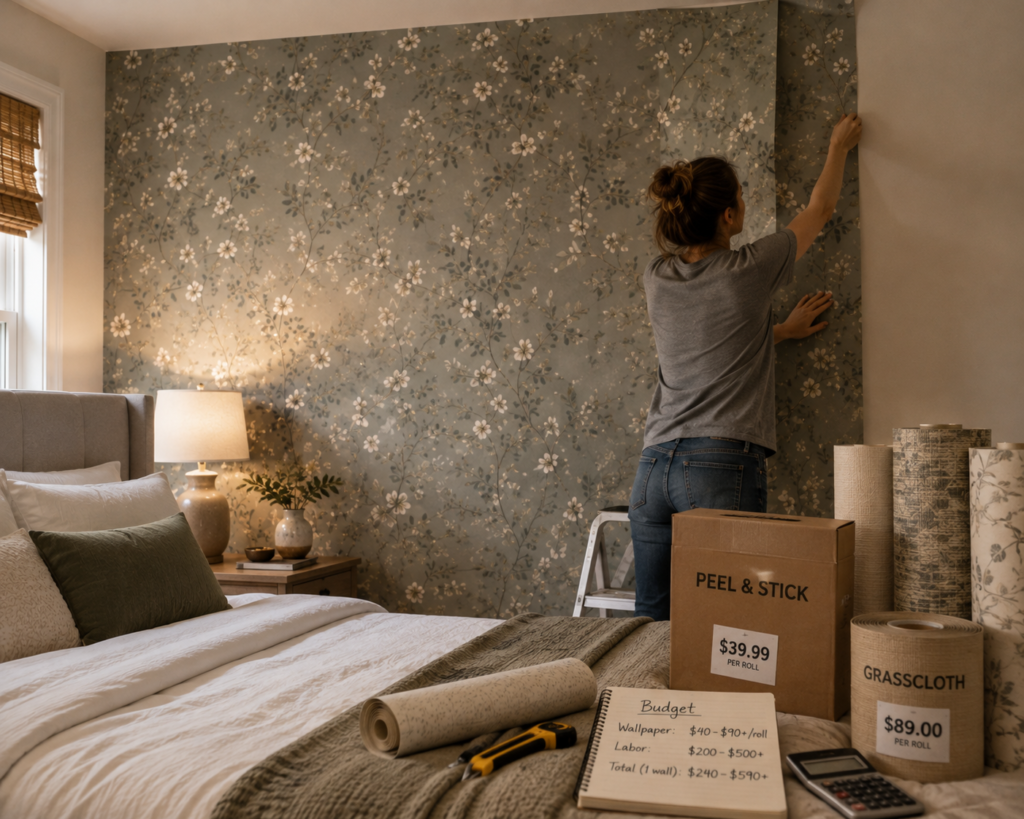
Pricing swings wide depending on the paper, and nobody likes saying that part out loud before you’ve already picked a favorite.
Peel-and-stick sits at the cheaper, more forgiving end — a smart landing spot for anyone unsure about long-term commitment. Grasscloth and other textured, traditional papers cost more per roll, and tend to eat up more rolls per wall than most budgets originally account for.
Labor is the real budget-breaker, not material. Hire it out and the price climbs fast. Handle a single wall solo, though, and you’ve found one of the most affordable ways to shift a bedroom’s entire personality — no flooring touched, no furniture swapped.
Caring for a Wallpapered Wall Without Overthinking It
People treat wallpaper like it’s fragile. Most of it isn’t, honestly.
A soft, dry cloth handles dust just fine on nearly every finish. Vinyl-coated and peel-and-stick options can usually take a barely-damp wipe if something splashes, though grasscloth and fabric-backed papers want dry care only — water stains those almost instantly.
Sun does more damage than moisture ever will. A window-facing bedroom wallpaper accent wall drifts in tone over the years, pigment slowly giving up under UV the same way a magazine cover fades on a porch table. Nothing broken about that — just chemistry doing what chemistry does, and it rarely shows unless a fresh swatch sits right beside it for comparison.
Small lifted edges near the baseboard? Normal, not a failure on your part. A dot of wallpaper-specific adhesive, pressed flat with a seam roller, solves most of it inside five minutes.
Frequently Asked Questions
Which wall in a bedroom is best for wallpaper?
The wall your eyes meet first on entry usually wins — often the headboard wall — rather than the wall facing the bed, which forces a busy pattern into view right before sleep every night.
Does a bedroom wallpaper accent wall make a small room feel smaller?
Rarely. One patterned wall against otherwise calm walls tends to make a tight bedroom look finished on purpose, especially with vertical or elongated prints tugging the ceiling upward.
Can I use peel-and-stick wallpaper for a bedroom accent wall?
Absolutely — it’s the friendlier starting point for renters or first-timers, forgiving during installation and simple to peel off later without wrecking the paint underneath.
How long does bedroom wallpaper on one wall usually last?
Peel-and-stick tends to run two to four years before needing a refresh, while traditional pasted paper, grasscloth especially, can outlast a decade with basic upkeep.
Should the wallpaper match my bedding or curtains?
No need — exact matching tends to flatten a room visually. Borrow a shade or two from the wallpaper for smaller textiles instead of coordinating every single pattern.
Is it expensive to wallpaper just one bedroom wall?
Rarely. A single wall keeps costs contained even with pricier textured papers, and most people can skip professional installation entirely on a one-wall job.
What wallpaper pattern ages best in a bedroom?
Botanicals, soft geometrics, and textured neutrals tend to age gracefully, while loud, trend-chasing, high-contrast prints often lose their charm somewhere around the one-year mark.
Do dark wallpaper accent walls make bedrooms feel smaller?
Not inherently — a dark wall often adds coziness and visual depth rather than shrinking the space, particularly when the ceiling and surrounding walls stay lighter for balance.
Conclusion
Trend-chasing was never really the point of a bedroom wallpaper accent wall. Give one surface permission to carry weight, and four flat, matching walls suddenly look thin by comparison. Play it too safe with a whisper-quiet neutral, and the wall barely registers. Push too loud, and the print starts overwhelming you the second your head hits the pillow. Somewhere between those two ditches sits the actual sweet spot — and it shifts depending on the room, the layout, how much visual noise a person can genuinely tolerate before bed.
Strip away everything else covered here and three things remain worth holding onto. Pick a wall that isn’t fighting windows or a cluster of switch plates. Choose texture or pattern built to survive longer than a six-month attention span. Think twice — maybe three times — before wallpapering the wall staring straight at the bed. None of that demands an expert. It demands slowing down before the midnight scroll through wallpaper catalogs turns into an impulse order.
Money-wise, few upgrades move the needle this much for this little. Flooring stays untouched. Furniture stays put. No repainting four walls twice because the first color choice felt wrong within a season. One wall, chosen with some care toward placement and material, reshapes a bedroom’s whole personality further than almost anything else achievable on a single weekend’s budget.
One thing bears repeating, since it’s the step people rush past: don’t sprint through wall selection. Pattern matters, sure, but the wall itself decides whether this becomes a decision you love nightly or one you’re quietly regretting by winter. Stand in the room. Notice what pulls your eye first, before any catalog or algorithm tells you what should. That answer, nine times out of ten, beats whatever’s trending this particular month.