

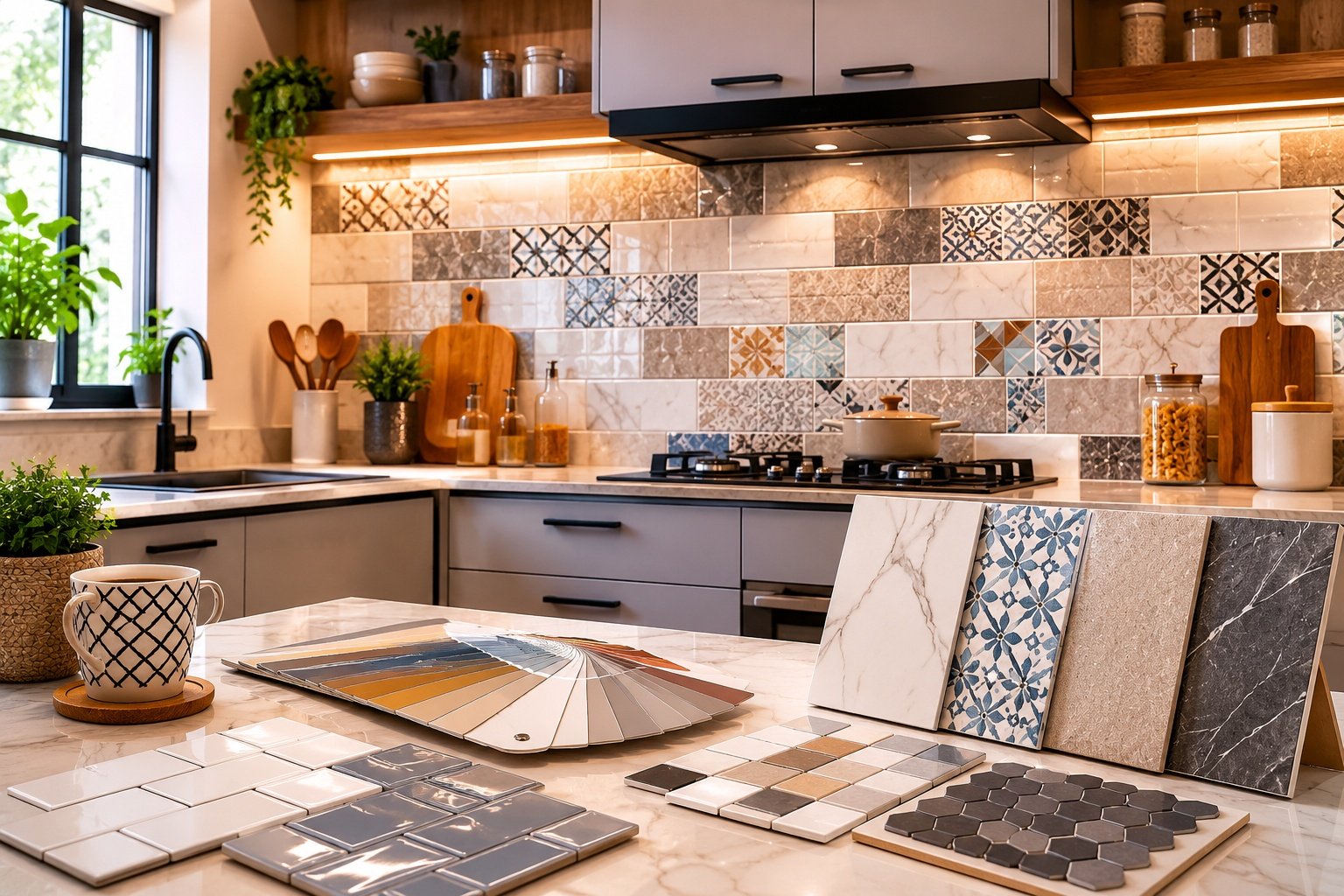
Kitchen wall tiles carry a reputation as an easy, five-minute decision — walk into a showroom, point at something shiny, done. Grab your chai, because that reputation is wrong. Kitchen wall tiles sit through grease splatters, steam, dropped pans, and a decade of arguments about whose turn it is to clean the stove.
The choice you make touches grout color, cabinet tone, resale value, and how much patience you’ll have left by installation day. Kitchen wall tiles deserve more thought than most people give them, and that’s exactly what this is about.
What Nobody Tells You About Kitchen Wall Tiles
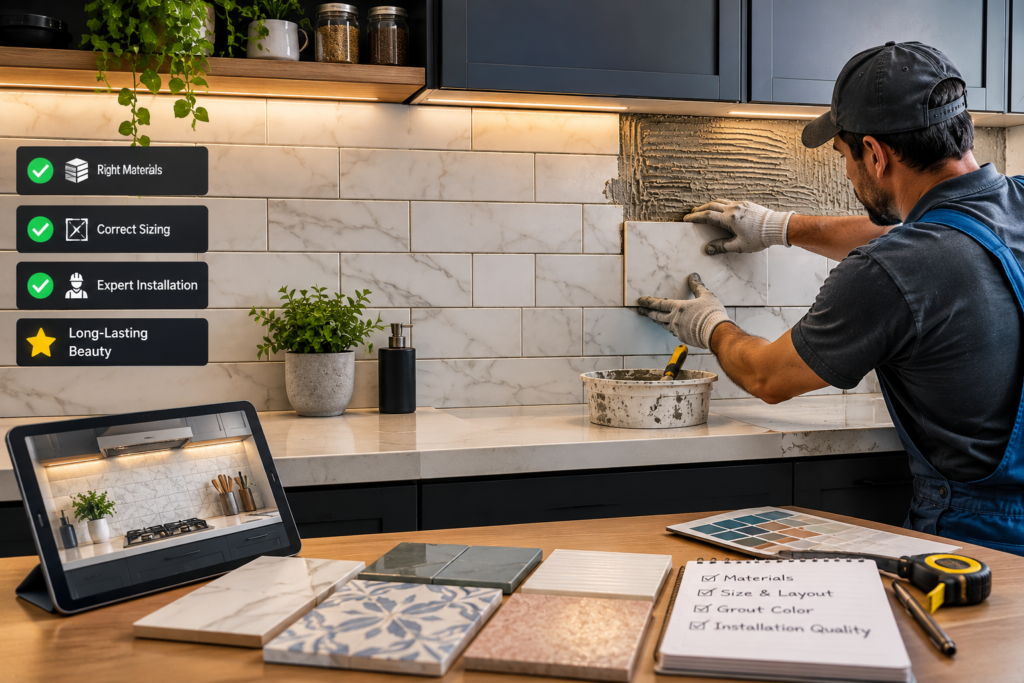
Here’s a thing contractors rarely say out loud: kitchen wall tiles get chosen last, almost as an afterthought, after cabinets and countertops eat the whole budget. That’s backwards. Tiles are the one surface you touch, wipe, and stare at every single day while cooking.
A cheap tile with a good installer often looks better than an expensive tile slapped up by someone rushing to finish the job. Installation quality matters more than most buying guides admit. If you want the full technical rundown on materials and sizing before you shop, there’s a full buying breakdown here that goes deeper than what fits in this piece.
Ceramic, Porcelain, or Glass — Pick Your Fighter
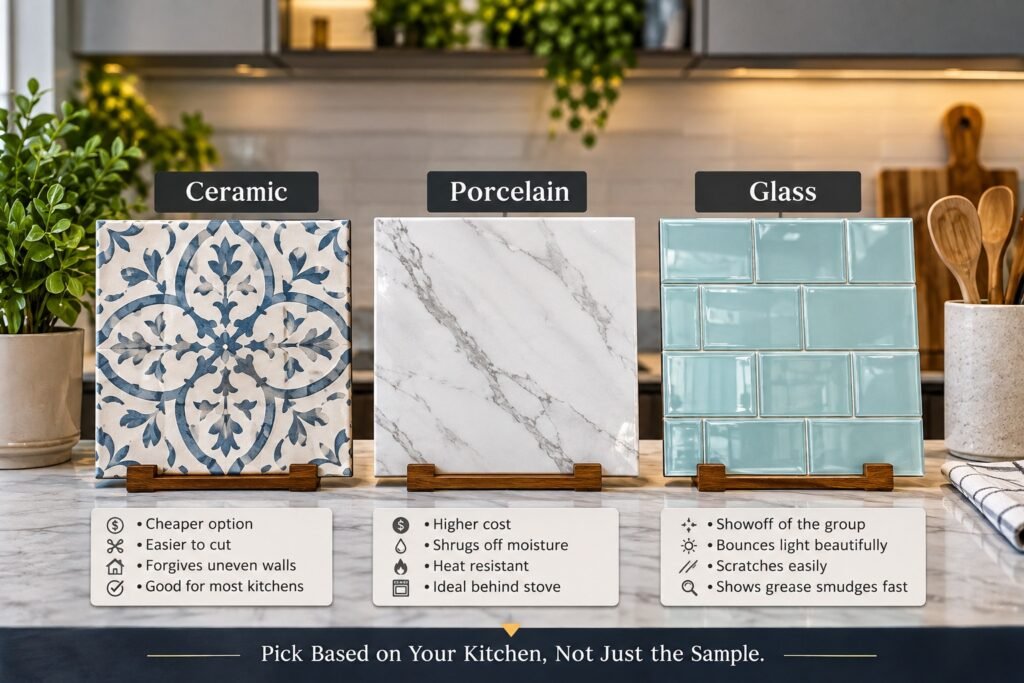
Ceramic is the friendly, forgiving option. It’s cheaper, easier to cut, and forgives a slightly uneven wall better than the other two. Porcelain costs more but shrugs off moisture and heat like it’s nothing, which matters right behind a stove.
Glass tile is the showoff of the group. It bounces light around a dim kitchen beautifully, but it scratches if you’re not careful and shows every smudge of grease within a week. Pick based on how much upkeep you’re honestly willing to do, not how the sample looked under showroom lighting.
Colors That Survive Real Cooking, Not Just Photos
White subway tile photographs like a dream and then turns slightly yellow near the stove after two years of frying onions. Nobody warns first-time renovators about that part. Darker greens, deep blues, and warm terracottas tend to hide the small stuff — water spots, faint grease film, the general chaos of a kitchen in use.
If color decision-paralysis has you stuck, there’s a smart shade selection guide that walks through undertones and lighting in more detail than a quick showroom visit ever could. Pull actual paint swatches and cabinet samples under your kitchen’s real lighting before locking anything in — fluorescent bulbs lie constantly.
Small Tiles vs Big Slabs: The Sizing Debate
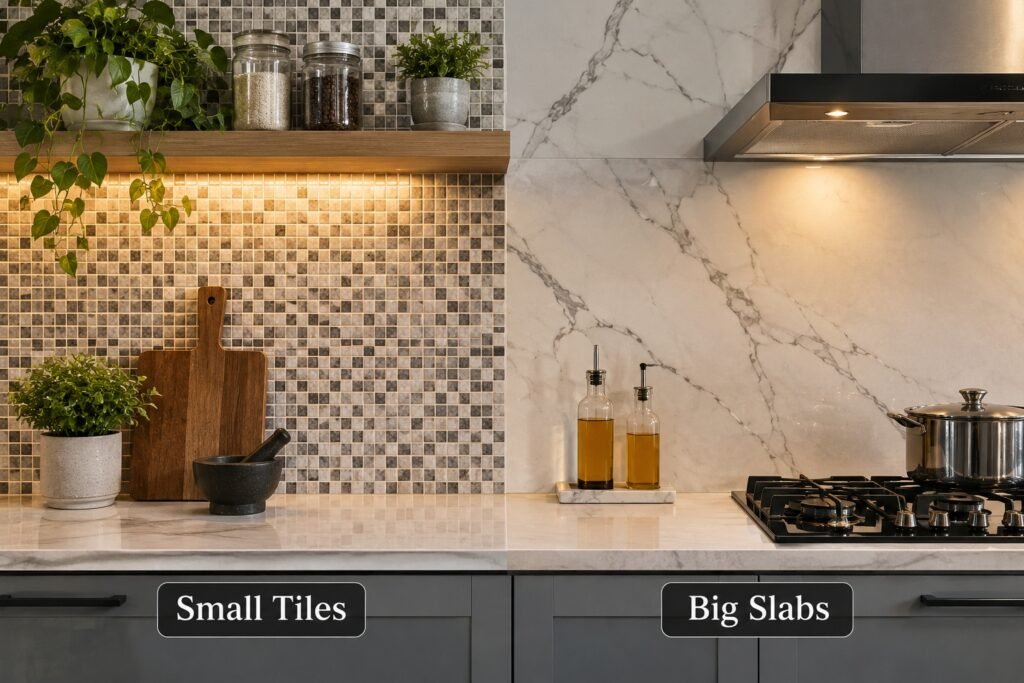
Small tiles mean more grout lines, and more grout lines mean more cleaning down the road. That’s the blunt version. But small mosaic-style tiles also hide imperfect walls really well, which older homes tend to have plenty of.
Big slab tiles look sleek and modern, almost seamless, and they’re genuinely easier to wipe down. The catch? They need a near-perfect wall underneath, and cutting them around outlets or windows takes real skill. A shaky installer with oversized tiles is a recipe for visible seams everywhere.
Mixing Two Materials on the Same Wall
Nobody says you have to pick just one material and stop there. A porcelain field with a glass accent strip behind the stove gives you durability where it matters most and sparkle where you actually want it. Mixing textures this way also stretches a tighter budget further, since the pricier material only covers a small strip instead of an entire wall.
The trick is keeping one element quiet while the other gets loud. Two bold patterns fighting for attention on the same wall usually ends up looking chaotic rather than intentional. Pick one hero material, let the other play a supporting role, and the whole thing reads as designed rather than accidental.
Where the Budget Actually Disappears
People budget for the tile itself and completely forget the other half of the bill. Adhesive, grout, edge trim, labor, and the inevitable “we need three extra boxes because of cuts” moment all add up fast.
| Cost Factor | Typical Range | Why It Swings |
| Ceramic tile (material) | $2–$8/sq ft | Design complexity, brand |
| Porcelain tile (material) | $5–$15/sq ft | Finish, size, imported vs domestic |
| Glass tile (material) | $10–$30/sq ft | Handmade vs mass-produced |
| Installation labor | $10–$25/sq ft | Pattern complexity, region |
| Grout, adhesive, trim | $50–$150 total (avg kitchen) | Type of grout, sealing needs |
That table isn’t exact for every zip code, but it gives a realistic shape to expect. Kitchen wall tiles rarely cost what the per-square-foot price tag suggests once labor and extras join the party.
Layout Patterns Beyond the Basic Grid
Straight grid layouts are safe, familiar, and honestly a little boring after the fortieth kitchen you’ve seen with one. Herringbone adds movement without screaming for attention, and it works especially well behind a stove as a feature strip rather than covering the whole wall.
Basketweave and diagonal-set patterns pull the eye differently and can make a narrow galley kitchen feel wider than it is. There’s a classic pattern layout reference from a well-known tile manufacturer that breaks down which patterns suit which room shapes, and it’s worth a look before committing to anything beyond a simple grid.
Grout: The Boring Detail That Ruins Everything
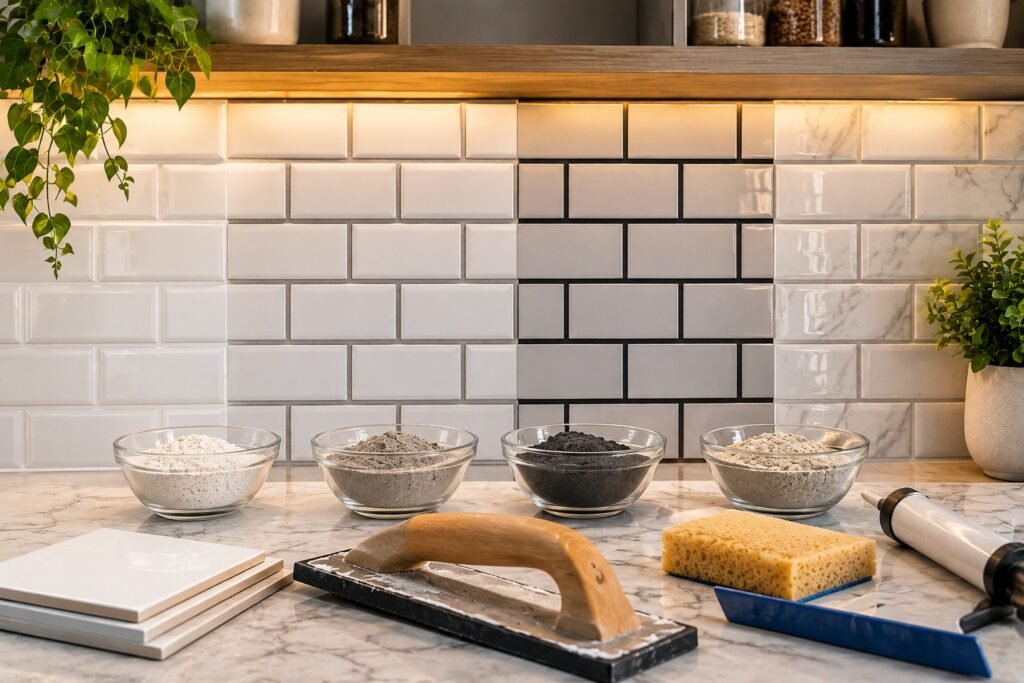
Grout gets picked in the last five minutes of a tile order, almost as an afterthought, and that’s a mistake people regret within a year. Light grout between white tiles turns gray fast near a stove. Dark grout hides stains but can look heavy against pale tile.
Epoxy grout costs more upfront but resists staining far better than standard cement grout, especially in the splash zone behind a sink or range. Ask your installer specifically about sealing schedule too — unsealed grout in a working kitchen is basically inviting trouble.
Lighting Changes Everything You Picked
Under-cabinet lighting can flip an entire tile decision on its head. A tile that looked flat gray under the showroom’s harsh overheads suddenly reads warm and inviting once real task lighting hits it from below at a low angle. Glossy finishes bounce that light around a room, while matte finishes soften and diffuse it instead.
Before finalizing anything, hold a real sample against the actual wall at night with your kitchen lights on, then again during the day with natural light pouring in. Colors genuinely shift between those two conditions more than most people expect, and skipping this step is a common regret people mention months after installation.
Making Kitchen Wall Tiles Work With Cabinets
Matching tile to cabinets isn’t about finding an identical shade — that usually looks flat and a little lifeless. Contrast, done carefully, makes both elements pop instead of blending into visual mush.
Warm wood cabinets pair nicely with cooler blue or green tiles, while white or gray cabinets can handle bolder tile choices without the kitchen feeling chaotic. There’s a matching cabinet finish ideas page that shows real combinations if you want visual proof before deciding.
DIY or Hire Someone — The Honest Cost Math
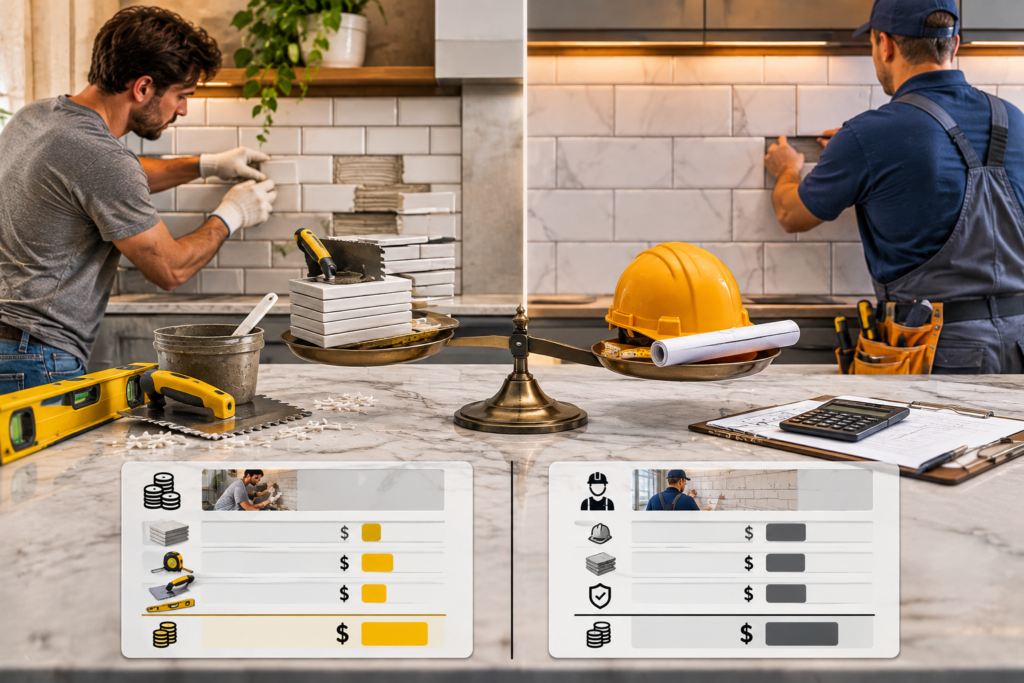
DIY tiling saves labor cost, no argument there. But a first attempt at cutting tile around outlets, corners, and a window frame usually costs more in wasted material than people expect, and the learning curve shows in crooked lines nobody notices until the lighting hits it just right.
A real remodel cost data breakdown from a national outlet puts average professional labor at a wide range depending on region and pattern complexity, which lines up with what most local installers quote. If your wall tiles involve any pattern beyond a basic grid, hiring someone experienced usually pays for itself in avoided mistakes.
Tool rental adds another hidden cost people forget to budget for. A wet saw alone can run $50 to $100 for a weekend rental, and that’s before factoring in spacers, a notched trowel, level, and the inevitable trip back to the hardware store for one more thing. Weigh the rental total against a professional quote before assuming DIY automatically wins on price.
Keeping Tiles Looking New for Years
Daily wiping with a mild soap solution handles most grease before it sets in. Harsh abrasive cleaners scratch glazed surfaces over time, even when the damage isn’t visible right away.
Reseal grout roughly once a year in a kitchen that sees heavy cooking, twice a year if it’s behind the stove specifically. Small habit, big payoff — resealed grout resists staining dramatically better than neglected grout ever will.
Chipped tile happens eventually, usually from a dropped cast-iron pan at the worst possible moment. Keeping a small stash of leftover tiles from installation day makes a single-tile repair simple; without spares, matching a discontinued glaze years later turns into its own small project.
When Wallpaper or Panels Beat Tile Entirely
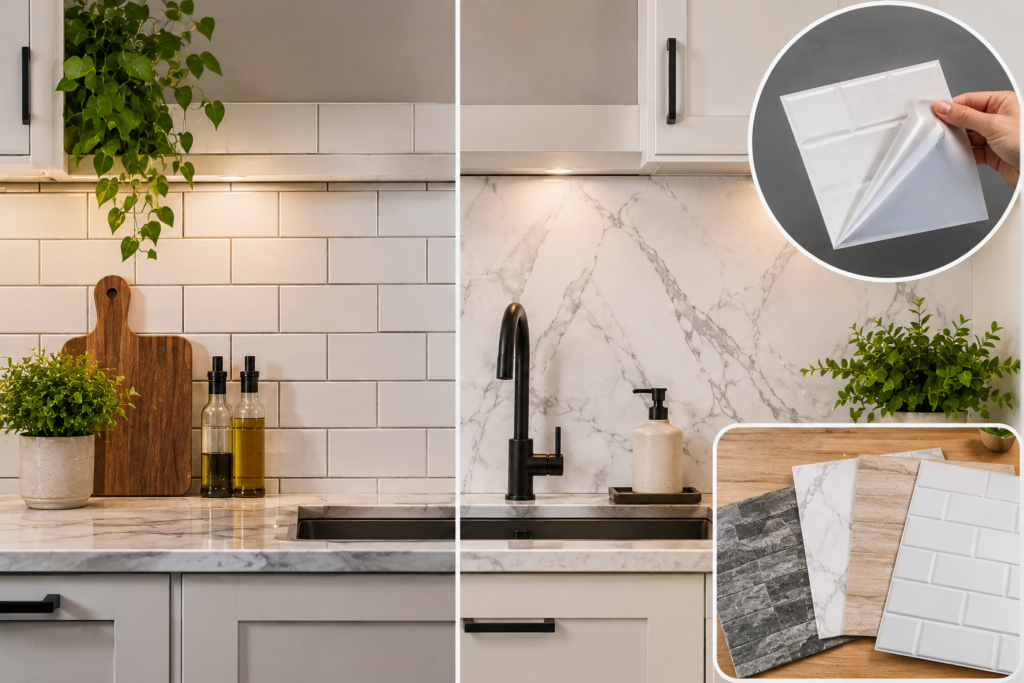
Sometimes tile isn’t the right call at all, and that’s fine to admit. Renters, tight budgets, or anyone wanting a quick refresh without demolition might do better with a peel-stick wall covering option that mimics tile texture at a fraction of the cost and effort.
For more visual direction beyond tile specifically, there’s an extra styling inspiration list covering decor approaches that don’t involve permanent installation at all. It’s a solid starting point if you’re still torn on committing to tile.
Frequently Asked Questions
Are these tiles worth installing in a rental property?
Usually not for full walls, since removal at move-out gets messy and expensive. Peel-and-stick or removable panel options make more financial sense for renters who want the look temporarily.
How many kitchen wall tiles do I need to order?
Measure your wall area, then add 10-15% extra for cuts, breakage, and future repairs. Pattern layouts like herringbone often need closer to 20% extra due to angled cuts.
Do wall tiles need to match the kitchen flooring?
Not at all — matching everything usually flattens a room visually. A complementary tone or texture contrast tends to look more intentional than an exact match.
What’s the most durable tile for behind a stove?
Porcelain generally handles heat and grease better than ceramic or glass in that specific zone. Its density resists staining and chipping under repeated exposure to splatters.
Can I install kitchen wall tiles over existing tile?
Sometimes, if the old surface is flat, clean, and structurally sound underneath. Most installers still recommend removal first, since layering adds weight and can trap moisture.
How long does a typical kitchen wall tile installation take?
A standard backsplash-sized project usually takes two to three days including drying time. Full accent walls or complex patterns can stretch closer to a week.
Is white grout ever a good choice for kitchen wall tiles?
It looks stunning on day one and requires real maintenance discipline afterward. Sealing consistently and wiping spills quickly keeps it from graying prematurely.
Do darker wall tiles make a small kitchen feel cramped?
Not necessarily, especially with good lighting and a glossy finish that bounces light around. Matte dark tile in a poorly lit room is where the cramped feeling actually shows up.
Conclusion
There’s no single right answer buried in this article, and that’s kind of the point. Kitchen wall tiles depend on how you actually cook, how much cleaning you’re willing to do weekly, and what your wallet can realistically absorb once labor and extras get added to the material cost. The people who end up happiest with their choice usually spent less time chasing trends and more time being honest about their own habits in the kitchen.
Material choice sets the tone first — ceramic for budget-friendly forgiveness, porcelain for heat and moisture resistance, glass if you’re willing to babysit smudges for a brighter look. Color comes next, and it should get tested under your kitchen’s actual lighting rather than showroom fluorescents that flatter almost everything equally. Size and layout decide how much personality the wall carries, from a quiet grid to something like herringbone that pulls focus without overwhelming the room.
Budget rarely behaves the way people expect going in. Material cost is only part of the number; grout, adhesive, trim, and labor round it out, sometimes doubling the figure someone had in their head from a quick online search. Building in that buffer early avoids the scramble that happens when a project stalls halfway because funds ran short.
Grout and maintenance get skipped in most planning conversations, yet they decide how the wall looks two years down the line more than the tile itself does. A slightly cheaper tile with disciplined sealing and cleaning habits will outlast a premium tile that gets ignored after installation. That’s not a popular opinion in most showrooms, where the sale happens before maintenance ever comes up, but it holds up in practice.
If tile still feels like too much commitment, wallpaper and panel alternatives exist for good reason, and there’s no shame in choosing flexibility over permanence. Whatever direction feels right, the goal stays the same: a kitchen wall that looks good in photos and actually survives the mess of real cooking, day after day, for years without demanding constant attention.