

Finding the right master bedroom wallpaper ideas can eat up an entire evening before you know it — forty tabs open, nothing decided. That’s normal. One wall carries a lot of weight in this decision.
The master bedroom wallpaper ideas worth pursuing all share a similar thread: they work with the room’s natural light, they don’t clash with what’s already there, and they still feel peaceful past eleven at night.
Below, we’ll look at how these ideas actually play out in real homes, not just in curated inspiration boards that rarely translate one-to-one. There’s also practical ground to cover, upkeep and pitfalls included, so nothing here catches you off guard later.
What Is Master Bedroom Wallpaper?
Really, this single wall decision shapes the mood of a space where you’ll spend close to a third of your entire life.
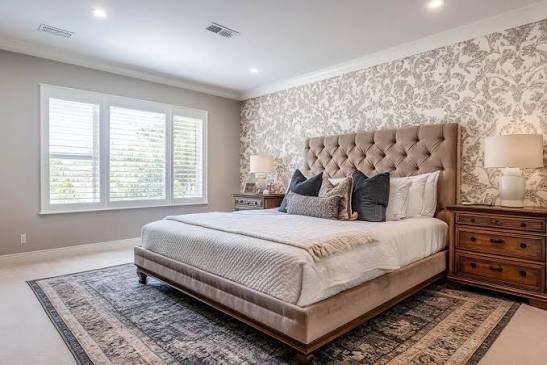
Plenty of people keep it contained, papering only the wall behind the bed. Others commit fully, ceiling and all. Neither approach is wrong. The gap between a wallpaper job that ages well and one that doesn’t rarely comes down to the print itself — it’s more about whether the choice actually suits how the room gets used, which is for sleeping and unwinding.
A primary bedroom asks something different of its wallpaper than, say, an entryway or a guest bath does. You don’t just glance at this wall in passing — you fall asleep looking at it, night after night, for years. That shifts things. A print that seems lively and fun on first sight can start to grate after half a year of daily exposure. More than once, I’ve watched someone fall for a sample in a showroom, only to feel differently a season later once it covered four full walls instead of a small display board.
Why Wallpaper Choice Matters in a Master Bedroom
Sunlight plays tricks on color throughout the day. A warm, earthy terracotta that looks grounded at sunrise can shift toward an almost artificial orange once the bedside lamp clicks on at night. Similarly, a punchy, high-contrast pattern that felt lively during a Saturday errand run might make it genuinely harder to relax before bed.
Guidance from Sherwin-Williams notes that gentler neutrals and green tones generally come across as calming in bedrooms, whereas deeper shades like red lean toward a warmer, more intimate mood rather than a restful one. That distinction is worth sitting with before painting — or papering — an entire room in one dominant color. Sherwin-Williams
Types and Features to Know
Wallpaper materials aren’t interchangeable. What you pick shapes install cost, upkeep, and honestly, how the room smells for the first several days after hanging it. Here’s a rundown of the main choices people weigh for a primary bedroom.
| Wallpaper Type | Best For | Durability | Removal Difficulty |
| Vinyl-coated paper | Budget refreshes, rentals | Moderate | Easy to moderate |
| Grasscloth | Natural, textured finish | Struggles with moisture | Difficult |
| Peel-and-stick | Renters, DIY jobs | Low to moderate | Very easy |
| Non-woven / paste-the-wall | Long-term primary bedrooms | High | Moderate |
Grasscloth tends to photograph beautifully, but it feels noticeably different up close than printed paper does. Some people love that texture near a headboard; others find it a bit rough. It also doesn’t hold up well against humidity, so an en-suite bathroom that runs frequent hot showers isn’t the ideal neighbor for it.
Peel-and-stick has improved a lot in recent years. Early versions used to bubble and lift at the seams within months. The newer generation holds its shape far better, making it a solid choice for renters or anyone testing out a bold print before fully committing.
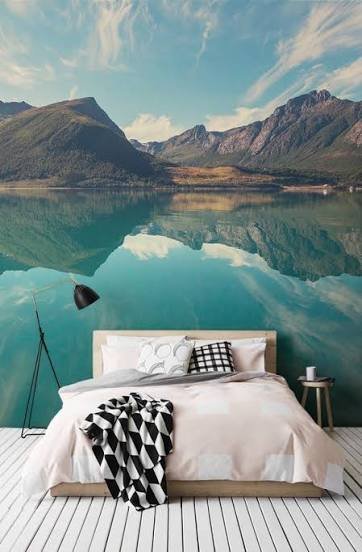
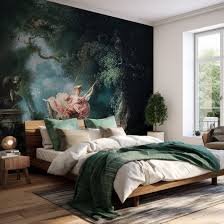
Scale matters just as much as material. Oversized murals — scenic views, botanical scenes — add real depth and shine on a single feature wall. Smaller repeating patterns distribute more evenly across a whole room, since they don’t visually compete with themselves from every angle the way a big mural can.
Benefits of Wallpapering a Master Bedroom
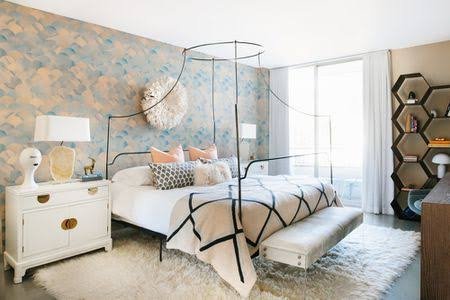
Wallpaper brings something flat paint just can’t manage, no matter the paint finish. It layers in texture and a sense of story that a solid color simply doesn’t reach.
- Covers up small wall flaws that paint tends to expose, especially in older houses
- Typically outlasts paint by a wide margin, often holding up three times as long before it needs replacing
- Opens up texture options — grasscloth, linen-look finishes — that paint has no real equivalent for
- Turns a modest primary bedroom into something that feels considered instead of forgettable
- Tends to photograph better for listings, which several real estate agents have mentioned to me directly
None of this means wallpaper is trade-off-free. It takes longer to install than a coat of paint, and once the paste sets, mistakes are far harder to fix. Anyone who repaints on a whim every year or two might find wallpaper’s permanence a little frustrating.
Real-Room Examples Worth Copying
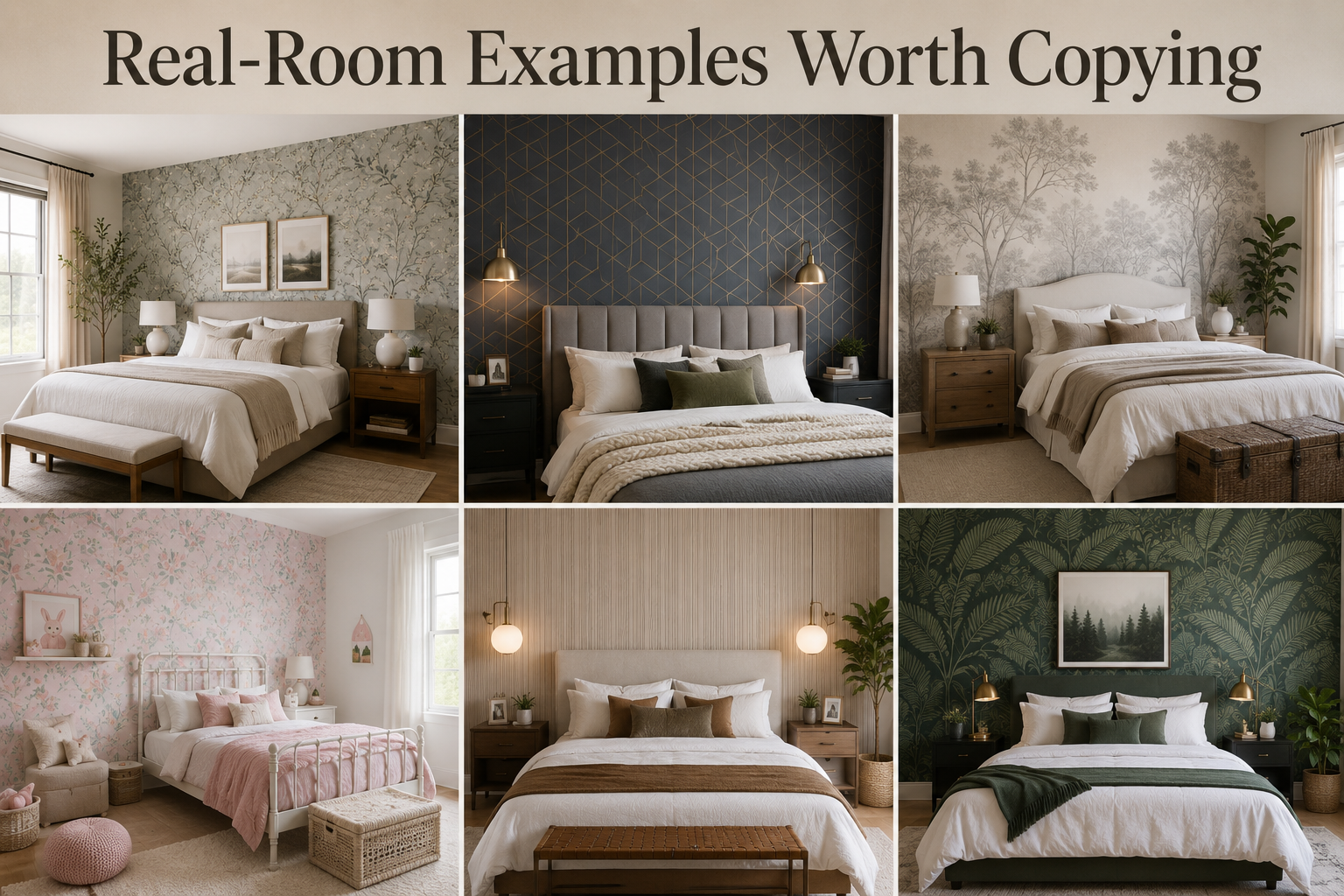
A friend of mine papered just the accent wall in her primary bedroom with a soft sage botanical print, left everything else white, and layered in woven rattan lighting fixtures. It reads calm without tipping into boring — one of the better restrained wallpaper jobs I’ve come across.
Another example worth studying pairs a dramatic, geode-inspired print with a plain upholstered headboard and brass-and-glass nightstands, letting the wall itself become the room’s focal point instead of just background. It’s a smart template when your furniture already leans neutral and needs a bolder anchor.
For a quieter route, a fine stripe or subtle texture applied across the whole room works particularly well in primary bedrooms with lower ceilings — it stretches the walls visually instead of adding clutter.
Our guide on bedroom wall covering styles goes deeper into these approaches broken down by room size, in case you want more direction before deciding.
Tips for Choosing the Right Design
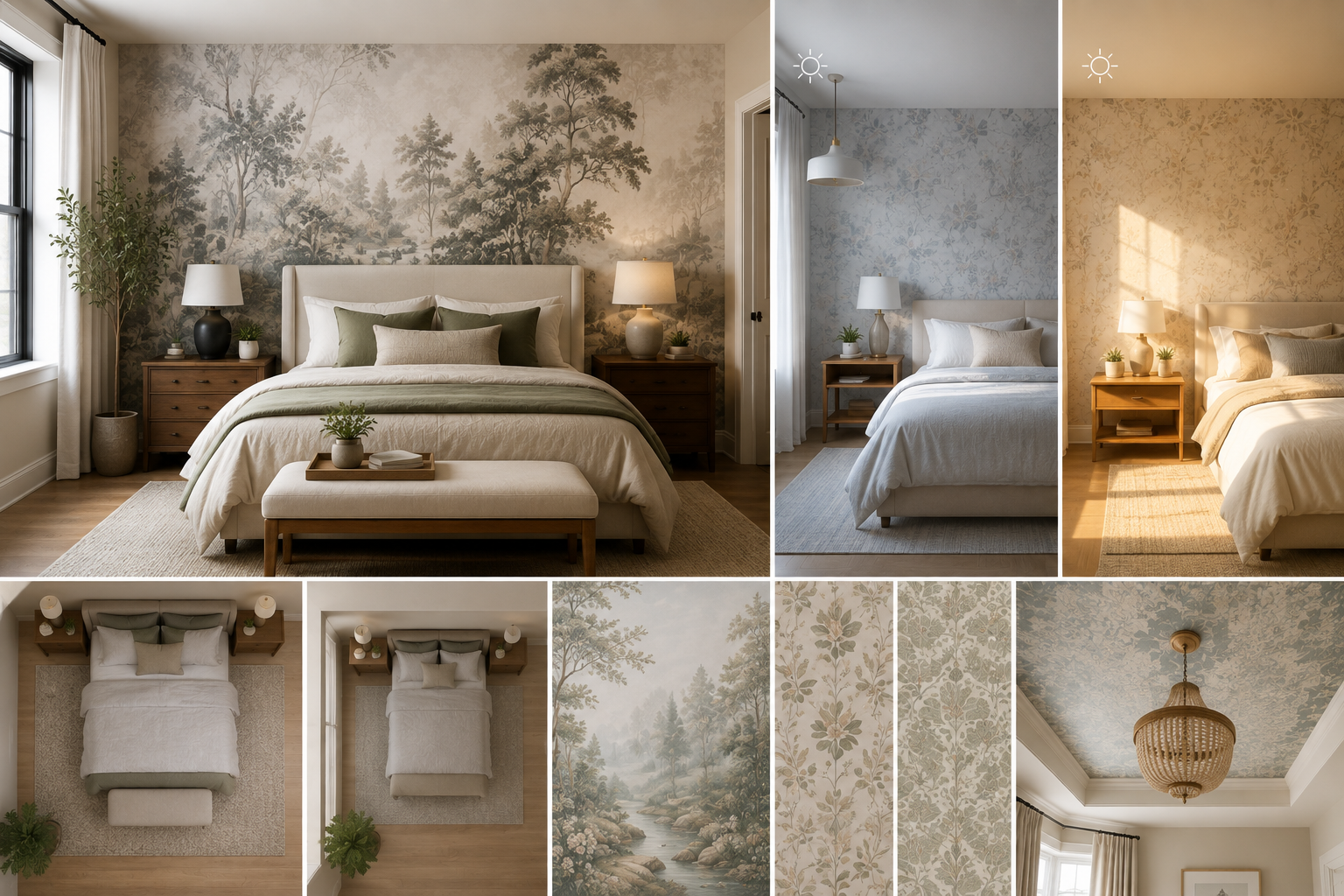
Figure out your light direction before you even think about color. North-facing primary bedrooms get flatter, cooler light most hours of the day, so leaning warmer helps balance that out. South-facing rooms get stronger, warmer light and can handle cooler or deeper tones without feeling cold.
Bed size matters more than people expect. A king with a tall headboard can carry an oversized mural without the room feeling cramped. A smaller space with a full or queen bed usually does better with a medium or small repeat, so the pattern doesn’t swallow the furniture.
Drawn to something scenic or mural-style? Our scene bedroom wallpaper resource covers scale and placement in more detail so the print doesn’t overwhelm the space.
Don’t rule out the ceiling either. It’s gaining traction in primary bedrooms heading into 2026, and it adds real drama without touching a single wall if you’re not ready for a full room commitment.
Common Mistakes to Avoid
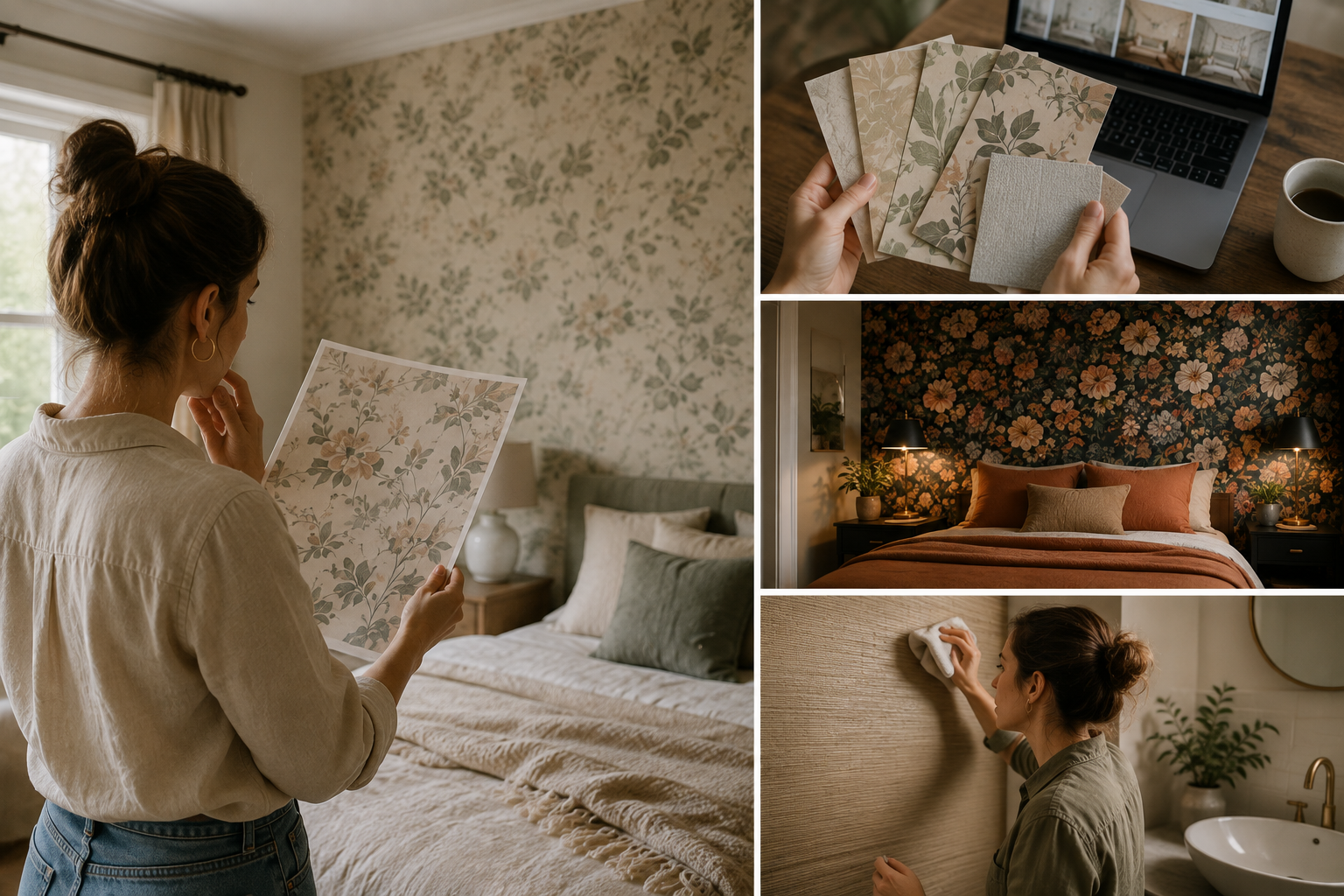
The single most common misstep? Falling for a pattern from one photo online without factoring in your own room’s light and dimensions. A print that worked in someone else’s sun-drenched loft won’t automatically translate to a dimmer, north-facing bedroom.
Right behind that is skipping the physical sample. Digital swatches render inconsistently across screens, and your room’s actual lighting can change how a print looks entirely.
Chasing whatever’s trending is another trap. Bold, maximalist prints look stunning in a magazine spread, but living with one every night before sleep can wear thin fast. Given the choice, I’d rather pick a quieter texture that still feels right five years from now than a loud one I’m stripping off the wall by spring.
Maintenance gets overlooked too, more often than you’d think. Grasscloth and other natural-fiber papers don’t do well in a humid, poorly ventilated en-suite bathroom. A soft, dry cloth handles dusting fine for most vinyl-coated papers — just skip harsh cleaners on textured or natural-fiber finishes, since they can strip color or wreck the fibers for good.
Conclusion
Landing on the right master bedroom wallpaper ideas really comes down to how well a pattern fits your actual daily life in that room, not how it looks in one standout photo. The primary bedrooms that hold up best over time tend to balance texture, light, and a bit of restraint rather than chase whatever’s trending that month.
Begin with the basics. Check which way your windows face. Get a real sample taped up for a few days before deciding anything. Consider your bed size before falling for an oversized mural that could crowd a smaller room. These steps feel almost too obvious, but skipping them is exactly why so many wallpaper jobs get redone within a year.
After that, let your own taste take over. That might mean a soft botanical print tied to a memory, or a bold geometric pattern that makes mornings feel a little brighter. Either direction works, as long as the room still does its main job: helping you actually rest.
Wallpaper is one of the more reversible big design choices out there, since most types can be swapped later if your taste changes. Treat the first round as worth doing thoughtfully, not as something permanent and unchangeable. A primary bedroom shifts as you do, and its walls can shift right along with it.
FAQs
Is wallpaper a good idea for a primary bedroom?
Yes — an accent wall behind the bed is a low-risk way to add texture and depth without taking over the room’s whole color story.
What wallpaper pattern works best for a small primary bedroom?
Smaller repeats or fine stripes generally read better than oversized murals, since they don’t make the space feel tighter.
How long does bedroom wallpaper typically last?
Good-quality non-woven or vinyl-coated wallpaper usually holds up for ten to fifteen years with basic care — well beyond most paint jobs.
Can I wallpaper just one wall in my primary bedroom?
Definitely, and it’s actually a common approach — it keeps costs down while still giving the room a clear focal point.
Is peel-and-stick wallpaper durable enough for a primary bedroom?
Newer peel-and-stick versions hold up decently for a few years, but they’re better suited to lower-traffic accent walls than full rooms with heavy furniture contact.