

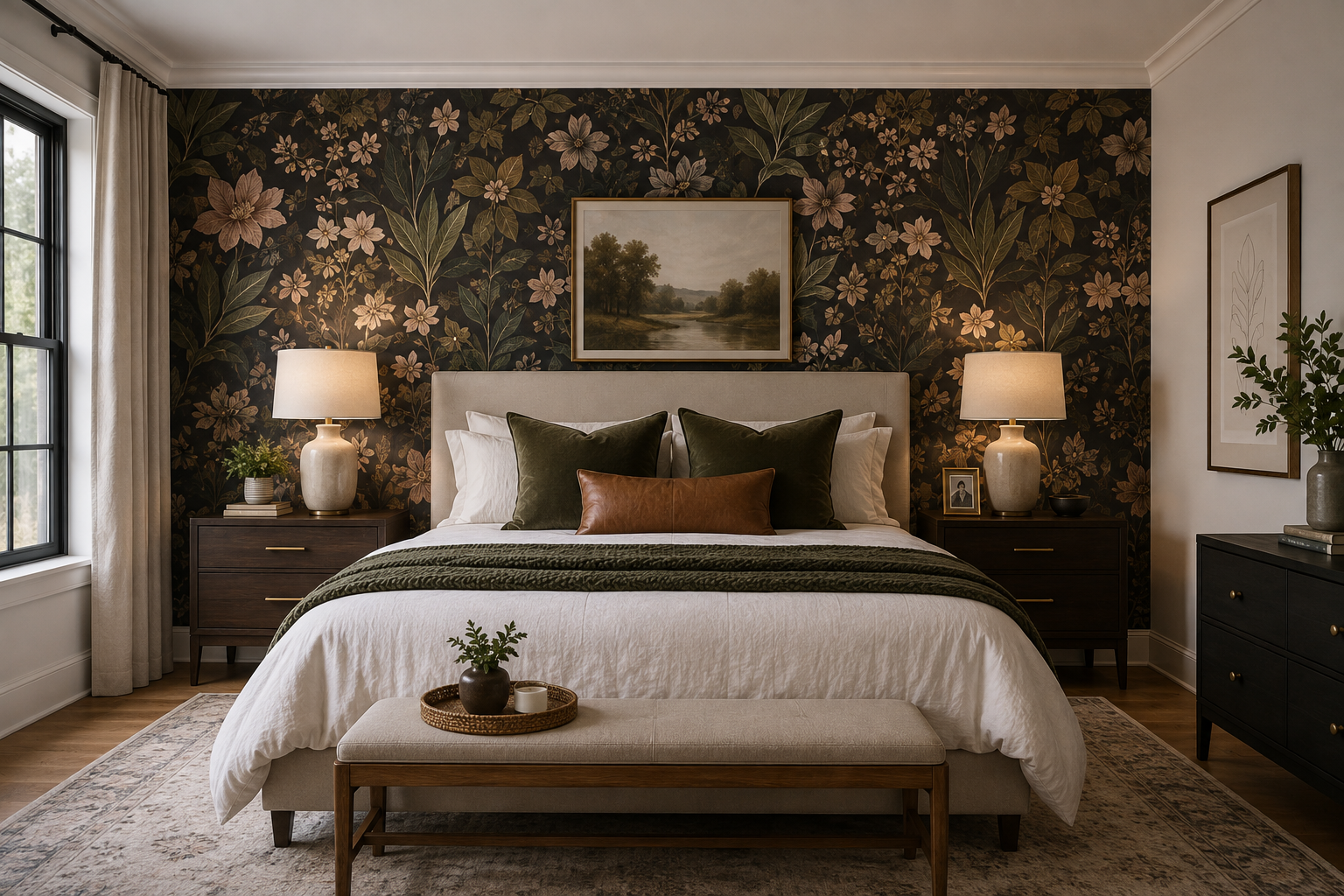
I still remember the first time I convinced a hesitant client to paper just one wall instead of chickening out entirely — she called me two days later saying the room finally “felt like hers.” That’s the pull of a wallpaper accent wall bedroom update: small commitment, outsized payoff.
Most people overthink the pattern before they’ve even figured out which wall deserves it. Get the placement right first, and the wallpaper accent wall bedroom choice practically makes itself. None of this needs to be complicated, and I’ll walk through exactly what I’ve learned doing this over and over again.
The Case for Stopping at One Wall
Papering an entire room sounds ambitious right up until you’re lying in bed staring at pattern from every angle. It gets loud fast.
One wall gives your eyes somewhere to land instead of somewhere to escape from. Think of it as a piece of art rather than wallpaper — that mental shift changes everything.
Money-wise, this approach is kinder too. Sticking to a single wall typically shaves off two-thirds of what a full room would cost, and rolls generally range somewhere between $35 and $160.
Renters especially gravitate toward this method. Peel-off styles lift away without drama when it’s time to move, no landlord drama included.
Choosing Which Wall Earns the Pattern
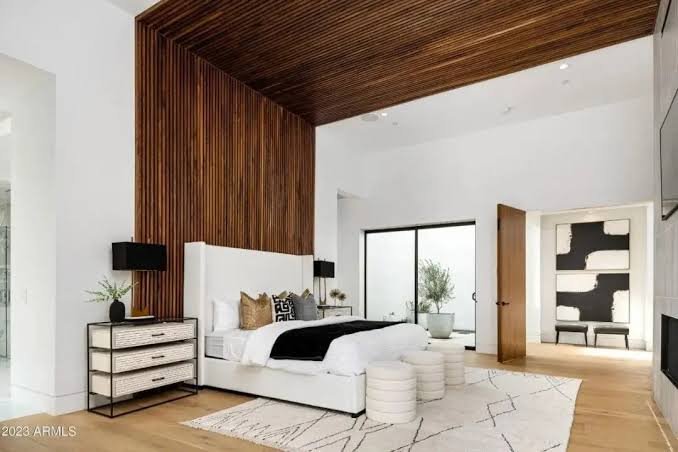
Not all four walls are created equal, and pretending otherwise leads to disappointing results. The wall directly behind your headboard almost always claims the win — it greets you at the door and it’s the last thing you see before sleep.
Steer clear of walls chopped up by closet doors, windows, or a cluster of switches. Broken sightlines ruin pattern flow no matter how gorgeous the roll looked in the store.
Sometimes the unexpected wall wins, though. One homeowner I worked with skipped the obvious bed wall entirely and papered the narrow strip behind her reading nook instead — the room gained personality it never had before.
Don’t forget ceiling height either. Compressed ceilings respond better to vertical stripes or tall, narrow prints. Anything sprawling and horizontal will make the space feel squashed.
Comparing Wallpaper Accent Wall Bedroom Styles Side by Side
| Wallpaper Style | Ideal Situation | How Hard to Remove | Typical Cost |
| Peel-and-stick | First-time DIYers, rentals | Simple | $15–$45/roll |
| Traditional paste | Homeowners staying long-term | Tough | $30–$120/roll |
| Grasscloth/woven texture | Warm, understated rooms | Medium | $60–$150/roll |
| Scenic murals/panels | Bold statement walls | Medium | $80–$300/panel |
| Vinyl-coated | Bedrooms near bathrooms, humid climates | Medium | $25–$70/roll |
None of this is fixed — treat it as a rough compass rather than a strict rulebook.
Gentle Florals for Couples’ Retreats
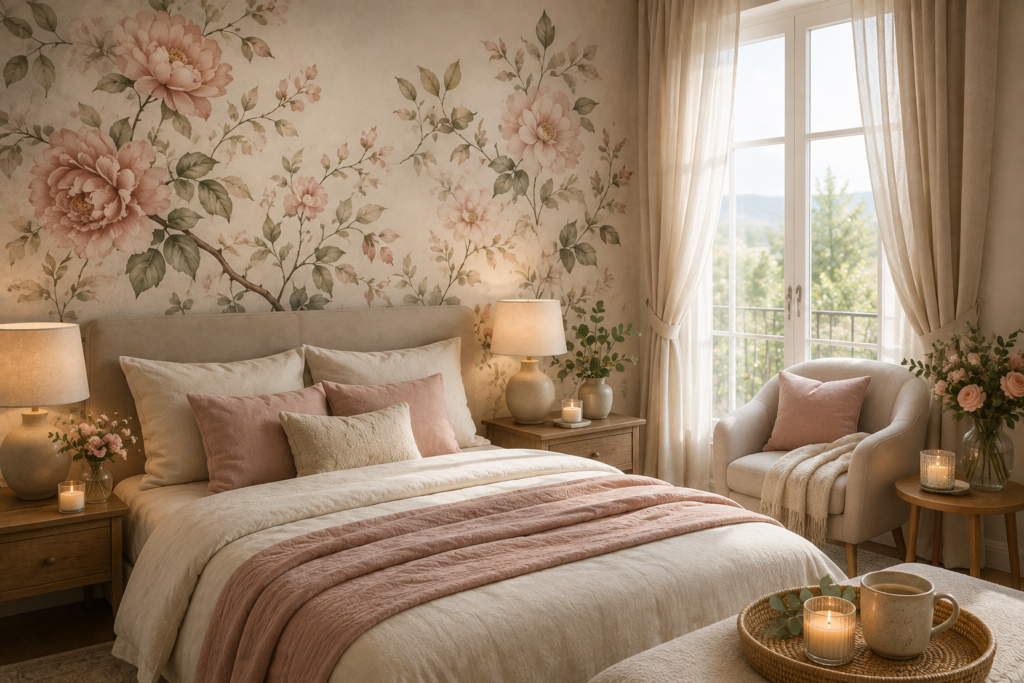
Hand-sketched blooms and dusty pink botanical prints have a way of making a bare wall feel like it was designed with two people in mind, rather than simply decorated.
Wondering how that translates into an actual room? There’s a solid collection of dreamy florals for couples worth flipping through before locking in a final choice.
One caution, though — go easy on saturation if the room is compact. A deep, intense floral photographs beautifully but can feel closed-in once the lights go down at night.
Why Master Suites Can Afford to Go Bigger
Primary bedrooms usually come with breathing room, which means you can push pattern scale further without the space feeling crowded.
Large botanical prints, deep navy tones, or richly textured grasscloth all read differently across a bigger wall — there’s enough negative space to let the eye rest. Worth browsing this set of primary suite pattern picks if you’re working with generous square footage.
Measure carefully regardless of size, though. Vaulted ceilings and angled walls in bigger bedrooms eat through paper faster than a standard rectangular room ever would.
Making the Single-Wall Approach Look Intentional
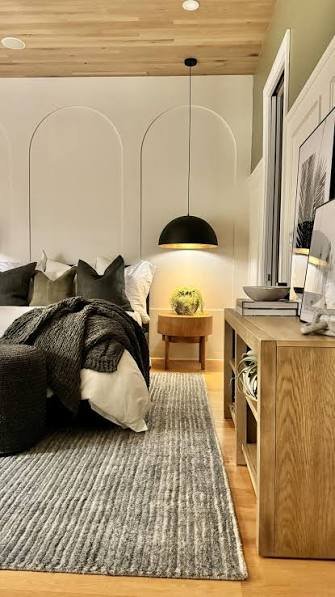
Committing to one wall is the easy part. Turning that single wall into something that feels purposeful, not unfinished, takes a little extra planning.
A handful of homeowners let the paper creep onto the ceiling edge for an enveloping, nest-like atmosphere. Others stop cleanly at the crown molding for something tidier. Both work — it’s really a question of how dramatic you want the final look.
There’s a detailed walkthrough of this exact method here: single feature wall guide, including the measuring specifics I don’t have room to cover here.
Tight bedrooms benefit most from this restraint. Overdo the pattern in a small space and you’ll feel surrounded by it rather than accented by it.
Scenic and Mural Wallpaper for Real Drama
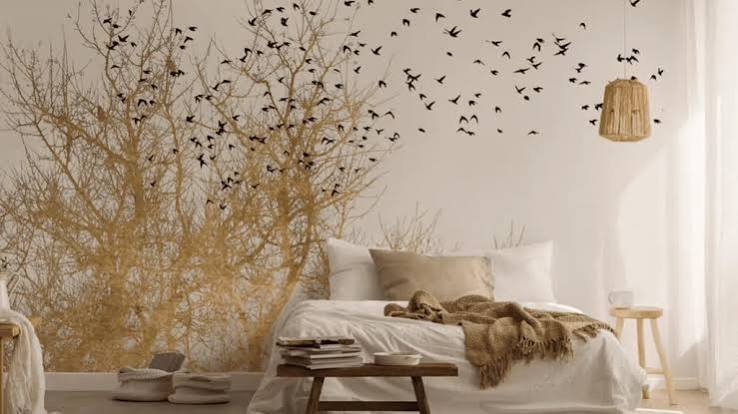
Landscape-style wallpaper — think dense woodland, skyline silhouettes, painterly abstractions — makes a wall feel closer to a framed exhibit than a bedroom surface. Quiet and understated it is not.
This kind of large-format print performs best when the surrounding decor stays deliberately calm. Neutral bedding, simple furniture, minimal extra art. Let the wall carry the visual weight on its own.
I watched this backfire exactly once — a client layered a busy jungle mural against a heavily patterned rug and a full gallery wall on the opposite side. The room ended up competing with itself. For anyone drawn to this style, this piece on mural style wall art covers scale and placement in more depth.
Nailing the Setup on Your First Attempt
Hanging wallpaper yourself takes practice, but self-adhesive versions leave far more room for error than glue-based paper does. Even so, one crooked opening strip throws off every strip that follows.
Work from a plumb line rather than the corner of the wall. Corners are rarely as straight as they look, and trusting one blindly will cause headaches three strips down the line.
First-timers going the peel-and-stick route might find Home Depot’s walkthrough on peel stick hanging steps genuinely useful — it covers the fiddly parts most guides gloss over, like outlets and switch plates.
Traditional pasted paper really does need two sets of hands. Attempting it solo on anything larger than a small wall usually ends in frustration.
Decorating Around Your Freshly Papered Wall
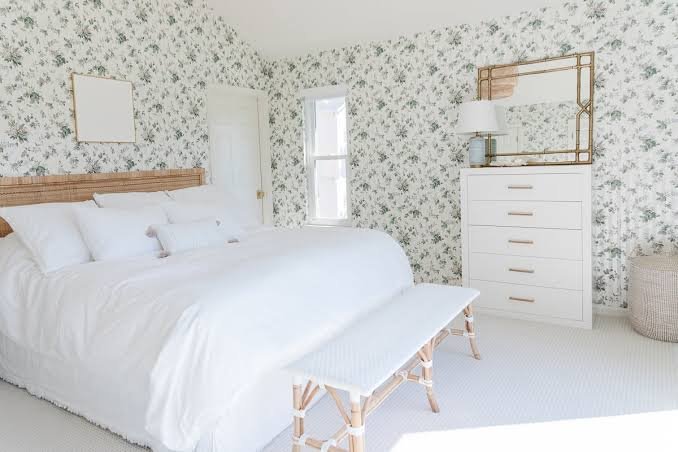
Once the wallpaper’s up, there’s an urge to immediately layer on more — art, texture, accessories. Fight that urge for a bit before acting on it.
Let the wall sit untouched for about seven days before deciding whether it needs anything else. Some rooms need nothing more. Others just need a single, well-positioned light fixture.
According to designer approved styling tricks featured by HGTV’s design team, the strongest results usually come from keeping the rest of the room subdued, so the wallpaper stays the focal point instead of fighting with heavy drapery or an oversized headboard.
Matching wood tones across furniture pieces grounds a loud pattern much more effectively than a scattered mix of finishes ever could.
Common Slip-Ups That Undermine a Wallpaper Accent Wall Bedroom Project
Skip a few unglamorous steps in a wallpaper accent wall bedroom project and the whole thing can fall apart quickly. Here’s what trips people up most.
- Applying pattern straight onto unprimed or textured walls, leading to bubbling within weeks
- Judging pattern scale from a phone screen rather than the wall’s actual dimensions
- Overlooking humidity near an attached bathroom, which warps certain paper types over time
- Buying rolls from mismatched dye lots, resulting in visible color shifts between strips
- Hanging the next strip before the previous one has fully set
On their own, none of these errors are dealbreakers. Together, though, they quietly stack into a wall that just feels off, without an easy answer as to why.
Color Psychology Deserves More Credit Than It Gets
I used to dismiss “color psychology” as marketing fluff, honestly. Then I watched three separate clients struggle to fall asleep in bedrooms wrapped in vivid red or blazing orange, and changed my stance completely.
Cooler shades — muted blue, soft sage, faded lavender — tend to settle the nervous system. Warmer shades tend to do the opposite, which works fine in a living room but fights against you once the lights go off.
That’s not a ban on warm tones for a wallpaper accent wall bedroom project. It just means pairing them with cooler bedding, softer lighting, and less overall saturation than you’d use in a more active room.
Terracotta and blush strike a nice middle ground — warm enough to feel welcoming, muted enough that it won’t keep you wired at night.
Why Room Size Changes Your Whole Strategy
Tight bedrooms and expansive primary suites practically demand opposite tactics — treat them identically and the results usually disappoint.
Oversized floral prints can overpower a small room entirely. Tighter, smaller-scale repeats tend to read as texture from a distance rather than visual chaos.
Larger rooms tolerate bold scale much better since there’s enough surrounding space for the pattern to feel balanced. Even an oversized mural on an oversized wall still looks proportionate.
A method that reliably works in smaller spaces: cover roughly the upper two-thirds of the wall and finish the bottom with wainscoting or a flat painted section. The eye reads this as extra ceiling height, even when there isn’t any.
Combining Paint and Paper Rather Than Choosing Just One
Nobody says you have to pick a single camp between paint and paper. Some of the most striking bedrooms I’ve come across do both at once.
Pair a painted wall on one side with a papered wall directly next to it, then connect the two through a color pulled straight from the pattern — you get added depth without piling on extra visual clutter.
Wallpapering just the lower half and painting the top is another combination worth trying, particularly for renters hesitant to commit to a full wall of pattern.
The secret lies in lifting a single dominant hue from the wallpaper and repeating it in your paint selection. Miss that step and the two finishes tend to fight rather than cooperate.
The Overlooked Role Lighting Plays in Wallpaper Choice
Almost nobody brings up lighting in these discussions, yet it’s genuinely one of the biggest variables in how a wallpapered wall looks hour to hour.
Bedrooms facing north receive cooler, flatter light that mutes warm tones and can leave certain patterns looking flatter than the sample suggested. Rooms facing south do the reverse, with everything appearing warmer and more vivid.
Before placing an order, tape a swatch directly to the wall and observe it through morning, midday, and evening light. A pattern that looks perfect under showroom bulbs can look entirely different under your own lighting at home.
Metallic details — gold veining, silver leaf accents — respond especially strongly to lamp light compared to overhead fixtures. Test both if your chosen pattern carries any shimmer.
Realistic Numbers for a Bedroom Wallpaper Budget
Vague advice only helps so much, so here’s roughly what a mid-sized bedroom wall — say ten feet wide, nine feet tall — tends to run across different budget tiers.
A basic peel-and-stick roll from a big-box retailer lands around $120–$180 total for that wall, tools included. Mid-tier designer peel-and-stick brands push that figure closer to $250–$350.
Traditional pasted wallpaper from a boutique label, plus professional installation, can realistically land between $500 and $800 depending on region and the installer’s day rate.
None of these figures include primer or wall repair if the surface needs patching first — set aside an extra $30–$50 for that step if your walls have seen better days.
A Wider Look Before You Commit to One Direction
Haven’t settled on a direction yet? Scrolling through a broader mix of finished bedroom examples tends to help more than staring at swatches alone before committing to one wall treatment.
Sometimes flipping through ten different rooms teaches you more than staring at swatches ever will. Patterns in your own taste start emerging — florals, geometrics, moody darker tones — long before you consciously settle on one.
Matching Pattern to the Furniture You Already Have
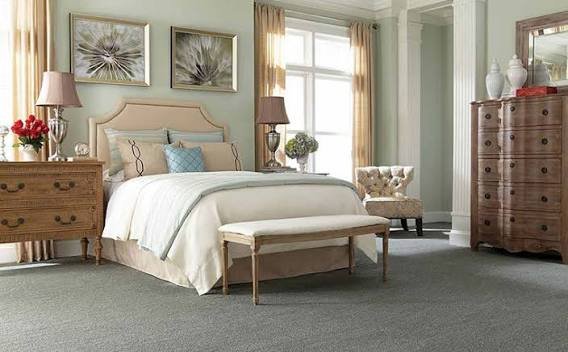
Few people swap out all their furniture just because a wall changed, which means the wallpaper has to work alongside existing pieces rather than fight them.
Furniture with a mid-century edge tends to complement geometric or retro-inspired patterns — sweeping arcs, dusty mustard hues, walnut-toned palettes. The pairing feels deliberate rather than coincidental.
Antique or traditional furniture, on the other hand, pairs better with damask, botanical motifs, or timeless stripes. Overly graphic or contemporary patterns tend to fight ornate wood carving.
Boho-inspired rooms genuinely allow for the most freedom. Rattan headboards and macramé wall hangings can handle almost any print, provided the color palette stays grounded in earthy shades like terracotta, sage, and warm sand.
Minimalist and Scandinavian-style bedrooms call for restraint even within the wallpaper choice. A quiet, tone-on-tone texture does more heavy lifting for that look than any bold floral pattern ever would.
Current Directions Shaping Bedroom Wallpaper Choices
Wallpaper styles evolve at a much slower pace than paint palettes, which is part of why the investment ages better in the long run. Still, a handful of directions keep resurfacing in newer bedroom projects.
Nature-inspired scenes — soft watercolor botanicals, forest silhouettes, cloud motifs — have held steady for several years now with no real sign of fading. They come across as enduring rather than fashionable-for-a-moment.
Neutral, textured papers — grasscloth especially, along with linen-look finishes — are seeing real momentum as well. They add depth without demanding a bold color commitment, which appeals to anyone nervous about pattern.
Dark, moody walls — deep green, charcoal, near-black with subtle texture — keep turning up in primary suites specifically. They look stunning in photos, sure, but more importantly, they actually feel warm and inviting in person, not just styled for a camera.
That said, I’d think twice before chasing anything too short-lived specifically for a bedroom. This is a space you’ll live in daily for years, so leaning timeless over trendy usually pays off better than following whatever’s peaking this particular season.
Keeping Your Wallpaper Looking Good Long-Term
Once the glue dries and the room’s back together, most people assume wallpaper needs zero upkeep going forward. For the most part it doesn’t, though a small set of habits can meaningfully extend how long it lasts.
Wipe it down now and then using a dry, soft cloth or a vacuum’s brush attachment. Accumulated dust flattens texture over time, particularly on grasscloth or matte finishes.
Aim humidifiers and diffusers in a different direction whenever you can. Repeated moisture exposure, even in modest amounts, weakens seams sooner than most people anticipate.
Minor scuff marks usually come off vinyl-coated wallpaper with a cloth that’s only slightly damp. Skip water entirely on grasscloth or fabric-backed styles — the two don’t mix well.
If a seam starts lifting after a year or two, a small dab of seam adhesive and a roller fixes it within minutes. Catching it early prevents a much bigger repair down the road.
Frequently Asked Questions
Is a wallpaper accent wall in a bedroom still worth doing in 2026?
Absolutely — arguably more so now that peel-and-stick quality has improved so much. Designers keep returning to single-wall statements because they refresh a room without demanding a full renovation timeline or budget.
How much wallpaper does one bedroom accent wall typically require?
Measure the wall’s width and height, multiply for total square footage, then add roughly 10–15% extra for pattern matching and trimming mistakes. Standard rolls generally cover 28–35 square feet each.
Can wallpaper go behind a bed on a wall with outlets?
Yes — simply cut around outlets after switching off power and removing cover plates first. It’s actually one of the more manageable parts of the whole install once the outer strips are done.
Which bedroom wall usually works best for an accent treatment?
The headboard wall wins most often since it’s the room’s natural focal point. Avoid walls broken up by closets, windows, or several switch plates unless the chosen pattern is small in scale.
Does removable wallpaper harm walls that were recently painted?
Generally not, provided the paint has fully cured for at least three to four weeks beforehand. Test a small, hidden corner first if you’re uncertain about your specific paint finish.
Can wallpaper go directly over an existing accent wall paint color?
Yes, as long as the painted surface is clean, dry, and free of glossy sheen. A light sanding or a coat of primer usually helps the adhesive bond properly and prevents peeling later.
Is peel-and-stick wallpaper durable enough for a long-term feature wall?
It holds up reasonably well for several years under normal conditions, though quality varies a lot between brands. Higher-grade vinyl options tend to resist fading, curling, and seam lifting far longer than budget versions.
Should the wallpaper pattern match the bedding, or stay separate?
Neither approach is wrong, but pulling just one or two colors from the wallpaper into the bedding usually looks more cohesive than an exact pattern match, which can feel overly coordinated.
Final Thoughts
A wallpaper accent wall bedroom project sits in a rare sweet spot — the effort required stays low while the visual payoff ends up disproportionately high. Nothing gets gutted. No renovation-sized budget gets touched. One wall goes up, and somehow the entire room reads differently the moment it’s finished.
My advice for anyone just starting out: resist the urge to chase the “perfect” pattern before you’ve even measured the wall properly. Measure first, shop second — a roll that looks stunning under showroom lighting can feel completely off once it’s scaled across your actual headboard wall at home.
Set a realistic budget too. Textured or mural-style papers cost noticeably more than a basic printed roll, and that gap can mean the difference between a $150 weekend project and a $400 one. Neither choice is wrong, just know which one you’re committing to before placing an order.
If there’s one idea worth repeating above everything else, it’s this: restraint everywhere else in the room is what makes a bold wallpaper accent wall bedroom choice actually succeed. Simple bedding, quieter furniture pieces, fewer competing patterns elsewhere. Let the wall carry the visual weight on its own.
And if the first strip comes out crooked? That happens to nearly everyone starting out. Peel-and-stick gives room for a redo without much consequence. Traditional paste is far less forgiving, which explains why so many beginners start there and switch to peel-and-stick after one exhausting Saturday.
Whichever direction ends up calling to you — soft romantic florals, a dramatic scenic mural, or a quiet textured grasscloth — the bedroom accent wall approach has stuck around this long for a reason. One wall, real impact, and a room that finally feels complete instead of half-finished.