

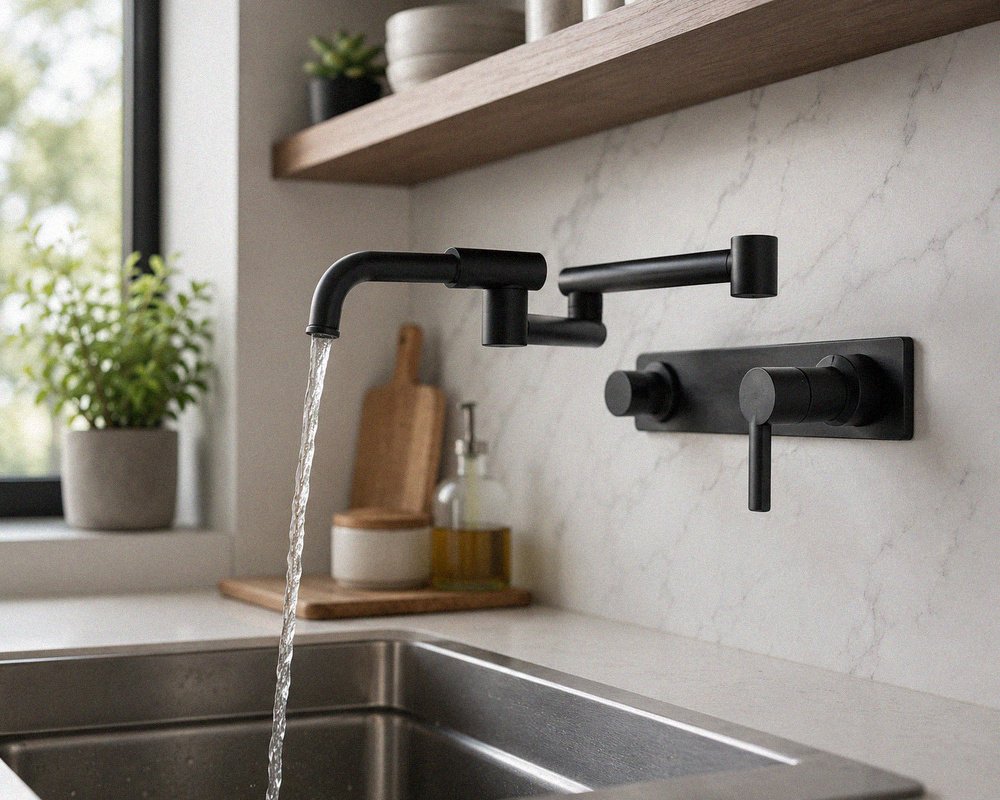
Somebody probably showed you a photo, right? A wall mount kitchen faucet jutting out from tiled wall, counter looking almost bare underneath it, and your own sink suddenly feels a bit plain by comparison. Normal reaction, honestly.
A wall mount kitchen faucet does something to a sink area that’s hard to put into words until you see one in person. Here’s the part almost nobody mentions upfront, though — the distance between that photo and the actual job is bigger than most people assume, and that’s the gap this piece tries to close.
What This Fixture Actually Is, Stripped Down
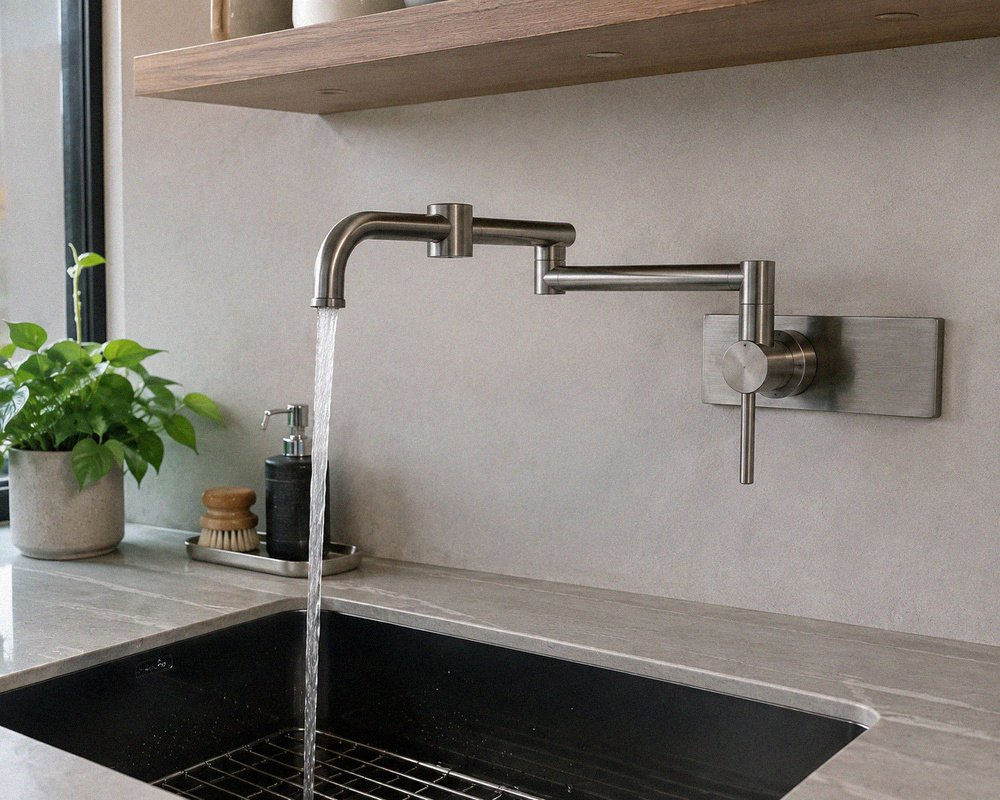
Forget the sink deck for a second. The spout doesn’t rise from the counter or the basin rim here — it comes sideways out of the wall, hanging above the sink almost like it was poured into the architecture itself.
Minimal-looking. Not minimal to build. A countertop faucet hooks into lines sitting right under the cabinet, wrench in hand, mostly done in an afternoon. Wall versions hide those same lines inside the framing, meaning someone had to plan for this well before drywall or tile ever went up.
Why People Actually Want One
No dressing this up: looks drive the decision, mostly. A faucet flush against the wall reads pricier than it usually is, and commercial kitchens have used this trick for decades partly because it frees prep room right by the basin.
Something gets repeated a lot online that I’m skeptical of, though — that these are inherently easier to keep clean. Fewer things cluttering the counter, fine, granted. Except the wall taking the splash still absorbs water every single day, and one sloppy caulk line lets moisture sneak somewhere it has no business being. That detail rarely survives the trip into a glossy before-and-after post.
Sink flexibility, on the other hand, holds up under scrutiny. Farmhouse basin, vessel bowl, trough sink — doesn’t matter which. A wall mount kitchen faucet was never bolted to any of them anyway. Useful if the sink itself is still up in the air and you’d rather not let faucet choice dictate that decision.
These Aren’t All Built The Same
People treat wall mounts like one single product. They’re not, not even close, and the differences change both the look and the plumbing hiding behind it.
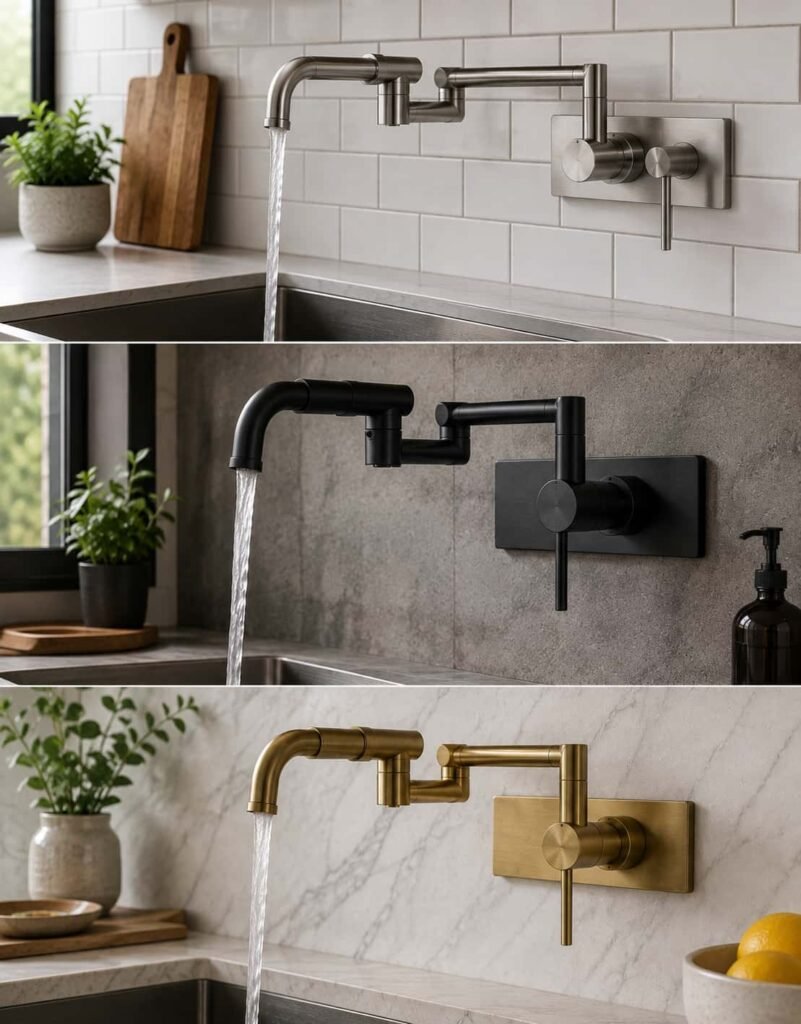
Bridge-style versions put that horizontal pipe connecting hot and cold right out in the open — farmhouse energy, functions as its own centerpiece. Then there’s the pared-back single-spout option that nearly vanishes into the wall until someone reaches for it. A few sit taller and stretch further out, built more for oversized cookware than for rinsing a coffee mug.
Finish matters more here than on a standard faucet, mainly because a wall mount sits against a much bigger visual field. Whatever’s covering that wall becomes part of the fixture’s presence, so it’s worth thinking through kitchen wall color schemes before settling on a finish. Matte black leans modern. Brushed brass pulls toward something older, warmer. Polished chrome mostly fades into the background, great if that’s the goal, less great if you wanted eyes drawn there.
That Wall Behind It Deserves Attention Too
Most write-ups skip this part entirely, which never sat right with me. That wall isn’t set dressing. It’s carrying half the visual weight of the whole setup.
Tile route? Keep the grout tight near the base — loose gaps there become moisture traps fast, and grime follows right behind. A different crowd skips tile completely, going instead for sealed, water-resistant washable kitchen wallpaper, usually in a spot that only catches light mist rather than a direct hit. Odd pick on paper. Works better than most people expect, though, once every edge is sealed properly.
Actually Getting It Installed
Blunt advice here: bring in a plumber. A wall mount kitchen faucet demands its supply lines run through the wall cavity at one precise height, tied directly to sink depth and how far that spout needs to reach. Off by even a small margin, and you’re either wiping splashback constantly or unable to slide a pot underneath.
Most people handle a countertop faucet swap themselves without much drama. Wall mounts sit in a different category altogether — closer to installing fresh plumbing than replacing an old fixture. For a general sense of sequence, shutoffs, disconnecting supply lines, that kind of order, This Old House’s faucet walkthrough breaks down a standard swap step by step, though wall-specific rough-in work goes further than what that guide covers.
Nothing roughed in yet where the faucet needs to sit? Plan on opening the wall, running lines out to that spot, then patching and finishing the surface back up. Not a job squeezed into a free Saturday.
| Feature | Wall Mount Kitchen Faucet | Deck Mount Faucet |
| Installation complexity | High — plumbing routed inside the wall | Low to moderate — connects beneath the sink |
| Counter/sink clearance | Frees space near the basin | Occupies deck space around the sink |
| Sink compatibility | Pairs with nearly any sink style | Limited by the sink’s hole layout |
| Repair access | Harder, sometimes needs wall access | Easier, reachable under the cabinet |
| Typical install cost | Higher, usually needs a plumber | Lower, manageable for most DIYers |
| Visual style | Architectural, stands out | Standard, blends into most kitchens |
Places This Goes Sideways
Spout height, wrong more often than anything else on this list. Too low, no room for a stockpot. Too high, water bounces off the basin and ends up on the floor.
Sealant, skipped or done cheap, comes right after. Silicone actually meant for wet areas, not scraps from some old tube in a drawer. Skimp there and moisture works its way behind the tile — months pass, then suddenly there’s a musty smell nobody can trace, and that’s mold, quietly doing its thing out of sight.
Reach gets underestimated constantly too. Pair a short-reach wall mount kitchen faucet with a deep farmhouse basin and it just looks wrong, functions worse — water hits the sink’s front wall instead of landing centered like it should. Cramming kitchen wall cabinets too close to the fixture doesn’t help either, since it leaves no visual breathing room around the spout.
Still A Niche Pick, Even Now
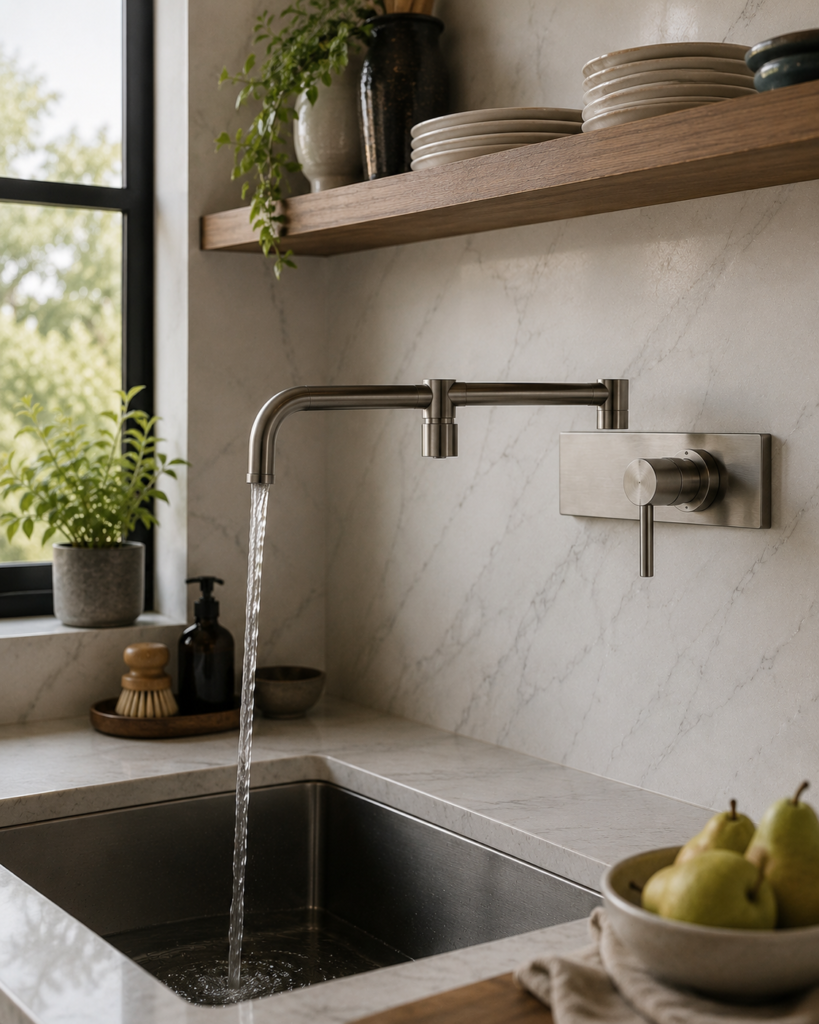
Design photos make these look like the default. They’re not. Wall mount kitchen faucets remain a smaller share of actual installs across real homes, and that gap comes down mostly to cost and how much work goes into fitting one properly. Family Handyman’s rundown of wall-mounted fixtures digs into why plumbers and designers still file these under specialty rather than standard, budget aside.
Part of the draw, honestly, is exactly that rarity. Odds are your street doesn’t have one.
Keeping It In Shape Long-Term
Hard water where you live? Give the wall around the base a weekly wipe-down. Mineral buildup shows up faster on a vertical surface than most people expect, catches folks off guard every time. Mild vinegar solution, soft cloth, clears it without scuffing the finish.
Glance at the caulk seam every couple months while you’re at it. Once it starts cracking or peeling near a wall mount kitchen faucet, that’s your cue — cheap fix now, expensive one later if water gets behind the wall before anyone notices.
Handle the shutoff gently, too. Cartridge valves buried inside a wall mount wear out quicker under heavy-handed use than the ones sitting in a regular deck faucet.
A Few Decor Touches Worth Adding
Some kitchen wall decor set off to the side — a narrow shelf, a small framed piece, nothing loud — softens the industrial edge a wall mount can bring, without pulling attention off the fixture itself. Just keep it well outside the actual splash range.
FAQs
Worth paying more to install a wall mount kitchen faucet?
Comes down to priorities. Counter space and a distinctive look matter to you, then yes, absolutely. Budget’s tight or a sale’s coming up soon, a deck faucet gets similar function done for less money and far less hassle.
Doable as a DIY project?
If plumbing experience is already solid, maybe. Most people still hand the rough-in stage to a professional, since exact measurements and pipe routing don’t leave much room for trial and error.
Ideal mounting height above the sink?
No single number fits every setup — sink depth and spout length both play into it. Roughly six to ten inches above the rim tends to work for most configurations without splash becoming a problem.
Limited to certain sink styles?
Not really. Since the faucet never attaches to the sink directly, farmhouse, vessel, trough, or standard basins all work fine, provided height and reach are dialed in correctly beforehand.
Best finish for hiding water spots?
Matte black and brushed finishes generally win here over polished chrome, which shows fingerprints and mineral streaks fast, particularly once it’s sitting against a plain wall.
Harder to repair down the line?
Usually, yes. Valve and connections sit inside the wall instead of an open cabinet, so anything beyond a minor fix could mean opening up wall material to get at it.
Tile or wallpaper makes more sense behind it?
Tile handles constant, direct splash better over the years. Sealed water-resistant wallpaper still holds up fine in lower-splash zones, though, and opens up more design options than grout lines ever will.
Final Thoughts
A wall mount kitchen faucet isn’t a call to make off one nice photo. Underneath that clean look sits a real plumbing project, and going in with eyes open on that front saves a lot of frustration later. Payoff’s real, too, once it’s done right. That open, uncluttered stretch of counter near the sink. Freedom to pick almost any sink style without hole patterns dictating the choice. A finished look that just feels considered in a way a standard faucet rarely does.
What actually trips people up usually has nothing to do with the faucet itself. It’s the wall prep, the caulking done properly, that one height measurement deciding whether the whole thing feels effortless or slightly off every time someone’s at the sink. None of it’s complicated in isolation. Skip a step, though, and it tends to resurface later as a small annoyance that costs real money once tile or wallpaper’s already sealed into place.
Kitchens where the wall cavity behind the sink is already accessible, or mid-renovation with walls already open, make this a far easier call. Starting from a finished wall with zero existing rough-in is a bigger commitment on both fronts — cost and disruption — and being honest about that upfront beats falling for a showroom display and figuring it out later.
Bring a plumber into the conversation early, before tile’s chosen, before paint hits the wall. Height and reach shape which fixture-and-sink combinations genuinely work together, and getting that sequence backwards is the regret people mention most, months down the line. Get the fundamentals right early on, and a wall mount kitchen faucet turns into one of those upgrades that quietly makes a kitchen feel more thought-through, long after the installation mess has been cleaned up.