

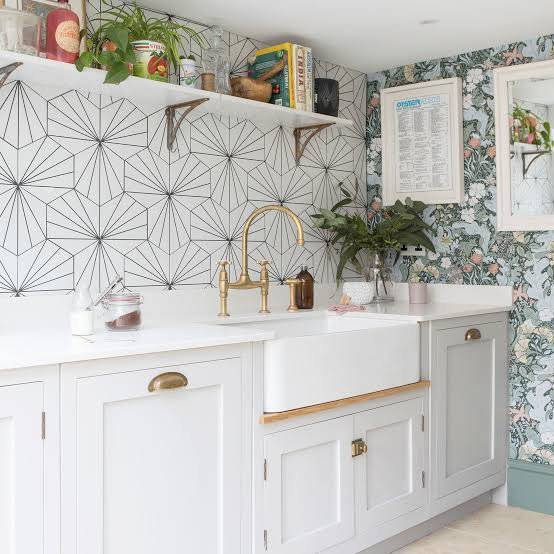
I’ll admit it — the first time a client asked me about kitchen wallpaper, I hesitated. My gut reaction was “won’t it peel near the stove?” That question turned into months of testing patterns, materials, and placements in real kitchens, and I came out the other side a convert.
Kitchen wallpaper isn’t the fragile, old-fashioned idea most people picture. Modern versions are built to handle steam, grease, and daily wiping without falling apart. And honestly, once you see it done right, plain painted kitchen walls start to feel a little flat by comparison.
This guide walks through what kitchen wallpaper actually is, why it’s worth considering, and how to avoid the mistakes that trip up most first-timers.
What Is Kitchen Wallpaper?
Kitchen wallpaper is a decorative wall covering designed — or at least suited — for kitchen conditions. That means it needs to resist moisture, handle occasional splashes, and survive being wiped down far more often than wallpaper in a hallway or bedroom would ever need to be.
Not every wallpaper qualifies for this job. A thin, uncoated paper roll meant for a quiet living room will bubble and stain within weeks near a stovetop. Real kitchen wallpaper usually comes in vinyl, vinyl-coated, or specially treated non-woven materials built to shrug off humidity and heat.
Some homeowners wrap all four walls in it. Others stick to one accent wall, or just the section behind open shelving where a tile backsplash doesn’t quite reach. Both approaches work fine — it really comes down to how bold you want the room to feel, and how much pattern you can live with day to day.
Even the backing material changes performance. Paper-backed vinyl breathes a little more, which helps in older homes with less ventilation, while solid vinyl on a fiberglass backing resists tearing better around outlets, corners, and cabinet edges.
Why Kitchen Wallpaper Matters More Than You’d Think
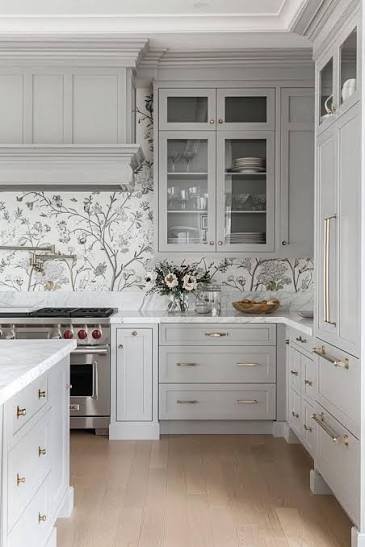
Kitchens see more daily traffic than almost any other room in the house. People cook, argue about recipes, do homework at the counter, and host impromptu gatherings there. So the walls take a beating that a quiet guest bedroom simply never sees.
Paint is the default choice for a reason — it’s cheap, forgiving, and fast to apply. But it also tends to look the same in every third kitchen you walk into. Wallpaper breaks that pattern. It adds texture, personality, and a sense that someone actually put thought into the space instead of grabbing whatever tin of white was on sale.
There’s a practical angle too. A well-chosen kitchen wallpaper can hide minor wall imperfections better than paint ever does. I’ve watched uneven old plaster disappear behind a textured print in a way that three coats of paint never managed to pull off.
It also changes how a kitchen photographs and feels to guests. A patterned wall gives people something to notice and comment on, rather than scanning past a blank surface on their way to the fridge.
Types and Features Worth Knowing
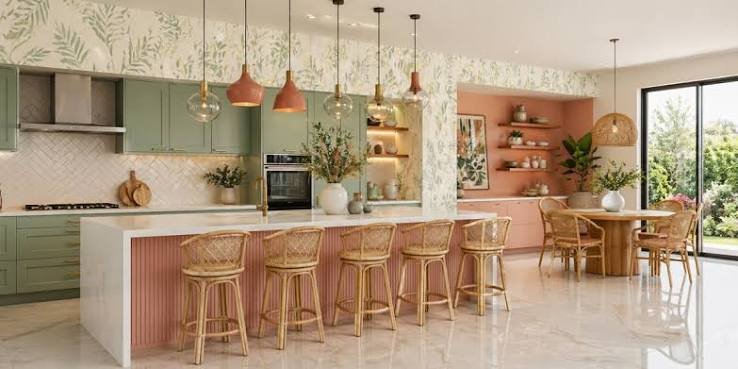
Not all wallpaper performs the same way once it’s living in a kitchen. Here’s a breakdown of what actually holds up over time:
- Vinyl-coated paper — A paper base with a thin vinyl layer on top. Wipeable, budget-friendly, and widely available in big-box stores.
- Solid vinyl wallpaper — Fully vinyl construction, the toughest option for splash zones near sinks and stovetops.
- Non-woven wallpaper — Breathable, tear-resistant, and much easier to hang or strip later without damaging the plaster underneath.
- Peel-and-stick vinyl — A solid choice for renters or anyone testing a bold pattern before committing to it long-term.
Beyond material, pattern scale matters just as much as durability. Small, tight prints tend to disappear once they’re surrounded by cabinets, appliances, and open shelving competing for attention. Larger, looser patterns — oversized botanicals or bold geometric shapes, for example — actually read better in a kitchen because there’s so much visual noise around them already.
Sheen level plays a role too. A matte finish hides fingerprints and grease smudges better than a glossy one, though a subtle sheen can bounce extra light into a dim, north-facing kitchen that doesn’t get much sun.
If you’re weighing options for more than one room, it’s worth spending a few minutes on this guide to choosing the right wallpaper, since the reasoning behind pattern scale and lighting carries over from room to room, kitchen included.
This lines up with what renovation experts generally recommend — a detailed wallpaper materials breakdown from This Old House notes that vinyl wallcoverings are the go-to pick for high-traffic spots like kitchens precisely because they shrug off scrubbing, scrapes, and splashes better than plain paper ever could.
Real Benefits of Using Kitchen Wallpaper
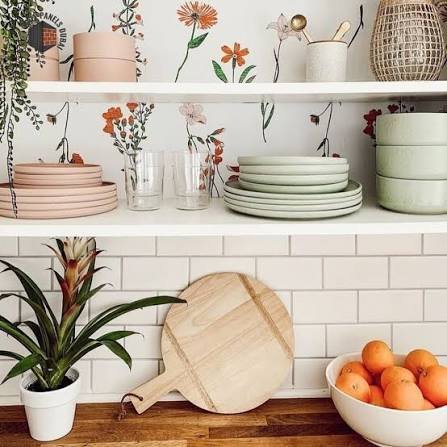
There’s more to this decision than looks alone, though the visual payoff is a big part of why people bother.
Character without a full renovation. A patterned wall can transform a kitchen’s mood in an afternoon, without touching a single cabinet, countertop, or appliance.
Cost efficiency. Compared to tile backsplashes or custom cabinetry, wallpaper is one of the cheapest ways to make a genuinely noticeable change to a kitchen.
Easier upkeep than people assume. Vinyl and vinyl-coated versions wipe clean with a damp cloth. More than one client has told me it’s actually less fuss than touching up chipped paint every year.
Flexibility for renters. Peel-and-stick versions let tenants personalize a rented kitchen without violating a lease, then peel it off cleanly at move-out with no patching required.
A sense of finish. Bare walls in a kitchen can make even an expensive renovation feel unfinished. Wallpaper tends to tie the cabinetry, countertops, and flooring together visually in a way paint rarely does on its own.
A Few Real-World Examples
A friend of mine turned her narrow galley kitchen around using a soft sage botanical print behind open shelving, leaving the rest of the walls a plain off-white. The result made a cramped space feel intentional instead of squeezed.
In a different project, a client with a dark, north-facing kitchen chose a warm terracotta geometric pattern for just the wall above her coffee station. It became the first thing guests commented on when they walked in — not the appliances, not the countertops, the wall.
I’ve also seen a checkerboard vinyl print used on a kitchen island’s side panel instead of the walls themselves, which is a clever way to get the visual effect without covering a large surface area or committing to a full room.
One more case worth mentioning: a small apartment kitchen with almost no natural light got a pale yellow linen-textured wallpaper on its single free wall, and the owner said it made the whole room feel noticeably warmer even under harsh overhead lighting.
Tips Before You Commit
Test a sample near your stove and sink first. Lighting and heat exposure change how a pattern looks day to day, and they affect how well the material holds up over a few weeks of real use.
Measure twice, then measure again. Kitchens have more corners, cutouts, and outlets than most rooms in the house, so waste factor runs higher than it would for a standard bedroom wall.
Choose a scrubbable grade if you cook often. A wallpaper labeled “spongeable” only handles light dust, while one labeled “scrubbable” survives actual cleaning with soap, water, and a bit of elbow grease.
Think about sheen and light direction before choosing a finish. Matte hides fingerprints better, but a slight gloss can help brighten a kitchen that doesn’t face much natural sun during the day.
Ask for a full roll sample, not just a swatch. Small paper squares almost never show how a repeat pattern behaves across an entire wall, and that’s where most buyer’s remorse comes from.
Common Mistakes to Avoid
Skipping the moisture zones. Applying regular paper wallpaper directly behind a sink or stove is asking for peeling within a single season of normal cooking.
Going too busy on every wall. A pattern that looks fun in a sample book can feel overwhelming once it’s wrapped around four walls of cabinetry, appliances, and open shelving.
Ignoring ventilation. Poor airflow traps steam against the wall, and even durable vinyl can loosen at the seams over time without a working exhaust fan doing its job.
Rushing the prep work. Wallpaper applied over unprimed or greasy walls rarely adheres well, and that’s usually the real cause when people end up blaming the wallpaper itself for failing.
Forgetting the long game. A trend-driven print might feel exciting today but tire you out within two years. Timeless patterns tend to age far better than anything chasing this season’s look.
A separate kitchen wallpaper guide from Taste of Home makes a similar point about grade, not trend: uncoated, fibrous, or flocked papers should stay out of a kitchen entirely, since only wallpaper labeled washable or scrubbable can actually handle daily cooking mess.
FAQs
Does kitchen wallpaper hold up near a stove?
Yes, if it’s vinyl or vinyl-coated and rated scrubbable. Avoid placing it directly on a wall with no ventilation or heat protection nearby.
How long does kitchen wallpaper typically last?
With proper installation and decent ventilation, most vinyl kitchen wallpapers last 10 to 15 years before needing a refresh.
Can I use wallpaper behind a backsplash?
It’s better to stop wallpaper just short of splash zones and use tile or a sealed panel there instead, then let the wallpaper cover the rest of the wall.
Is peel-and-stick wallpaper strong enough for a kitchen?
Good-quality peel-and-stick vinyl works fine for lower-splash areas, though it’s usually less durable long-term than pasted vinyl near heavy-use zones like sinks.
Final Thoughts
Kitchen wallpaper has come a long way from the outdated, easily damaged rolls people remember from decades ago. Today’s vinyl and non-woven options are genuinely built for daily cooking, steam, and repeated cleaning — not just for show in a magazine spread.
What surprised me most, working through different kitchen projects over the years, is how much a single accent wall changes the entire room’s personality. You don’t need to wrap every surface in pattern. Sometimes one well-chosen wall, similar to the accent wall wallpaper ideas that work so well in living rooms, does more visual work than a full renovation ever could.
If you’re on the fence, start small. Try a peel-and-stick sample on one section, live with it for a couple of weeks, and see how it holds up to actual cooking and daily cleaning. That’s a far better test than staring at a swatch under showroom lighting.
Don’t feel pressured to match every current trend, either. A pattern that still feels calm and interesting five years from now is worth more than one that photographs beautifully but grows tiresome by next winter.
And if you’re planning a broader refresh, it’s worth glancing at these bedroom wallpaper decor ideas too, since matching tones across rooms usually makes a home feel more considered as a whole rather than pieced together room by room.
Whatever direction you choose, the biggest win is simply moving past plain paint. Kitchens deserve the same design attention as any other room, since it’s usually where people spend the most real time in a home. Once you commit to the right material and prep the walls properly, kitchen wallpaper tends to reward you with years of character that paint alone just can’t match.