

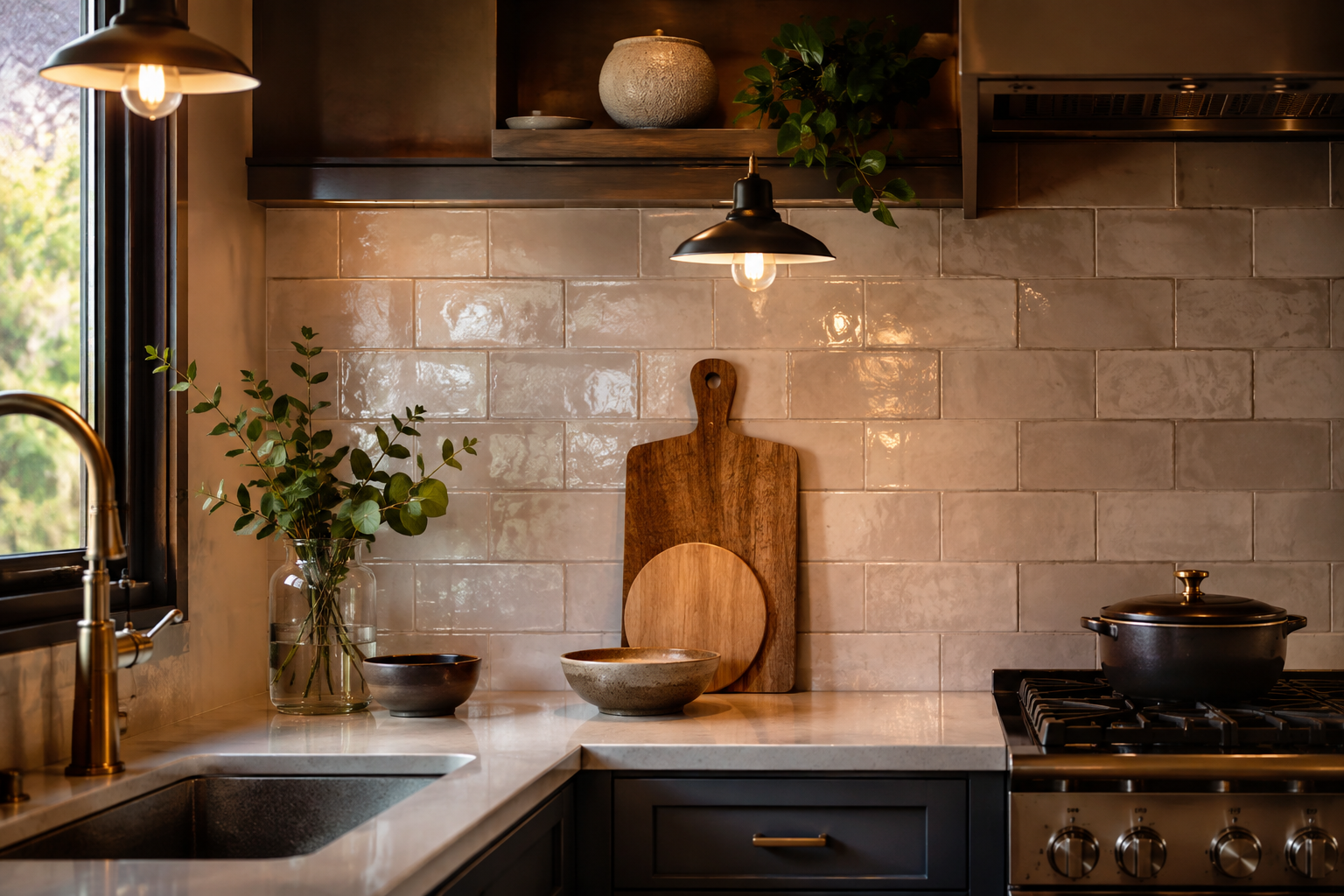
Chai’s getting cold, so let’s just get into kitchen wall tile before it does. Everybody online treats this decision like rocket science, and it just… isn’t. What it actually does — quietly, without anyone noticing at first — is decide whether a kitchen reads as put-together or thrown-together.
Two clients, same year, same budget range: one kitchen wall tile choice aged beautifully, the other I’d redo in a heartbeat if I could. That gap taught me more than any showroom brochure ever did. No polished pitch here, no glossy sales voice. Just what I’d actually tell a friend texting me at 11pm asking which tile to buy.
Nobody Talks About Why This Choice Outlasts Everything Else
Paint gets the spotlight in every renovation conversation, weirdly. Meanwhile kitchen wall tile just sits there for a decade, absorbing steam, grease splatter, the occasional flung meatball, and somehow still looking fine.
Chip a wall, repaint it, done. Tile doesn’t work that way — get it wrong, and you’re staring at that mistake every single dinner for years.
Size of the tile, how glossy or matte it is, where the grout lines land — small stuff, individually. Stacked together, though? A kitchen can feel cramped purely from tile choices, even with generous square footage underneath it all.
One thing worth doing first: nail down your wall color palette choices before tile shopping even starts. Tile either agrees with that color or actively argues with it — middle ground barely exists here.
Backsplash Tile Isn’t the Same Thing as Full Wall Tile
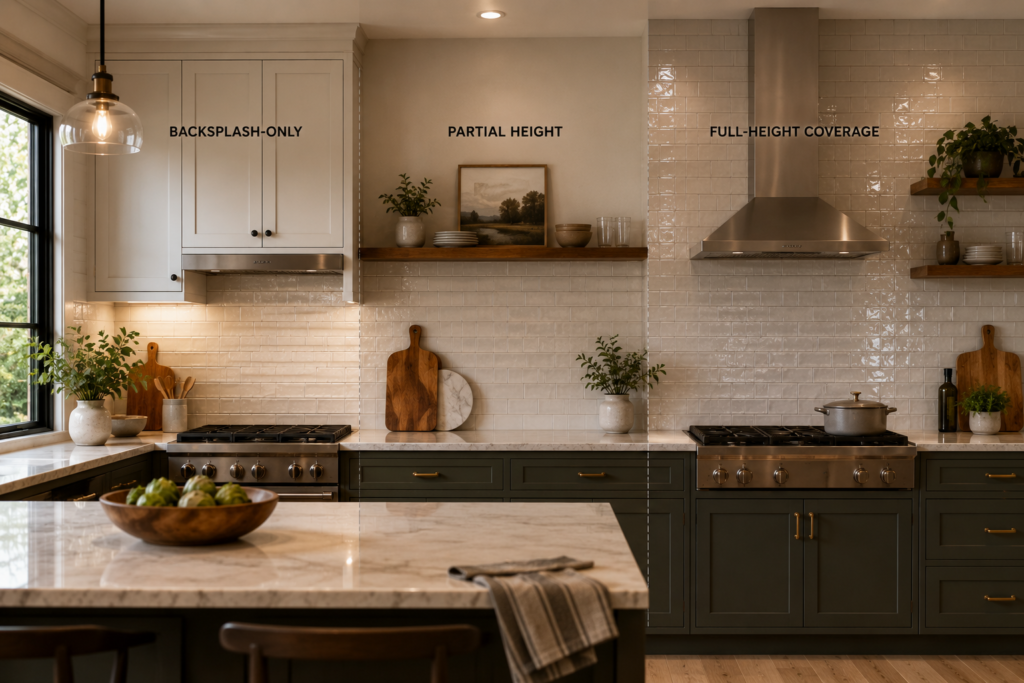
Something gets lost when people say “kitchen wall tile” like it’s one single category. Two very different animals hide under that phrase.
A backsplash covers a modest strip, usually hugging the stove and countertop edge. Full wall coverage stretches much further — sometimes ceiling height — and it shifts the entire personality of a room, not just one section of it.
Quick breakdown, no fluff:
- Backsplash-only: cheaper, quicker, painless to swap out later
- Full-height coverage: bold, pricier, forgives grease way better than paint ever could
- Partial height (roughly counter to upper cabinet): the middle ground most homeowners quietly settle on
My honest lean? Partial height, most of the time. Visual punch without the wallet-wince.
Sorting Through Material Options Without Losing Your Mind
This part turns fun or overwhelming depending entirely on your mood that afternoon.
Ceramic’s the dependable workhorse — cheap, low-maintenance, endless finish options. Porcelain costs more upfront but shrugs off water and scratching like neither bothers it. Zellige, that handmade Moroccan style everyone’s chasing right now, looks stunning but installs unevenly almost by design, since no two pieces match perfectly.
Glass tile does something interesting with light — dark kitchens brighten up in a way nothing else quite replicates. Natural stone photographs like a dream and then quietly demands sealing forever, a step most people forget within a year.
| Material | Cost Range | Maintenance | Best For |
| Ceramic | $ | Low | Budget-friendly kitchens |
| Porcelain | $$ | Very Low | High-moisture areas |
| Zellige | $$$ | Moderate | Statement walls |
| Glass | $$ | Low | Small, dark kitchens |
| Natural Stone | $$$$ | High | Luxury, low-splash zones |
A Color Mistake I Actually Made (So You Don’t Have To)
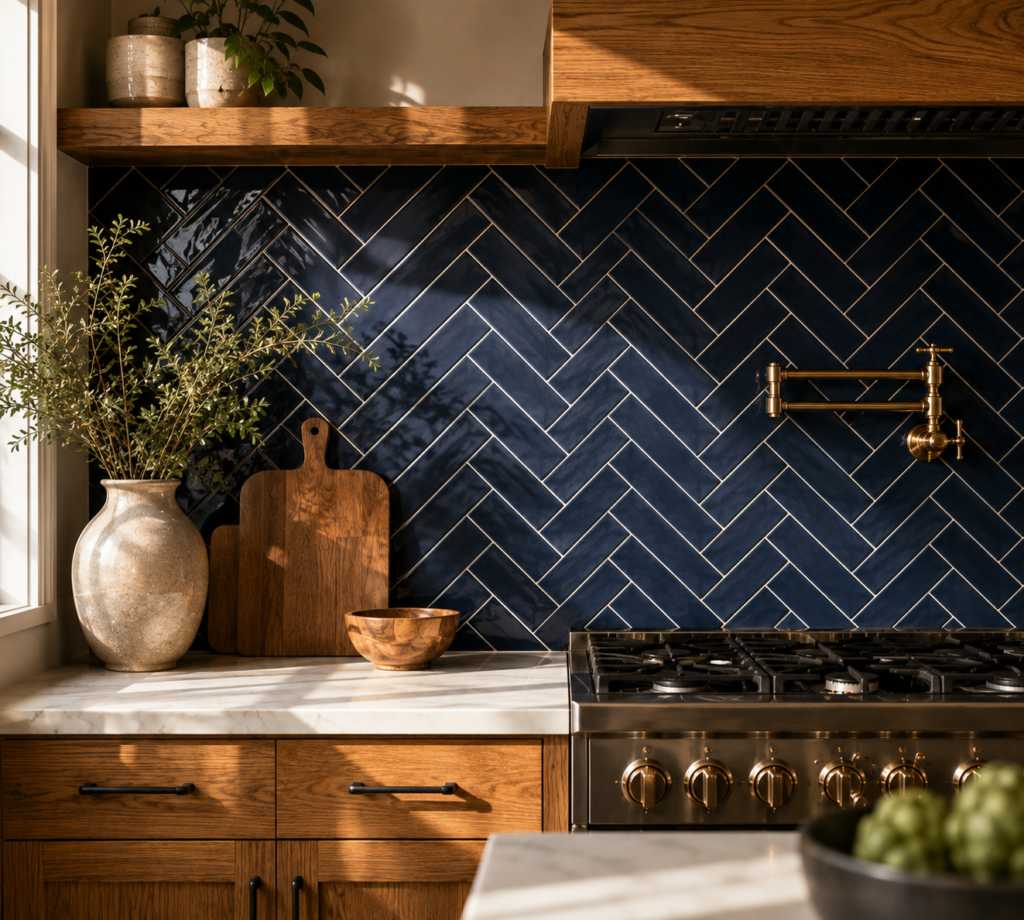
Navy tile, one client’s kitchen, showroom lighting made it look moody and rich. Daylight told a completely different story — clashed hard against warm oak cabinets, and nobody caught it until install day. Expensive lesson, learned the hard way.
Grab a sample. Tape it straight to the wall. Watch it under morning sun, then again at night. Skip this step at your own risk.
Herringbone brings motion to a flat wall, chevron does something similar with sharper angles, subway tile stays classic because it just works, and large-format pieces make tight kitchens feel less chopped-up visually. Still hunting direction before locking anything in? A scroll through fresh kitchen styling inspiration tends to save a lot of second-guessing down the line.
Per the Tile Council of North America’s handbook, substrate flatness and grout joint sizing directly shape how patterned tile ultimately reads once installed. That explains, honestly, why some herringbone layouts snap crisp and others look slightly off no matter how careful the tiler was.
The Grout Conversation Nobody Starts First
Grout color reshapes a tile more than most people expect walking in. White grout on white tile vanishes, giving that seamless, almost custom look. Swap in dark grout on that identical tile, and suddenly every joint pops, graphic and bold.
Epoxy grout resists staining far better than the standard cement version — costs more, trickier for a weekend DIY attempt, worth every extra rupee if your kitchen sees heavy cooking splatter.
Sanded grout handles wider joints well. Anything under an eighth of an inch calls for unsanded instead. Tiny detail, outsized impact on how the finished wall holds up years later.
Should You DIY This or Call Someone
Certain kitchen wall tile jobs genuinely suit a weekend and a Saturday playlist. Others punish that same optimism badly.
Flat walls, straightforward layouts, small backsplash zones — go for it if you’re reasonably handy. Complicated patterns, uneven plaster, anything involving relocated outlets — hire a professional, no shame in that at all.
Once tile’s locked in, pairing it thoughtfully against cabinet finish and layout choices matters more than most renovation guides admit upfront. Tile and cabinetry either speak the same visual language or they don’t, and there’s rarely an in-between.
How Tile Talks to Everything Else in the Room
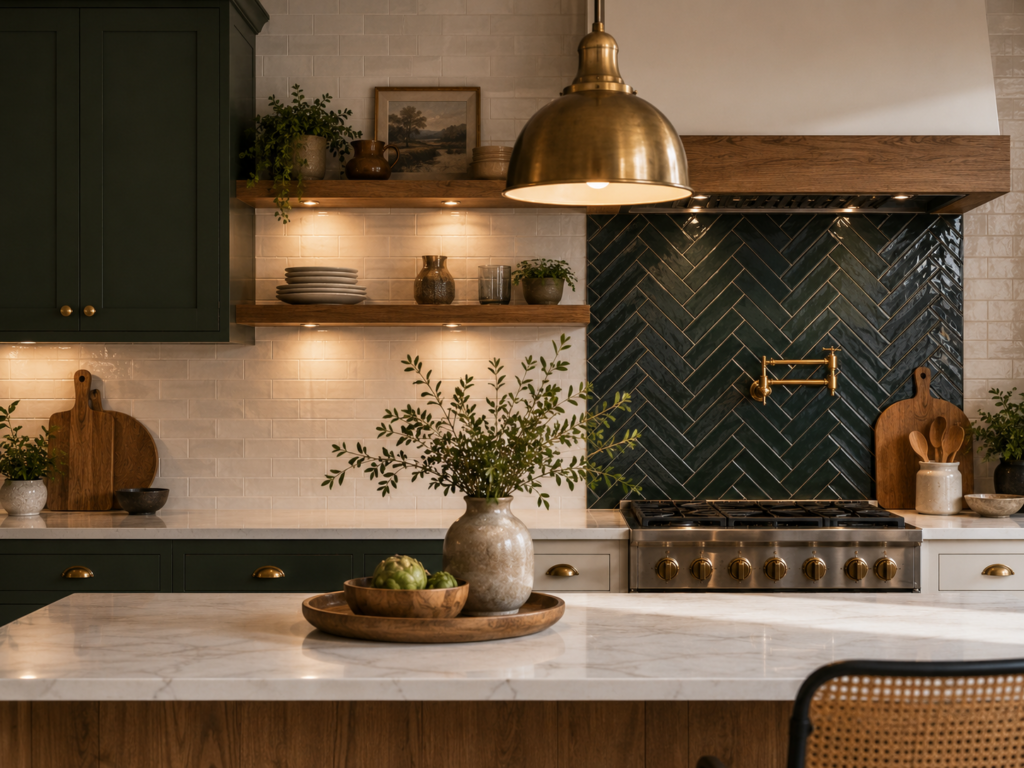
Nothing in a kitchen exists on its own island, tile included, though some design guides pretend otherwise.
Busy, patterned cabinet doors already demand attention — a quieter tile keeps the whole room from shouting. Plain white shaker cabinets, on the other hand, practically beg for a bolder tile statement.
Open shelving nearby changes the math too. Grout lines that misalign with shelf brackets bother some people (guilty) every single time they walk past.
Lighting shifts everything as well. Warm bulbs soften white tile into something creamy. Cool bulbs turn that exact same tile almost clinical. Test both before installation, never after — swapping bulbs is easy, swapping tile isn’t.
Homes & Gardens’ tile roundup makes a fair point about metallic finishes needing a neutral backdrop to actually shine, rather than competing against everything else fighting for attention in the room.
Talking Numbers, Briefly
Nobody enjoys this part, myself included, but skipping it costs more later.
- Ceramic subway tile: usually the lowest cost per square foot, a solid starting point
- Mid-range porcelain: balances durability against a reasonable price tag
- Handmade or imported pieces: gorgeous, but budget extra for breakage and shipping waste
- Labor: sometimes outpaces the tile cost itself, especially with intricate layouts
Order ten to fifteen percent more tile than the math says you need. Cuts happen, breakage happens, and dye lots shift between batches more than manufacturers ever admit upfront.
Tight Kitchens Play By Different Rules
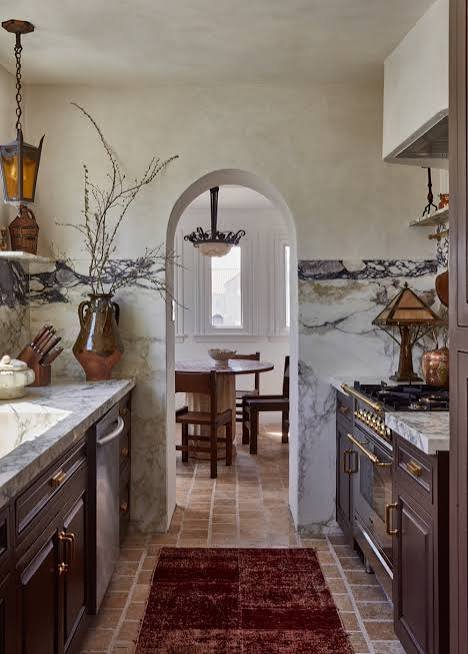
“Small kitchen needs small tile” — outdated advice, repeated constantly anyway. Reality flips it: large-format tile with fewer grout seams often makes a cramped kitchen feel roomier, since the eye stops tripping over dozens of grout lines.
Reflective, glossy tile bounces whatever natural light exists around the space far better than matte finishes do, even though matte gets all the design-blog love lately.
Chasing layout ideas specifically for tighter footprints? This piece on smart kitchen wall styling covers a handful of tricks worth borrowing.
Keeping It Looking New Isn’t Glamorous, But It Works
Wipe grease while it’s still fresh, not the next morning once it’s basically cemented onto the surface. Small habit, saves hours of scrubbing eventually.
Acidic cleaners and natural stone tile don’t mix — permanent etching, no undo button once it happens. Ceramic and porcelain forgive far more here.
Reseal grout annually if you went the natural stone or handmade route. Fifteen minutes, tops, and yet somehow gets skipped for years by almost everyone.
Trends That Deserve Attention (And a Few That Don’t)
Zellige’s moment hasn’t faded, and honestly, the texture earns every bit of the hype surrounding it. Bold color-blocked walls are creeping back too — kitchens are getting braver lately, in a good way.
Planning to sell within five years? Maybe skip the ultra-trendy pick, unless enjoying your own kitchen matters more than resale math — which, fair enough, it often should.
Tile stretching onto a kitchen island, or forming its own standalone accent wall, feels like a trend with actual staying power rather than a passing season.
Frequently Asked Questions
Is kitchen wall tile actually worth it over paint or wallpaper alone?
For high-splash zones, yes — tile handles grease, steam, and daily wiping far better than paint manages across several years of regular kitchen use.
How much kitchen wall tile do I need for a standard backsplash area?
Measure square footage first, then pad the order by ten to fifteen percent for cuts and breakage, since matching tile later on gets surprisingly hard.
Can kitchen wall tile go directly over existing old tile?
Sometimes — if that older surface stays flat, secure, and crack-free. A professional should still inspect the substrate before anything gets committed to.
Which kitchen wall tile material handles daily cooking the best?
Porcelain tends to win this comparison — resisting moisture, scratches, and staining better than ceramic or most natural stone without constant resealing required.
Does grout color genuinely change how kitchen wall tile reads visually?
Dramatically, yes — matching grout blends into a seamless surface, while contrasting grout turns the tile pattern into the clear visual centerpiece instead.
Is installing kitchen wall tile myself realistic without experience?
Simple, flat, small areas are doable solo. Intricate patterns or uneven walls usually save money and stress when handed to a professional instead.
What keeps kitchen wall tile looking fresh over several years?
Wiping grease promptly, skipping acidic cleaners on stone, and resealing grout yearly — consistent small habits outperform occasional deep-cleaning marathons every time.
Should kitchen wall tile match cabinets or contrast against them instead?
Both work fine, honestly — busy cabinet fronts usually pair better with calmer tile, while plain cabinetry leaves room for a bolder tile statement.
Bringing This Together
Fifty browser tabs open at midnight, comparing kitchen wall tile options — sound familiar? Hopefully this leaves things calmer than that. Truth is, there’s no universally “correct” tile choice. There’s only the one that fits your budget, your cabinets, your lighting, and honestly, your patience for upkeep down the road.
Ceramic covers most situations well, and picking the practical route over the trendy one never needs justifying to anyone. Porcelain earns its slightly steeper price in kitchens seeing genuine daily cooking action. Zellige and natural stone look gorgeous, sure, but they ask more from you in maintenance — a fair trade only when you’re actually willing to make it.
Never skip taping a sample to the wall first. Watch it shift under morning light, then evening light, across a few days if patience allows. Showroom lighting lies constantly, and that gap explains most post-installation disappointment better than anything else could.
Grout deserves more planning time than most budgets allow for — both the color decision itself and the sealing routine that follows afterward. Pattern and layout choices can make a small kitchen feel expansive, or a plain kitchen feel deliberate, so rushing toward whatever’s cheapest in stock rarely pays off long-term.
At the end of the day, kitchen wall tile rewards patience quietly, for years, if the decision gets made carefully. Rush it, and it nags at you just as quietly, for just as long. Take the extra week. Order the extra box. Ask the installer those annoyingly specific questions nobody else bothers asking. Future-you, cooking dinner in that exact kitchen years from now, will genuinely appreciate the effort spent today.