

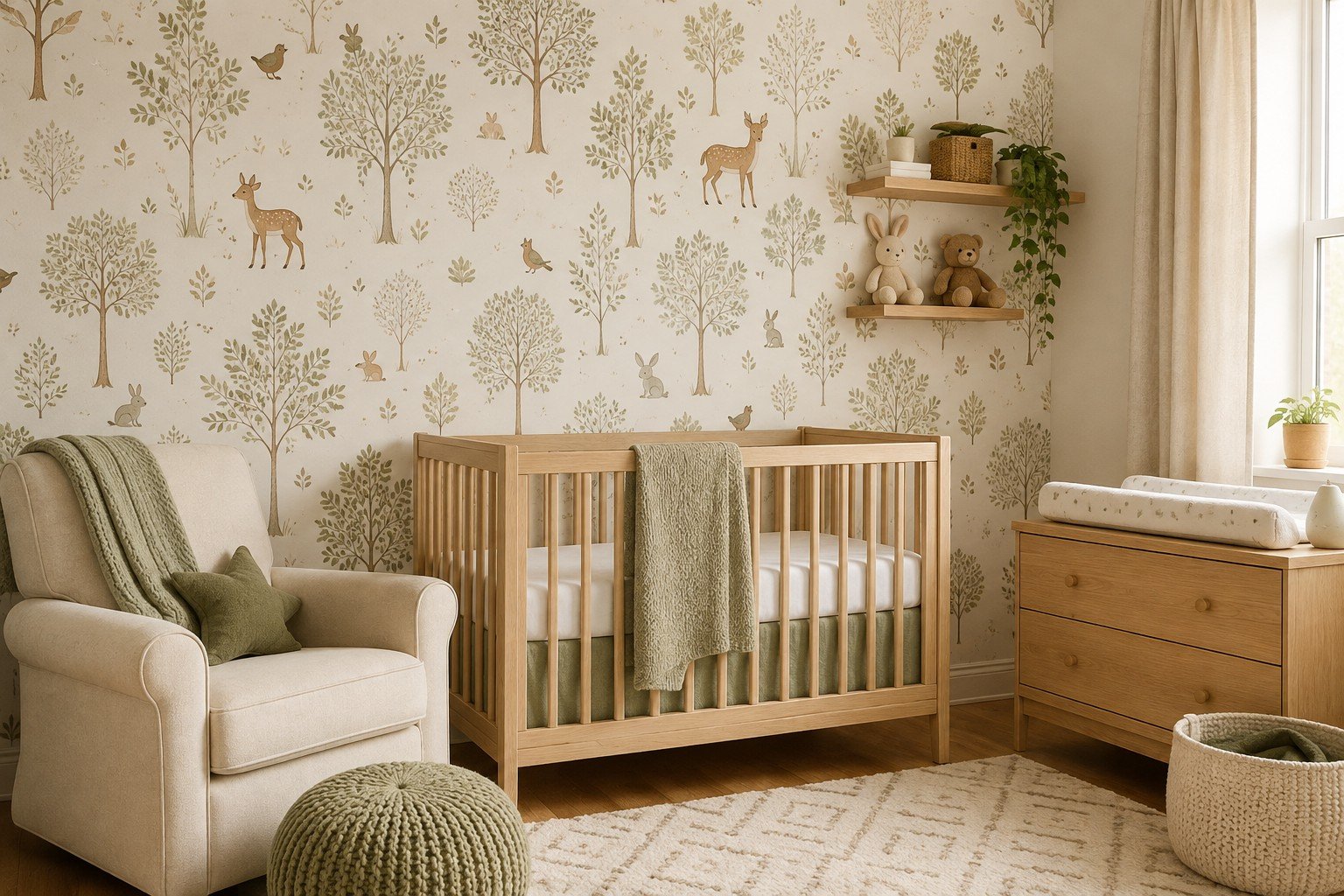
Picture this — empty room, paint swatch in hand, due date closing in fast. That was basically my situation. Instead of paint, I grabbed peel and stick wallpaper for the nursery, half out of panic and half just curious what the fuss was about. Didn’t expect much, but peel and stick wallpaper nursery setups turned out way more solid than I’d guessed.
A decent self-adhesive roll goes up in an afternoon, peels off clean later without chewing up the drywall, and ends up looking like an actual design decision rather than some rental-apartment workaround for the baby’s room.
My Cousin Redid Her Nursery Twice Before Landing On This
She painted first. Sage green, very Pinterest, very 2023. Six weeks in, she hated it — too gray in the morning light, too green by evening lamp. Repainting a nursery with a newborn asleep down the hall isn’t exactly relaxing, so round two was peel and stick wallpaper instead, and she hasn’t touched the walls since.
That’s kind of the whole pitch, honestly. You get to be indecisive without the fumes, the drop cloths, or the three-day dry time nobody has when there’s a baby involved.
Why So Many Parents Are Skipping Paint Entirely
Paint is permanent-ish. Wallpaper used to be permanent-ish too, until the peel and stick version showed up and changed the math. Now a nursery wall can commit to a pattern for eighteen months and then just… stop, with no scraping involved.
I’ll say something a little unpopular here: I think traditional wallpaper paste is overrated for kids’ rooms specifically. Babies grow out of themes fast — dinosaurs become dinosaurs-are-embarrassing by age six — and paying a professional installer twice in five years is not a great use of money.
The Types That Actually Show Up In Real Nurseries
Vinyl rolls have taken over most of the market — they clean up fast and shrug off a humidifier running nonstop through winter. Fabric-backed versions lean softer to the touch and let the wall breathe a bit more, something a lot of parents care about near a crib specifically.
Textured varieties — grasscloth-look, subtle woven finishes — are having a moment too, adding depth without adding a busy pattern. If you want the full rundown on which material fits which budget, the full style guide breaks it down room by room.
Botanical prints deserve their own mention. Leafy, jungle-adjacent patterns have become the unofficial default for gender-neutral nurseries, and leafy botanical patterns tend to age better than cartoon characters do.
Lighting And Room Size Quietly Decide Everything
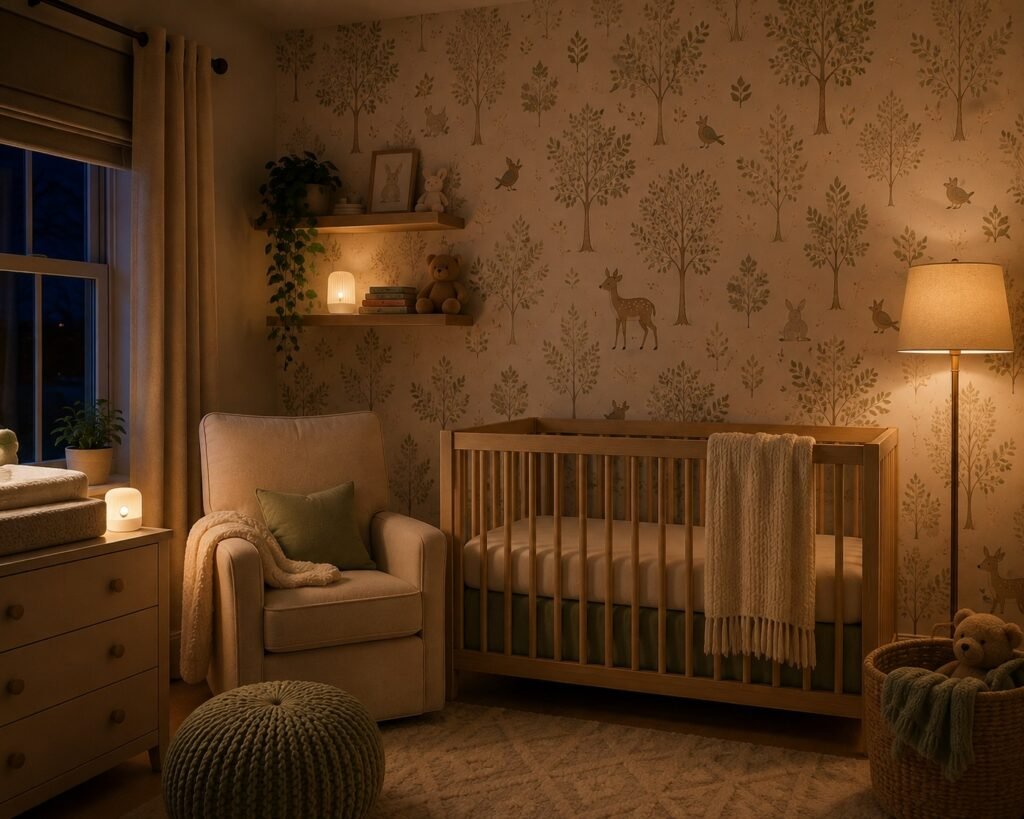
A north-facing nursery with one small window eats dark colors alive. My cousin’s second attempt used a soft, warm cream base specifically because the room barely gets afternoon sun — anything moodier just disappeared into shadow by 4 p.m.
Smaller rooms, meanwhile, punish busy repeating patterns. Overdo the pattern density and a cramped nine-by-ten nursery starts reading like a supply closet with a crib shoved in. Better move: shrink the print scale, or commit to just one accent wall instead of wrapping every side of the room.
Design Styles That Won’t Embarrass Anyone By Kindergarten
None of this reads as strictly “baby” décor — it’s just solid design that happens to land in a nursery, which counts for something once that kid hits four and is still sleeping in there.
Pastels get written off as boring way too often, but a dusty rose or muted blush tone still comes across as deliberate, not saccharine. For anyone leaning that direction, soft pink nursery options has a decent spread of shades that aren’t overly saccharine.
Real Perks Worth Knowing Before You Buy
Not every benefit gets mentioned in product listings, so here’s the honest short list:
- No wet paste, no fumes, no waiting days before the crib can go back against the wall
- Removable without damaging drywall — landlords tend to appreciate that detail
- Easy to patch a single damaged panel instead of redoing an entire wall
- Faster than paint, which matters a lot in the last trimester
Putting It Up Without Losing Your Whole Weekend
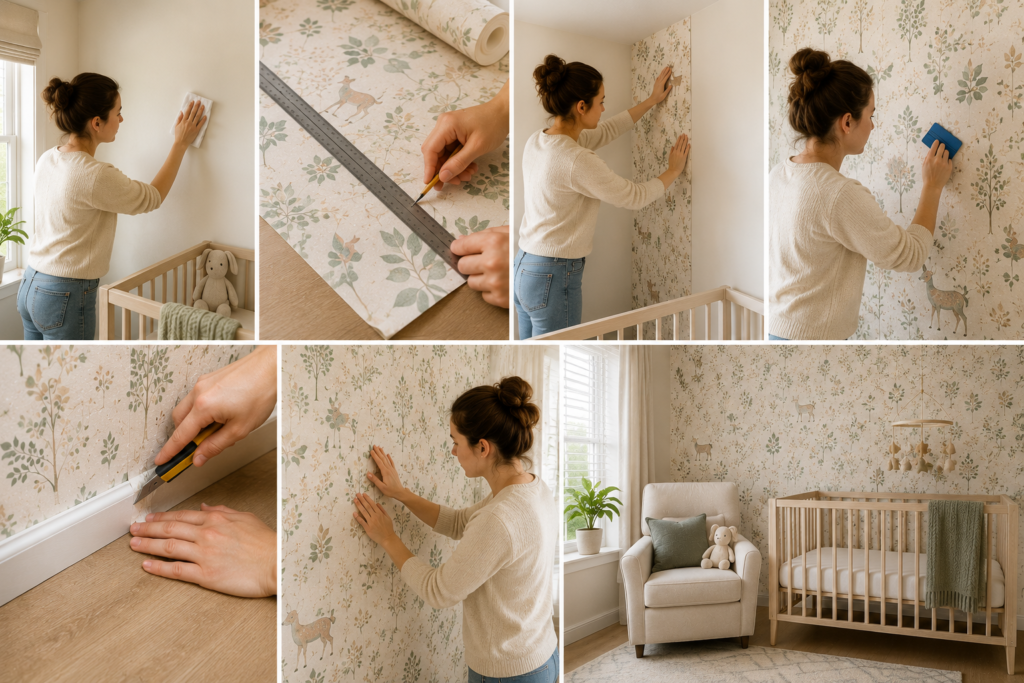
- Clean the wall first. Dust and old paint residue are the number one reason panels bubble within a week.
- Measure twice, cut once — obviously, but still. Add two extra inches per strip for trimming errors.
- Start from a corner, not the middle. Corners hide small alignment mistakes far better than open wall space does.
- Smooth outward, not upward. A plastic smoother edges out a credit card here, though honestly a credit card gets the job done in a pinch too.
- Trim excess with a sharp blade, keeping it angled slightly so the paper’s edge doesn’t tear.
- Give it a full day before hanging anything with real weight — shelves, a mobile, that kind of thing — near the seams.
What Actually Happened When I Installed It Myself
I’ll admit the first panel went crooked. Badly crooked. The pattern didn’t line up with panel two, and I spent twenty minutes convinced I’d wasted forty dollars on a roll of botanical print.
Peeling it back and reapplying saved it, which is the entire point of this material — paste wallpaper doesn’t forgive mistakes like that. Three panels in, the rhythm clicked, and the whole accent wall was done before the baby’s nap ended. Not flawless. Close enough that you’d only notice if I dragged you over and pointed at it.
Little Errors That Surface Weeks Later
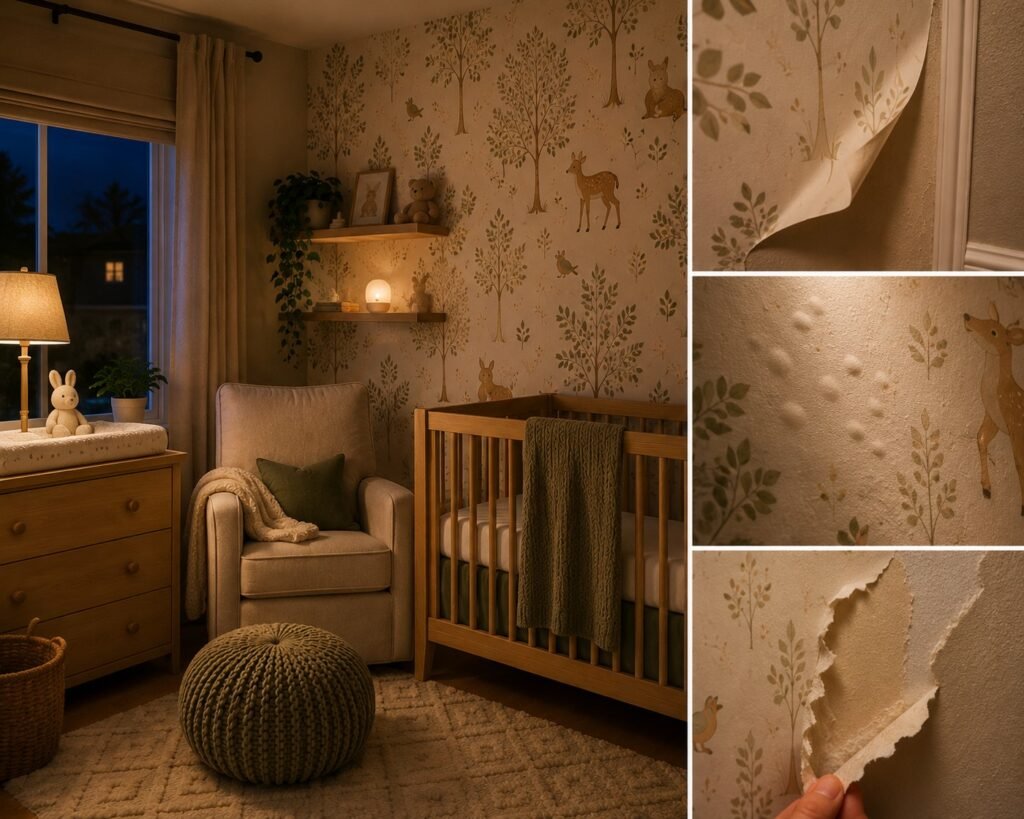
Forgetting to clean the wall first tops the list, by a wide margin. Panels look fine on day one, then start peeling at the corners by month three once dust works its way underneath the adhesive.
Rushing the smoothing process causes bubbles too — they’re subtle at first, more obvious once afternoon light hits the wall at an angle. And cheap rolls, the ultra-thin kind sold purely on price, tend to tear during removal instead of peeling clean, which defeats the whole “renter-friendly” selling point.
Safety Actually Matters Here, Not Just Style
Nurseries earn extra caution, and rightly so. Homes built before 1978 carry a real risk of disturbing old lead paint during wall prep, which is exactly where the federal lead-safety guidelines come in — worth reading before touching an older wall.
Adhesive quality matters too. Look for low-VOC labeling specifically, since babies spend far more hours per day breathing that air than adults do — the indoor air quality research on this is worth a quick read if you’re renovating an older home.
Picking The Right Peel And Stick Wallpaper Nursery Match By Room Size
| Room Size | Best Pattern Scale | Recommended Finish |
| Small (under 90 sq ft) | Small-scale prints, single accent wall | Matte, light tones |
| Medium (90–130 sq ft) | Medium botanical or geometric | Textured vinyl |
| Large (130+ sq ft) | Bold prints, full-room coverage | Fabric-backed, breathable |
For anyone still comparing rolls before committing, our best-picks roundup has options sorted by exactly this kind of room math.
Keeping It Looking New Through The Toddler Years
Wipe spills immediately — vinyl-based rolls handle this well, but standing moisture near seams eventually loosens adhesive. A damp microfiber cloth handles most marker incidents without stripping the print underneath.
Avoid direct sunlight fading by keeping curtains partially drawn during peak afternoon hours, especially on darker printed patterns. Small tears can usually be smoothed back down with a bit of gentle heat from a hairdryer, held a few inches away — no need to replace the whole panel over one lifted corner.
FAQs
How long does a peel and stick wallpaper nursery install usually run?
First-timers should budget two to three hours for one accent wall — quicker once you’ve done it before and know the rhythm.
Does peel and stick wallpaper ruin rental walls?
Rarely, so long as it comes down within the suggested window and the wall had proper prep beforehand.
Can this wallpaper survive a nursery humidifier running constantly?
Vinyl rolls handle moderate humidity fine, though seams exposed to direct moisture over time can start losing their grip.
Does peel and stick wallpaper stick to textured walls okay?
Not really — texture underneath causes bubbling and weak adhesion, so a smoother surface gives noticeably better results.
What’s the typical cost for a full nursery wallpaper project?
Most single-wall jobs land somewhere between $80 and $250, depending on the pattern and roll quality picked.
Is peel and stick wallpaper reusable after it’s been taken down once?
Not really — the adhesive loses most of its grip after that first removal, so plan on it being one-time use.
Conclusion
Nursery decisions have a way of feeling bigger than they actually are, mostly because there’s a deadline attached and a person is going to come out of it needing somewhere calm to sleep. Paint used to be the default answer simply because it was the only answer most people considered. That’s changed. Peel and stick wallpaper nursery projects have quietly become the practical choice for a specific kind of parent — the kind who wants the room to look intentional without committing to a decision that outlives the theme by three years.
What sold me wasn’t the design catalog, honestly, even though the patterns are genuinely good now. It was the redo-ability. Nurseries change fast. A newborn’s neutral cloud print won’t survive contact with an opinionated four-year-old who’s suddenly obsessed with dinosaurs — that’s just how kids work. And repainting a room with a preschooler’s furniture crammed inside it isn’t anyone’s idea of a good Saturday. Swapping one wallpapered wall, though, eats up an afternoon instead of a whole weekend, and that gap matters more in real life than it does on paper.
Safety deserves just as much attention here as the look does, maybe more. Checking for low-VOC adhesive, prepping older walls properly, and giving new panels a day or two to fully set before hanging anything heavy nearby — none of that is complicated, but skipping it is exactly how small problems show up months later as bubbling seams or lifted corners. A little patience during installation saves a lot of frustration during toddlerhood.
If there’s one honest piece of advice buried in all of this, it’s to not overthink the first attempt. Mine wasn’t perfect. The pattern didn’t align on the first try, and I nearly gave up twenty minutes in. It still turned out fine, because peel and stick wallpaper forgives mistakes that paint and paste never would. That forgiveness, more than anything else, is why this material keeps showing up in nurseries that actually need to survive real, unpredictable family life — not just look good in a single photo before the crib gets moved in.