

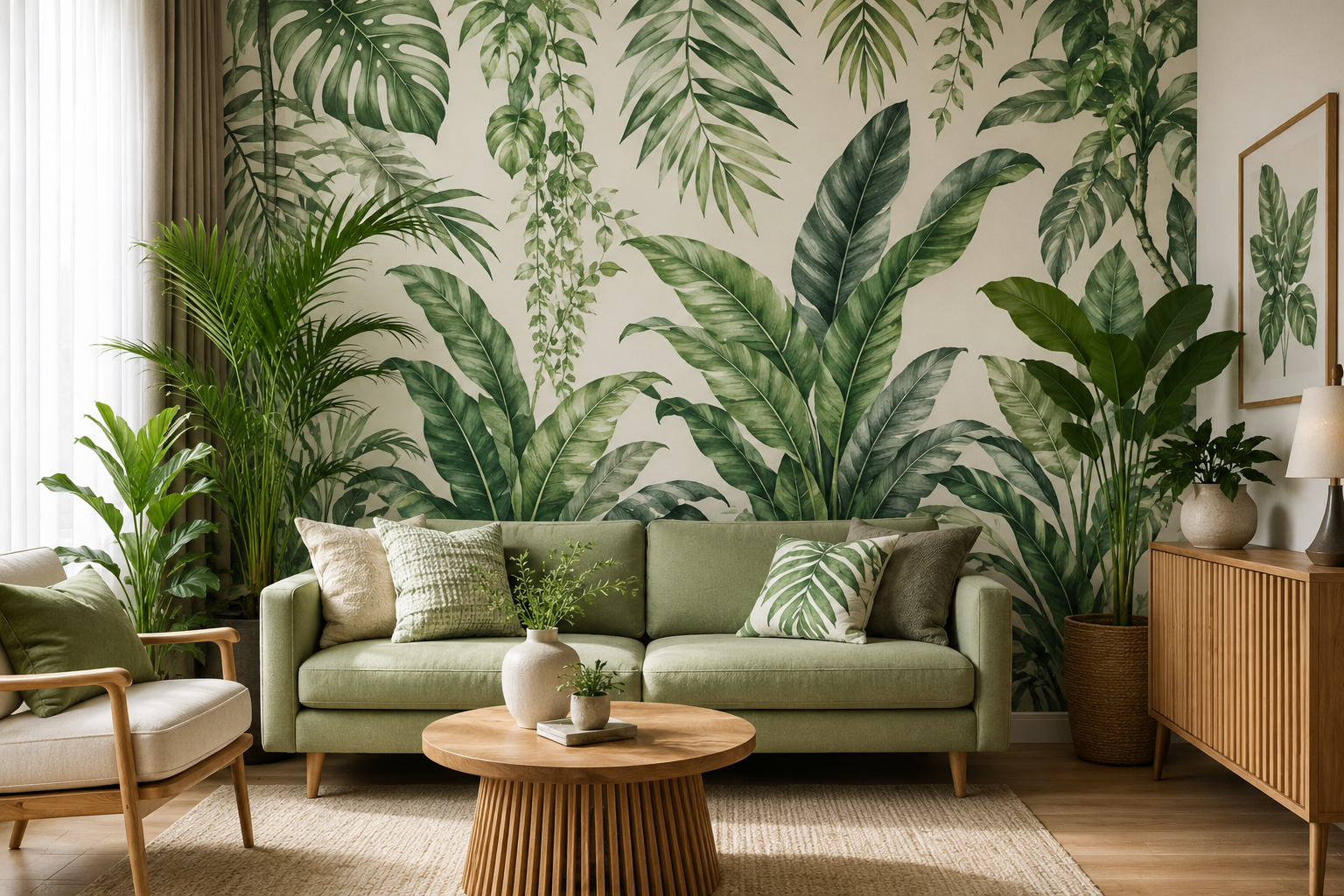
Every house has that one dead wall — nothing hangs right on it, paint alone doesn’t fix it, and you walk past it daily without ever noticing anything. Plant wallpaper solves this particular problem better than almost anything else short of knocking the wall down. Skip the fiddle-leaf fig you’ve already killed twice; the leaf pattern does the same visual job without needing water.
Seven approaches follow, each built around a specific room type rather than a generic “just add greenery” suggestion. A full jungle suits one wall. A single fern print suits another. Peel-and-stick versions mean most of this happens in an afternoon.
Full Jungle, One Wall Only
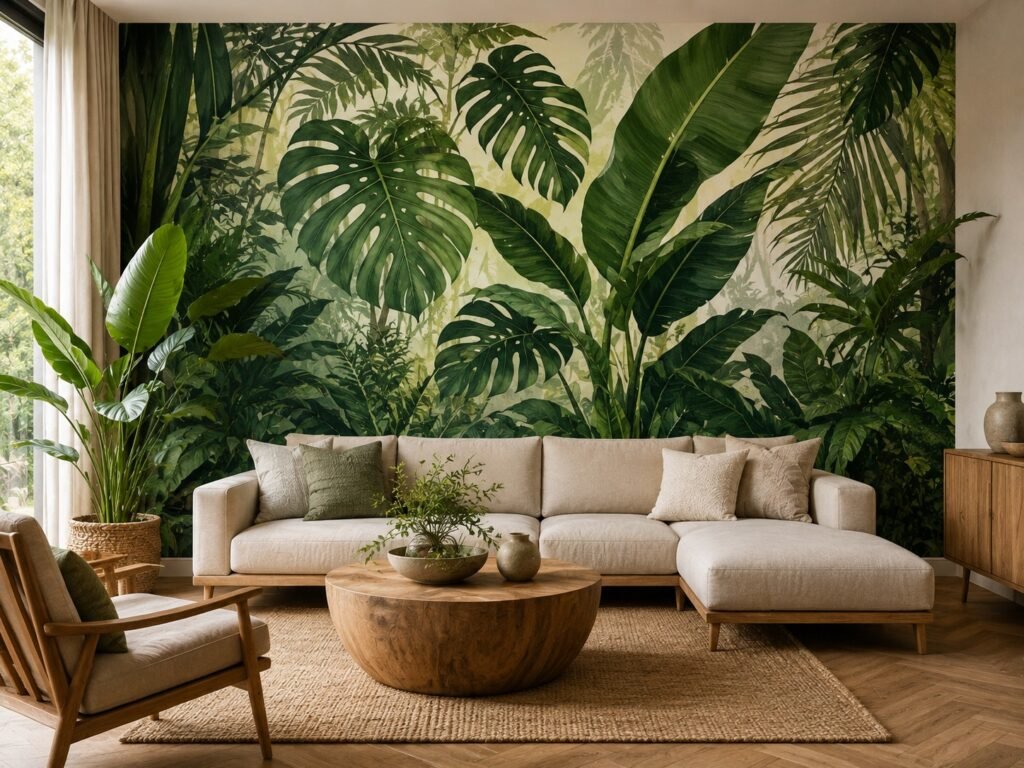
Pick the wall nobody actually sits facing, then commit fully — large monstera or banana leaf prints outperform tiny repeating patterns here because scale reads as deliberate rather than chaotic.
Furniture nearby should calm down. A jungle-scale plant wallpaper wall already carries the room’s visual weight; stacking a patterned rug or loud pillow next to it usually competes rather than adds.
Vines Climbing Behind a Headboard
Quieter than a jungle wall, this still lands as intentional. A slow-climbing vine or fern pattern behind the headboard grounds a bedroom without shouting for attention the second you walk in.
Muted greens work better here than tropical brights. Bedrooms need calm more than most rooms, and saturated plant wallpaper in this exact spot tends to fight against sleep rather than support it.
One Fern Panel, Nothing Else
Full coverage isn’t mandatory. A single fern-print panel, bordered by plain painted wall on both sides, does real work in narrow hallway strips or that odd sliver of wall beside a front door.
This also solves a budget problem nobody talks about — one small roll beats papering a whole room, and the visual payoff barely suffers for it.
Botanicals Behind a Home-Office Desk
An office benefits from plant wallpaper more than most people assume, mostly because glancing at greenery periodically through a workday genuinely helps focus reset. Pick a print with breathing room in it rather than dense, edge-to-edge pattern — a busy wall behind a desk pulls eyes away from actual work.
Pair it with warm wood pieces where possible. Botanical print against natural wood tone reads grounded, not themed, and that distinction matters on video calls.
A Green Accent Behind the Bathroom Sink
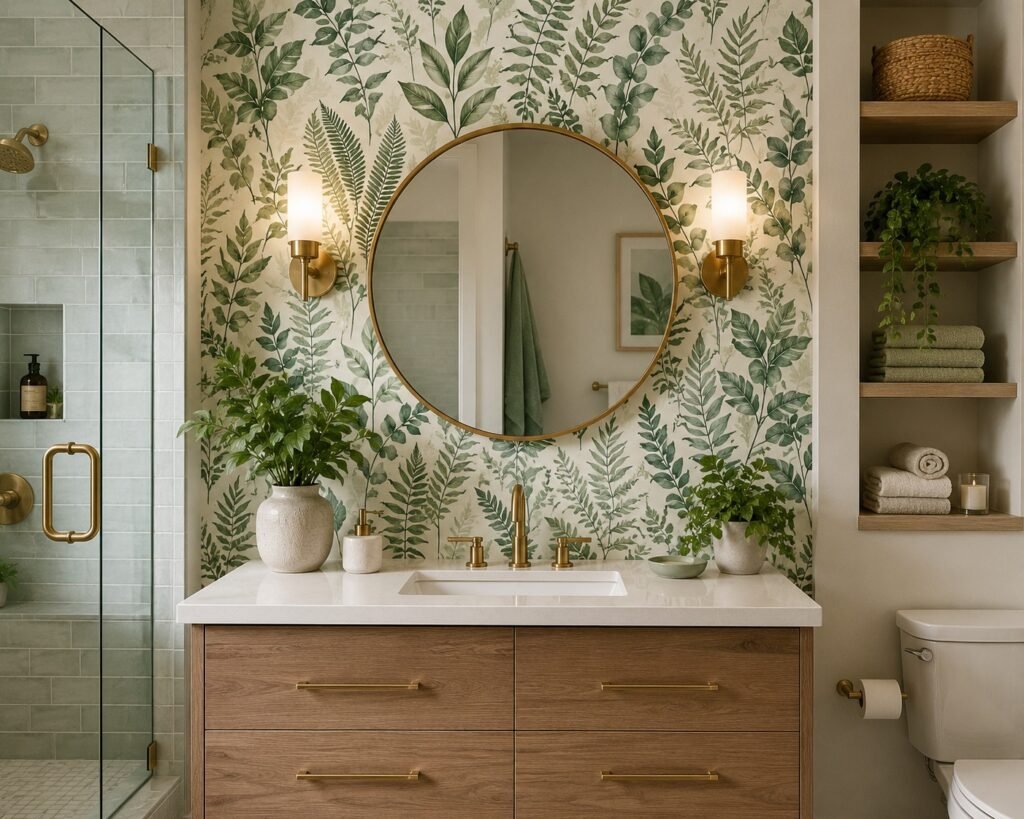
Bathrooms rarely get real decorating attention past towel color, which is a waste. One accent wall — sink-side or opposite the shower usually — handles humidity fine, assuming vinyl-based wallpaper rather than plain paper.
Smaller leaf scale suits bathrooms better than oversized jungle prints. Mirrors, cabinets, and fixtures already break the wall up visually, so a giant busy pattern competes against clutter that’s already there.
Layered Greenery Where Light Pours In
Sunrooms and window-heavy reading corners handle bold plant wallpaper without flinching. Natural light keeps a saturated jungle print from turning heavy or closed-in the way it might against a darker wall.
Stack real houseplants nearby if you’ve got them. Sounds redundant on paper — printed leaves next to living ones — but the effect extends the greenery rather than duplicating it awkwardly.
Playful, Simplified Prints for a Kid’s Room
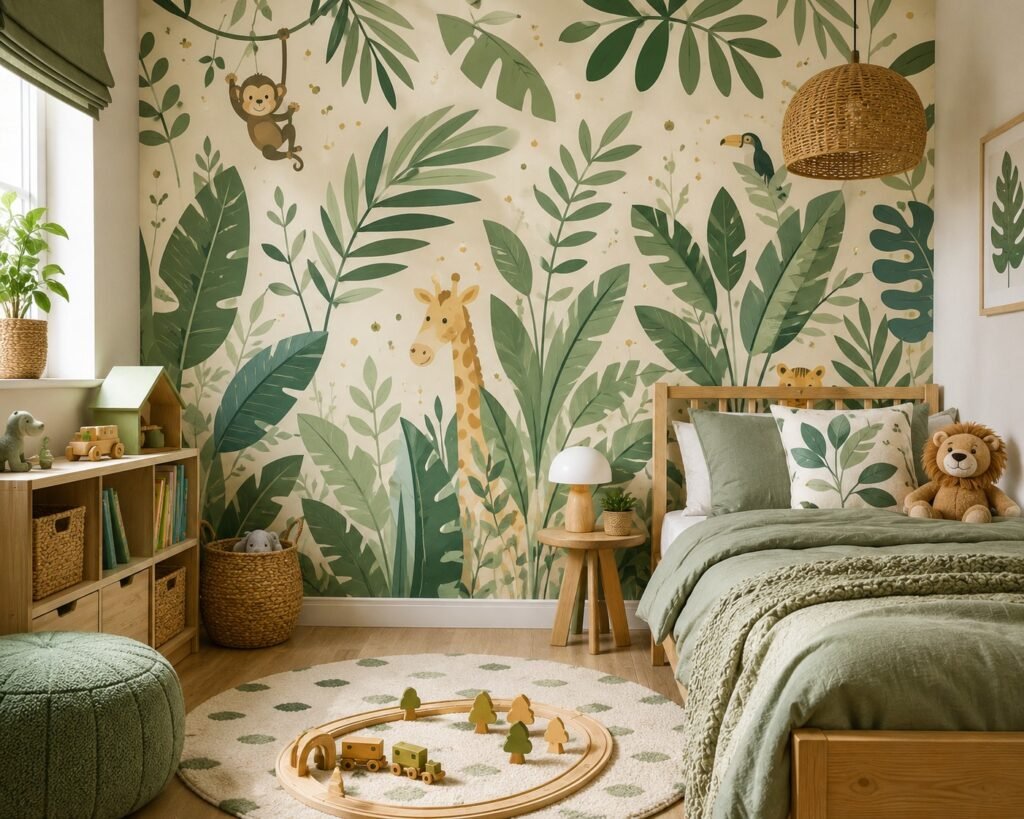
Skip photo-realistic jungle scenes here. Stylized leaf shapes, maybe a few tucked-in animals, age better than anything trying to look like an actual rainforest — kids’ interests shift fast, and overly literal prints date quickly alongside them.
This is exactly where peel-and-stick wallpaper options matter most. Kids’ rooms change often, and swapping a wall design without damaging paint underneath counts for more here than almost anywhere else in a house.
Matching Wallpaper Type to Wall Situation
| Wall Situation | Best Wallpaper Type | Why It Works |
| Renting, no damage allowed | Removable peel-and-stick | Comes off clean, no adhesive residue |
| Bathroom or kitchen wall | Vinyl-coated peel-and-stick | Handles humidity without peeling |
| Textured or older walls | Traditional paste-based | Adheres better to uneven surfaces |
| Small accent panel only | Pre-cut peel-and-stick panel | No trimming or pattern-matching needed |
Application: Where Most People Trip Up
Surface prep decides more of the outcome than color or pattern choice ever does. Even minor bumps, leftover paint residue, or grease on a wall show through peel-and-stick backing almost instantly — a busy leaf print makes every bubble obvious.
Home Depot’s installation walkthrough walks through drawing a plumb vertical line before the first strip goes up, which stops the whole pattern from drifting sideways as you move across a wall. Skip that step and drift compounds fast.
Peel the backing away slowly, strip by strip, rather than tearing off large sections at once. Matters even more with best peel and stick wallpaper featuring fine leaf detail, since rushing stretches those delicate lines out of shape.
Why Botanical Prints Never Really Leave
Plant wallpaper isn’t tied to one design season the way some trends are — it resurfaces yearly in slightly reshaped forms. A recent wallpaper trend roundup from Homes and Gardens ties nature-inspired designs to neutral furnishings and natural textures, which explains the pattern’s spread across wildly different interior styles instead of staying locked to one look.
That range is what makes it a safer long-term bet than trend-locked geometrics or seasonal colorways that age out within a year or two.
Two Mistakes That Show Up Constantly
Picking scale off a phone screen trips up more people than anything else. A print that looks perfectly sized in a photo can land tiny and lost, or absurdly oversized, once it’s actually on a real wall with real dimensions.
Light direction gets ignored just as often. A dark, saturated jungle print in a room with only weak afternoon sun can turn murky rather than lush — no pattern survives bad lighting conditions unscathed.
Care That Keeps It Looking New
Textured leaf patterns collect dust faster than smooth walls do. A light wipe with a slightly damp microfiber cloth every few weeks keeps fine detail from vanishing under a film of grime.
Harsh cleaners are a hard no. Most stick and peel wallpaper tolerates light moisture fine but not scrubbing — aggressive products dull the print or lift edges over time.
Frequently Asked Questions
Does plant wallpaper work in small rooms, or does it shrink them visually?
Scale and tone decide this, not the pattern’s subject matter. A pale, small-leaf print opens a tight room up considerably, whereas a heavy, dark jungle scene can press in on a space that’s already short on square footage.
Is peel-and-stick plant wallpaper actually removable without wall damage?
Mostly, with one condition attached — the wall needs proper prep and fully cured paint underneath. Rip it off fast and paint sometimes comes with it; peel it back slowly instead, and that risk mostly disappears.
Can plant wallpaper handle regular bathroom steam?
Vinyl-coated versions manage it without issue, standard paper does not. That single material difference determines whether a bathroom wallpaper install survives its first year or starts curling at the seams within weeks.
How do I tell if a plant wallpaper pattern is too busy for my room?
Count what’s already competing for attention on that wall first. A room stacked with patterned textiles or statement furniture needs a spaced-out, simpler leaf print — dense jungle coverage just adds noise to noise.
Do I need a professional to install plant wallpaper?
Peel-and-stick, no — an afternoon and basic tools cover most single-wall installs. Traditional paste-based rolls are the exception; that’s genuinely where hiring someone tends to save both time and material.
What plant wallpaper style suits a kid’s room best?
Stylized over photo-realistic, every time. Kids’ preferences shift within a year or two, and an overly literal jungle scene dates fast, while simplified shapes and playful color hold up through several rounds of changing taste.
How long does peel-and-stick plant wallpaper typically hold up?
Three to five years is the realistic range under normal household conditions. Direct sun exposure or a high-traffic wall shortens that window, sometimes noticeably, so placement matters as much as the product itself.
Can plant wallpaper and real houseplants work in the same room?
Combined, they tend to outperform either used alone. A real plant positioned near a printed wall extends the pattern rather than repeating it, which reads as layered and considered instead of matched-set decor.
Where This Leaves You
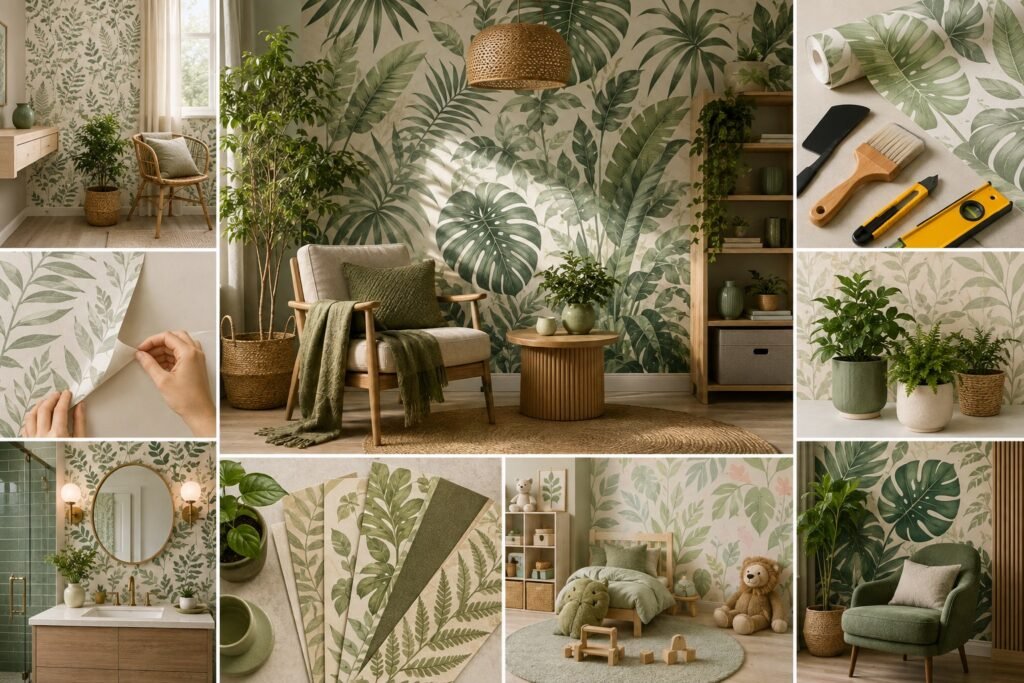
Plant wallpaper handles a specific decorating problem paint can’t touch on its own — texture, movement, a sense of life on a wall that otherwise sits flat and forgettable. A jungle wall behind a reading chair, one fern panel in a hallway — the effect comes down to matching scale and placement to the actual room, not grabbing the boldest print available.
Start small if unsure. One accent wall, or even a single framed panel, tells you how a botanical print lives in a room day to day before an entire space gets committed to it. Bedrooms lean toward quiet, muted green; sunrooms and offices can carry bolder, more saturated patterns without tipping into overwhelming.
Application counts for as much as the design choice itself. Skipped surface prep, rushed peeling, ignored humidity in bathrooms — these cause most of the regret people report afterward, not the pattern they picked. Twenty extra minutes on wall prep and a straight plumb line heads off nearly every common issue before it starts.
What plant wallpaper actually delivers, in the end, is how differently a room reads once it’s up. A flat wall turns into the room’s actual focal point, and unlike color trends that fade within a season, botanical prints tend to hold their appeal for years rather than aging out fast. That staying power is the real argument for choosing it over something flashier.