

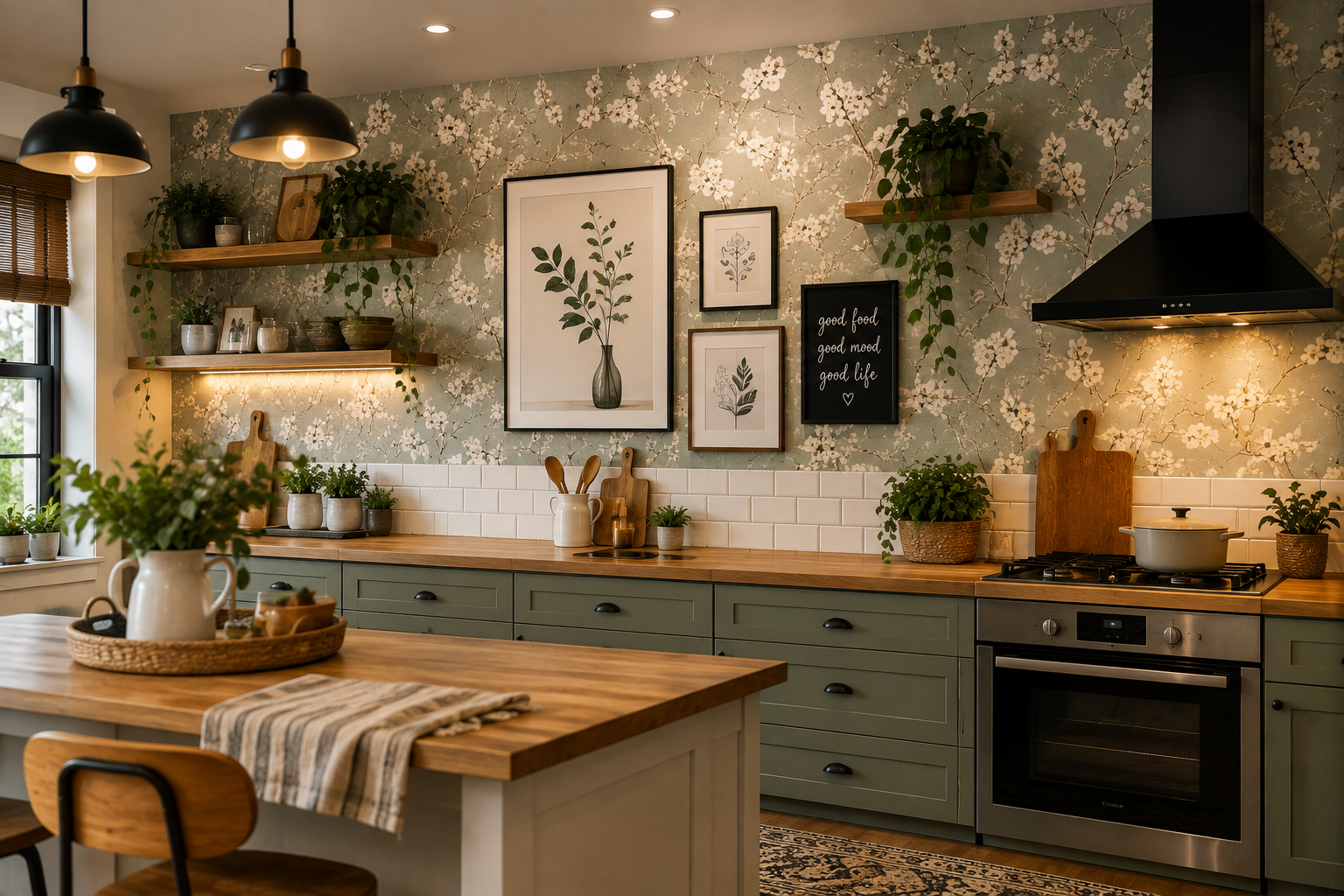
Wall decorating ideas for kitchen spaces get overcomplicated way more than they need to, and after years of helping friends and clients fix bare, awkward kitchen walls, I can tell you it usually takes less effort than people assume. Most kitchens have three or four blank stretches nobody notices until they’re standing over a pot of boiling pasta wondering why the room feels unfinished.
Good wall decorating ideas for kitchen spaces aren’t about copying a magazine spread — they’re about texture, a bit of personality, and knowing which spots people actually look at. Once you treat kitchen walls as real design opportunities instead of leftover space, the whole room shifts, and it doesn’t cost what you think.
Why Kitchen Walls Get Ignored (And Shouldn’t)
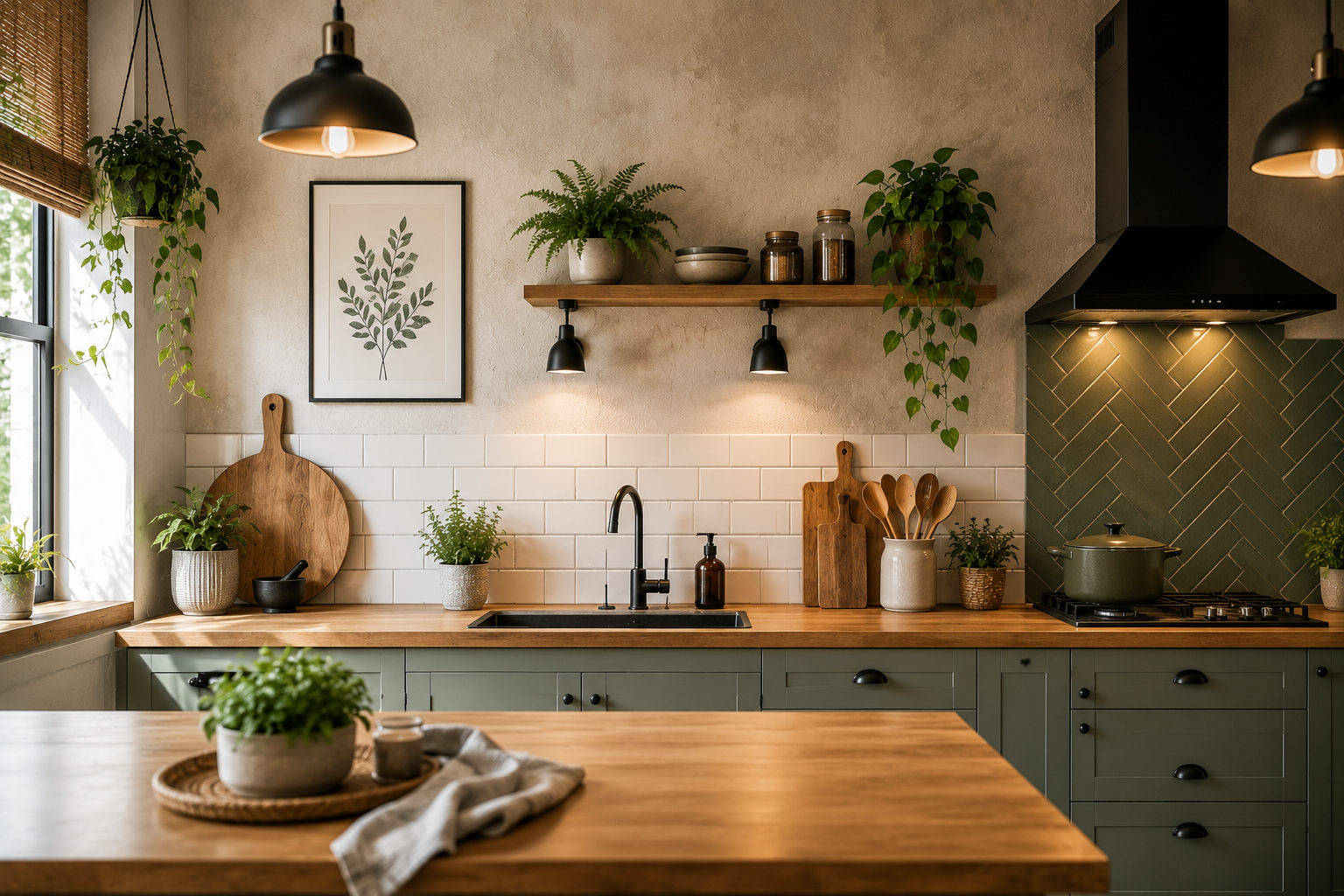
Here’s the thing nobody tells you when you move into a new place: the kitchen gets all the design attention on countertops and cabinets, and the walls get whatever’s left over.
That’s backwards. You spend more waking hours looking at that wall behind the stove than almost any other surface in your home. A blank wall doesn’t just look unfinished — it makes the whole kitchen feel colder than it is.
I learned this the hard way in my first apartment. White walls, white cabinets, zero personality. It took one small shelf and a print I actually liked to make the room feel like mine.
Wall Decorating Ideas for Kitchen Spaces That Feel Personal
Not every idea works in every kitchen, and that’s fine. The goal isn’t to hit every trend — it’s to pick two or three wall decorating ideas for kitchen use that fit how you actually cook and live.
Ask yourself what you’re drawn to when you scroll home accounts online. Warm and cluttered? Clean and minimal? Your answer should shape everything else in this list.
Skip anything that needs constant upkeep if you’re not the type to dust weekly. Honestly, that one rule alone will save you from half the decorating regrets people post about.
Open Shelving Instead of Hiding Everything Away
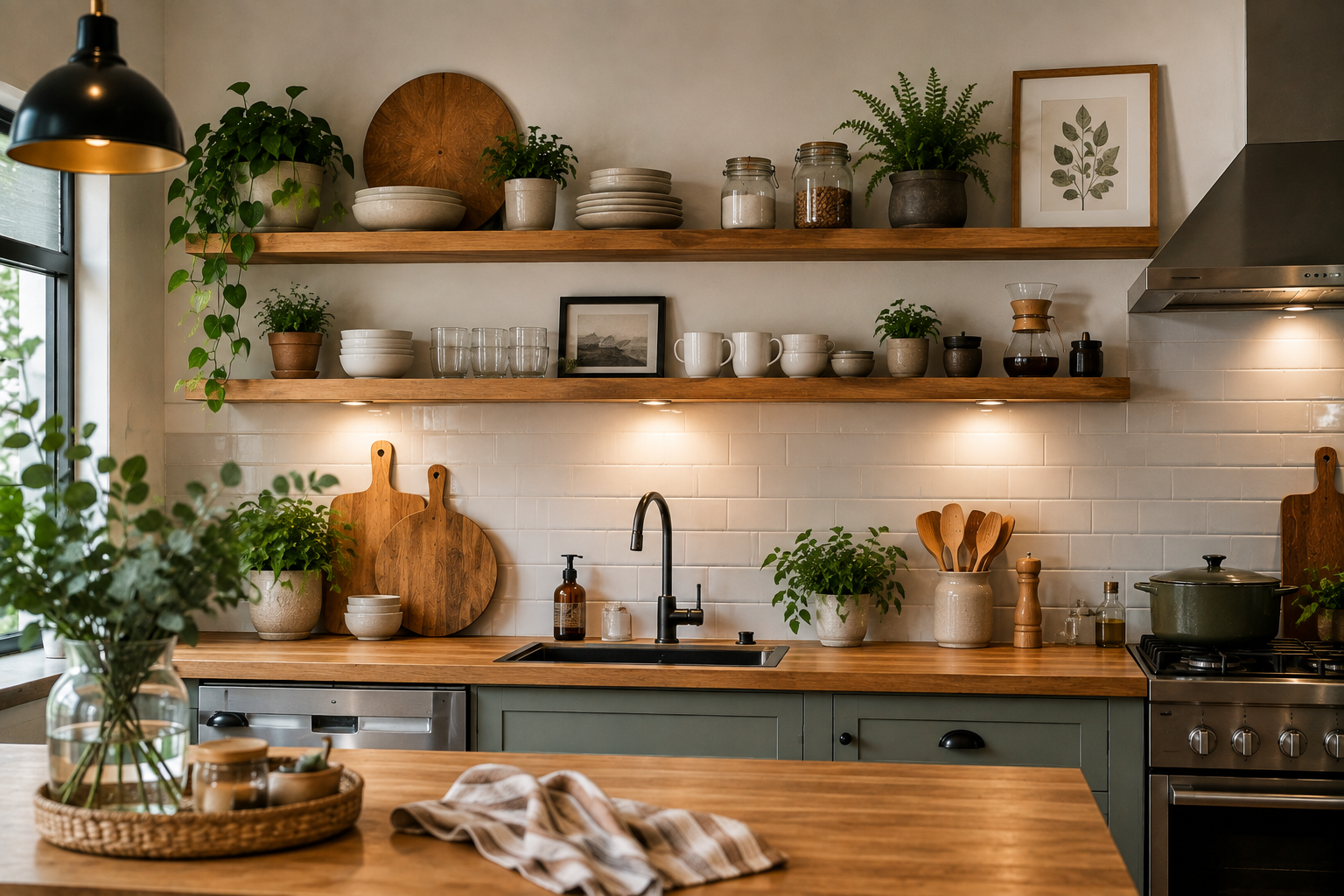
Swapping even one upper cabinet for open shelving changes a kitchen more than people expect. Suddenly your everyday mugs and bowls are doing double duty as décor.
Group items by color or material so the shelf doesn’t look like random storage. Three mismatched mugs look messy; three mugs in the same glaze look intentional.
A trick I picked up from a designer friend: hang one bold print near the dining side of an open kitchen instead of over the stove. It pulls the eye toward that zone and keeps the artwork safely away from grease and steam, which means you get shelving and real wall art working together instead of picking just one.
Keep the bottom shelf functional — plates and glasses you use daily — and let the top shelf carry the personality: a small plant, a stack of cookbooks, one framed print leaning against the wall. For more layout inspiration beyond shelving alone, this roundup of kitchen wall decor ideas covers paint, tile, and paper treatments that pair well with an open shelf setup.
Wallpaper Without the Forever Commitment
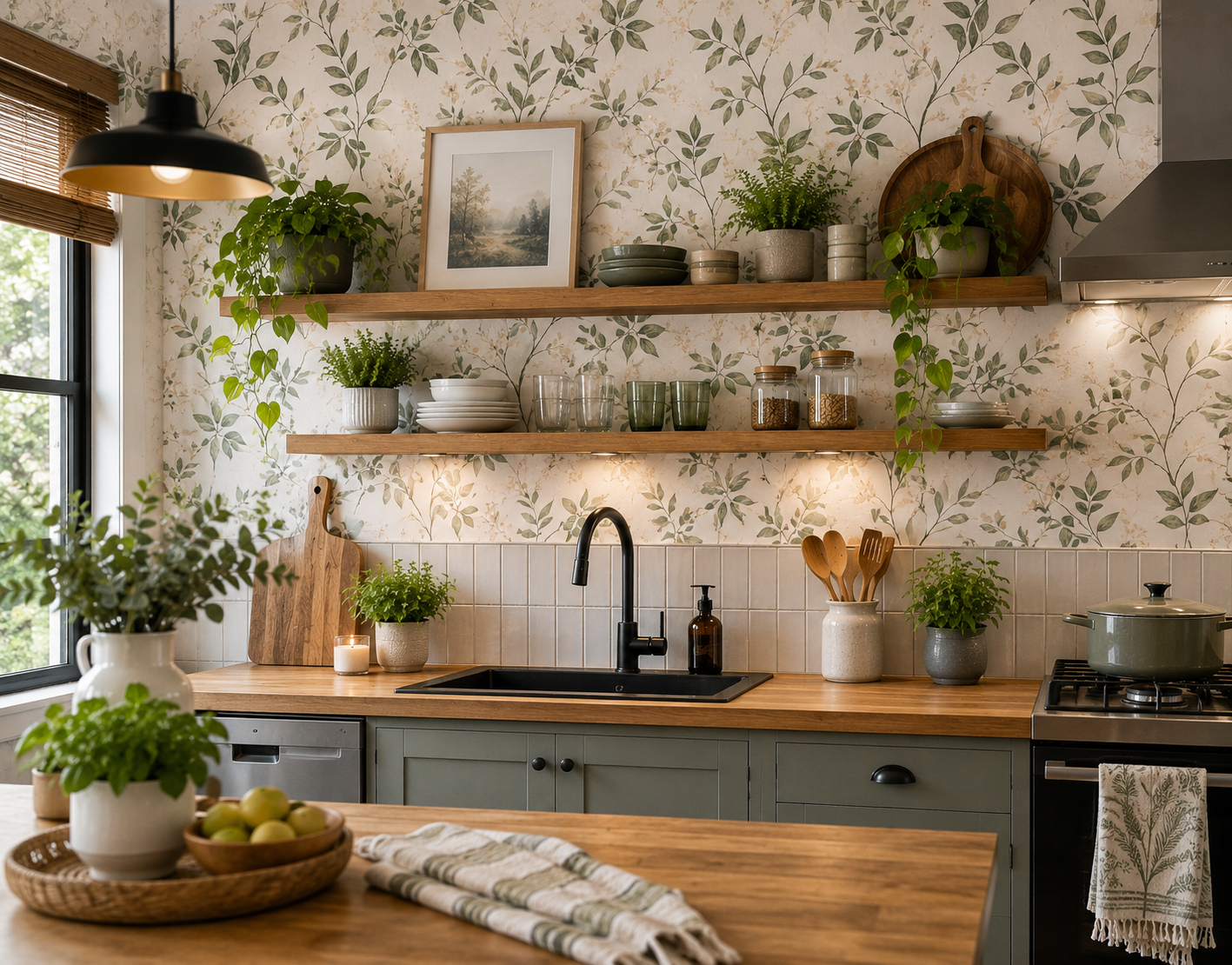
Wallpaper used to mean a decade-long relationship with a pattern you’d eventually resent. That’s not true anymore, and it’s honestly one of my favorite wall decorating ideas for kitchen makeovers on a deadline.
Peel-and-stick versions go up in an afternoon and come down just as fast when you’re ready for something new. Behind open shelves, on a single accent wall, or lining the inside of a pantry door — small doses go a long way in a kitchen.
If you want a full breakdown of patterns, adhesives, and where they hold up best around heat and moisture, this kitchen wallpaper guide walks through it in more depth than I can cover here.
Stick to washable, grease-resistant finishes near the stove. Everywhere else, have fun with it.
A Gallery Wall That Actually Makes Sense in a Kitchen
Gallery walls get a bad reputation for looking fussy, but a loose, low-key version works surprisingly well in a kitchen. Think three to five small pieces, not fifteen.
Mix a botanical print, a vintage-looking recipe card in a frame, and one piece of real art you love. That contrast is what keeps it from looking like a matched set from a catalog.
Hang everything slightly lower than you would in a living room. Kitchens are used at close range — you want the art visible while you’re standing at the counter, not craning your neck.
Plates, Trays, and Kitchenware as Real Art
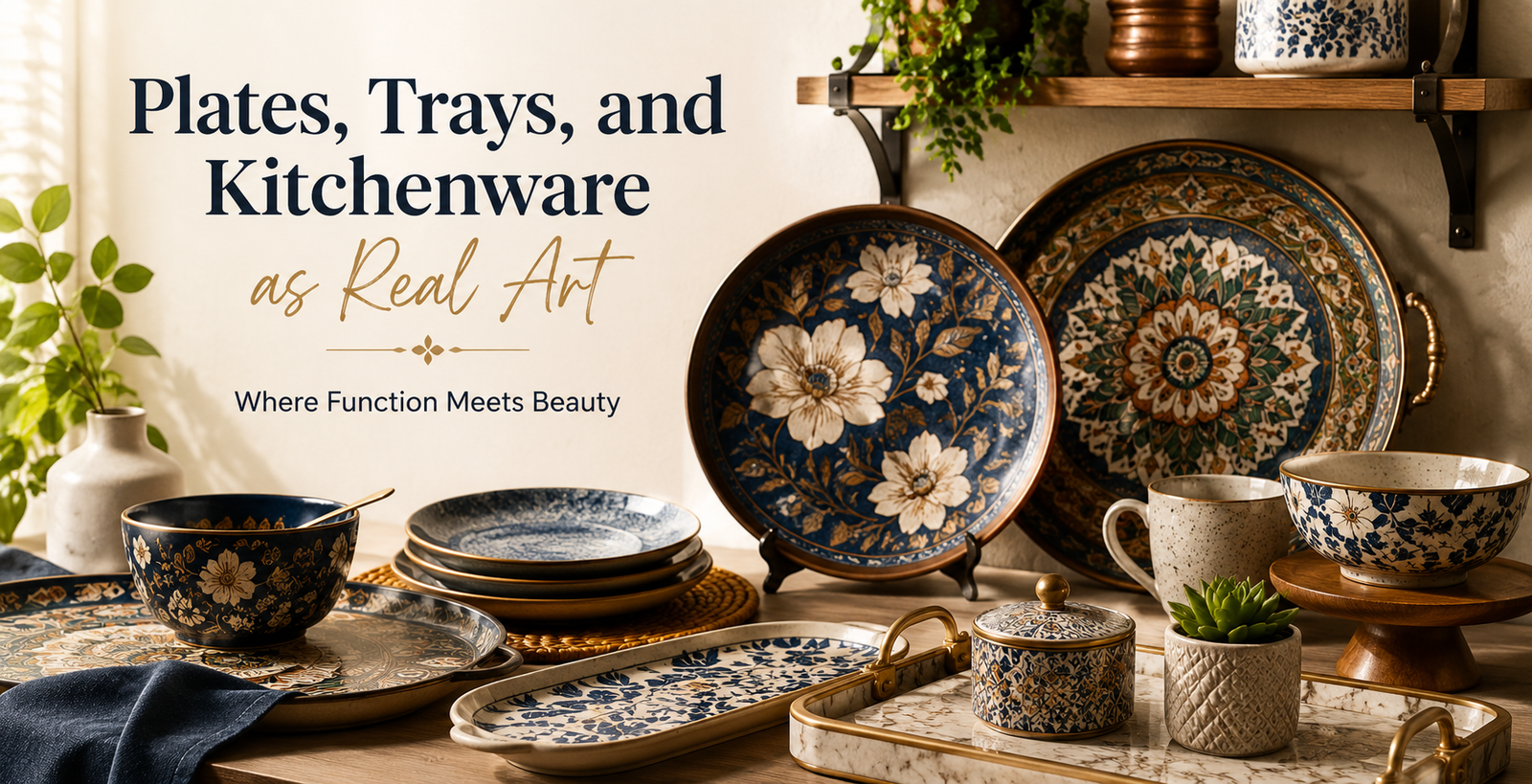
This one surprises people, but it’s been done in serious design circles for ages: hang the dishes you already own. A patterned plate collection on a wall costs nothing extra since you already bought the plates.
A rustic print above the stove or a gilded frame around something a little vintage tends to make a kitchen feel warmer almost instantly, and that same feeling carries over when the “art” is actually your grandmother’s china instead of something bought from a print shop.
Vintage trays, an old sifter, even a well-worn cutting board — anything with shape and texture earns its spot once you stop thinking of it as just a tool. If you want to see how far this idea can stretch, this collection of kitchen wall art ideas shows real homes leaning on plates, trays, and found objects instead of traditional framed pieces.
A Chalkboard or Message Wall for Real Life
Not every idea has to be purely visual. A chalkboard panel, even a small one, gives your wall an actual job: grocery lists, a doodle from a kid, tonight’s dinner plan scrawled in someone’s handwriting.
Paint it directly onto a cabinet door or a cut piece of board if you don’t want a permanent installation. It’s cheap, it’s forgiving, and it changes weekly without you doing anything extra.
Wall Decorating Ideas for Kitchen Spaces That Are Small
Tiny kitchens need different rules. The smartest wall decorating ideas for kitchen spaces under a certain size lean vertical instead of wide, since floor space usually can’t spare a single extra inch.
A narrow floating shelf above a doorway. A single striking print instead of a cluster. A mirror angled to bounce light from the one window you’ve got — that last trick alone can make a cramped galley kitchen feel noticeably bigger.
Skip anything bulky or three-dimensional in a small space. Flat, light pieces read as calm; anything jutting off the wall reads as clutter fast.
Color helps here too. A pale, single-tone print or a light wood frame keeps the eye moving smoothly across the wall instead of stopping and registering “small room.” Save the bold, dark pieces for kitchens with a little more square footage to absorb them.
Lighting That Doubles as Wall Décor
A sculptural sconce or a row of small picture lights does two jobs at once — it lights your counter and it looks like intentional design rather than an afterthought bulb screwed into the ceiling.
Warm-toned bulbs make everything on your walls, from plates to prints, look richer in the evening. It’s a small swap most people skip, and it’s one of the cheapest upgrades on this entire list.
Mixing Textures So the Wall Doesn’t Feel Flat

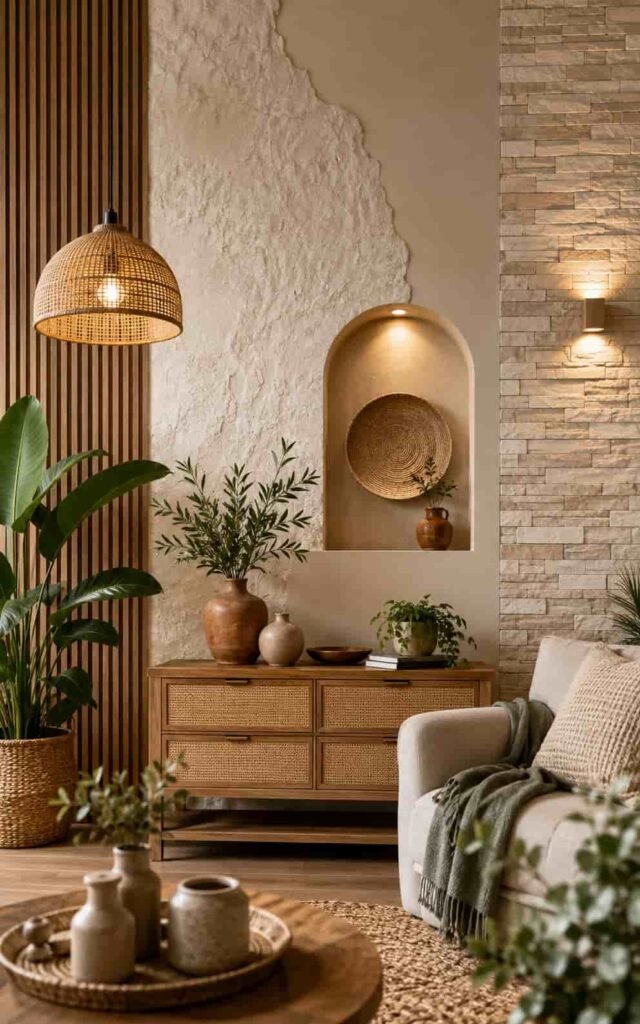
Flat paint next to flat cabinets next to flat countertops adds up to a room that feels a little lifeless, even with decor hung up. Texture is the fix, and it’s underrated.
A woven basket, a rough ceramic vase, a linen tea towel hung on a hook — small textured pieces break up all that smoothness without needing a full renovation.
Pick a Focal Point Before You Buy Anything
Every wall doesn’t need equal attention, and trying to decorate all of them at once is how kitchens end up feeling busy instead of finished. Pick one wall — usually the one you face most while cooking or the one guests see first — and let that carry most of the visual weight.
Everything else stays quieter. A single hook, a small shelf, maybe nothing at all. Restraint on the secondary walls is what makes the focal wall actually read as intentional rather than just one more surface covered in stuff.
I used to spread decor evenly across every wall in my kitchen, and it never looked finished no matter how much I added. The second I committed to one real focal point, the whole room clicked into place — and I’d spent less money getting there, not more.
What Your Wall Decor Says About the Room’s Mood
Color does more heavy lifting than most people give it credit for. A wall of warm terracotta prints and wooden trays reads completely differently than the same layout done in cool blues and glass.
Think about how the kitchen actually feels at 7am versus 7pm, since lighting shifts the mood of whatever’s hanging on the wall. A print that looks moody and rich under evening light can look flat and dull in harsh morning sun.
If your cabinets and countertops already lean neutral, this is your chance to bring in color through the walls without repainting anything permanent. Swappable art and textiles are a much lower-commitment way to test a bolder palette than most people realize.
Budget Tricks Nobody Talks About
Thrift stores are stacked with frames, plates, and trays that just need a coat of paint or a good clean. You don’t need a big budget for good wall decorating ideas for kitchen spaces — you need a little patience and an eye for shape.
Swap seasonal art instead of buying more. Rotate three or four pieces you already own every few months and the wall feels new without a single new purchase.
Print your own art. A postcard from a trip, a page torn from an old calendar, even a kid’s drawing scanned and reprinted larger — cheap frames make almost anything look considered.
Facebook Marketplace and local buy-nothing groups are underrated sources too. People constantly offload frames, shelves, and decorative trays for free or close to it when they’re redecorating themselves, which means someone else’s outgrown style can become the start of yours for the price of a short drive across town.
Don’t underestimate a fresh coat of paint on an existing piece either. A dated brass frame or a scuffed wooden tray can look brand new with twenty minutes of spray paint and a well-ventilated garage, and that’s true even for pieces that looked genuinely hopeless before you started.
Materials That Actually Hold Up in a Kitchen
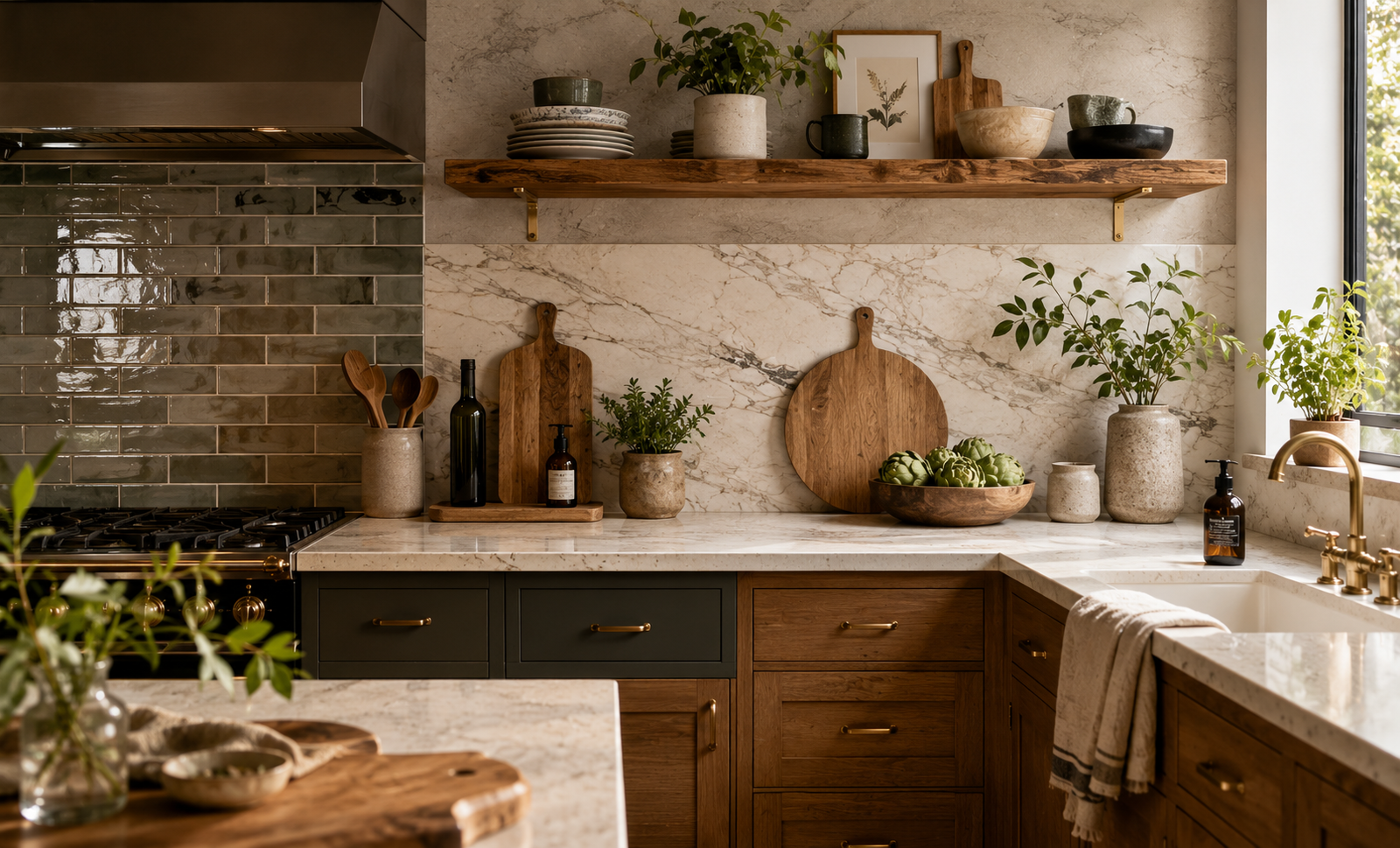
A kitchen isn’t a hallway or a bedroom. Steam, grease, temperature swings, and the occasional splash from a pan all take a toll on whatever’s hanging nearby, so material choice matters more here than in almost any other room.
Glass and acrylic frames beat raw wood or unfinished paper near heat sources. They wipe clean in seconds and don’t warp the way certain materials do after a few months of humidity swings from the stove or dishwasher.
Metal trays, ceramic, ironware — anything already designed to survive a kitchen environment doubles nicely as décor. That’s part of why hanging actual kitchenware works so well; it was engineered for this room in the first place.
Fabric pieces, macrame, and anything porous should stay well away from the cooking zone. A linen runner draped decoratively near a sink or window is fine. The same piece six inches from a stovetop is a different story entirely.
Sealants help too. A light coat of clear varnish over a print or a piece of reclaimed wood adds a surprising amount of protection against the occasional grease splatter, and it’s a five-minute job most people skip.
Working With What You Already Have
Before buying anything new, walk through your kitchen and take stock of what’s already sitting in drawers and cabinets unused. Most people are one drawer of forgotten kitchenware away from a decent start on their walls.
An old colander, a set of measuring cups nobody uses, a cutting board that’s more decorative than functional at this point — these items already match your kitchen’s existing color story because they’ve been living in it for years.
This approach also solves the biggest complaint people have about decorating: the fear that nothing will match. Items pulled from your own kitchen automatically coordinate with everything else in the room, since they were chosen (even unconsciously) with the same taste that picked your dishes and cookware.
Even a stack of old cookbooks, spines facing out on a floating shelf, counts as decor. It’s functional, it’s personal, and it costs exactly nothing extra.
Mistakes That Make Kitchen Walls Look Cluttered
Too many small items with no breathing room between them is the number one mistake I see. Give each piece, even a tiny one, some visual space to exist on its own.
Mismatched frame finishes fighting each other — gold next to black next to raw wood, all crammed together — reads as chaotic rather than curated. Pick one or two finishes and stick with them.
Art in a kitchen doesn’t actually need to match the room’s color scheme to work — it just needs to look intentional instead of accidental, and that’s honestly the most useful piece of advice I’ve picked up for fixing this exact problem.
Skipping scale is another common one. A tiny 5×7 print floating alone on a huge wall looks lost. Go bigger, go clustered, or go somewhere smaller — just don’t leave a postage stamp on a barn door.
FAQs
What’s the cheapest way to decorate a bare kitchen wall?
Thrifted frames, printed photos, and a coat of paint on an old tray usually beat anything store-bought. Rotating what you already own costs nothing and keeps the space feeling current.
Is wallpaper safe to use near a stove?
Yes, if you choose a washable, grease-resistant finish and keep it a reasonable distance from direct heat. Peel-and-stick versions near the stove should be wiped down regularly.
How high should kitchen wall art be hung?
Lower than you’d hang art in a living room, generally around eye level while standing. Kitchens get used at close range, so pieces hung too high often go unnoticed entirely.
Do open shelves make a small kitchen look bigger?
Often, yes. Removing bulky upper cabinets and replacing them with slim shelves opens up sightlines and reduces visual weight, which makes tight kitchens feel noticeably more spacious.
Can I mix different frame styles on one kitchen wall?
A little variation is fine, but too many finishes fighting each other looks chaotic fast. Stick to one or two frame tones so the wall reads as intentional.
Final Thoughts
If there’s one thing worth taking from all of this, it’s that kitchen walls don’t need to be treated as an afterthought squeezed in after the cabinets, counters, and appliances are picked. They’re some of the most-viewed real estate in your entire home, and dressing them up doesn’t require a renovation budget or a design degree.
Start small. Pick one idea from this list — open shelving, a cluster of plates, a peel-and-stick pattern behind the stove — and see how it feels before committing to more. Most of the kitchens that feel truly finished got there through a handful of small, deliberate choices rather than one big expensive overhaul.
The best wall decorating ideas for kitchen spaces are the ones that actually reflect how you live in the room. If you cook constantly, lean into function-forward pieces like a chalkboard or open shelf. If the kitchen doubles as a gathering spot, a gallery wall or warm lighting fixture might matter more than storage.
Give yourself permission to change your mind, too. Nothing on this list is permanent. Peel-and-stick wallpaper comes down, shelves get rearranged, frames get swapped for new prints. The wall that felt perfect two years ago can evolve as your taste does, and that flexibility is honestly part of what makes decorating a kitchen fun instead of stressful.
Whatever you choose, don’t let the walls sit blank out of indecision. Even one small, well-placed piece changes how the whole room feels the next time you walk in for coffee.
And if you’re still not sure where to begin, start with whatever you already own. Half the battle with decorating any kitchen wall is realizing you don’t need a shopping trip — you need fifteen minutes, a hammer, and a willingness to try something and take it down if it doesn’t work. That kind of low-stakes experimenting is honestly the fastest way to land on a wall you’ll actually love looking at every single morning.