

Flower wallpaper isn’t just a pattern you slap on a wall — it’s a mood shift. I’ve walked into rooms that felt flat and gray, then watched them come alive the moment someone added a floral print. This isn’t about chasing a trend blindly. It’s about understanding how botanical patterns, scale, and color work together to change how a space feels. Whether you want a soft, vintage-inspired bloom or something bold and graphic, flower wallpaper brings nature indoors without a single houseplant involved. Below, I’ll walk through what actually works, based on real rooms and a few real mistakes.
What Is Flower Wallpaper?
At its core, flower wallpaper is any wall covering printed or hand-painted with floral motifs — roses, poppies, wildflowers, tropical blooms, you name it. It can be traditional pasted paper, peel-and-stick vinyl, or even fabric-backed wallcoverings for higher-end installs.
What surprises a lot of first-time buyers is how much range exists within this one category. A tiny ditsy print reads completely differently than an oversized, jungle-style bloom. Both are technically “flower wallpaper,” but they’ll change a room in opposite ways.
I’ve noticed people often assume flower wallpaper means something delicate and old-fashioned. That’s outdated thinking. Modern printing techniques let designers scale florals up to mural size, strip out the pastel palette, and use ink-black or deep burgundy backgrounds instead. It’s a completely different animal from your grandmother’s rose-print hallway.
Why Flower Wallpaper Matters
Walls take up more visual real estate than almost anything else in a room, yet they’re the part homeowners tend to neglect. Paint gets the easy default. Wallpaper gets skipped because it feels risky.
That’s exactly why flower wallpaper matters — it’s one of the fastest ways to give a room personality without a full renovation. A single accent wall can turn a builder-grade bedroom into something that actually looks considered.
There’s also a practical side. Well-chosen florals can visually soften hard architectural lines, disguise uneven plaster, or draw the eye toward a focal point like a headboard or fireplace. And according to a recent industry wallpaper trend report, floral motifs have made a strong comeback precisely because they add warmth and texture that flat paint simply can’t replicate.
Types and Features of Flower Wallpaper
Not all flower wallpaper is built the same way, and the differences matter more than most buyers expect.
Traditional pasted paper — This is the classic option. It’s durable, tends to have richer color depth, and suits long-term installs in dining rooms or formal living spaces. Removal takes more effort, though.
Peel-and-stick vinyl — Great for renters or anyone who likes to redecorate often. It’s forgiving to apply and remove, though the color saturation can look slightly flatter than traditional paper.
Grasscloth and textured blends — Some florals are printed over a grasscloth or linen-look base, which adds tactile texture on top of the visual pattern. This works well in rooms that already lean minimal.
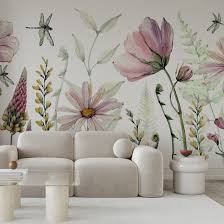
Mural-style panels — These are large-scale, often photographic or hand-illustrated florals designed to cover an entire wall as one continuous scene rather than a repeating pattern.
If you’re browsing for real inspiration rather than just theory, this collection of floral wallpaper designs shows how differently each format can read depending on room size and lighting.
Benefits of Choosing Flower Wallpaper
So why go floral instead of a solid color or geometric print? A few reasons stand out.
It hides flaws well. Busy floral patterns are forgiving on walls that aren’t perfectly smooth, which matters more in older homes than people realize.
It photographs beautifully. If you rent out a space, sell homes, or just post interiors online, floral walls tend to perform better in photos than plain paint — there’s more for the eye to catch.
It’s flexible with furniture. Because florals already carry multiple colors, they give you a built-in palette to pull accent pieces from, which honestly makes decorating easier, not harder.
And it doesn’t date as fast as people assume. A well-proportioned floral print, especially in a neutral or tonal colorway, can stay relevant for a decade or more.
Real-World Examples
I once worked with a small apartment where the main bedroom had almost no natural light. Instead of painting it a flat white, the owner chose a soft, cream-based floral with just a hint of sage green. It didn’t brighten the room technically, but it made the space feel intentional instead of empty — that distinction matters more than people think.
In another case, a home office got a deep navy floral on a single accent wall behind the desk. On video calls, it reads as polished and a little unexpected, instead of the usual gray-cube backdrop everyone else has.
A rental property manager I know swapped basic white walls for a light peel-and-stick bloom in a guest bathroom. Small change, but guest reviews specifically started mentioning how “charming” the space felt — something that never came up before.
Tips for Picking the Right Flower Wallpaper

Start with scale before color. A print that looks perfect on a sample swatch can feel completely overwhelming once it’s covering four walls.
- Test a physical sample on your actual wall for a few days, under morning and evening light
- Match the print’s undertone (warm or cool) to your existing trim and flooring
- Go bolder in smaller rooms like powder rooms — they can handle drama that a large living room can’t
- Keep busy florals to one accent wall if you’re nervous about commitment
If you want a broader sense of how different flower families translate onto wallcoverings, this guide on floral wallpaper flowers breaks down how specific blooms tend to behave in print — some hold detail well at large scale, others get muddy.
And don’t underestimate lighting. A print that looks soft and romantic under warm bulbs can look dated or washed-out under cool white LED lighting.
Common Mistakes to Avoid
The biggest mistake I see is choosing a pattern from a tiny screen thumbnail. What looks charming at two inches wide can feel chaotic at full wall size.
Another common slip-up: ignoring the repeat pattern length. Some florals have a large vertical repeat, which means more wasted material and higher costs — worth checking before you fall in love with a design.
People also forget about maintenance. Kitchens and bathrooms need moisture-resistant or vinyl-coated options, not standard paper, or the wallpaper will bubble and peel within a year or two.
Lastly, matching furniture too closely to the wallpaper’s dominant flower color often backfires. It reads as matchy rather than styled. Pull one or two accent colors instead of the whole palette.
FAQs
Is flower wallpaper still in style?
Yes. It’s shifted from small, muted prints toward bolder, larger-scale florals, but the category itself hasn’t gone anywhere.
Does flower wallpaper make a room look smaller?
Not necessarily. Lighter backgrounds and open spacing between motifs can actually open up a room, while dense, dark prints tend to feel cozier and more enclosed.
Can I use flower wallpaper in a bathroom?
Yes, as long as you choose a vinyl-coated or moisture-resistant version rated for humid rooms.
How do I remove old flower wallpaper safely?
Score the surface lightly, apply a wallpaper removal solution, then peel gently in sections — patience matters more than force here.
Final Thoughts
Flower wallpaper has earned its comeback for good reason. It’s one of the few design choices that can completely shift how a room feels without touching layout, furniture, or lighting fixtures. That’s a lot of impact for one wall.
What stands out to me after seeing dozens of these installs is how differently the same general category can behave depending on scale, colorway, and where it’s placed. A tiny bedroom nook and a formal dining room shouldn’t use the same floral logic, even if both technically fall under “flower wallpaper.”
The mistakes people make are rarely about taste — they’re usually about scale, lighting, or forgetting to sample the print in the actual room first. A pattern that looks stunning on a laptop screen can feel completely different once it’s covering real square footage under real lighting.
If you’re on the fence, start small. A single accent wall, a powder room, or even the back of a bookshelf is a low-risk way to test whether floral patterns work for your space before committing to a full room. You can always scale up once you’ve lived with it for a few weeks and know how the light hits it morning and night.
At the end of the day, walls are one of the easiest things to change back if you don’t love the result. That alone makes flower wallpaper worth the experiment — it’s rarely as permanent, or as risky, as it first feels.