

Somewhere between a leaky shower curtain and three failed coats of primer, plenty of people just give up on their bathroom walls entirely. That’s usually the moment bathroom peel and stick wallpaper comes up, half joke, half genuine question.
Turns out it’s not the gimmick it used to be — modern self-adhesive sheets are built to shrug off steam and come away later without tearing the plaster underneath. This piece covers what bathroom peel and stick wallpaper handles well, where it falls short, and how to pick a water-resistant roll that outlasts more than one humid winter, minus the usual renter-friendly sales pitch.
A Shower Wall Isn’t the Same Test as a Bedroom Wall
Nobody touches a living room wall more than twice a year outside of a repaint. A shower wall gets hit with condensation before breakfast, every single day.
That gap is exactly why regular wallpaper keeps failing in bathrooms — paste softens, seams curl, and within a year you’re scraping bubbled edges off with a butter knife. Vinyl-backed, self-adhesive rolls were built specifically around that failure point.
Anyone still comparing options might find the peel and stick basics rundown useful, since it covers material differences most product listings skip entirely.
Where Bathroom Peel and Stick Wallpaper Earns Its Keep
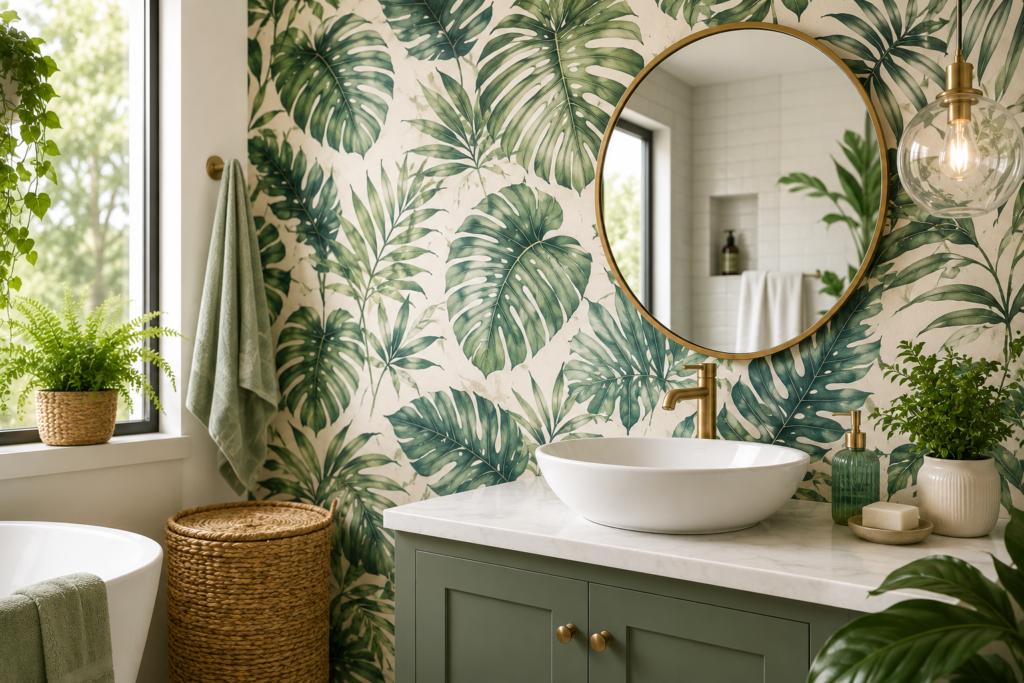
Not every bathroom punishes wallpaper equally. A powder room with no shower is basically a normal room with a sink — nearly anything sticks fine there.
A cramped en-suite with a daily hot shower and no working fan is the real stress test. Bathroom peel and stick wallpaper built from PVC-based vinyl tends to hold up here, mostly because the film itself is close to waterproof.
Ventilation still outweighs the material choice. The EPA’s official EPA moisture guidance notes that keeping indoor humidity under 60% does more for mold prevention than any single wall product ever could.
So wallpaper alone won’t rescue a bathroom with zero airflow. It just buys a lot more time than paint does.
Vinyl, Fabric, and Textured Aren’t Interchangeable

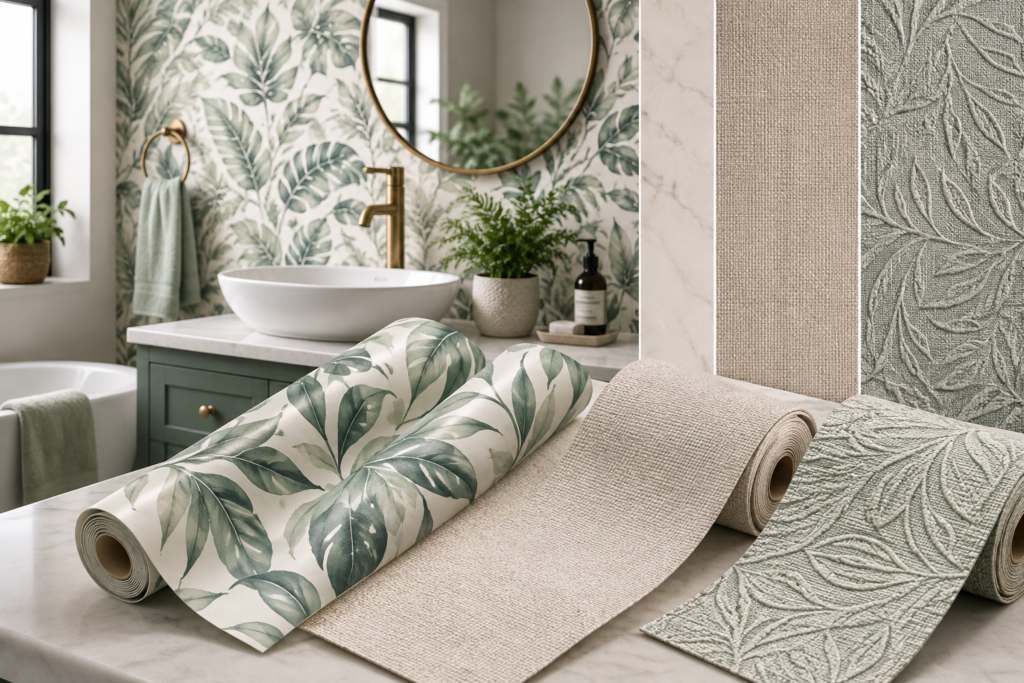
Three main camps exist here, and people mix them up constantly. Straight vinyl is the toughest and cheapest option. Fabric-backed looks softer but forgives moisture less. Textured, grasscloth-style prints look expensive and hate steam almost completely.
For a wall right beside the shower, vinyl wins on pure toughness. Fabric-backed suits a dry accent wall further from the tub.
If texture is the goal anyway, the vinyl option worth considering page breaks down which finishes genuinely last versus which ones just photograph well.
Textured grasscloth near a shower is one I’d skip outright. Gorgeous in the listing photo, rough after six months of steam.
Small Bathroom, Big Bathroom — Different Rules Apply
A tiny half-bath with one bulb behaves nothing like a sunlit primary bathroom. Dark, busy prints don’t hide flaws in a small room — they just make it feel like a closet.
Lighter tones with a subtle pattern do the reverse, pushing walls outward without adding a single square foot.
Larger bathrooms can absorb bolder wallpaper simply because there’s enough open space around fixtures to let the pattern breathe. A cramped powder room squeezed under the stairs usually can’t.
Design Directions That Suit a Wet Room
Coastal blues, soft botanical prints, and geometric tile-look patterns dominate this category for good reason — they read as “wet room appropriate” before the actual tile even gets touched.
Classic damask and vintage floral prints also hold up well, particularly in older homes with clawfoot tubs or original trim.
For something closer to upscale than playful, elegant bathroom styling ideas lays out pairings that avoid the generic rental-upgrade look.
The Actual Benefits, Without the Sales Gloss
Cost is the obvious win — a roll costs a fraction of tiling a wall, and installation needs no contractor. That part genuinely checks out.
Removability is the second real advantage, and it’s not exaggerated. Quality rolls come off in one piece, leaving a paint-ready wall behind rather than damaged drywall.
Where marketing oversells things is durability. Bathroom peel and stick wallpaper beats a same-weekend repaint on speed and looks, but it’s not a fifteen-year traditional-paste product, and nobody selling it should claim otherwise.
A Quick Side-by-Side Before You Commit
| Factor | Peel and Stick Wallpaper | Traditional Pasted Wallpaper |
| Install time | 2–4 hours, no drying wait | Full day, plus drying time |
| Moisture tolerance | Good with vinyl-backed rolls | Poor near direct steam |
| Removability | Peels off clean, mostly | Often damages drywall |
| Typical lifespan | 3–7 years in wet rooms | 10–15 years, properly hung |
| Renter friendly | Yes | Rarely |
Hanging It Without Wrecking the Wall
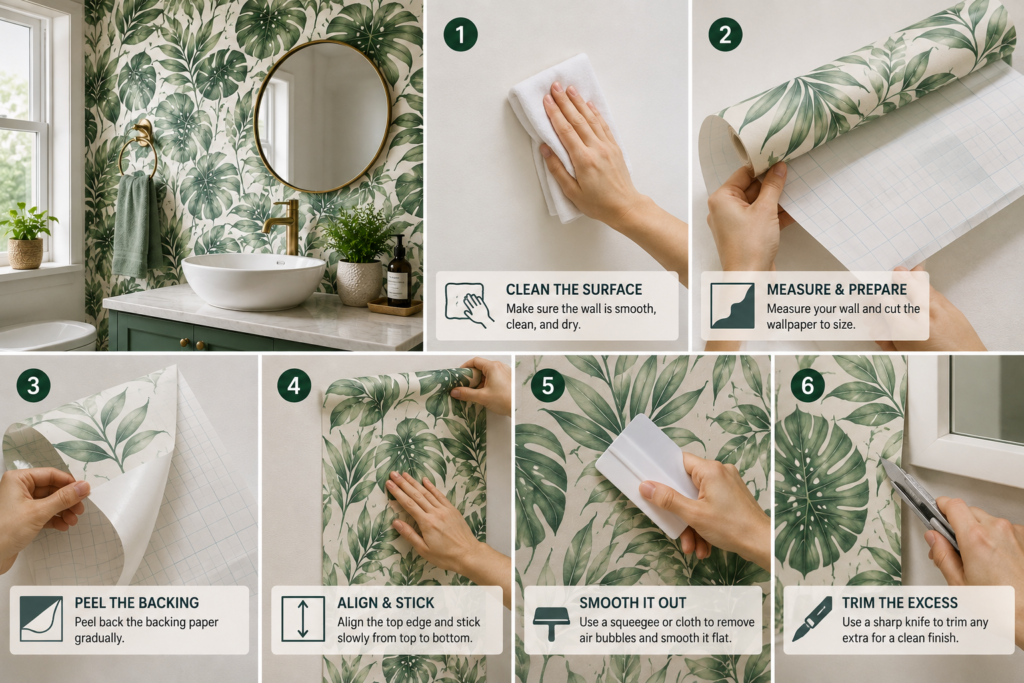
Start with a wall that’s genuinely clean and dry — grease, dust, and flaking old paint are the three fastest ways to kill adhesion.
Measure twice, cut once, and start from a corner using a level line instead of eyeballing it. A half-inch drift compounds fast across a full wall.
Peel back roughly a foot of backing, press that section flat, then keep peeling and smoothing in small stretches instead of ripping the whole sheet free at once.
For the exact tool list and trimming method, Home Depot’s application guide is one of the few retailer resources that actually explains the plumb-line step properly.
One Bathroom, One Costly Lesson
A friend hung a textured floral roll around her tub surround without checking its moisture rating. It looked fantastic for about four months.
Then the bottom third, right where steam settles after every shower, started lifting at the seams. She ended up re-hanging just that lower strip with a proper vinyl-backed roll instead.
Lesson learned the expensive way — check the moisture rating before falling for the pattern.
Mistakes That Keep Repeating in Bathrooms
Skipping wall prep is the biggest one. Applying wallpaper over flat, chalky paint almost guarantees peeling within a year.
Ignoring a weak exhaust fan is a close second. Even the best wallpaper on the market can’t outlast poor ventilation for long.
Buying the cheapest roll available backfires constantly too. The price gap between a solid vinyl-backed roll and a flimsy one is usually smaller than a takeaway dinner.
Full Wall Coverage or Just an Accent
Some bathrooms handle full coverage beautifully; others feel overwhelming unless one wall stays plain. It mostly comes down to natural light and ceiling height.
For anyone planning more than one wall, full wall coverage tips explains when full coverage works and when a single accent wall does more visual work for less material.
Keeping It Looking Good for Years
Wipe it down with a barely damp microfiber cloth — never anything abrasive, and never a scrub brush near the seams.
Run the exhaust fan after every shower, no exceptions, even in winter when it feels tempting to skip it.
Check the corners near the tub every few months. Lifting starts small, and a quick re-press with a smoothing tool now beats replacing a whole panel later.
FAQs
Does bathroom peel and stick wallpaper actually survive a daily hot shower?
Vinyl-backed rolls generally do, especially with decent ventilation. Fabric-backed or textured prints struggle much sooner.
How long does it realistically last in a wet bathroom?
Most vinyl rolls hold up three to seven years near a shower, depending on ventilation and prep quality beforehand.
Can it go directly over old bathroom tile?
Not reliably. Grout lines and uneven tile texture usually show through and weaken adhesion over time.
Will removing it damage the paint underneath?
Good-quality rolls peel off cleanly on properly primed walls. Cheap adhesive or bare drywall is where damage tends to happen.
Is it worth using in a small windowless bathroom?
Only with a strong exhaust fan running consistently. Without airflow, no wallpaper handles that much trapped humidity well.
Does pattern size matter in a small bathroom?
Yes, noticeably. Larger prints shrink the visual space, while smaller or lighter patterns make tight bathrooms feel less cramped.
Can renters use it without losing a deposit?
Generally yes — that’s part of its appeal. Most rolls remove without pulling paint or leaving residue behind.
What’s the biggest reason people regret their choice?
Skipping the moisture rating and choosing purely on pattern. The prettiest roll in the store isn’t always built for steam.
Final Thoughts
Bathroom peel and stick wallpaper isn’t a miracle fix, and it won’t outlast a well-installed tile job either. But for the price, the speed, and the fact that it comes off clean once you’re tired of the pattern, it fills a gap traditional wallpaper never really covered in wet rooms.
The real decision isn’t whether to use it — it’s which type to buy. Vinyl-backed rolls cost a little more and look slightly less premium than fabric or textured options, but they’re the ones that survive a bathroom’s daily abuse. Skimping here is the single most common regret people run into a year later.
Ventilation still does more heavy lifting than people give it credit for. Even a top-tier wallpaper will eventually lift if the bathroom fan is weak or rarely used. Pair a decent exhaust setup with a properly prepped wall, and most of the horror stories about peeling and bubbling simply stop applying.
If there’s one honest takeaway here, it’s that bathroom peel and stick wallpaper rewards a little patience during prep and punishes shortcuts fast. Clean the wall properly, pick a genuinely moisture-rated roll, and keep that fan running — and there’s a decent chance this becomes one of the easier upgrades that bathroom ever sees.