

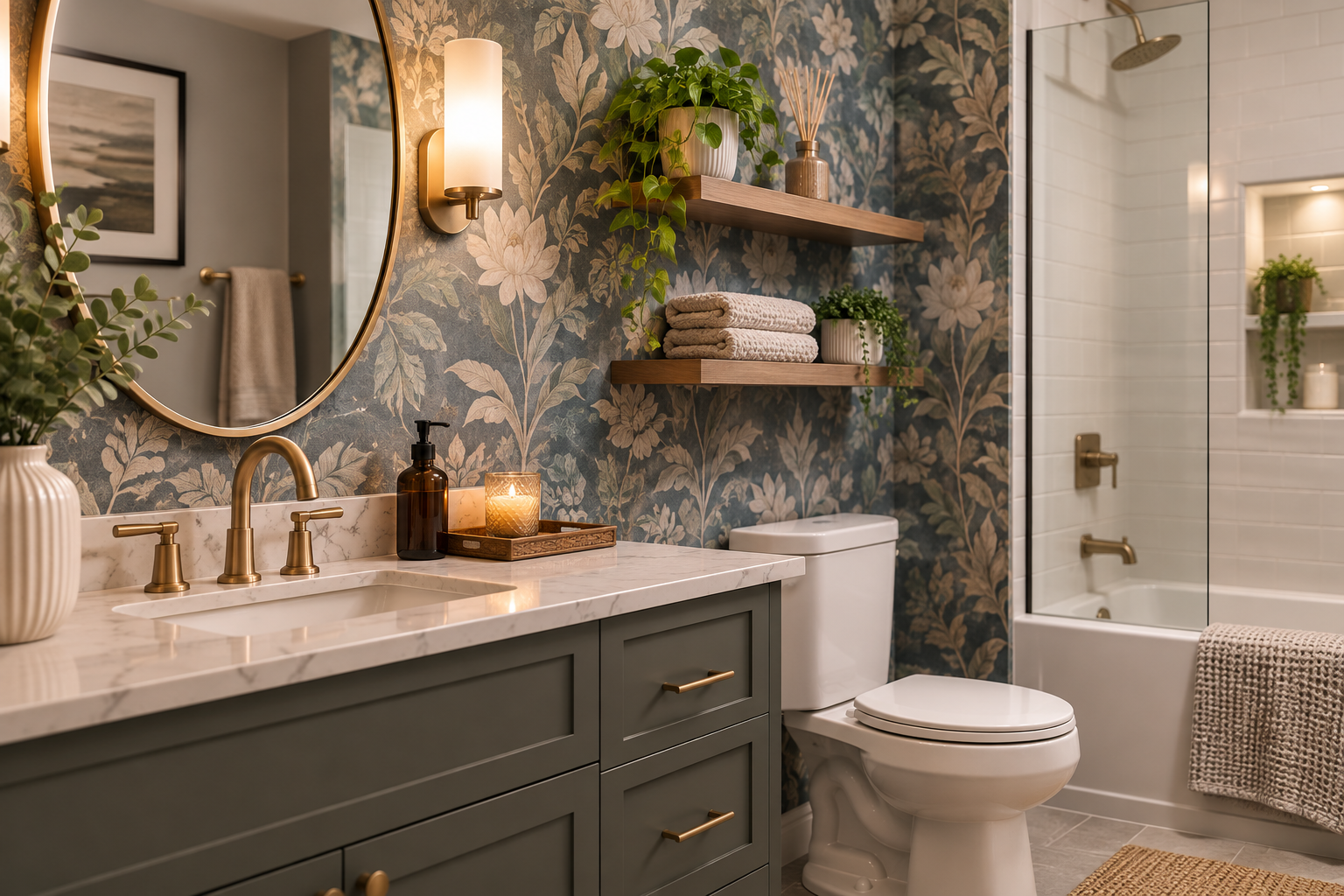
Three repaints in five years — that’s what my aunt’s bathroom went through before she gave up on paint entirely, and it’s the reason wallpaper for bathroom walls ended up on my radar at all. People still tense up at the idea, and fair enough, because paper plus steam used to be a losing bet. Something changed though, quietly, somewhere over the last decade. Coatings got tougher.
Adhesives stopped giving up after one humid summer. What used to be a coin flip now behaves more like a calculated bet. Nothing here is a sales pitch — just the mechanics of why some rolls survive a bathroom and others don’t.
Every Shower Floods The Room With Vapor. Then What?
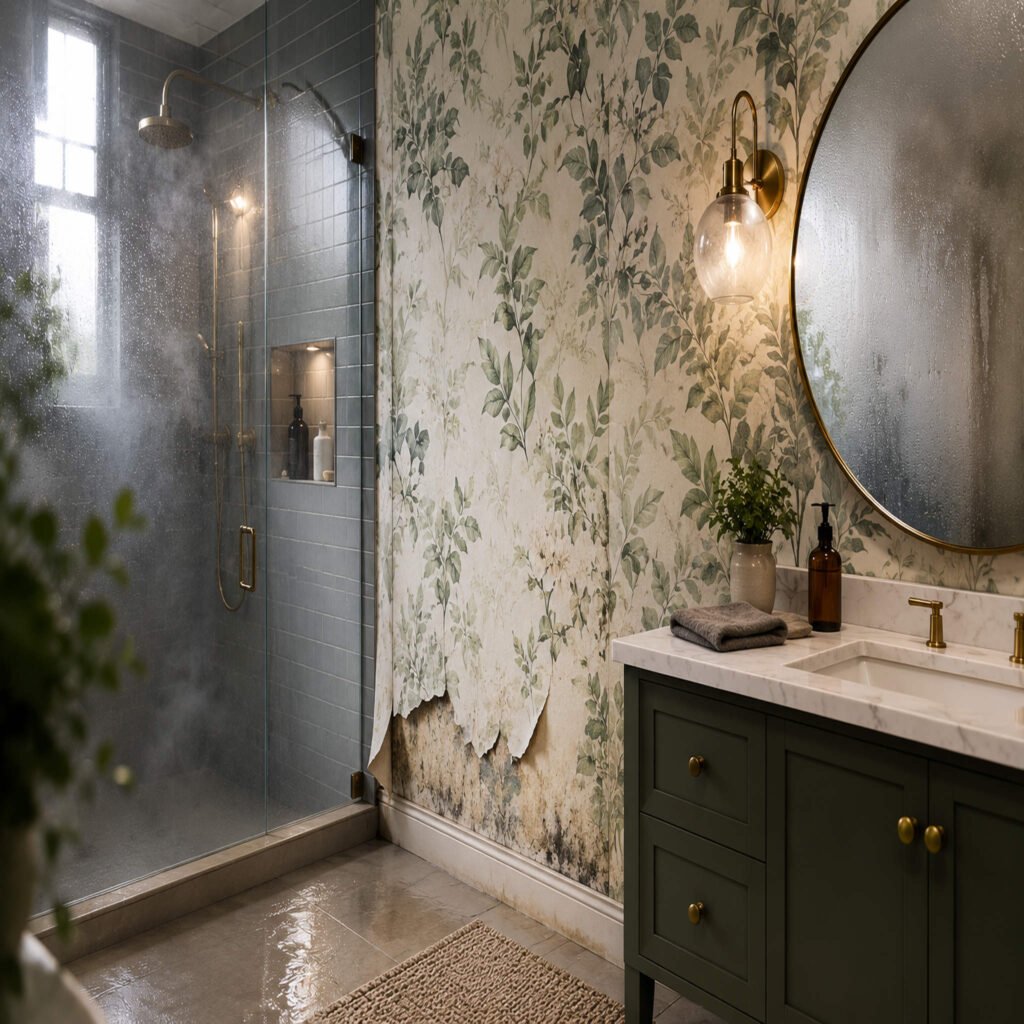
Here’s a number worth sitting with: a single hot shower can push out enough vapor to fog a mirror clear across the room. That moisture doesn’t vanish — it has to land somewhere. And when it lands on wallpaper that wasn’t built to take it, the signs show up fast. Edges lift first. Corners curl next. Then comes that faint mustiness nobody wants to be the one to point out.
Here’s the part most people skip past: “wallpaper” isn’t a single product wearing different prints. Some rolls are little more than printed paper with zero armor. Others are engineered vinyl built to shrug moisture straight off. That gap in construction quality decides more than any pattern ever will.
Nervous about a full renovation? A humidity tolerance breakdown from a paint and wallpaper retailer confirms peel-and-stick handles bathroom moisture reasonably well, making it a gentle entry point. Worth a look: our peel and stick option for exactly this hesitation.
Decorators Keep Landing On The Same Answer: Vinyl
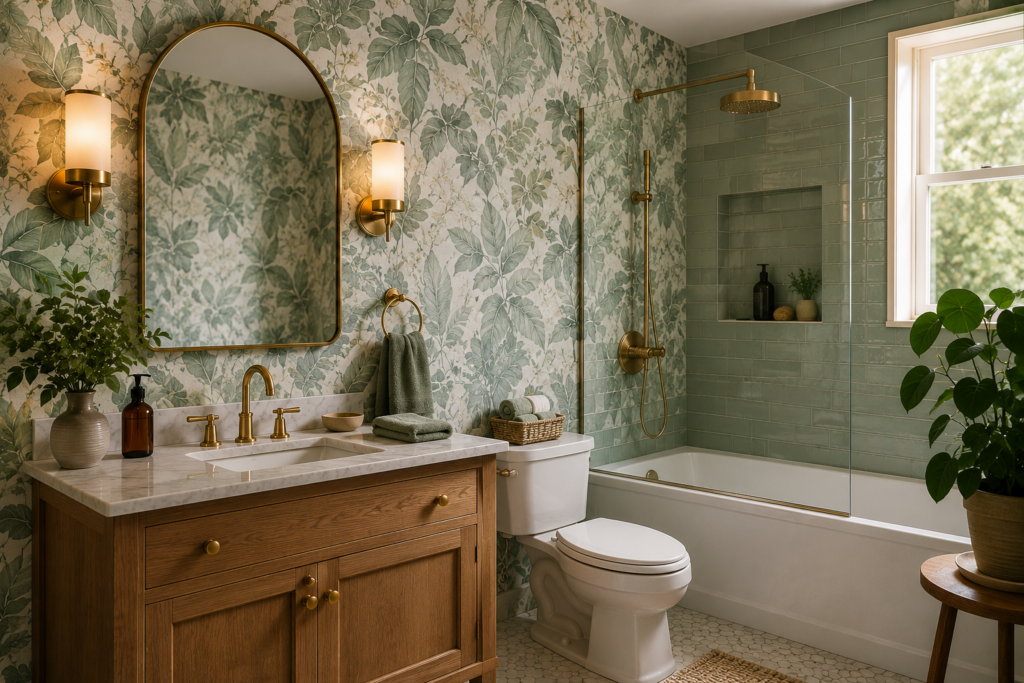
Poll ten decorators on which wallpaper for bathroom walls actually holds up, and eight will name vinyl without hesitating. Not brand loyalty — there’s a genuine mechanism behind that consensus.
The surface is sealed and non-porous, so steam has nothing to grip onto — it just rolls off. Zero swelling, zero slow breakdown lurking under the pattern. And cleanup is a non-issue: toothpaste flecks, hairspray drift, none of it warps the surface underneath.
That said, calling vinyl bulletproof would be dishonest. Prep work still decides outcomes, and even top-grade vinyl shouldn’t sit in the direct blast zone of a shower head. Full wall coverage near a tub demands the heaviest-duty rating you can find — something engineered for standing water contact, not just ambient humidity.
Chasing moisture protection without gutting the bathroom? Check our durable vinyl choice breakdown for what those tiny wavy-line symbols on the packaging are actually telling you.
Forget The Pattern For A Second — Location Decides Everything
Nobody talks about this enough: where you hang wallpaper matters just as much as which roll you choose. A bathroom isn’t a single moisture environment. It’s a patchwork — bone-dry in one corner, drenched three feet away — and treating every wall the same is exactly where most projects collapse.
Map it by exposure instead of guesswork.
| Zone | Moisture Level | Recommended Wallpaper |
| Wall behind vanity mirror | Low | Vinyl-coated, washable |
| Wall opposite shower | Low-Moderate | Washable or vinyl-coated |
| Wall beside sink | Moderate | Vinyl, wipeable finish |
| Wall inside shower enclosure | High | Full vinyl only, sealed edges |
| Powder room (no shower) | Very Low | Nearly any wallpaper works |
Walls tucked away from splash range — behind a toilet, say, or high above a mirror — can wear something far more delicate than a wall standing right next to an open shower. Once the bathroom gets mapped this way, wallpaper for bathroom walls stops feeling like a single risky bet. It turns into a handful of small, easy calls instead.
The Regular Wallpaper Trap Nobody Sees Coming

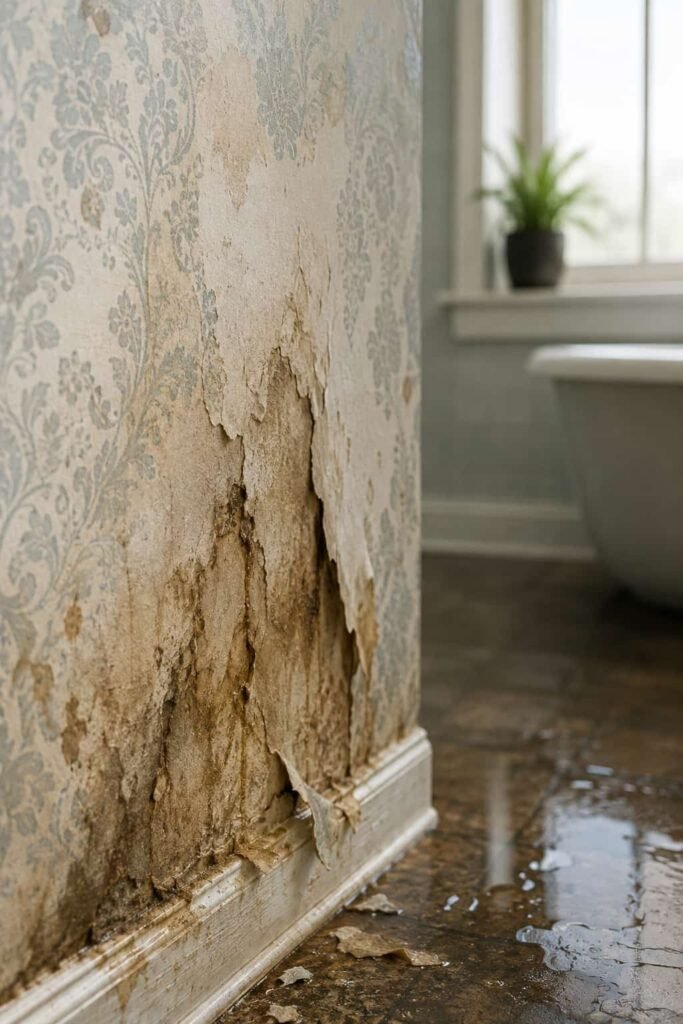
Somebody always wants to know if their favorite existing wallpaper can just work. Occasionally. Rarely, though, honestly.
Uncoated paper soaks up humidity like a sponge left in a wet sink. Moisture creeps in, the adhesive underneath goes soft, and eventually seams give way on their own schedule. Nothing about it is sudden — it’s a slow-motion failure, and by the time it’s visible, the damage already happened behind the surface.
Stuck on a pattern that only exists in plain paper? A few coats of proper sealant can stretch its lifespan in low-moisture pockets — a powder room, a wall nowhere near spray. It’s a delay tactic, not a fix.
But near actual water, skip the workaround. Start with wallpaper for bathroom walls that was built for the job in the first place.
Your Exhaust Fan Might Be The Real Villain
This section barely made the cut — it’s not really about wallpaper. Then I remembered how often the wallpaper gets blamed for what a dying exhaust fan actually caused.
Moisture control isn’t optional here. The official ventilation guidelines from the EPA confirm exhaust fans are the primary defense against mold and mildew buildup in bathrooms. Even the best vinyl wallpaper for bathroom walls loses the fight if steam has no way out. Flip the fan on before the water even starts, and leave it running twenty minutes after you’re done. Small habit. Outsized impact.
Underpowered or clogged fans cause trouble no matter what’s on the walls. So before pointing a finger at the wallpaper, check whether the fan upstairs is actually pulling its weight.
Refined Doesn’t Mean Delicate — Here’s The Proof
A myth keeps circulating that anything elegant-looking must also be fragile. Mostly false. Some of today’s most polished prints — marble veining, muted botanicals, restrained geometric lines — ship on fully moisture-rated vinyl.
The old style-versus-durability tradeoff barely applies anymore. That shift happened the moment manufacturers figured out how to print sharp, detailed patterns onto vinyl without losing resolution.
After something sophisticated? Browse our elegant pattern picks before settling for something generic. Want a sharper, more current feel instead? Our contemporary style guide might reshape what “practical” means to you.
Small Prep Errors That Undo Even The Best Wallpaper
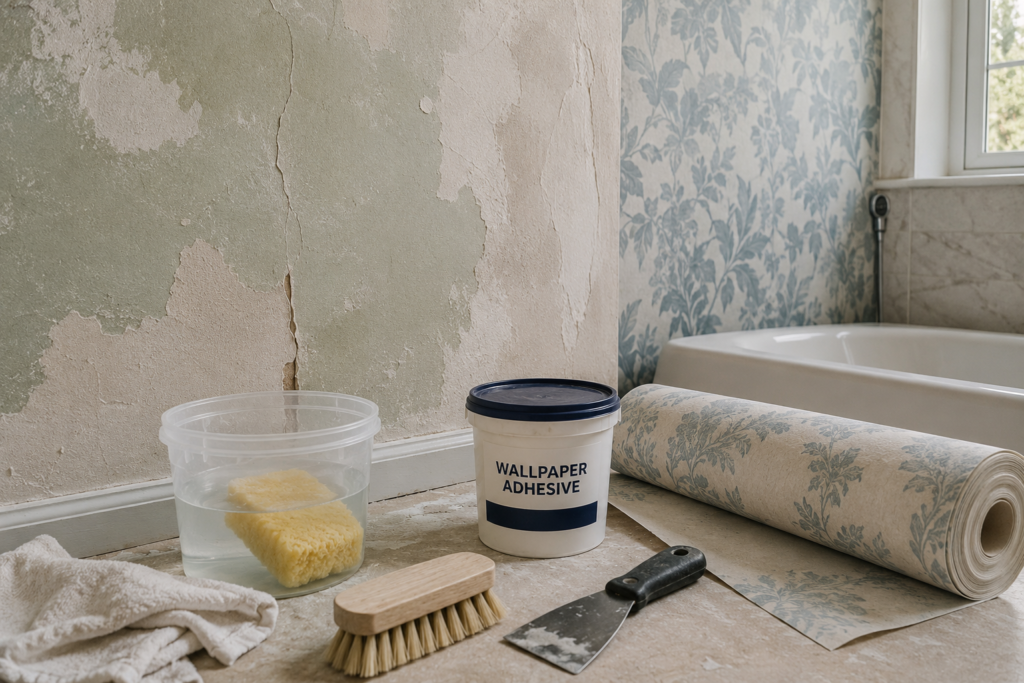
Premium wallpaper for bathroom walls still fails on a badly prepped surface. It won’t bond to a wall that’s damp, uneven, or dusty — clean and dry is non-negotiable.
Mistakes that trip people up over and over:
- Skipping the sugar-soap wipe-down before hanging anything
- Ignoring hairline cracks that show through later
- Grabbing a cheaper, weaker adhesive to save a few bucks
- Hanging wallpaper right after a shower instead of waiting the room out
Individually, none of these feel catastrophic. Stacked together, they quietly defeat even top-shelf vinyl.
Bottom Line: Is It Worth The Effort?
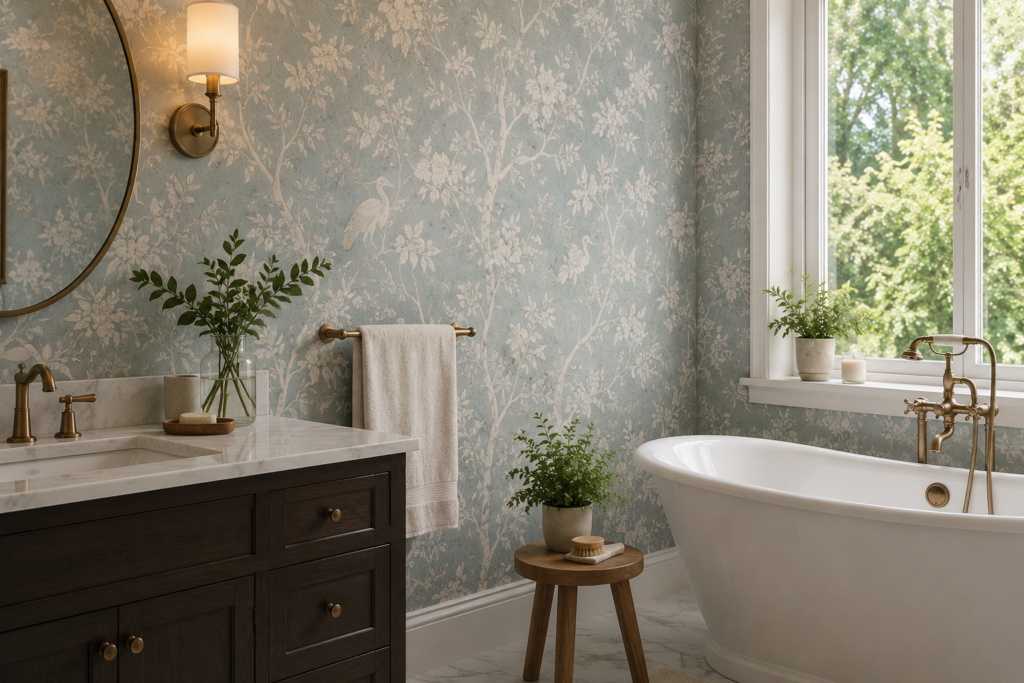
Short version — yes, as long as the grade matches the zone. Wallpaper for bathroom walls used to be a genuine gamble. Now it reads more like a calculated design decision, provided you respect where the moisture actually goes.
Need a wider starting point before narrowing anything down? Our full buying guide covers the fundamentals in more depth.
FAQs
Is wallpaper safe right next to a shower or tub?
Only with a full-coverage, high-humidity vinyl rating. Anything weaker eventually peels or traps moisture underneath.
How long does bathroom wallpaper realistically last?
Well-installed vinyl in a properly ventilated bathroom often holds up for ten to fifteen years.
Is peel-and-stick wallpaper a doable DIY project?
Mostly, yes — most peel-and-stick products are built for DIY hands, though wall prep still decides the outcome.
Does wallpaper shrink a small bathroom visually?
Not automatically. Lighter shades and vertical patterns can actually stretch a small room upward, not close it in.
Washable versus full vinyl — what’s the real difference?
Washable tolerates the occasional light wipe. Full vinyl handles direct splash and constant steam without soaking anything in.
DIY install or call a professional?
Bathrooms complicate things with moisture and tight corners, so a professional installer often earns their fee back.
Can wallpaper go straight over old paint?
Yes, provided the paint is fully cured, clean, and lightly sanded so the adhesive has something to grab.
What’s the safest way to remove mold-damaged wallpaper?
Ventilate the room first, glove and mask up, peel slowly, then scrub the bare wall clean before hanging anything new.
Final Thoughts
One thing worth remembering — wallpaper for bathroom walls was never really one decision. It’s several smaller ones layered on top of each other: the material grade, the specific zone it’s covering, the prep work beforehand, and the exhaust fan nobody thinks about until it fails. Skip even one of those, and gorgeous wallpaper can still let you down within a year.
Vinyl is what actually shifted the odds. Ten years back, hanging wallpaper in a bathroom felt like tempting fate on purpose. Now, sealed vinyl surfaces brush off steam that would’ve torn old-school paper apart in weeks flat. That single shift explains why people who once wrote wallpaper off completely are circling back to it.
The wet-zone-versus-dry-zone split sounds complicated but genuinely isn’t. Anything catching direct spray needs the toughest, fully sealed vinyl available. Anything set back — behind a vanity mirror, high above the sink — can carry something far softer with much less risk attached.
Don’t skip the unglamorous groundwork either. Wipe the wall down properly. Patch the hairline cracks. Let the room dry out fully before anything goes up. None of that looks impressive in photos, but it’s the real gap between wallpaper that lasts over a decade and wallpaper that starts curling within months.
Still on the fence? Spend one more evening comparing grades and patterns before committing. A rushed pick almost always costs more in redo time than a few days of deliberation upfront would have. Get the fundamentals locked in, and wallpaper for bathroom walls stops being a gamble altogether — it becomes one of the more rewarding upgrades for a room that usually gets the least design attention in the entire house.