

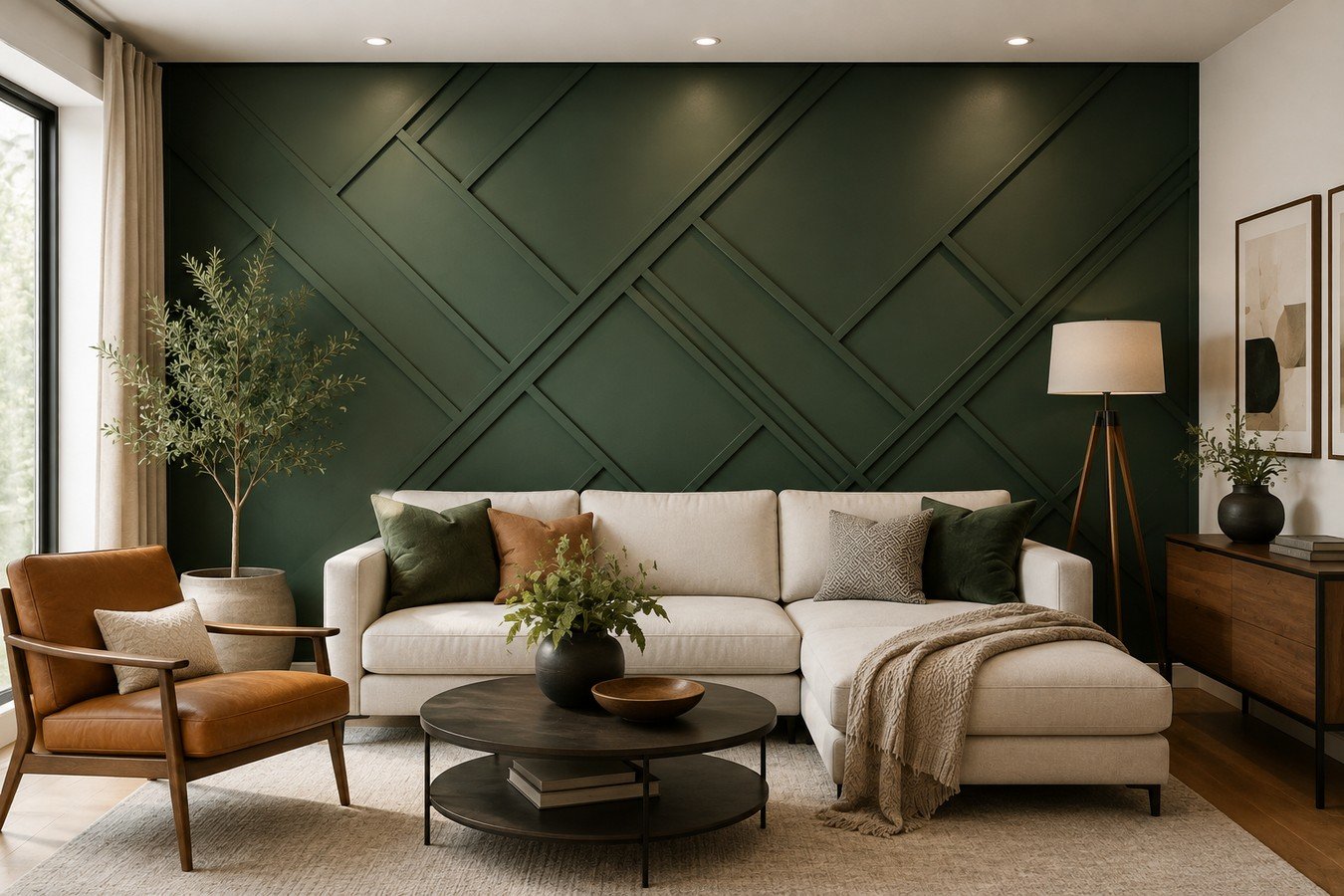
I’ve lost count of how many living rooms I’ve walked into where every wall is the exact same shade of “builder beige,” and the owner says some version of “it just feels flat, I don’t know why.” Nine times out of ten, the fix isn’t more furniture. It’s one wall doing something different from the other three.
That’s the whole idea behind an accent wall — you’re not redecorating the room, you’re just giving the eye somewhere to land. Simple concept. People still manage to overthink it constantly, myself included back when I painted my first apartment’s wall a color I can only describe as “aggressive eggplant.” Live and learn.
So here’s what I’ve picked up over the years — the ideas that actually work in real living rooms, not just in styled photos where the lighting is doing 90% of the labor. I’m not going to hand you a generic top-ten list either. This is a working list of accent wall ideas living room owners can realistically pull off without hiring anyone, covering paint, wallpaper, lighting, shelving, and a few material changes people forget even count.
One more thing before we get into it: not every one of these accent wall ideas living room owners try needs to be permanent or expensive to count. I’ve seen renters pull off wall transformations with nothing but peel-and-stick paper and a Saturday afternoon, and I’ve seen homeowners spend three weekends on a tile surround that ended up being the best money they spent on the whole house. Both are valid. The trick is matching the approach to your actual living situation instead of copying whatever’s trending on your feed this week.
Start With the Wall, Not the Color

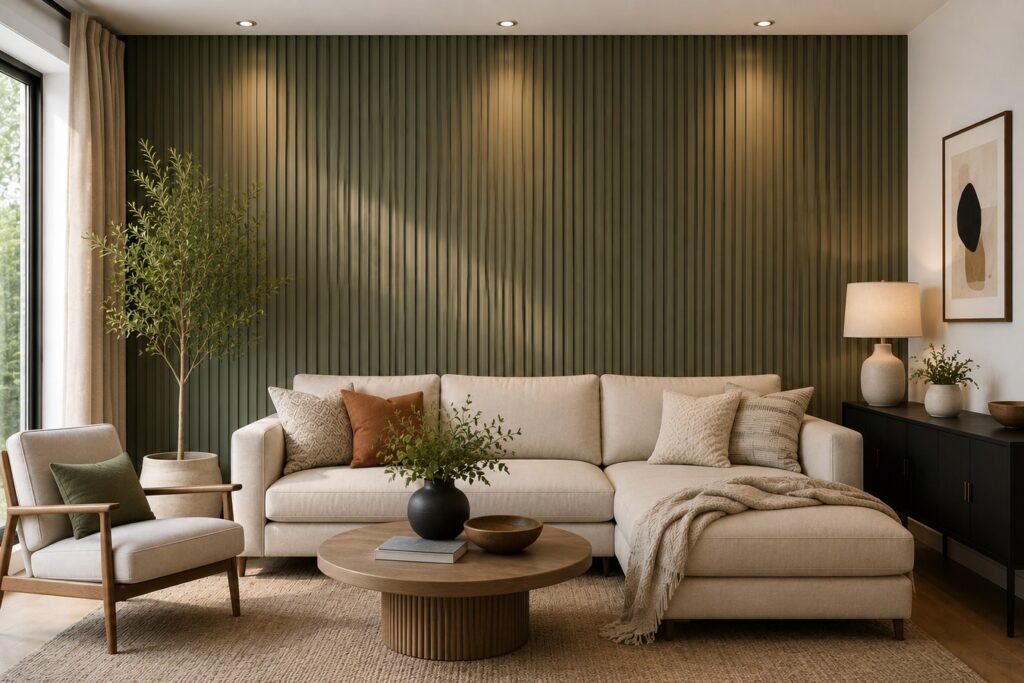
Before you touch a single swatch, figure out which wall deserves the attention. This is the step almost everybody skips, and it’s the reason so many living room accent wall projects feel randomly placed instead of intentional.
Your best candidate is usually the wall behind the sofa, or the one with the fireplace, or whichever surface your eye naturally drifts toward when you first walk in. Home Depot’s own accent wall guide puts it plainly — the feature wall in a living room is usually the one behind the TV or the sofa, and honestly, that’s held up every time I’ve tested it against a client’s instinct. It’s the first thing I check on every accent wall ideas living room consult I do, before color even enters the conversation.
One rule I break constantly, though: don’t automatically pick the first wall you see walking in. It sounds like the obvious choice, but that wall usually has a doorway cutting through it, which kills the effect before it starts.
Walls with a built-in focal point win first
If you’ve already got a fireplace, a big window, or built-in shelving, just work with it. Trying to compete against an existing focal point with a second one somewhere else in the room is how living rooms end up feeling busy instead of intentional.
Measure the sightline, not just the wall
Here’s something nobody tells you until you’ve done a few of these: the wall itself matters less than what you see from the couch, the doorway, and the kitchen pass-through, assuming your living room connects to one. Stand in each of those spots and take a mental photo. Whichever wall keeps showing up in that frame is your real answer, even if it’s not the biggest wall in the room or the one you assumed would be obvious.
I did this exercise in my own place a few years back and realized the wall I’d been planning to paint was barely visible from where anyone actually sits. Saved myself a wasted gallon of paint on that one.
Rooms with awkward layouts need a different approach
Long, narrow living rooms, or ones with three doorways crammed into two walls, don’t always have an obvious accent candidate. In that case, pick the wall with the least interruption — no doors, no windows, minimal outlets — even if it’s not the “main” wall by traditional logic. A clean, uninterrupted surface will always outperform a technically-more-visible wall that’s chopped up by trim and switch plates.
Paint Is Still the Fastest Way In
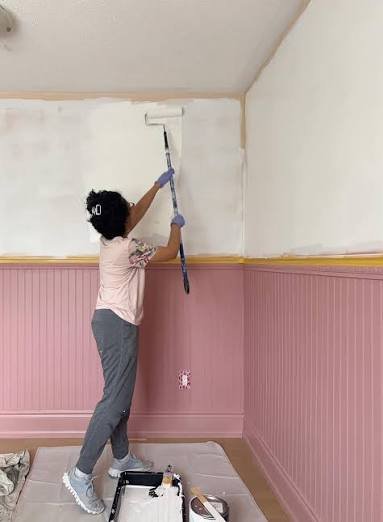
I keep steering clients toward paint before wallpaper, mostly because of what happens if they hate it. Paint’s an afternoon and a gallon. Wallpaper’s a weekend and a returns policy you’re hoping still applies. When people ask me for quick accent wall ideas living room paint alone can deliver, this is usually where I start.
That said, color choice matters more than people expect. A muddy, indecisive color reads as a mistake. A confident one reads as a decision.
- Deep navy or charcoal — dramatic without being trendy, and it makes white trim look sharper by comparison.
- Warm terracotta or rust — this one’s had real staying power the last few years, not just a flash-in-the-pan Pinterest moment.
- Forest or olive green — pairs shockingly well with wood tones, which most living rooms already have plenty of.
Here’s the thing most people miss: the accent color doesn’t need to be bold to work. A soft, barely-there tonal shift — same family, one shade darker — can be just as effective in a smaller room where a loud color would feel like it’s shouting. If you want a deeper breakdown of specific palettes that actually flatter a living room instead of fighting it, there’s a solid rundown on wall color ideas worth a look before you commit to anything.
Sheen matters more than people realize
Nobody talks about finish enough. A matte or eggshell finish on an accent wall reads as moody and intentional. Go satin or semi-gloss on the same color, and suddenly it looks like a hallway in a doctor’s office. For deep, dramatic colors especially, I almost always land on matte — it swallows light instead of bouncing it around, which is exactly what you want for that cocoon-like effect.
The one exception is a room that barely gets natural light. In that case, a slightly higher sheen can help bounce around whatever light you do have, so don’t rule it out entirely just because matte is trendier right now.
Test it for 48 hours before you commit
I say this to every single client and about half of them ignore me anyway: buy the sample pot, paint a two-foot square, and live with it for two full days before rolling out the whole wall. Morning light, afternoon light, lamp light at night — the color will look like three different colors depending on when you catch it, and you want to like all three, not just the one you saw in the store.
Don’t ignore the ceiling and trim
If you’re going dark or saturated on the accent wall, take a second and decide what’s happening at the ceiling line and the baseboards. Crisp white trim against a moody wall color reads as intentional and sharp. Trim painted the exact same white as your other three walls, with no transition thought given to where the accent wall meets the ceiling, can look like the paint just ran out halfway through the room.
Wallpaper, When You Want More Than a Flat Color
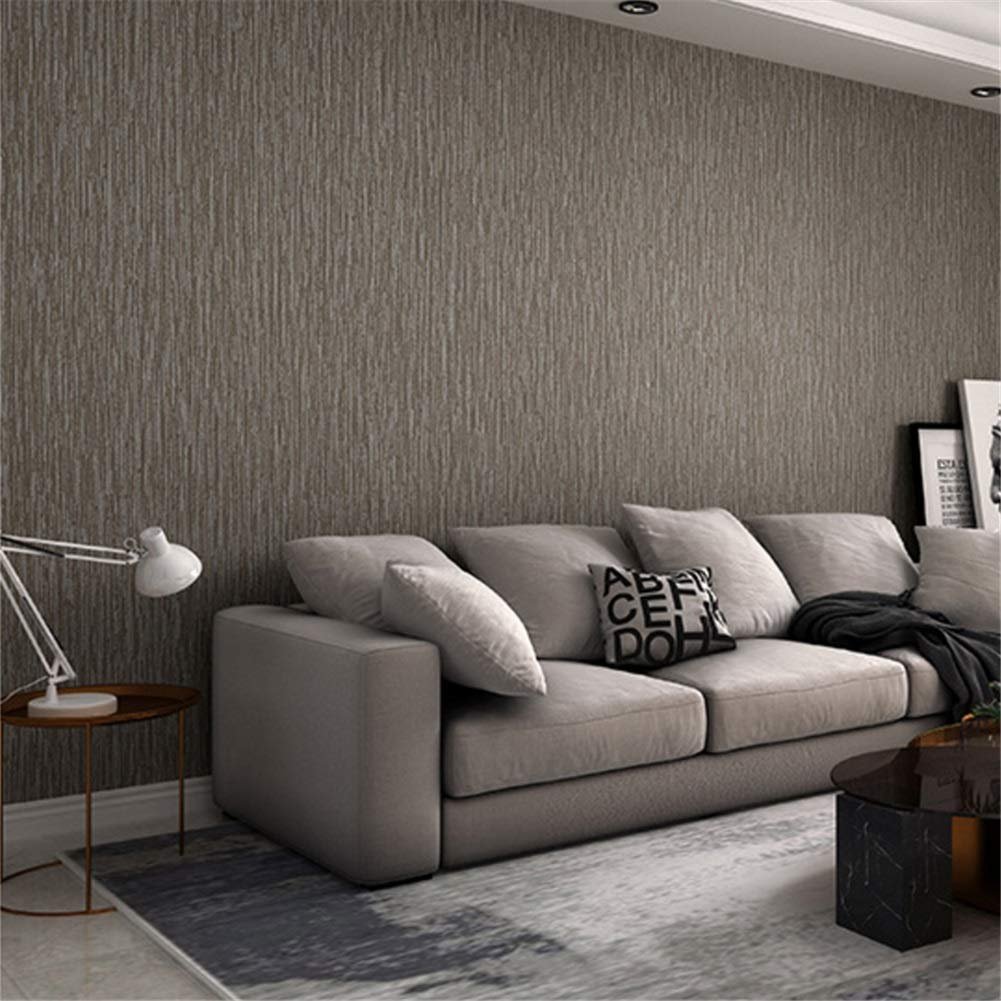
Paint is fast. Wallpaper is where the personality lives. If your living room already has good bones — decent light, a few nice furniture pieces — wallpaper on one wall can push the whole space from “nice” to “memorable” without touching anything else in the room. Out of every category on this list, wallpaper is where accent wall ideas living room owners send me the most photos afterward.
I’ve noticed people get nervous about pattern because they’re imagining an entire room wrapped in it. That’s not what an accent wall is. You’re containing the drama to one surface, which means you can go bigger and bolder than you’d ever dare on all four walls.
Texture reads as expensive even when it isn’t
Grasscloth, linen-look vinyl, subtle geometric embossing — these all photograph flat but feel completely different in person. That tactile quality is honestly doing more work than the pattern itself in most rooms I’ve seen. If you’re weighing your options here, this guide to wallpaper accent walls covers a wider range of textures and finishes than most people realize exist.
Pattern scale changes everything
A tiny, busy print can make a wall feel cluttered from across the room, while a large-scale, simplified pattern often reads as calmer even though it’s technically “bolder.” I learned this the hard way on a client project where we swapped a small floral for an oversized leaf print and the whole room suddenly felt bigger, not smaller.
Neutral doesn’t mean boring
If bold pattern isn’t your thing, that doesn’t rule wallpaper out entirely. A subtly textured neutral paper still adds dimension that flat paint just can’t, and beige or greige tones in a woven or grasscloth-style finish tend to be the easiest sell for anyone sharing the decision with a partner who’s allergic to bold color.
Where wallpaper actually pays for itself
Wallpaper costs more per square foot than paint, no getting around that. But on a single accent wall, you’re usually only covering 100 to 150 square feet, which keeps the total cost reasonable even with a higher-end paper. I’ve had clients balk at a $90-a-roll wallpaper for a whole room, then happily spend that same money once they realized it was only going on one wall. Framing the cost that way tends to change the conversation fast.
Installation is the part people underestimate, though. A textured or patterned paper with a repeat takes real patience to line up, especially around outlets and window trim. If you’ve never hung wallpaper before, an accent wall is a genuinely good place to practice — low stakes, small surface area, and if you botch a seam, it’s one wall, not four.
Matching wallpaper to a specific look
If you already know your general aesthetic — traditional, transitional, whatever you want to call it — it helps to browse within that category instead of scrolling endlessly through everything available. There’s a solid collection of classy wallpaper designs that leans toward the timeless end of things, which is useful if you’re the type who gets nervous about a pattern feeling dated in three years.
Wood Paneling and Shiplap, Without the Farmhouse Cliché
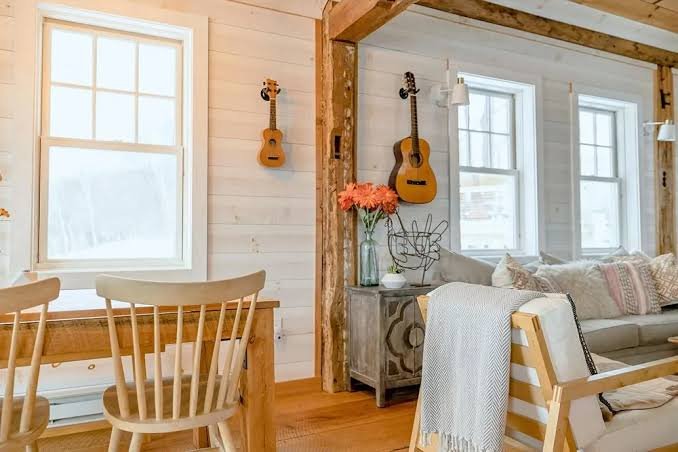
Shiplap had its cultural moment and then got a little overexposed — fair. But wood texture on a wall, done with restraint, still holds up. The trick is scale and finish. Of all the accent wall ideas living room clients bring me, wood paneling is the one that ages the most gracefully, since it’s a material choice rather than a color trend.
Vertical slat paneling, sometimes called batten walls, tends to look more current than horizontal shiplap right now. It draws the eye upward, which is genuinely useful in rooms with lower ceilings. Paint it the same color as the wall behind it for subtlety, or go two-tone if you want it to actually announce itself.
Reclaimed or distressed wood works if your living room already leans rustic or industrial. In a more modern space, though, it can look like it wandered in from a different house entirely — so match the material to what’s already there, not to whatever’s trending.
Get the plank direction right for your ceiling height
I mentioned vertical slats making low ceilings feel taller, but the opposite is true too — if you’ve got generous ceiling height already and want a wall that feels grounded and cozy rather than soaring, horizontal shiplap or wide-plank paneling does that job better. Match the direction to the problem you’re actually trying to solve, not to whatever look you saw first.
Budget wood options that don’t look cheap
Real reclaimed wood isn’t cheap, and MDF plank kits can look obviously fake if the finish is too smooth or too uniform. The middle ground I recommend most often is a paint-grade tongue-and-groove board, installed with slightly uneven spacing and then painted in a single color. It photographs like a much pricier custom build, and most people can’t tell the material cost difference once it’s painted and styled.
Gallery Walls: The Accent Wall for Commitment-Phobes
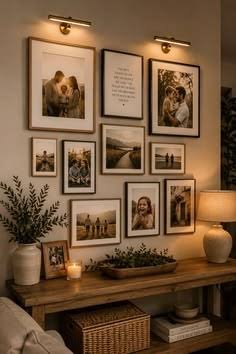
If painting a whole wall feels like too big a leap, a gallery wall gets you 80% of the visual impact with none of the paint fumes. Group frames, mirrors, or art in varying sizes on one wall, and suddenly that wall has a personality the others don’t.
Here’s my honest opinion: most gallery walls fail because people space everything too evenly. A little visual tension — some pieces closer together, some slightly off-grid — reads as curated. Perfectly even spacing reads as a corporate hallway.
For more direction on pulling this off without it looking like you just grabbed whatever frames were in the closet, check out this piece on wall decor ideas — it ties into the broader living room accent wall thinking this whole guide is built around, with good guidance on mixing frame sizes and finishes so the whole arrangement feels intentional rather than accidental.
Lay it out on the floor first, always
I cannot stress this enough after watching too many people hammer nails straight into drywall based on guesswork alone. Tape butcher paper to the floor in the shape of your wall, arrange the actual frames on top of it, step back, take a photo, adjust, and only then start hanging. It takes maybe twenty extra minutes and saves you from a wall full of patched nail holes.
A three-inch gap between frames is a decent default for a cohesive look, though I’ll break that rule deliberately when I want a looser, more collected-over-time feeling. Mismatched frame finishes — a few black, a couple of natural wood, one brass — read as curated rather than sloppy, as long as there’s some other unifying thread, like matting color or subject matter, tying it together.
Mirrors count as gallery pieces too
Don’t limit yourself to framed art. A cluster that mixes two or three mirrors of different shapes with a handful of art pieces adds reflected light into the mix, which is genuinely useful in a living room that only gets natural light from one direction.
Statement Lighting as the “Wall”
This one surprises people, but lighting can function as an accent wall even without paint or paper involved. A row of sconces, an oversized art light, or a dramatic wall-mounted fixture draws the eye the same way color does — sometimes more effectively, since it works day and night.
I’ve used this trick in rentals specifically, where painting isn’t an option. A pair of brass sconces flanking a piece of art turns an otherwise blank wall into the room’s focal point, and you take it all with you when you move.
If lighting feels like an angle you haven’t fully explored, there’s a good roundup of wall sconce ideas that breaks down placement height and spacing — details that make or break whether the fixtures look designed or just stuck on.
Textured Tile or Stone (Yes, In a Living Room)
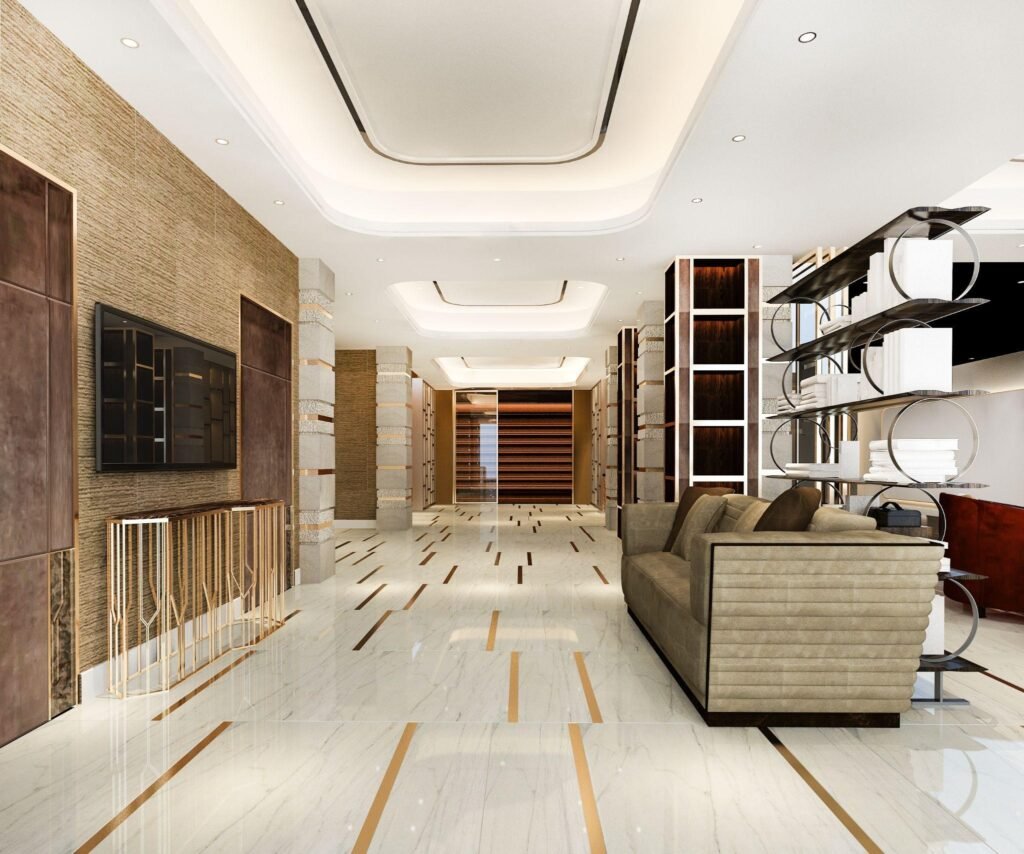
Tile isn’t just for kitchens and bathrooms anymore, and I say that as someone who was skeptical the first time a client asked for it around their fireplace. A vertical stack of natural stone, or even a bold ceramic tile in an unexpected color, can turn a fireplace wall into the obvious centerpiece of the whole room.
It’s a bigger investment than paint, no question. But it’s also the option least likely to look dated in five years, since natural materials tend to age better than whatever paint color is trending this season.
Built-Ins and Shelving as a Structural Accent
Sometimes the “accent” isn’t color or pattern at all — it’s architecture. Floor-to-ceiling built-in shelving, especially painted a contrasting color from the rest of the room, does everything an accent wall does and gives you storage on top of it.
This is the option I push hardest for smaller living rooms specifically, because it solves two problems at once: the flat-wall issue and the never-enough-storage issue. Win-win, and it photographs beautifully once it’s styled with books and a few objects instead of crammed full.
Mixing Materials on a Single Wall
Once you’re comfortable with the basics, this is where it gets fun. Half paneling, half paint. Wallpaper on the top two-thirds, board-and-batten below. A tile surround with paint above it. Mixed-material walls take more planning, but the payoff is a wall that looks custom rather than picked off a shelf.
The one thing I’d caution against: don’t mix more than two materials on a single wall. Three starts to look like you couldn’t decide, rather than like a deliberate design choice.
Accent Walls in Small Living Rooms
Small rooms get treated like they need to play it safe, and I disagree with that almost every time. A small living room with four pale walls doesn’t feel bigger — it just feels blank. One confident wall, even a dark one, gives the room a sense of depth that flat, matching walls never will. Some of the best accent wall ideas living room owners with tight square footage ever try are the boldest ones, not the safest.
The trick in a tight space is picking the far wall, the one directly across from the main entry point, rather than a side wall. A dark or patterned wall at the far end of a small room draws the eye back and actually makes the space feel like it extends further than it does. Put that same treatment on a side wall in a narrow room, and it can make the space feel like it’s closing in instead.
Mirrors help here too, and not just as gallery pieces. A large mirror placed on the wall adjacent to your accent wall — never directly on it, since that just cancels the effect — bounces the color and light back into the room instead of trapping it in one corner.
Furniture and rug choices that support the wall instead of fighting it
An accent wall doesn’t exist in isolation, even though most photos treat it like it does. Whatever’s sitting in front of it needs to hold its own without matching so closely that the wall disappears. If you’ve gone dark and moody on the wall, a lighter rug and lighter upholstery keep the room from feeling like a cave.
If your wall is doing something loud and patterned, the safest move is pulling one or two colors out of that pattern and repeating them in a throw pillow or a single accent chair — just enough to tie it together without echoing the whole thing.
I’ve walked into rooms where the accent wall was genuinely beautiful and the room still felt off, purely because the sofa fabric was competing with it instead of grounding it. It’s worth thinking about the wall and the furniture as one decision, not two separate ones made months apart.
What Accent Wall Ideas Living Room Projects Actually Cost
Budget expectations vary wildly depending on the route you take, and it’s worth being honest about that upfront instead of letting a Pinterest board set unrealistic expectations. Cost is usually the deciding factor once someone’s narrowed their accent wall ideas living room shortlist down to two or three options.
- Paint: Realistically $40–$80 for a single wall, including a quality primer if you’re going from light to dark. This is the cheapest entry point by a wide margin.
- Peel-and-stick wallpaper: Usually $60–$150 depending on the brand and pattern complexity, and it’s fully reversible if you’re renting.
- Traditional pasted wallpaper: Anywhere from $150–$400 for materials on an average-size wall, more if you’re hiring an installer for a tricky pattern match.
- Wood paneling or shiplap: $200–$600 in materials for a DIY job, climbing fast if you bring in a contractor.
- Tile or stone: The priciest option by far, often $500 and up once you factor in adhesive, grout, and labor if you’re not doing it yourself.
None of these numbers should be treated as gospel — regional material costs and labor rates swing things in either direction. But as a rough gut-check, paint and peel-and-stick paper are where I point anyone who’s testing the accent-wall concept for the first time and isn’t ready to commit real money to it yet.
How to Choose the Right Accent Wall Ideas for Your Living Room
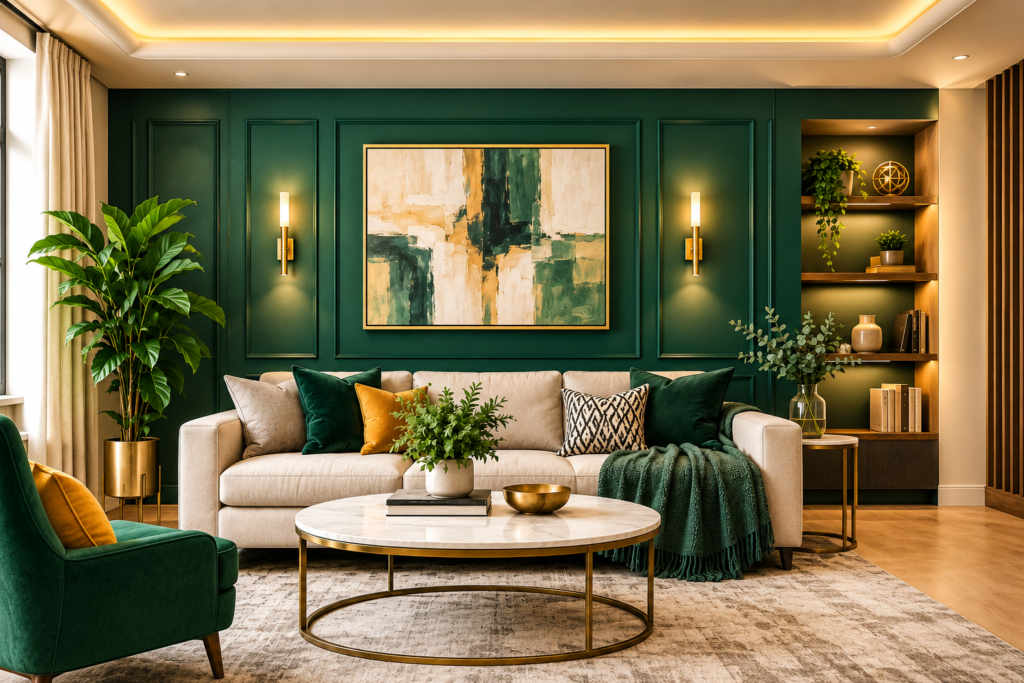
Standing in front of all these options can be paralyzing, so here’s the shortest version of the decision I walk clients through:
- Renting or non-committal? Peel-and-stick wallpaper or a gallery wall.
- Want drama with zero pattern anxiety? Bold paint color.
- Room already has good architecture? Lean into it with tile, paneling, or built-ins rather than fighting it with paint.
- Small space? Go tonal instead of high-contrast — same color family, one or two shades off.
If you’re still torn on wallpaper specifically, the short version is this: hold the sample up in the actual room, at the actual time of day you use it most, before you order a single roll. Scale, lighting, and how a pattern reads from six feet versus two feet away all shift more than people expect once it’s on the wall instead of on a small swatch card.
How Your Wall Changes Through the Day (and Why That Matters)
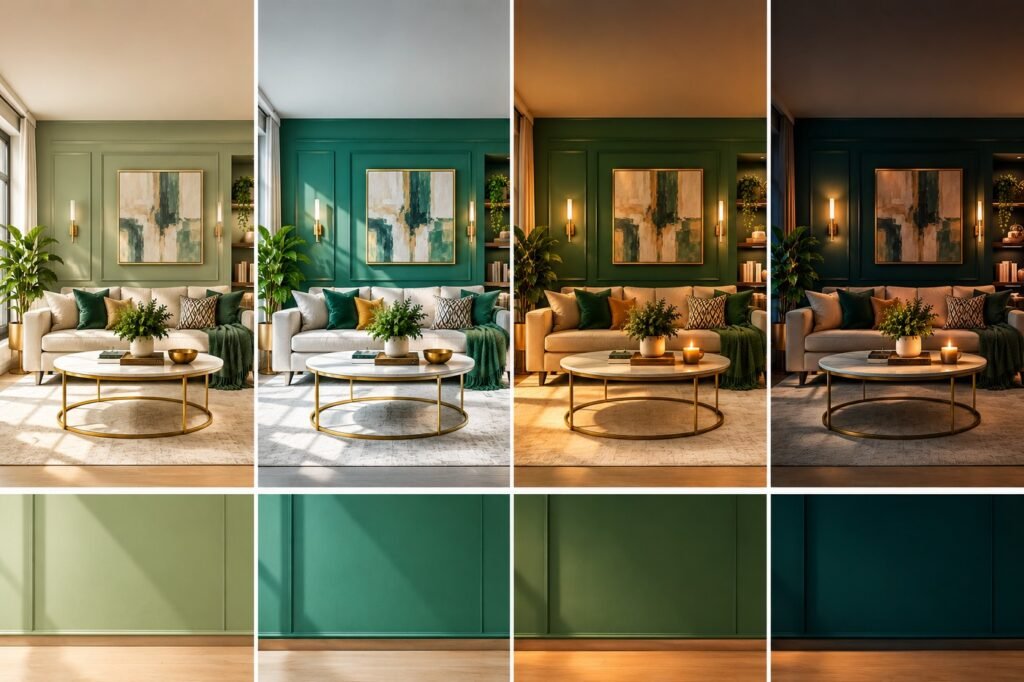
This is the section I wish someone had walked me through before my first accent wall project instead of after. Paint and wallpaper both shift dramatically depending on the light hitting them, and a living room usually gets several different kinds of light across a single day — cool morning light, warm afternoon light, then whatever your lamps and overheads are doing at night.
A north-facing living room tends to get cooler, flatter light all day, which means colors can read slightly duller or grayer than they did on the paint chip. South-facing rooms get warmer, more golden light, which is generally more forgiving and tends to make colors look richer than expected. If your living room leans north, I’d nudge you toward warmer undertones in whatever color you pick, just to counteract that natural coolness rather than fight it.
At night, everything comes down to bulb temperature. Warm bulbs, anything in the 2700K–3000K range, will pull out the warmth in a color and can make some blues or greens look muddier than they did in daylight. Cooler bulbs do the opposite. If you’ve already got a lighting setup you’re not planning to change, test your paint or paper sample under those exact bulbs before you commit, not just under whatever lighting happens to be in the store or the sample catalog photo.
Seasonal light shifts are real too
Depending on where you live, the angle and intensity of natural light coming through your windows changes meaningfully between summer and winter. A wall that looked perfect in July can feel noticeably different by December once the sun’s lower in the sky and the light coming in has shifted color. This isn’t a reason to avoid bold choices — it’s just worth knowing going in, so a slight seasonal shift doesn’t feel like you made the wrong call when really it’s just the light doing what light does.
Where This Trend Is Actually Headed
I get asked a lot whether accent walls are “still a thing,” usually by someone who read a headline somewhere declaring them dead. The honest answer is that the specific version — one wall, one bold contrasting paint color, three neutral walls around it — has cooled off some, mostly because it’s been the default move for over a decade and default moves eventually start to feel default.
What hasn’t cooled off is the underlying instinct: give a room a focal point instead of letting every surface compete equally for attention. That instinct is just showing up in different forms now — ceilings treated as a fifth wall, architectural moments like an arched niche or a fluted panel, doorways and trim painted in a contrasting color instead of the wall itself.
The accent wall ideas living room owners gravitate toward today just look a little different than they did ten years ago. If the classic single-color accent wall doesn’t excite you anymore, that doesn’t mean the idea is off the table. It just means the execution has more options than it used to, and honestly, that’s a good thing for anyone who was getting a little tired of seeing the same navy-blue-wall-behind-the-sofa setup in every other living room tour online.
If your instinct says bold paint is still the right call for your space, don’t talk yourself out of it because a headline said otherwise. Trends are directional, not mandatory, and a well-executed accent wall in a room that’s otherwise thoughtfully put together doesn’t read as dated — it reads as a choice someone actually made on purpose.
A Few Mistakes I See Constantly
- Painting the wrong wall. Usually the entry wall instead of the one behind the seating.
- Going too matchy. An accent wall that coordinates with literally everything else in the room stops functioning as an accent — it just blends in.
- Skipping the undertone check. That “warm gray” can turn lavender under certain bulbs. Always test a swatch at night and during the day before committing.
- Overcrowding it with decor. An accent wall is already doing the visual work. Piling gallery frames on top of bold wallpaper usually just looks cluttered.
These four mistakes account for nearly every accent wall ideas living room project I’ve been called in to fix after the fact, so catching even one of them ahead of time saves a repaint down the line.
For a wider gut-check on what’s currently working, 1stDibs rounded up a batch of designer-created accent walls that’s worth a skim — it’s a good reminder that a well-chosen mural or wallcovering can hold its own next to genuinely high-end furniture, which is really the bar you want your own wall to clear, even on a fraction of that budget.
Final Thoughts
An accent wall is one of the cheapest, fastest ways to make a living room feel like someone actually lives there on purpose. You don’t need a full renovation, a design degree, or a five-figure budget — you need one wall, a decision, and the nerve to commit to it. Out of everything covered here, the best accent wall ideas living room owners land on are almost always the simplest ones done with conviction, not the most complicated ones done halfway.
If I had to leave you with one piece of advice, it’s this: pick the wall the room is already pointing you toward, then go slightly bolder than your gut says is safe. The safe choice is the one that ends up feeling flat again in six months anyway.
Give one wall a shot this weekend. Worst case, it’s a gallon of paint and an afternoon — best case, it’s the thing everyone notices the second they walk in.
FAQs
What are the best accent wall ideas living room owners should try first?
Paint is the lowest-risk starting point, followed by peel-and-stick wallpaper if you want pattern without commitment. Both are reversible, cheap, and give you a real feel for whether bold works in your space before you invest in anything permanent.
Which wall should be the accent wall in a living room?
Usually the wall behind the sofa or the one with the fireplace — basically wherever your eye naturally lands first when you walk into the room. Avoid the entry wall since doorways interrupt the effect.
Is it outdated to have an accent wall in 2026?
Not outdated, just evolving. Designers are split on the classic single-color-splash approach, but textured, tonal, and architectural living room accent wall ideas — paneling, built-ins, tile — are still going strong.
How do I pick a color that won’t feel dated in a few years?
Lean toward deep, natural tones — navy, forest green, terracotta — over trend-driven brights. Earthy colors tend to age more gracefully than saturated, of-the-moment shades.
Can I do an accent wall if I’m renting?
Yes — peel-and-stick wallpaper, gallery walls, and statement lighting all deliver the same visual effect without touching the actual paint or walls, and they come with you when you move.
Should the accent wall match my furniture color?
It should coordinate, not match exactly. A wall that’s too close in tone to your sofa or rug tends to disappear instead of standing out, which defeats the whole point.