

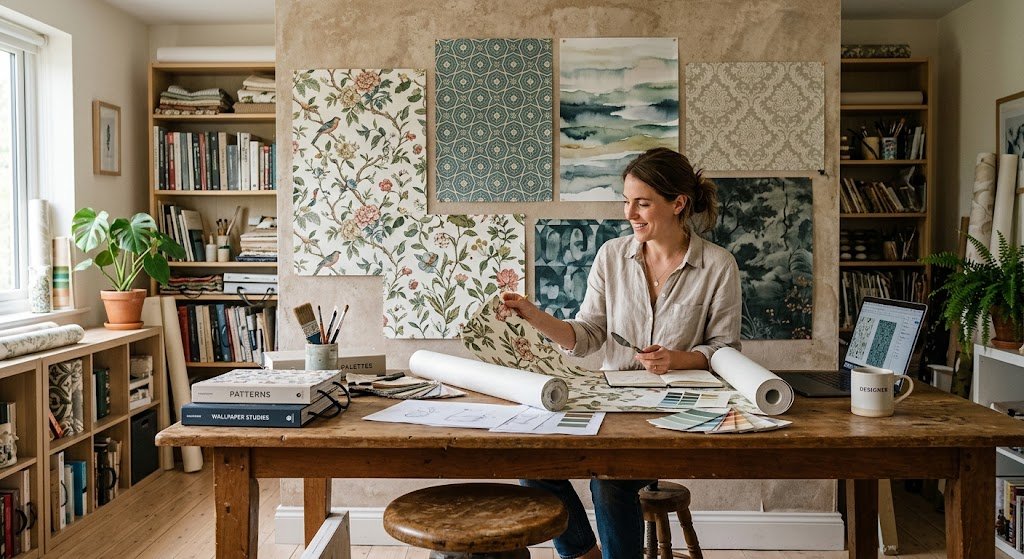
A client handed me a stack of her late mother’s watercolor sketches once and asked, half-serious, “could you turn these into my dining room wall?” Turns out, yes. And the moment that print went up floor to ceiling, I got why people become a little fixated on this whole idea.
Most wallpaper articles read like spec sheets — DPI numbers, adhesive brands, nothing you’d actually say out loud to a friend. I’d rather walk you through this the way I’d explain it over coffee, standing in your actual living room, trying to figure out if the effort’s worth it for you specifically.
Short version: probably yes. The rest of this explains why.
Why Custom Wallpaper Grabs People the Way It Does
There’s a particular feeling that comes from a wall nobody else on earth has — not something you spotted on forty different Pinterest boards. I’ve seen homes with perfectly nice off-the-shelf florals. I’ve also seen a hallway wrapped in a print made from a family’s own handprints, turned abstract, and that second room simply lands differently.
A custom order sidesteps whatever pattern a factory somewhere decided was in style this year. Hand over an old photograph, a painting you love, or even that faded recipe card in grandma’s handwriting, and a print shop can scale it to fit your exact wall.
It costs real money and takes real patience. What you get back, though, answers to nobody but you.
I won’t pretend custom is the right move every time. Chasing a specific vibe — think coastal, or moody, or stripped-down minimalist — a good pre-made pattern will usually get you there quicker and for less money. Where custom earns its keep is when the story behind the artwork matters just as much as the visual itself.
The Emotional Side Catches People Off Guard
More than one client has teared up mid-install. A woman I worked with used a photo of her childhood garden, stretched across her entire hallway. She told me walking past it felt like visiting her grandmother again. A department-store roll simply can’t do that for anyone.
Prepping Your Artwork Without Ruining the Print

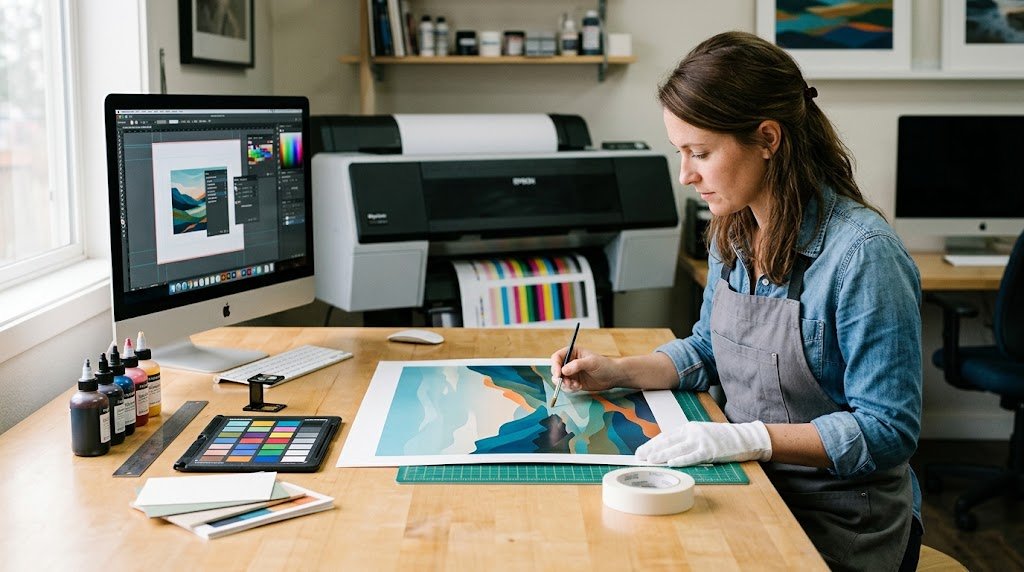
Let’s get practical for a second. Nothing wrecks a custom wall faster than bad resolution — it’s the one thing that separates a print you’ll love from one you’ll wince at every morning. A photo that looks fine on your phone screen has a nasty habit of turning into a soft, blurry mess once it’s blown up across eight feet of wall.
I won’t sign off on anything printing below 150 DPI at its final size, no matter how tempting the design is. Go lower than that and the softness becomes obvious the second daylight hits it.
- Bring in a designer if the artwork needs cleanup work
- Always order a small test print before committing to the full wall
- Measure your wall twice — I’ve botched this myself more than once
Most print-on-demand shops will hand you their file specs, but don’t expect them to flag your mistakes for you. They tend to print whatever you send, flaws included.
Peel-and-Stick or Traditional Paste: Pick Your Fighter
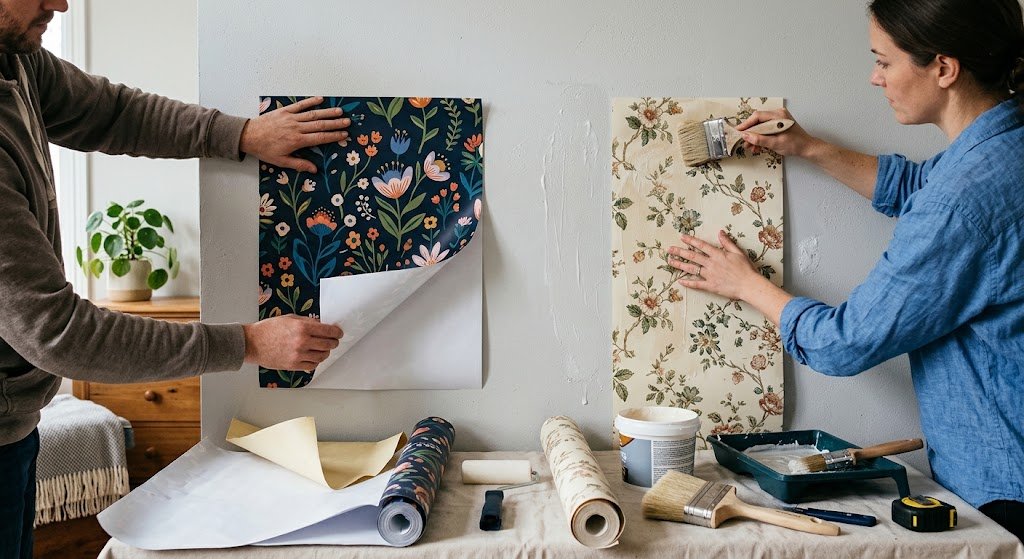
This is usually where people freeze up, and it’s a fair place to freeze. The two installation paths couldn’t feel more different, and neither asks for the same level of commitment.
Custom peel-and-stick is the renter’s best friend — forgiving, low-stakes, and weirdly satisfying to hang on a lazy weekend. No paste mess, no wrecked drywall if you mess up a strip, and fixing a crooked section takes seconds rather than a meltdown. For a broader look at the material itself, there’s a thorough rundown on what separates a solid peel and stick wallpaper from a flimsy one.
Traditional pasted custom prints lay flatter and hold up longer, sure, but they demand a bigger commitment — and pulling them down later is genuinely unpleasant. I’d only suggest this route to homeowners who are confident they won’t repaint anytime soon.
Renters, Skip the Paste Entirely
If you’re renting, don’t let anyone talk you into a pasted custom print. I’ve watched too many security deposits vanish over exactly this decision. Peel-and-stick is the safer bet, no exceptions.
Choosing a Wall That Actually Earns the Splurge
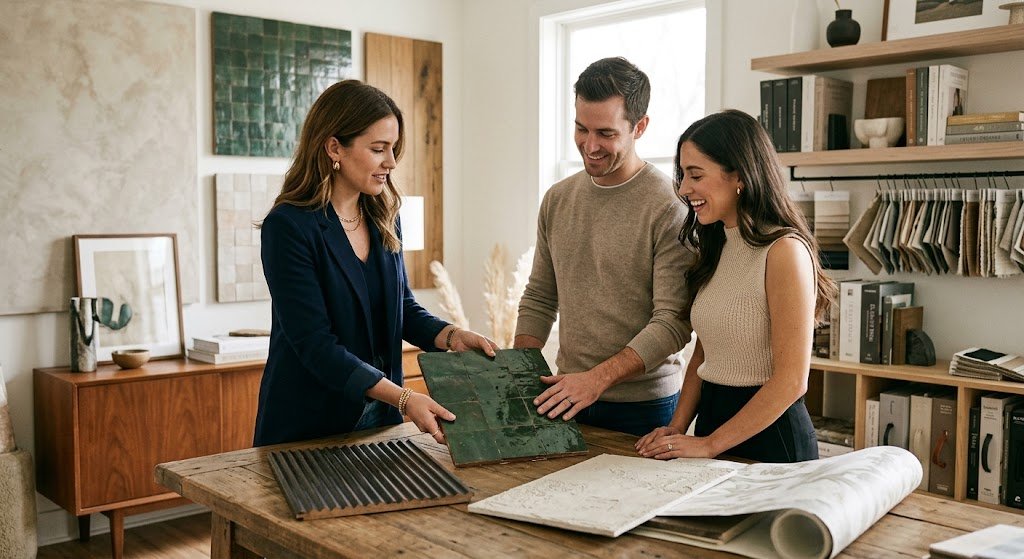
Not every wall deserves the custom treatment. Save the budget for a space you’ll genuinely notice every day — a nursery corner, an entryway, that little reading nook nobody else sees but you.
I usually talk clients out of custom-printing an entire open living room. It’s costly, and one well-chosen feature wall typically does more visual heavy lifting anyway.
Nurseries happen to be my favorite canvas for custom work, mostly because the design ideas get delightfully specific — a skyline from mom’s home country, a hand-drawn parade of animals, whatever tells that particular family’s story. Anyone heading that direction should browse a dedicated collection of nursery wallpaper before commissioning something one-of-a-kind.
Colors and Patterns That Won’t Embarrass You in Five Years
Trends fizzle out fast. Custom wallpaper, once it’s mounted, tends to stick around well past whatever trend inspired it — mostly because of the cost involved in redoing it. So pause before chasing whatever’s currently flooding your social feed.
From what I’ve seen, a neutral backdrop paired with one bold custom detail — a family crest, a botanical sketch, a map of somewhere meaningful — outlasts a wall drowning in trendy geometric shapes. Those geometric prints look sharp for maybe a year and a half, then suddenly they read as dated.
Still, if a heavy pattern is calling your name, go for it — just walk in with realistic expectations. Earthy greens hold up particularly well over time since they read as natural rather than fashionable, which is part of why they show up so often in the botanical prints I’ll get to later.
Pink Has Outgrown the Nursery Stereotype
There’s this assumption that pink wallpaper only belongs in a baby girl’s room. Not accurate, at least not anymore. I’ve landed dusty rose and terracotta-adjacent tones in dining rooms, home offices, and a few bedrooms with a decidedly moody feel. Scrolling through a pink peel and stick wallpaper collection can spark tone ideas worth borrowing even when your final wall ends up fully custom.
Finish Matters More Than People Expect
Matte, satin, or something with a subtle sheen — the finish you choose changes how a custom print behaves in a room, and this is the part I see people skip entirely while obsessing over the design itself.
A matte surface disguises seams and forgives a wall that isn’t perfectly smooth, which is exactly why it’s my go-to suggestion for detailed photography or artwork prints. Shinier finishes bounce light in a way that makes colors punchier, sure, but they also broadcast every dent, bump, or patched nail hole underneath.
For a busy family space with kids running fingerprints along the hallway, ask your print shop about a wipeable laminate coating. It costs a bit more, but it saves you from watching a custom mural slowly collect smudges you can’t clean off.
Textured Options Aren’t Just for Traditional Wallpaper
There’s a common assumption that texture only lives in the grasscloth-and-linen corner of traditional paper, but plenty of custom print shops now bake subtle embossing into their peel-and-stick material as well. It’s a minor upgrade, admittedly, but dragging a hand across a slightly raised surface gives a print a presence that a flat photo finish just doesn’t have.
What This Actually Costs
Nobody enjoys the money conversation, but let’s have it anyway. Depending on the shop, the material, and the finish, custom printing usually falls somewhere between $8 and $25-plus a square foot. Set that beside the $2-5 a square foot you’d pay for a pre-made peel-and-stick roll, and the sticker shock starts making sense.
Here’s what I tell everyone: measure with care, pad the total by roughly 10% for waste and pattern alignment, and price it out with more than one printer before you commit. Quotes vary between vendors more than you’d guess.
- A modest accent wall under 100 square feet usually falls between $400 and $1,200
- A full room can push past $2,000 once the design gets complicated
- Sample prints typically cost $15-$40, and they’re worth every cent
Never skip the sample. Seriously. Color shifts happen across different materials and lighting conditions, and your screen will lie to you every single time.
Installation Lessons Nobody Mentions Beforehand
I’ve hung more rolls than I can count, custom and otherwise, and a handful of lessons only became clear the hard way.
Wall prep carries more weight with custom prints than with off-the-shelf ones, mainly because you can’t just order a replacement roll if things go wrong — your print run is limited and irreplaceable. Wipe the surface down properly, give any fresh paint plenty of time to cure, and run your hand over the wall to check the texture before you touch a single strip.
Family Handyman has a solid write-up of tips for applying peel and stick wallpaper that goes deeper than the usual “peel it, stick it” oversimplification, and it’s worth a skim before you start. If a numbered checklist suits you better, Home Depot’s guide to hanging peel and stick wallpaper covers the same ground in a more linear format.
Bring a Helper for the Big Walls
Confidence aside, bring in a helper for anything larger than a small accent wall. Custom prints need careful pattern alignment across strips, which becomes nearly impossible alone once you’re reaching above shoulder height.
The First Strip Sets the Tone for Everything After
Every strip that follows takes its cue from the first one. Get it crooked, and that error travels down the entire wall. Slow down here, trust a level over your eyes, and don’t rush this part.
Vetting a Print Shop Before You Commit
Not all custom wallpaper printers are equal, and this is somewhere I’ve been burned before. Some shops specialize in fine art reproduction and struggle with photo-heavy files. Others nail photography but fumble flat vector work like logos and line art.
Rather than judging a shop by its highlight reel, ask specifically for samples that match your project type. A gorgeous portfolio piece means little if it’s nothing like what you’re actually printing.
People also underestimate turnaround. Custom orders can take anywhere from a week to well over a month depending on how backed up the shop is, so if there’s a hard deadline in play — a nursery due date, say — pad your timeline generously.
- Ask about their file format requirements upfront
- Request a physical swatch, not just a digital proof
- Confirm their return policy on custom prints — most won’t accept returns once printed
That last bullet catches more people off guard than it should. Since the piece is made for you specifically, printers almost never accept it back just because you changed your mind once it’s hanging. Nail the sample stage, and this stops being a problem at all.
Botanical and Plant Motifs Keep Coming Back for a Reason
Stuck on what to design? Botanical themes are close to a guaranteed win. Plant-based patterns have survived decade after decade of shifting interior trends because they’re soothing, photograph beautifully, and pair with nearly any furniture style already sitting in your home.
I regularly point undecided clients toward custom botanical prints, mostly because nobody’s ever regretted a well-designed leaf pattern landing on their wall. Before committing to a fully custom version, this plant wallpaper roundup offers a good sense of color palettes worth studying first.
Blending Custom Art With the Peel-and-Paper Method
A newer hybrid technique some installers use pairs a custom-printed base with a peel-and-paper application, landing somewhere between the look of traditional paper and the ease of peel-and-stick, minus the wet-paste mess. I’m still experimenting with this method myself, but early attempts have been encouraging for anyone who wants durability without a nightmare install.
Curious about it? There’s a clear explainer covering how peel and paper wallpaper differs from the standard peel-and-stick approach, worth reading before asking a print shop to prep your files this way.
Keeping Your Custom Print Looking Fresh for Years
Most people figure the job’s finished once the last strip goes up. Fair enough — but a small dose of ongoing care adds years to a custom print’s life that skipping it never gives you.
Dust settles quicker than most people expect, particularly on matte surfaces near a busy doorway or hallway. Running a dry microfiber cloth over the print every couple of weeks keeps it looking freshly installed far longer than ignoring it altogether.
Skip the harsh cleaning products, even when a stubborn mark is staring back at you. A lightly damp cloth with mild soap handles most custom peel-and-stick materials fine, while anything abrasive risks peeling the edges or dulling the ink underneath. When in doubt about what a particular material can handle, ask the print shop before reaching for anything stronger than plain water.
Direct sunlight does the real damage over time, quietly. A wall soaking up hours of afternoon sun will fade noticeably sooner than one tucked into indirect light, so for a sun-drenched spot, ask about UV-resistant inks before printing rather than discovering the fade years later.
The Mistakes I’ve Watched People Make (Myself Included)
Let me spare you some pain here. These errors show up over and over.
People consistently underestimate how precisely a repeating pattern needs to tile. If your custom design doesn’t line up seamlessly, you’ll end up with visible seams where strips meet — and printing’s already done by the time you notice.
Outlets, switches, and trim get forgotten during measuring more often than you’d think. I watched a gorgeous custom mural come up two inches short once, purely because nobody accounted for a window frame correctly.
And here’s a mistake I’ll own personally: I signed off on a proof from my phone one night, under warm yellow lighting, and the finished wallpaper arrived noticeably more orange than I’d pictured. Whenever you can manage it, review proofs in actual daylight, on a screen you trust.
Final Thoughts
Custom wallpaper for walls won’t suit every room or every wallet, but done thoughtfully, it turns a house into something that genuinely reflects the people living inside it. I’ve watched it reshape nurseries, hallways, even a forgotten home office corner.
Still unsure? Start small — a closet door, a quiet reading nook, one accent wall. Live with something nobody else on the planet has hanging in their home, and see how it feels. My bet is you’ll already be planning your next wall before the current one’s even fully dry — or fully stuck, if peel-and-stick is your route, which I usually recommend.
Got a wall already picked out? Great. Measure it, dig up that photo you’ve been holding onto, and get the process moving. The rest tends to sort itself out along the way — it did for most of us.
Frequently Asked Questions
Is custom wallpaper more expensive than regular wallpaper?
Generally, yes. Made-to-order printing costs more per square foot than mass production, though a small accent wall keeps the total reasonable.
Can I use my own photo for custom wallpaper?
Definitely, provided the resolution holds up at full wall scale — 150 DPI at final print size is the safe minimum.
Is peel-and-stick custom wallpaper a good choice for renters?
Yes, it’s the safer pick for renters since it comes off cleanly without harming paint or drywall underneath.
How long does custom wallpaper typically last?
With solid wall prep, custom peel-and-stick generally holds up 3-5 years, while traditional pasted versions can last well over a decade.
Do I need a professional to install custom wallpaper?
Not always. Plenty of peel-and-stick custom designs are DIY-friendly, though intricate murals benefit from an extra set of hands or a pro.