

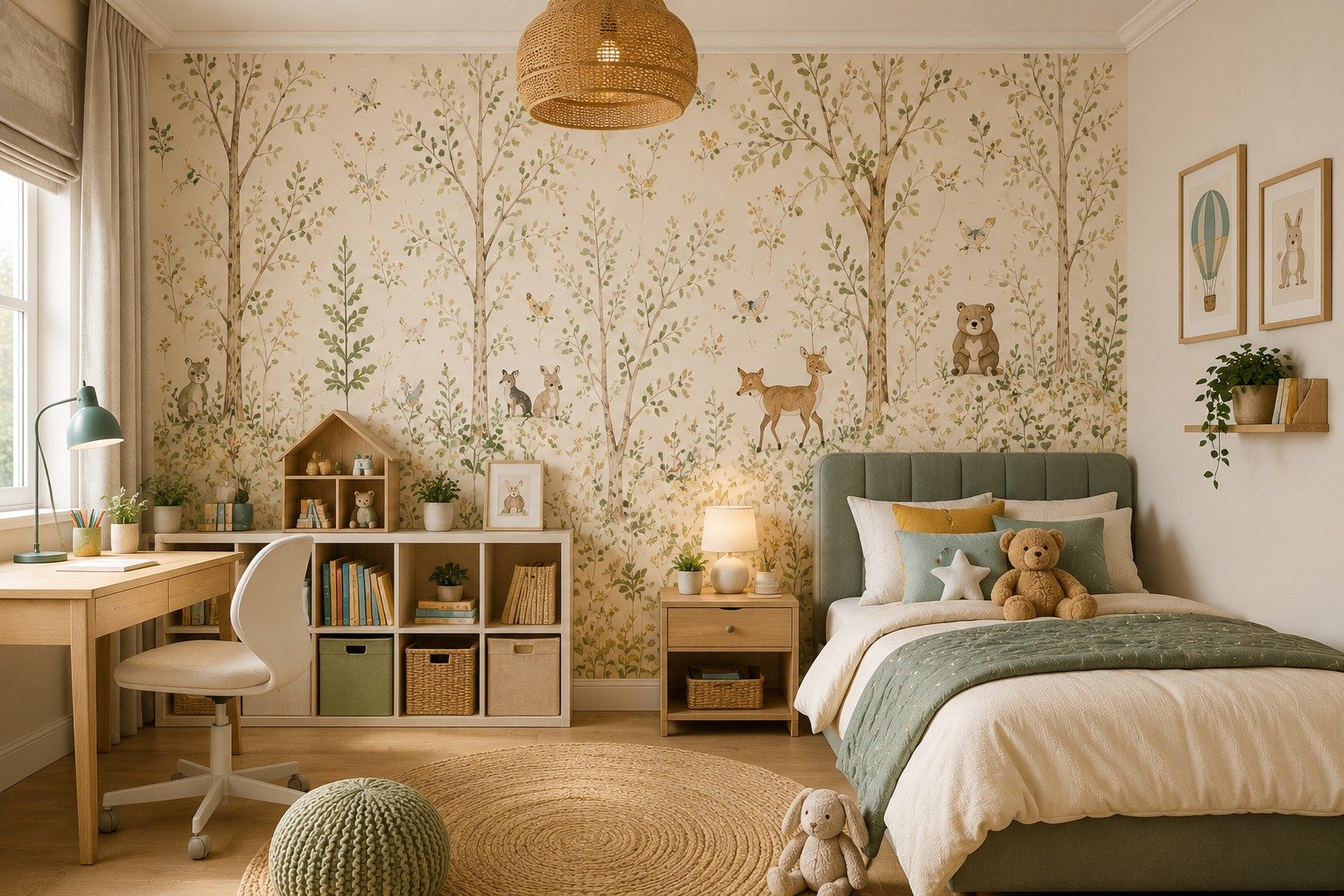
Paint a kid’s room and you’ll be back up that ladder in two years, guaranteed — tastes shift fast at that age. Kids bedroom wallpaper sidesteps that whole cycle, at least partly, if the pattern gets chosen with a little foresight instead of pure impulse at the store.
Some kids bedroom wallpaper prints are built to outlast a phase. Others practically expire the moment a favorite cartoon falls out of rotation. This roundup covers five picks worth the money, plus the safety, cost, and styling questions that tend to get skipped until they’re suddenly urgent — usually mid-install, tools already out.
Picking This Right Saves a Repaint in Two Years
Nobody warns new parents how fast a nursery theme ages out. Dinosaurs today, dinosaurs-are-embarrassing by age seven — it happens quicker than the receipt for the crib fades.
Wallpaper dodges some of that churn simply by committing harder. Good kids bedroom wallpaper reads as a room, not a phase, which paint alone rarely manages on a budget that doesn’t involve repainting annually.
Why This Beats a Fresh Coat of Paint
Paint covers a wall. Wallpaper tells it something. Texture, depth, a scene that actually holds a kid’s attention past bedtime story time — none of that comes from a can of eggshell finish, no matter how carefully picked the color.
<cite index=”10-1″>Design editors covering children’s rooms have pointed out that a flexible, semi-grown-up pattern works for both girls’ and boys’ spaces at once</cite>, which solves the “what happens when tastes change” problem before it starts. Worth reading their design editors suggest roundup if the pattern hunt feels overwhelming.
Mural Scenes Built for Bedtime Stories
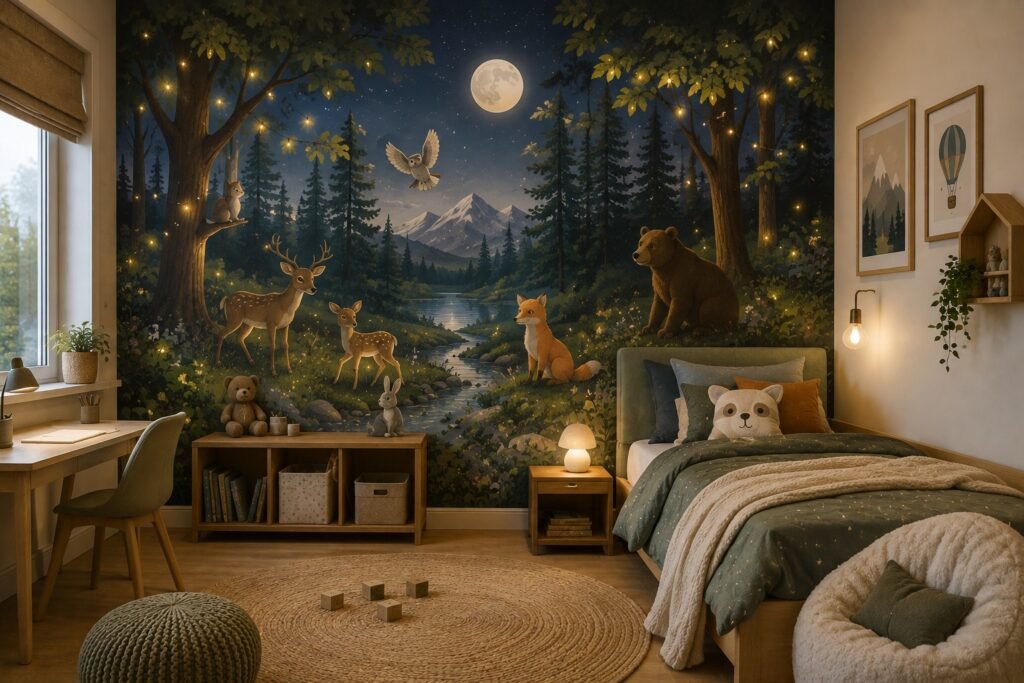
Full-wall murals — a forest, a night sky, a city skyline — do something patterns can’t. They turn a flat wall into a place a kid actually wants to be, which matters more at bedtime than most parents expect going in.
Cost runs higher than standard rolls, sure. But a mural rarely needs replacing on the same two-year clock smaller prints do; the scale of it ages better simply because there’s more to look at. Our mural scene options page has combinations that don’t feel babyish by year three.
Scale matters more than most people budget for going in. A mural sized for a nine-foot ceiling looks nothing like the same design cropped down for eight feet, and a lot of buyer’s remorse traces back to skipping that measurement before ordering. Take the exact wall dimensions before browsing, not after falling for a print online.
One Bold Wall Instead of Four
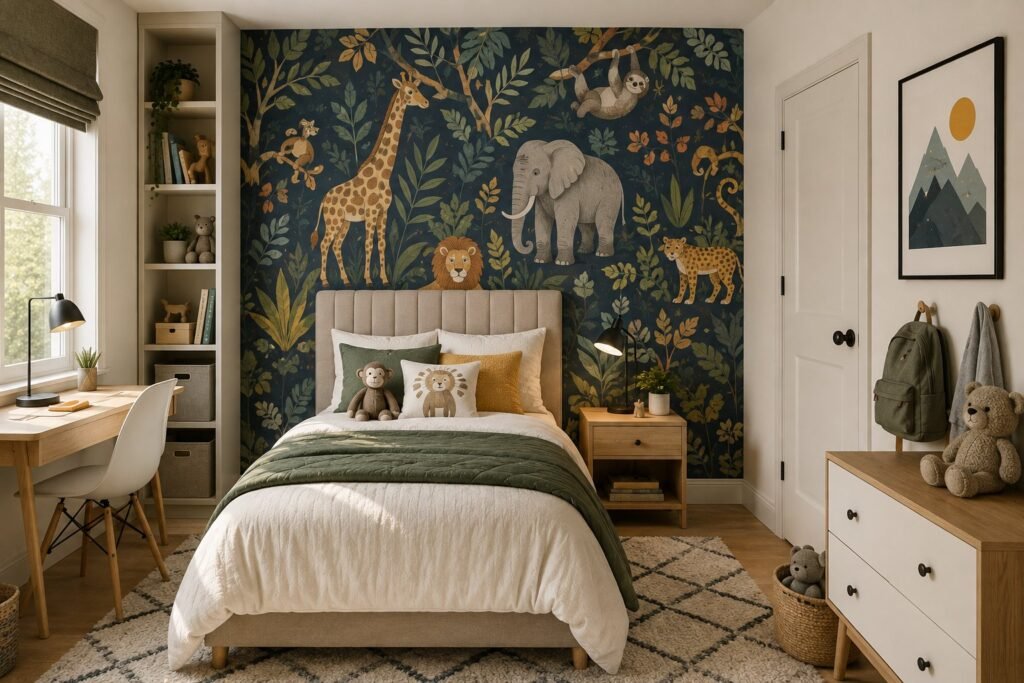
Committing every wall to a loud print gets overwhelming fast, for the kid and for whoever has to sit in there during story time. One wall carries the personality; the rest stays calm.
This approach also saves money and labor — a real consideration if the room gets redone again in a few years anyway. Our single wall accent guide breaks down which walls in a typical layout work best for this.
Behind the headboard is the usual pick, and for good reason — furniture blocks half the pattern from view during the day, so bold choices feel less overwhelming than they would running floor to ceiling uninterrupted. The wall facing the door works too, giving anyone walking past a hit of personality without living inside it constantly.
Patterns Made Specifically for Girls’ Rooms
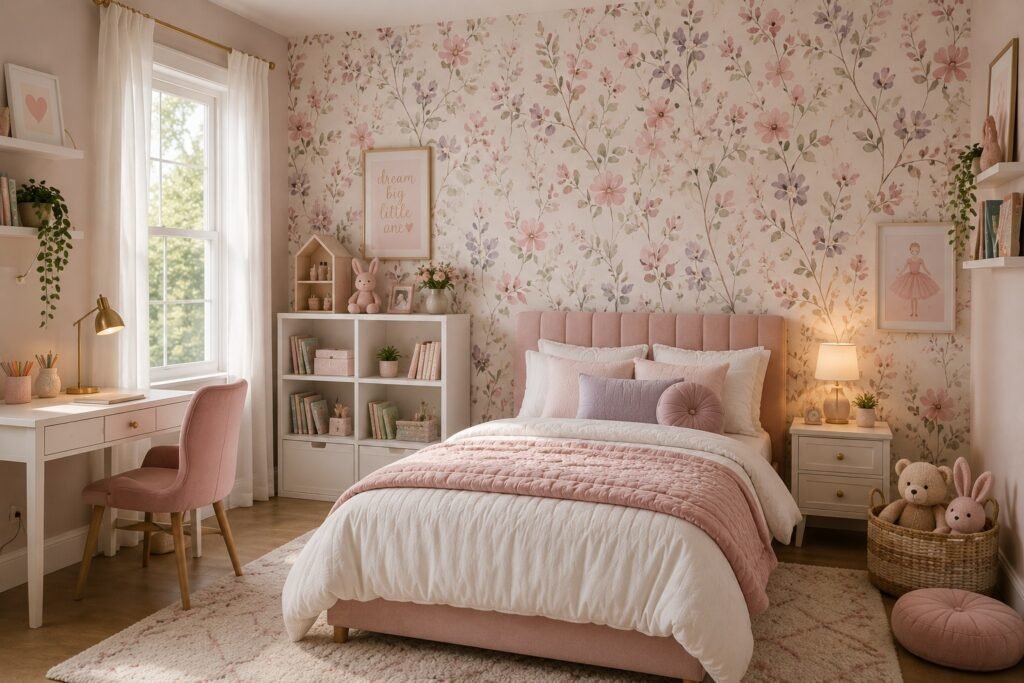
Florals, soft geometrics, pastel scenes built with a lighter hand than the generic “kids” category usually offers — this niche exists because one-size-fits-all rarely does, especially past the toddler years.
Skip anything too literal, like a single licensed character plastered wall to wall. Trends fade faster than the wallpaper’s warranty. Our girls room picks collection sticks to patterns with more staying power than a single show’s popularity.
Peel-and-Stick for Renters and Rotators
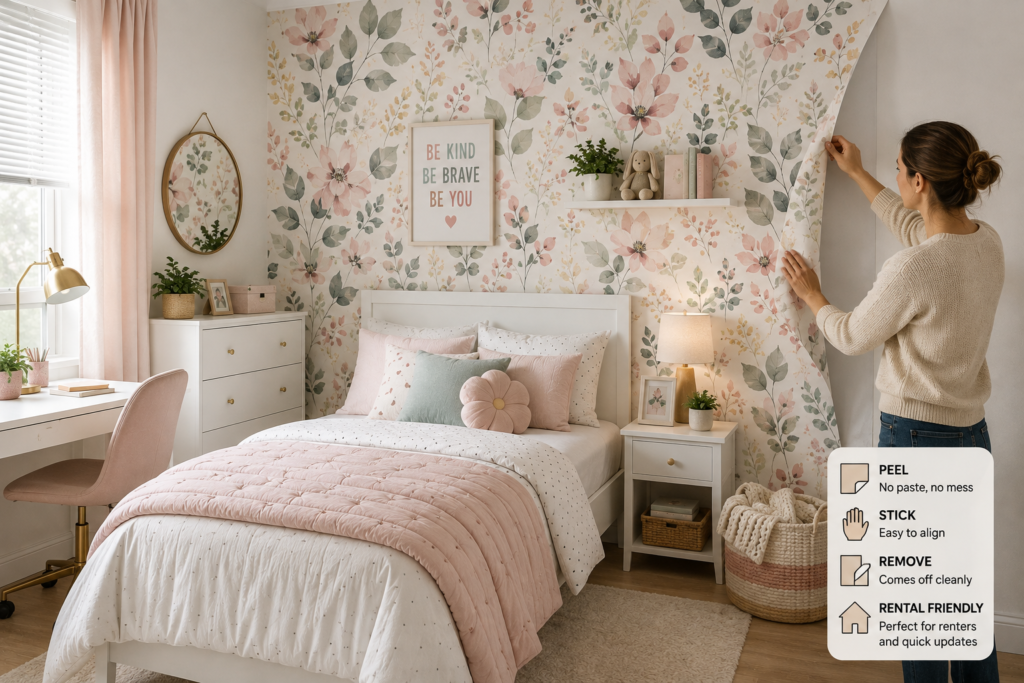
Traditional paste-and-paper wallpaper isn’t going anywhere for permanent homes, but renters — or parents who know a theme swap is coming in eighteen months — do better with removable rolls.
Application takes an afternoon, no steamer or scoring tool required. Peeling it back off leaves walls close to spotless if the surface underneath was prepped decently to begin with. Not indestructible against a determined toddler with a sticker obsession, but close.
Quality varies wildly across brands here, more than with traditional paper. Cheaper rolls bubble at the seams within months; better ones hold flush for the full stretch of a lease. Reading actual reviews before ordering matters more with peel-and-stick than almost any other wallpaper category, since the price gap between good and bad often isn’t obvious from photos alone.
Neutral Prints That Age Along With Them
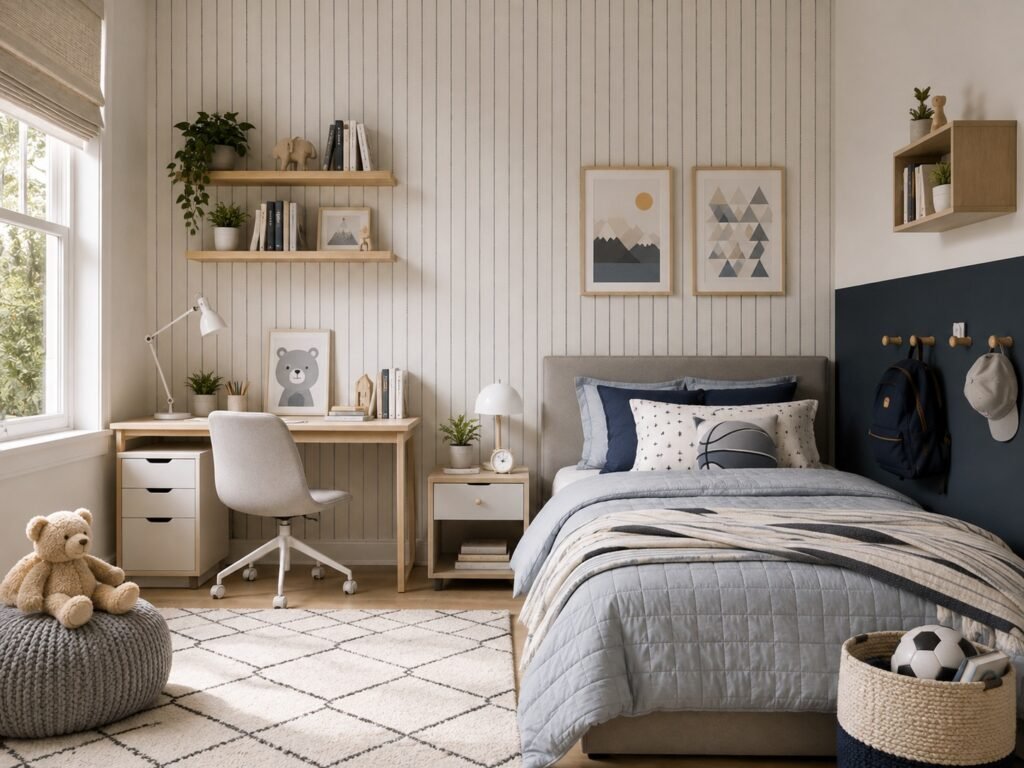
Stripes, small-scale geometrics, subtle botanicals — patterns that read as “kid’s room” at five and still hold up as “teenager’s room” at fifteen, no repaper required in between.
This is the pick for parents who’d rather invest once and forget about it. Our bedroom decor pairing page has furniture and accent ideas that keep a neutral print from reading flat or boring.
The trick with this category is resisting the urge to go too safe. A neutral pattern doesn’t have to mean beige and boring — texture, subtle color shifts, and interesting scale all keep it from disappearing into the wall entirely. The goal is longevity, not invisibility.
Kids Bedroom Wallpaper Types, Side by Side
| Type | Typical Cost | Lifespan | Best For |
| Full Mural | $$$ | 5+ years | Statement rooms, imaginative play |
| Traditional Paste | $$ | 4–6 years | Permanent homes, long-term rooms |
| Peel-and-Stick | $ | 1–3 years | Renters, frequent theme changes |
| Neutral Pattern | $$ | 6–10 years | Parents avoiding repeat redos |
Keeping the Materials Actually Safe
Fresh wallpaper off-gasses more than most parents realize, particularly vinyl-heavy rolls in the first weeks after install. It’s not a reason to panic, but it’s worth knowing before any kids bedroom wallpaper goes up in a room where someone sleeps eight-plus hours a night.
<cite index=”3-1″>Indoor concentrations of many VOCs run consistently higher than outdoor air — sometimes by a factor of ten — since these compounds are emitted by a huge range of household products</cite>. Ventilating the room well for the first few days after hanging new paper isn’t overkill; the indoor air guidelines cover exactly why that matters.
Look for low-VOC adhesive specifically, not just low-VOC paper. The glue matters just as much as the roll itself, and it’s the detail most people skip entirely.
Vinyl-free and fabric-backed options tend to off-gas the least overall, worth the extra cost for a nursery or a younger kid’s room specifically. Anyone with asthma or sensitive skin in the household benefits most from this upgrade, since indoor air concerns compound faster in a smaller, less-ventilated bedroom than in open living spaces.
Filling In the Rest of the Wall
Wallpaper alone can feel unfinished once it’s up — a frame, a shelf, a reading nook light fixture gives the eye somewhere else to land besides one continuous pattern.
Our focal wall styling guide has combinations that layer decor onto a papered wall without competing with the print itself. Less is genuinely more here; one strong pattern rarely needs much company.
Mistakes That Shorten a Wallpaper’s Lifespan
Going too trendy is mistake one. A specific licensed character or a design tied to one very-of-the-moment show ages out fast, sometimes within a single school year.
Skipping the primer coat is mistake two, especially on textured or previously painted walls. Adhesive that doesn’t bond properly means bubbling and peeling within months, not years — an expensive redo nobody planned for.
Mistake three: ignoring humidity. Bathrooms attached to a kid’s room, or a home without great ventilation, can warp paper edges faster than the pattern itself wears out. Vinyl-coated rolls hold up better in those conditions than plain paper ever will.
What Installation Actually Runs
Peel-and-stick rolls average $30 to $60 per roll, most rooms needing four to eight depending on wall count and ceiling height. DIY-friendly, no professional labor required if the walls are prepped properly first.
Traditional paste jobs run higher — paper plus adhesive plus, often, a professional hanger for anything beyond a single accent wall. Budget $300 to $800 for a full room done by a pro, less for a single wall handled solo.
Murals sit at the top of the price range, often $200 to $600 for the print alone before any labor gets factored in. Worth it for a room that’s meant to last, harder to justify for a phase that might not survive the next birthday.
FAQs
How long does kids bedroom wallpaper typically last?
Traditional paste holds four to six years easily. Peel-and-stick runs shorter, one to three years, depending on how often the room gets redecorated or a theme falls out of favor.
Is peel-and-stick strong enough for an active kid’s room?
Generally, yes, for normal wear. It’s not scratch-proof against determined toddlers with crayons, but quality brands hold up fine through typical play and cleaning.
Should the whole room get wallpapered or just one wall?
One wall usually wins for cost and longevity. Full-room wallpaper works better for murals or subtle neutral patterns that won’t feel overwhelming at full scale.
What’s the safest wallpaper option for a nursery specifically?
Low-VOC paper paired with low-VOC adhesive, plus good ventilation for the first week after install. Vinyl-free options exist and tend to off-gas less overall.
Can wallpaper go over existing paint without issues? Usually, yes, as long as the paint isn’t glossy and the wall gets primed first. Skipping primer on painted drywall is the most common cause of early peeling.
How do parents choose a pattern that won’t feel dated fast?
Lean neutral or nature-based over licensed characters. Stripes, botanicals, and abstract geometrics tend to outlast specific trends by years, sometimes a full decade.
Does wallpaper make a small kid’s room feel more cramped?
Not necessarily — light colors and smaller-scale prints can open a room up rather than close it in. Dark, dense patterns are the ones that shrink a space visually.
Is professional installation worth the extra cost?
For full rooms or tricky traditional paper, usually yes — bubbling and seams are common DIY mistakes. Peel-and-stick on a single wall is realistic for most people to handle themselves.
Making the Call That Actually Sticks
None of these five picks is universally correct — the right one depends on how long a family plans to stay put, how fast a particular kid’s interests shift, and honestly, how much patience exists for a redo down the line. A rental favors peel-and-stick. A forever home might justify the cost of a full mural nobody will touch for a decade.
What separates a good choice from a regretted one usually comes down to timing, not taste. Picking a pattern tied to this month’s favorite show is a bet against how fast six-year-olds change their minds — and that bet rarely pays off. Neutral, adaptable prints cost a little more emotional restraint upfront but save an actual repaper down the line.
Safety matters more than most parents budget time for, too. A few extra dollars on low-VOC adhesive and a week of open windows after installation is a small price against the alternative, especially in a room where a kid spends most of their unconscious hours.
Whichever of these five ends up on the wall, the goal stays the same: kids bedroom wallpaper that photographs well today and still feels right when the kid outgrows the crayons but not the space. That’s a narrower target than it sounds, but it’s hit more often than people assume — usually by parents who resisted the most exciting option in favor of the one that would still make sense in three years.