

Honest wallpaper decor for bedroom advice — real prep steps, material picks, and the mistakes that turn a good roll into a wasted weekend. My cousin repainted her bedroom four times in two years chasing the “right” shade of gray. Every can looked identical on the swatch and completely different by lamp light at 9pm.
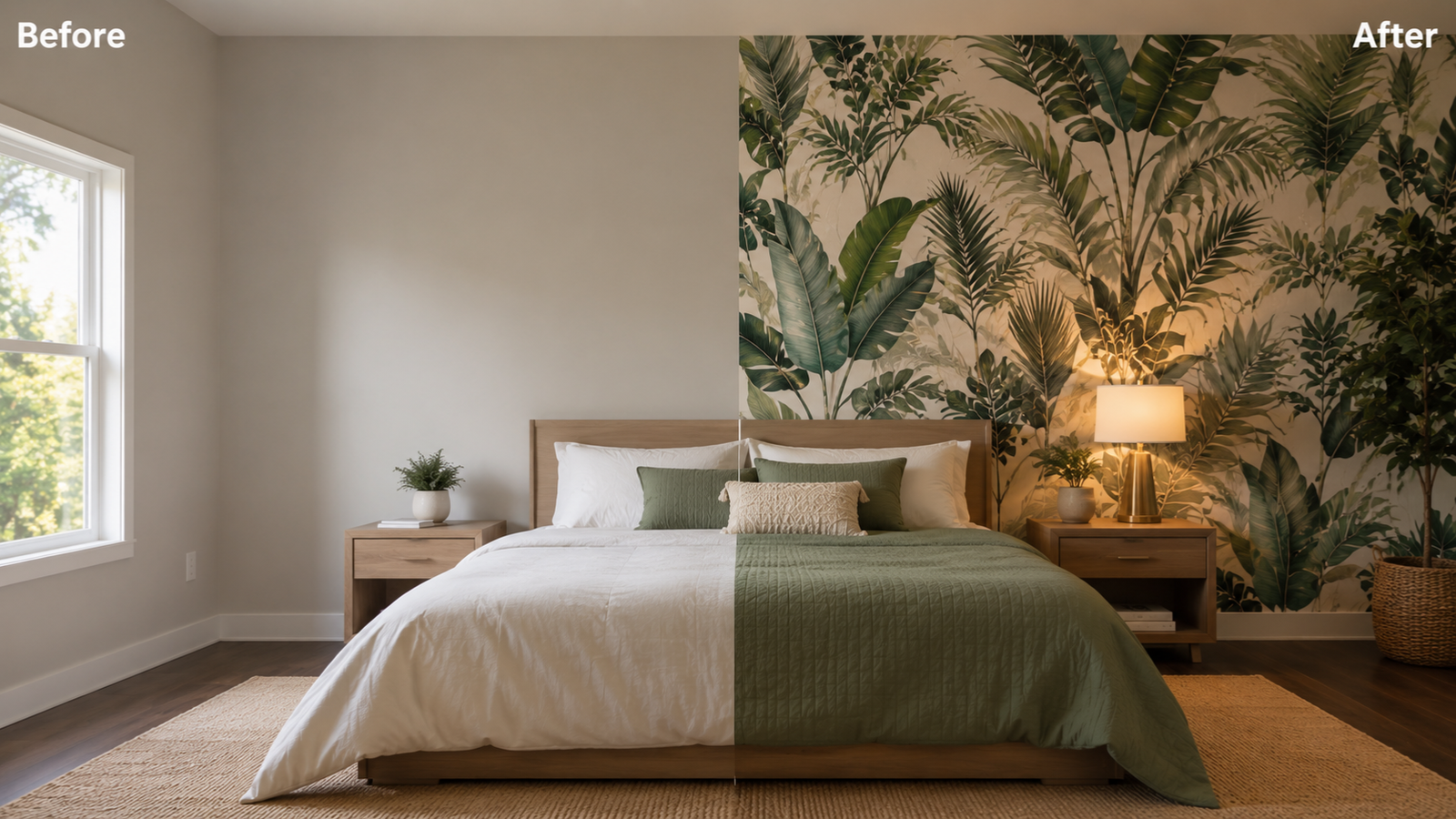
She finally gave up and hung a patterned roll instead, and the room stopped feeling like a work-in-progress overnight. That’s the pull behind wallpaper decor for bedroom spaces right now — paint keeps promising a finished room and keeps falling a little short.
Wallpaper’s reputation problem is mostly outdated. It used to mean heavy florals nobody could remove without gouging the drywall underneath. These days a bedroom done in wallpaper decor can look restrained, modern, even a little minimal, depending on what you pick. For a broader look at what’s trending right now, our bedroom wallpaper ideas roundup covers the range.
What Counts As Wallpaper Decor For Bedroom Walls
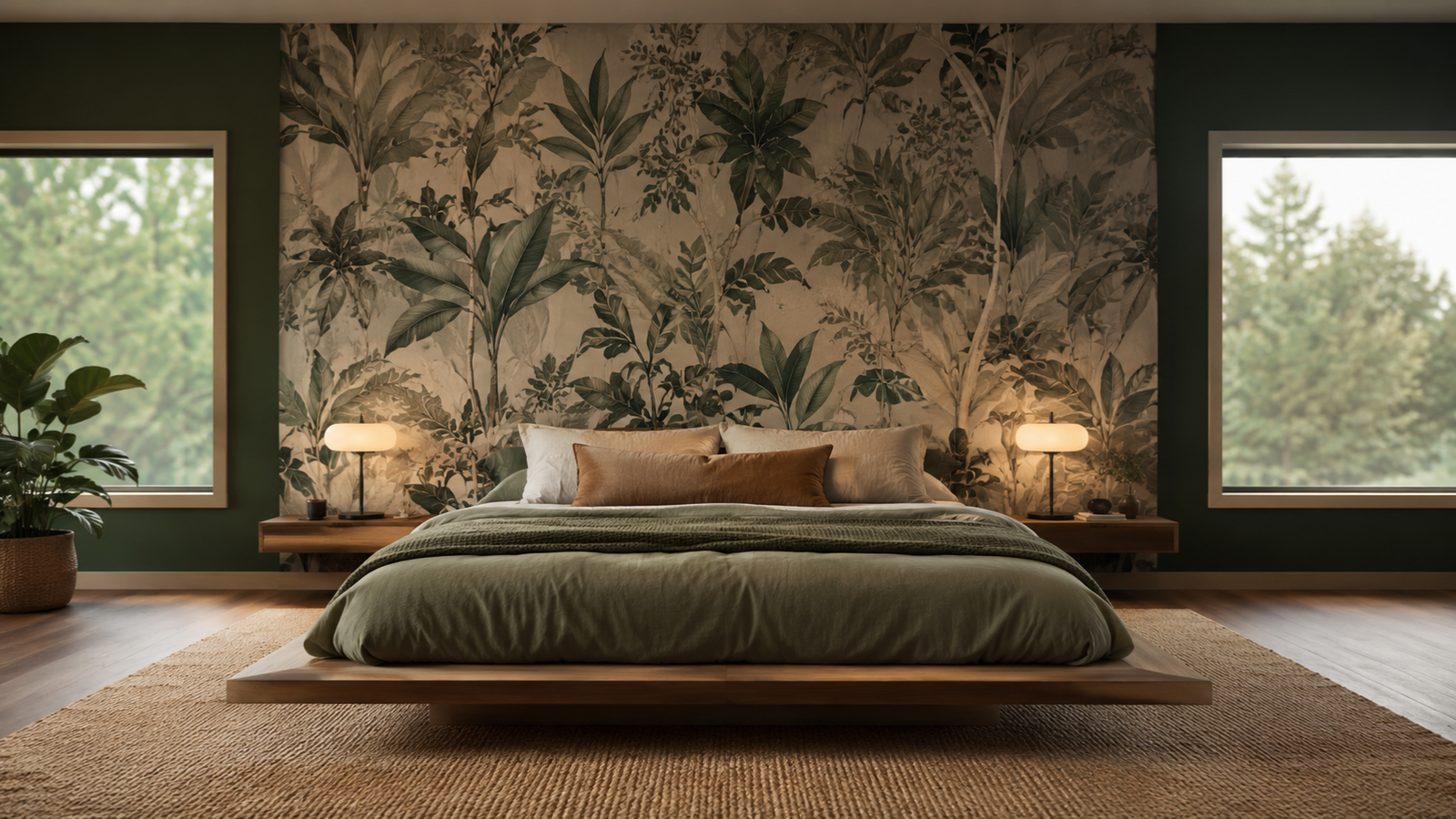
Wallpaper decor for bedroom rooms just means using a printed, textured, or woven wall covering somewhere in the space instead of relying only on paint. Sometimes that’s one wall behind the headboard. Sometimes it’s the whole room, ceiling included, which is having a moment in smaller primary bedrooms right now.
The material does more work than most people expect. A flat matte paper reads almost like paint from across the room, while grasscloth or a raised vinyl print catches shadow differently depending on where your bedside lamp sits. That physical texture is a big part of why a wallpapered bedroom photographs so much better than a painted one — there’s something for the light to grip.
Why Bedrooms Specifically Benefit From It
Color psychology gets thrown around a lot with bedrooms, and for good reason — it’s the one room where mood actually affects how well you sleep. Wallpaper lets you layer pattern into that without losing the calm. A soft striped paper in a muted tone reads gentler than a solid wall in the same color, oddly enough, because the eye has somewhere quieter to land.
There’s a less glamorous reason too. Most bedrooms, especially in older houses or rentals, have walls with small dents, old patch jobs, or slightly uneven texture that paint shows off rather than hides. A mid-weight paper does a genuinely better job disguising that than another coat ever will. I’ve had people insist paint is the “safer” fix for rough walls, and it almost never is.
Materials Worth Knowing Before You Buy
Not every roll behaves the same way once it’s on a wall, and picking the wrong one for a bedroom usually shows up months later, not on install day.
- Vinyl-coated: wipeable and forgiving, good if the room doubles as a nursery or gets a lot of use
- Peel-and-stick: removable without paste, the easiest entry point if you’ve never hung a roll before
- Grasscloth: woven natural fiber with real texture, but seams show and it can’t be wiped down
- Non-woven: breathable and less likely to tear mid-install, generally the most DIY-friendly option
- Fabric-backed: heavier and more expensive, but it smooths over slightly uneven plaster better than most
For a bedroom, non-woven and peel-and-stick tend to be the practical picks. You’re not fighting grease or steam like a kitchen or bathroom would, so heavy-duty durability matters less than getting the pattern and hand-feel right.
How A Wallpaper Decor For Bedroom Project Actually Comes Together
Three phases, and the first one is where most people quietly sabotage themselves. Prep means a clean, dry, primed wall — no glossy old paint, no flaking patches. Skipping primer on a freshly patched section is probably the single most common reason paper bubbles within the first year.
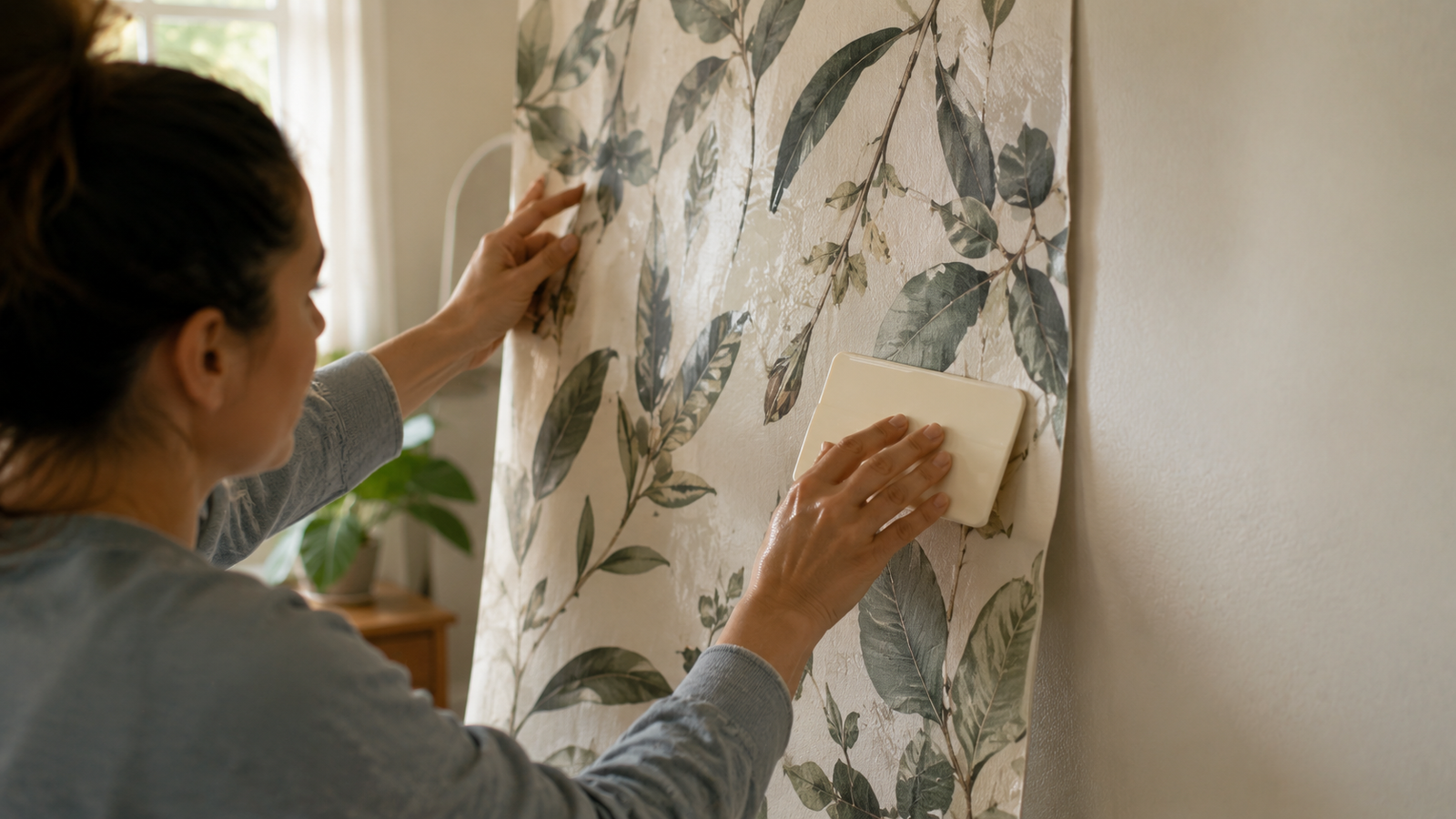
Application changes by material. Paste-the-wall non-woven papers get adhesive rolled straight onto the drywall, then the dry sheet gets pressed on and smoothed outward from the center so air has somewhere to escape. Peel-and-stick gives you a few forgiving minutes to reposition before the adhesive fully sets, which is exactly why it’s the better beginner choice.
Finishing is trimming the excess at the ceiling and baseboard with a sharp blade, then running a seam roller along every joint so edges don’t curl loose in a few months. Indoor air quality is worth a thought here too, especially with adhesive off-gassing in a room you sleep in for eight hours a night — the EPA’s indoor air quality overview is a decent starting point if you’re sensitive to VOCs.
The Real Benefits, Beyond Just Looking Good
A thought-out wallpaper decor for bedroom scheme changes how the room reads at a structural level, not just a decorative one. Vertical stripes pull the eye up and make a low-ceilinged room feel taller. An oversized print on one wall does the opposite on purpose — it pulls the walls in a little and makes a big bedroom feel more like a retreat.
Resale comes up more than you’d think. A tasteful single accent wall tends to photograph better in listings than an all-white box, though it’s smart to keep the boldest choices to one wall if you’re planning to sell within a few years — buyer taste varies wildly and a fully wrapped pattern is a bigger ask.
Sound dampening is minor but real. Thicker textured papers like grasscloth soak up slightly more sound than a painted wall, which is genuinely useful if the bedroom shares a wall with a neighbor or backs onto a noisy street.
What Nobody Warns You About
Removal can turn into a bigger job than the install was, especially with older vinyl glued straight to bare drywall. Pull it wrong and you take a layer of drywall paper with it, which means a repair before you can hang anything new.
Humidity is the other quiet problem. A bedroom attached to a bathroom, or a house without solid climate control, can see seams start to lift as moisture works underneath them over a couple of years. Peel-and-stick struggles the most here — the adhesive just isn’t built for consistently damp air.
And cost climbs faster than people plan for. A designer print easily beats what a few cans of paint would run, especially once you buy extra rolls to cover pattern matching and the mistakes everyone makes on their first few cuts.
A Straightforward Order Of Operations
- Measure the room’s square footage and add 10-15% for pattern repeats and cutting errors
- Pick a material based on wall condition and whether you’re renting
- Tape a real sample to the wall for a few days before you commit to a full order
- Prep — clean, patch, sand, prime
- Start hanging from the most visible point, usually the headboard wall or the wall facing the door
- Smooth, trim, and roll seams as you go instead of leaving it all for the end
- Let the paper cure for the time the manufacturer recommends before hanging shelves nearby
Skipping the sample step is the mistake I see most. A pattern that looks quiet on a phone screen can look completely different across a full wall under warm bedroom lighting.
A Few Real Rooms
A north-facing guest room with weak natural light got a large-scale floral in peel-and-stick, kept to just the headboard wall. It made the room feel deliberate instead of small, and because it’s removable, the current tenant can take it down whenever they want without any penalty.
A kid’s room went through two full pattern swaps in four years using peel-and-stick geometric prints, with zero drywall damage either time — worth knowing if the room’s occupant is still figuring out what they actually like.
An older house with genuinely uneven plaster walls went with grasscloth across all four walls in the primary bedroom, and it hid decades of small imperfections that paint had never managed to smooth over. For more full-room approaches like this, check our master bedroom wallpaper ideas. For anyone weighing a full-room approach like that, a wallpaper vs paint cost breakdown from a trusted renovation source is worth reading before you commit to a whole room instead of one wall.
Tips Worth Stealing
Match a roll’s pattern repeat to your actual wall height before ordering — a large repeat on a short wall wastes more paper than people expect. Buy one extra roll from the same dye lot up front, since reordering later can land you a slightly different batch color.
Test adhesion somewhere hidden first if you’re unsure how the wall will take paste. Older plaster and some textured drywall finishes need a primer coat, sometimes called a “size,” before the paper will actually grip. [INTERNAL LINK 2 — later anchor, e.g. accent wall paint colors guide]
Mistakes That Show Up Later
Hanging shelves or curtains too soon, before the adhesive has fully cured, stresses the seams before they’ve had a chance to set. Underestimating how lighting changes a print is another one — that soft pattern in the store can read almost neon once it’s lit by a warm bedside lamp every night.
Rushing prep is probably the single biggest failure point in any wallpaper decor for bedroom project. And chasing whatever’s trendy right now instead of something you’ll still want in five years is a quieter mistake — it just takes longer to notice.
FAQs
Is wallpaper decor for bedroom walls worth it compared to paint?
For a single accent wall, usually yes — the visual payoff per square foot beats paint pretty clearly. A full room costs more upfront but can hold up for a decade or longer with steady care.
Can renters use wallpaper decor for bedroom spaces without losing a deposit?
Peel-and-stick is made for exactly this situation and removes cleanly from most painted drywall. Test a small patch inside a closet first, since older or flat paint can react differently than you’d expect.
How long does wallpaper decor for bedroom walls typically hold up?
Traditional pasted paper often lasts 10-15 years in a room with stable humidity. Peel-and-stick tends to run shorter, closer to 3-5 years, before edges start needing attention.
What wallpaper suits a small bedroom best?
Lighter backgrounds with small or medium-scale prints keep a small room feeling open rather than boxed in. Save the darker, oversized patterns for a single wall instead of wrapping the whole space.
Conclusion
Wallpaper decor for bedroom walls isn’t going anywhere soon, mostly because it solves things paint just can’t — real texture, pattern scale, a sense that the room has some personality behind it.
Start with a sample, don’t shortcut the prep, and pick something you’ll still be glad to see in five years. That’s really most of the decision right there.