

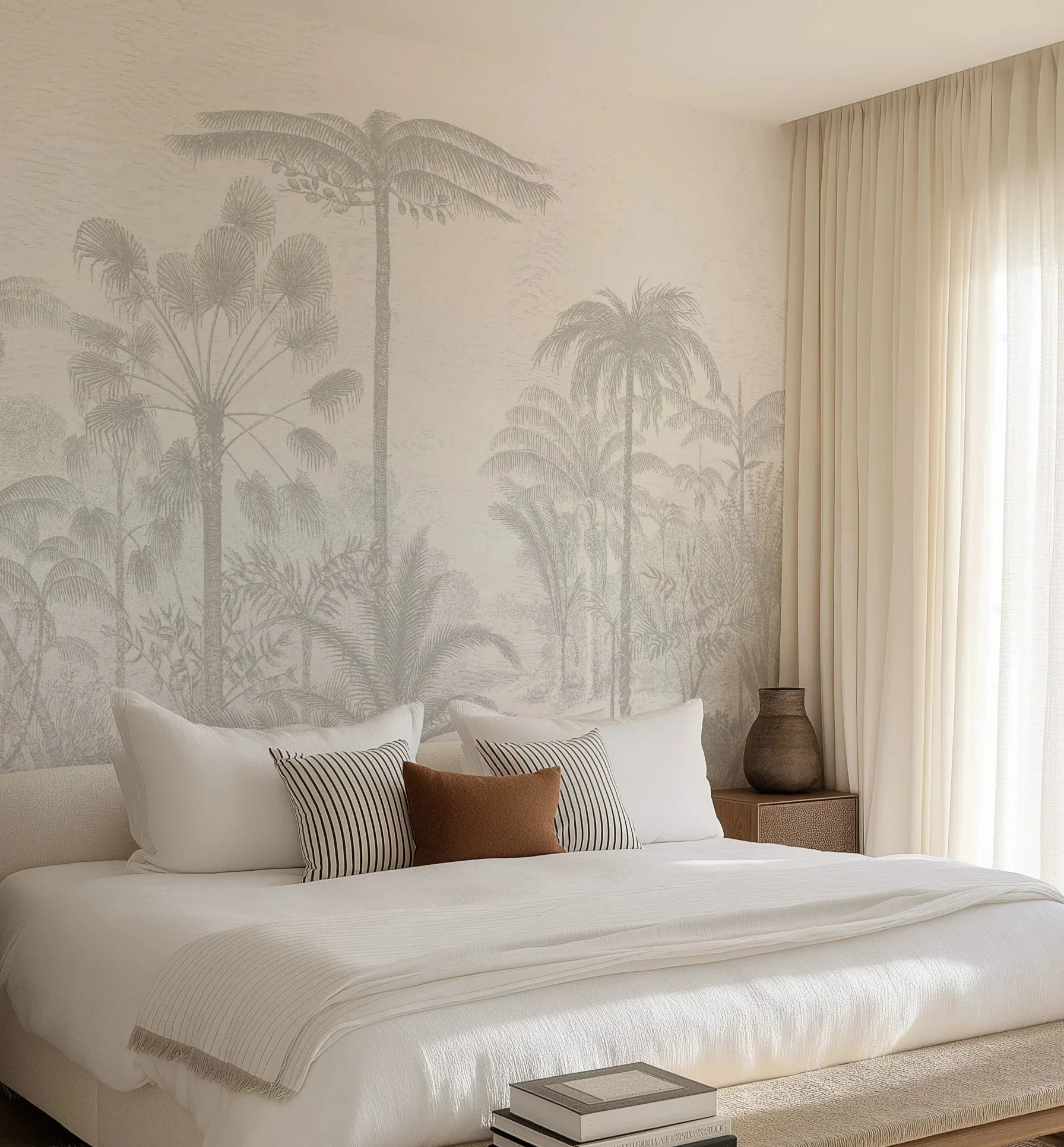
Okay, chai’s brewing, so let’s actually talk about this. Wallpaper for bedroom walls is one of those decisions people overthink for months and then wonder why they waited so long. I get asked about it constantly — clients, cousins, one guy at a wedding last year who cornered me near the buffet.
Same worry every time: what if I hate it in six months? Fair. You’ll stare at these walls more than any other surface in your house, so the nerves make sense. But here’s the thing nobody tells you upfront — wallpaper for bedroom spaces forgives mistakes way more than paint ever does. Tape a sample up, live with it a week, and you’ll know.
Bedrooms Don’t Play by the Same Rules
A living room performs. Guests walk in, judgments happen, everyone’s on their best behavior including the sofa.
Bedrooms don’t answer to anyone like that. Just you, maybe someone snoring next to you, and whatever mood the walls set at 11pm.
That freedom trips people up more than it should. No audience to please means no obvious “right” choice, and somehow that’s harder than following rules.
Here’s my honest take after years of this: pick whatever makes your shoulders drop the second the light flicks on. Not the pattern that’ll photograph well for a feed nobody in that room will ever scroll through anyway.
Figure Out What’s Actually Bugging You First
Forget swatches for a second. Sit in the room after dark, lights low, and just notice.
Some rooms feel cold no matter the thermostat. Others feel boxed in, sterile almost, or just unfinished in some way you can’t quite name. Wallpaper solves each of those differently — so knowing your actual complaint matters more than any Pinterest board.
Quick gut-check before you shop:
- Is there one wall that always looks bare, whatever you hang on it?
- Do you want the room to feel dramatic, or do you want the pattern to disappear?
- Is the space genuinely small, or does clutter just make it feel that way?
Those answers decide scale, undertone, whether you’re doing one wall or committing to all four. We’ll get to that. For pairing wallpaper against furniture you’ve already got, wallpaper decor for bedroom goes deeper than I can here.
Materials Aren’t Interchangeable, Whatever the Store Clerk Tells You

Bedrooms forgive more than kitchens or bathrooms do, humidity-wise. So you’ve got more freedom on material than most people assume.
| Material | Best Suited To | The Downside |
| Peel-and-stick vinyl | Renters, nervous beginners | Looks a bit plasticky up close |
| Non-woven paper | Homeowners staying put | Wants a steady hand to hang straight |
| Grasscloth | Warm, textured rooms | Marks easily near doors and windows |
| Mural panels | One dramatic wall | Pricier, unforgiving of bad measurements |
Grasscloth is the one everyone underrates. It muffles sound, softens light — clients keep describing their room as “hushed” afterward, which sounded silly to me until I actually lived with it myself.
Colors That Help You Sleep, Not Just Look Nice
Real science backs this, not just my opinion. Warm, muted tones — sage, dusty blue, terracotta — quiet the eye down before bed. Neon or high-contrast prints do the opposite, keeping it working overtime.
This isn’t just something I’ve noticed on job sites either. Homes & Gardens flagged the same shift, pointing out that bedrooms are increasingly built as restorative, low-stimulation retreats instead of rooms meant to impress guests. Matches nearly every install I’ve done lately.
Combos that keep working, project after project:
- Deep green, brass accents — reads expensive, barely tries.
- Clay tones, linen bedding — warm without turning heavy.
- Muted navy florals — moody by lamplight, calm come morning.
Skip glossy finishes across a full wall. Lamp light bounces off them at exactly the wrong angle when you’re trying to wind down.
One Wall or All Four? Depends, Honestly
This question comes up constantly, and there’s no universal answer — it hinges entirely on your specific wall.
Got an obvious focal point, usually behind the headboard? One wall’s often plenty. Draws the eye, doesn’t swallow a small room, costs way less too.
Papering the whole room does something an accent wall can’t manage though. Kills that “boxy” feeling four plain painted walls tend to create. There’s a longer breakdown on when one feature wall beats full coverage over at wallpaper in bedroom on one wall — worth a read before you pick a lane.
Rooms under about 120 square feet? Stick to one wall. Bigger than that, and full coverage starts feeling deliberate instead of cramped.
Small Bedrooms Get Bad Advice Constantly
Small rooms have this unfair reputation with wallpaper. Tiny florals or micro-prints can honestly make a cramped room feel layered instead of squeezed.
What actually shrinks a space is scale mismatch. A giant tropical leaf print on a nine-foot wall never reads right, not once, not ever. Keep the repeat small, cap yourself at two or three colors, leave the ceiling plain white so eyes keep traveling up instead of stopping short.
A mirror across from the papered wall helps too — bounces more light around than you’d guess from something so small.
Master Bedrooms Are a Whole Different Game
More wall space changes everything about your approach. You’re not just picking a pattern anymore, you’re deciding how the whole room reads the second someone walks through the door.
Bigger walls handle bolder scale, deeper saturation, even mixed textures — grasscloth on one wall, flat paint elsewhere — without tipping into chaos. I’ve walked through plenty of these layouts myself over at master bedroom wallpaper ideas, and one combo keeps winning: a big botanical print behind the bed, quiet walls everywhere else.
Don’t skip the ceiling either. Taller master bedrooms with a papered ceiling — the so-called fifth wall — get an intimacy four papered walls alone just don’t deliver.
Mural Wallpaper: Hype or Actually Worth It?
Scenic murals had their moment a few years back and, honestly, never fully left. Not for everyone. Done right though, it changes a room in ways paint plain can’t touch.
Scale and placement decide everything here. A misty forest behind a headboard feels calm. That same forest wrapped around all four walls starts feeling like you’re sleeping inside a screensaver — not exactly restful, not what anyone actually wants at bedtime.
Leaning this way? The sizing notes and real examples at scene bedroom wallpaper are worth checking before ordering custom panels. A mismeasured mural is a genuinely expensive mistake.
What This Actually Costs You
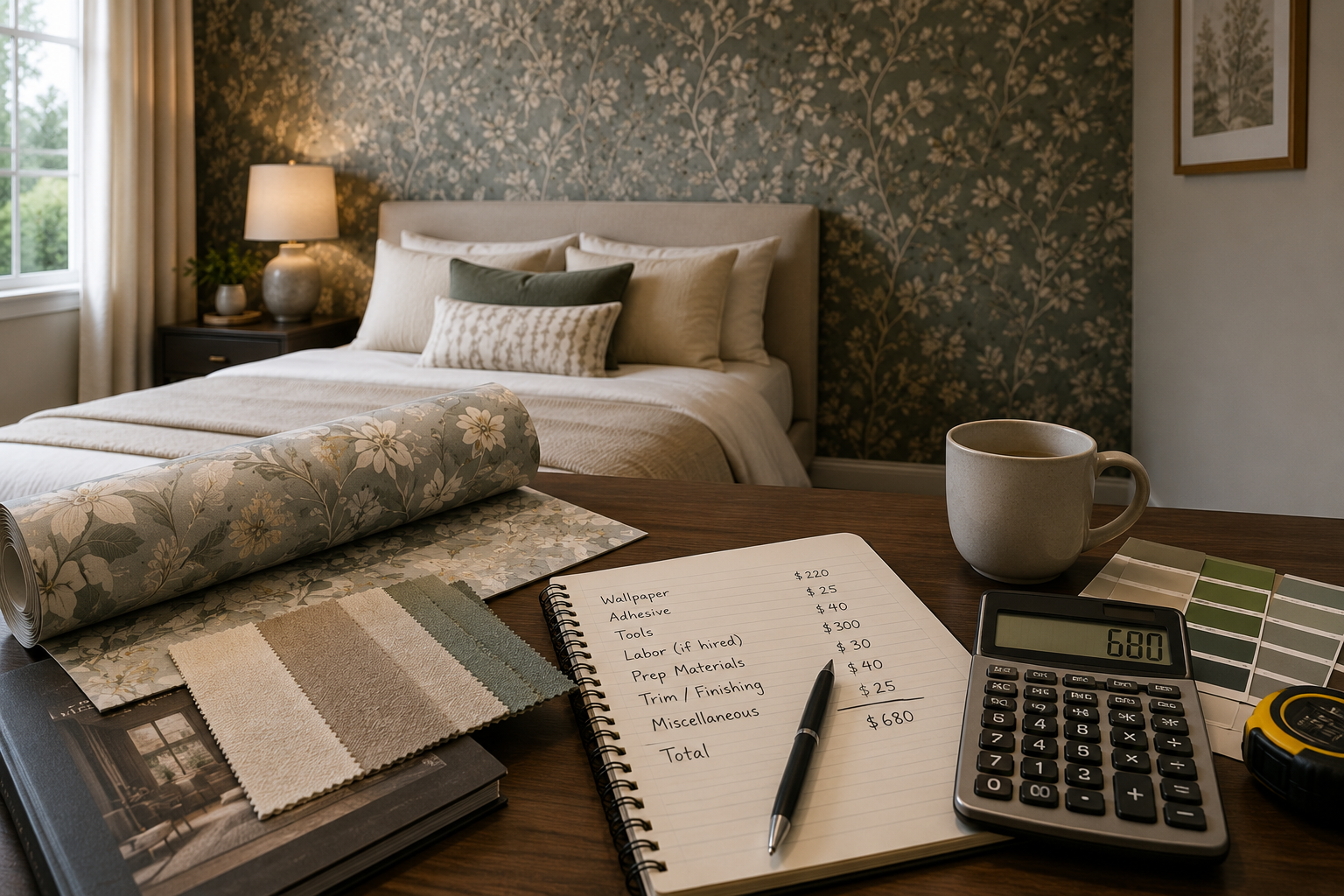
Budget blindsides most people, mostly because online prices skip labor, waste, and that extra roll you’ll almost certainly need for matching patterns.
| Wallpaper Type | Rough Cost Per Roll | DIY-Friendly? |
| Peel-and-stick vinyl | $30–$60 | Yes |
| Non-woven paper | $50–$120 | Somewhat |
| Grasscloth | $90–$200 | Not really |
| Custom mural panels | $300–$900+ | No |
A standard wall eats roughly 3 to 4 rolls, ceiling height depending. Budget for that before you fall for some gorgeous, expensive mural online.
Hanging It Yourself, Without Losing Your Mind
Not gonna lie — hanging wallpaper solo is doable, but it’s not the breezy weekend thing certain influencers make it look like. Walls are rarely as straight as they appear, and matching patterns tests patience most beginners don’t know they lack yet.
Peel-and-stick forgives the most. Start there if this is your first attempt. Non-woven and pasted papers reward careful measuring and steady hands, and they last longer, lie flatter too, over the years.
Before touching a smoothing brush, take a look at This Old House’s wallpaper hanging guide. Covers pre-pasted versus non-pasted rolls better than most blog posts bother explaining.
One thing beginners never hear until it’s too late — buy roughly 10% more paper than your measurements say you need. Pattern matching burns through rolls fast, and dye lots won’t always match if you reorder weeks later.
Mistakes I See Over and Over
A handful of patterns show up in nearly every botched bedroom job, and every single one is avoidable.
- Skipping samples entirely. Colors shift wildly under bedroom lighting versus store lighting.
- Papering behind furniture you’ll never move. Save the cash, only paper what actually shows.
- Ignoring humidity. Bathroom-attached bedrooms need moisture-resistant vinyl, not delicate paper.
- Matching pillows too exactly. Reads staged, not lived-in — nobody wants their bedroom looking like a showroom.
The real mistake, though? Rushing it. Tape samples up, live with them a week, then decide.
Pairing It With Stuff You Already Own
Wallpaper never exists in isolation. It reshapes how every other piece in the room reads — furniture finishes, lamp tones, all of it.
Warm wood, think walnut or oak, pairs beautifully against cooler wallpaper shades like sage or slate. Cooler metal furniture looks sharper against warmer paper — terracotta, rust, that family of colors.
Lighting matters just as much, maybe more. Warm bulbs around 2700K soften bold patterns come nighttime. Cooler bulbs make that same wallpaper feel almost clinical. Fixtures already leaning cool? Swap the bulbs before you swap the wallpaper. Five bucks, and the whole room’s mood changes.
A Cheat Sheet, Because Scrolling Gets Old
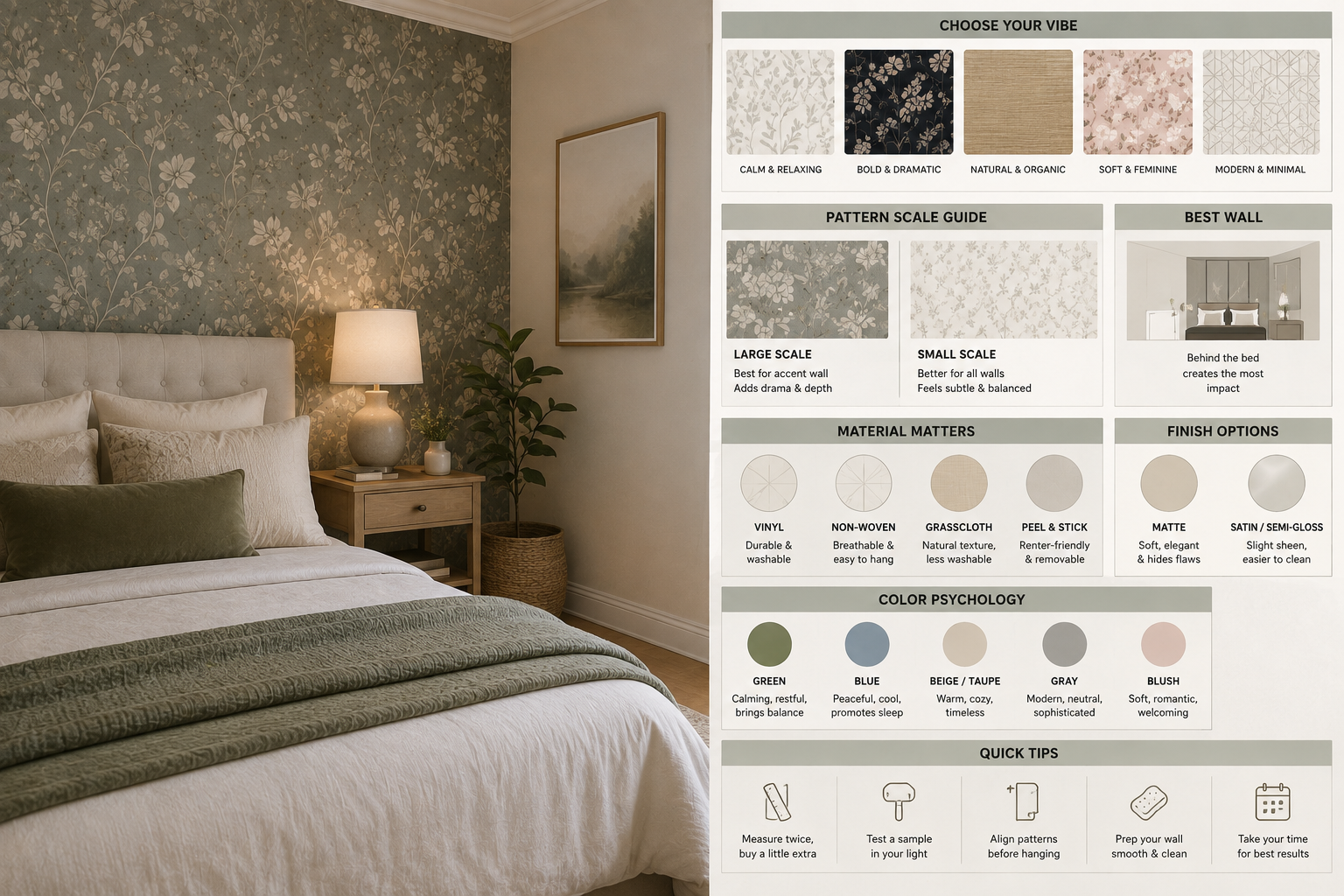
Sometimes you just want the options laid flat instead of hunting through another forty tabs.
| Style Goal | Pattern Type | Color Direction |
| Calm, sleep-focused | Small florals, texture | Sage, dusty blue, oat |
| Bold, statement-making | Large botanicals, murals | Deep green, navy, rust |
| Airy, small-room friendly | Micro-print, stripes | Soft white, pale pink |
| Warm and textural | Grasscloth, linen-look | Terracotta, tan, clay |
People screenshot this constantly. Speeds up in-store decisions more than you’d think.
FAQs
Is wallpaper for bedroom walls actually worth it over plain paint? Y
es, if texture or pattern matters to you — paint just can’t deliver that alone. Peel-and-stick now rivals paint pricing for a single accent wall too.
Can renters use wallpaper for bedroom accent walls safely?
Peel-and-stick vinyl exists exactly for this. Test a hidden corner first, since some paint finishes react oddly to removable adhesive.
How long does bedroom wallpaper usually last?
Quality non-woven or vinyl holds up 10 to 15 years with normal care. Peel-and-stick tends toward 3 to 5 years, depending on sun and humidity levels.
Should wallpaper cover just the headboard wall or all four walls?
Headboard-only suits smaller rooms or bolder prints better. Larger bedrooms usually handle full coverage fine, without tipping into feeling cramped.
What wallpaper pattern works best in a small, dark bedroom?
Small-scale prints in soft, light colors help dark rooms feel bigger and brighter. Oversized patterns tend to shrink the perceived space even further.
Final Thoughts
None of this was ever really about chasing trends, no matter how convincing the mood boards look on a Tuesday night scroll. Choosing wallpaper for bedroom walls comes down to one honest test — how the room feels at 11pm when you finally lie down after a long day. That’s it. That’s the whole benchmark, and it’s more reliable than anything a showroom display can tell you.
Start small if you’re nervous. One accent wall behind the headboard shifts the whole feel of a bedroom, and it leaves room to get bolder later without blowing your budget on day one. Peel-and-stick keeps that experiment cheap and low-stakes, which explains why so many first-timers begin there before moving on to non-woven paper or grasscloth in future rooms.
Don’t sleep on lighting either — pun somewhat intended. The same wallpaper looks entirely different under warm lamp light versus daylight streaming through a window. Test your samples at night before locking anything in. This one habit alone saves more people from regret than any color theory lecture ever could.
If there’s a single thing worth remembering here, let it be patience. Tape the samples up. Live with them a full week. Check them morning and night both. Only then place the order. Wallpaper genuinely rewards slowing down in a way paint never quite does, mostly because a mismatched roll can’t just get papered over with a second coat like a bad paint choice can.
Bedrooms are personal, full stop. So let the wallpaper reflect that instead of chasing whatever’s trending this particular season. Budget one extra roll for the inevitable mistake, and trust that a slightly imperfect hand-hung seam is exactly what makes a room feel lived-in rather than staged.