

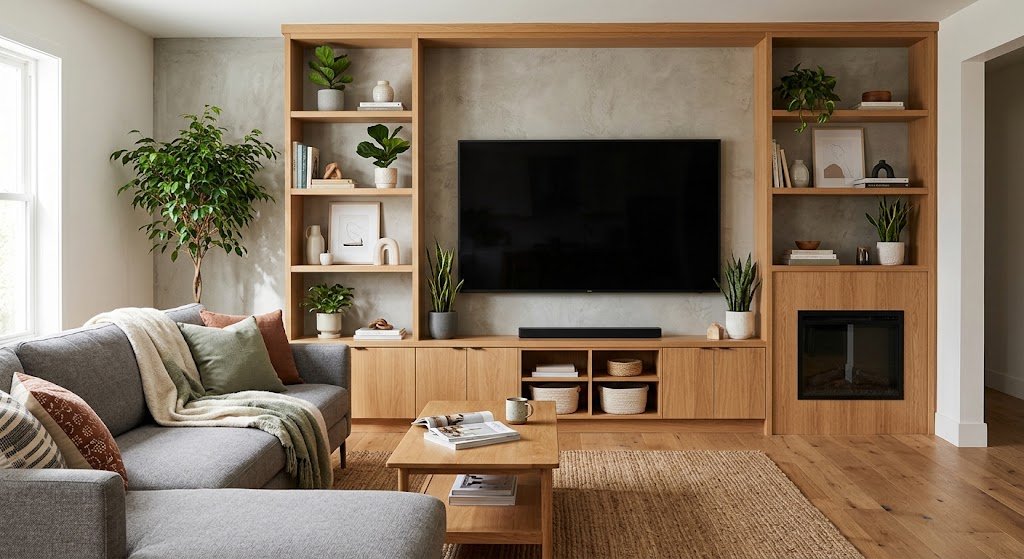
I’ve lost count of how many clients call me the week after mounting their TV, asking why the wall still looks off. The TV itself was never the problem — it’s everything around it that got ignored. Good living room tv wall ideas aren’t really about the screen at all. They’re about the six feet of wall surrounding it, and that’s the part almost everyone skips. If you’re hunting for living room tv wall ideas that hold up past the first week, this is where I’d start.
A TV wall gets used more than any other wall in the house, and yet people treat it like an afterthought. Let’s fix that.
The One Tension Every Living Room TV Wall Has to Solve

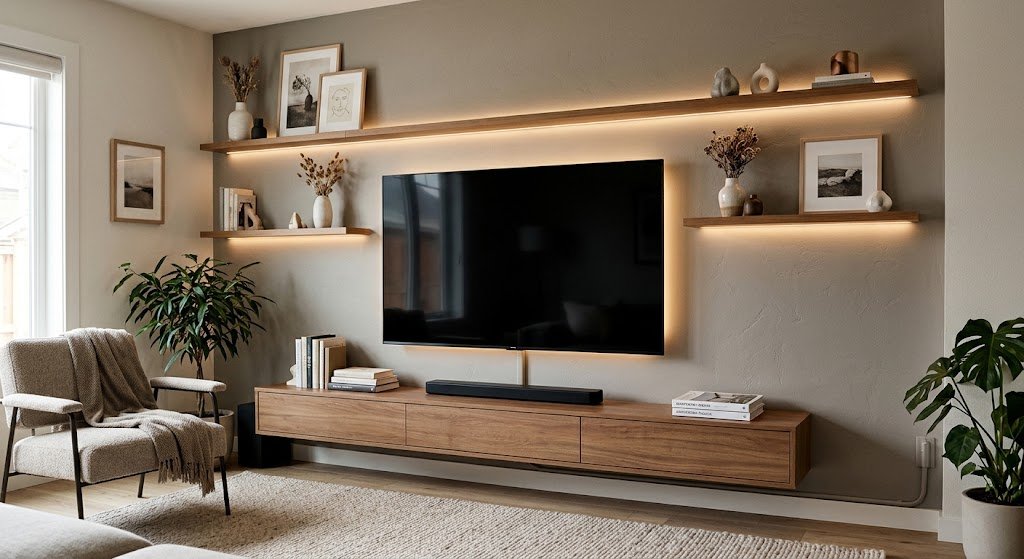
Every other wall in a living room gets to be pretty. This one has to be pretty and functional, and that tension is where most plans fall apart. You’ve got cords, a router blinking somewhere, maybe a soundbar, and a screen that goes pitch black and reflective the second you turn it off.
I tell clients this constantly: design the wall for when the TV is off, not on. If it only looks good mid-Netflix-binge, you’ve built a room that’s ugly for sixteen hours a day.
Picking the Right Wall Before You Touch a Drill
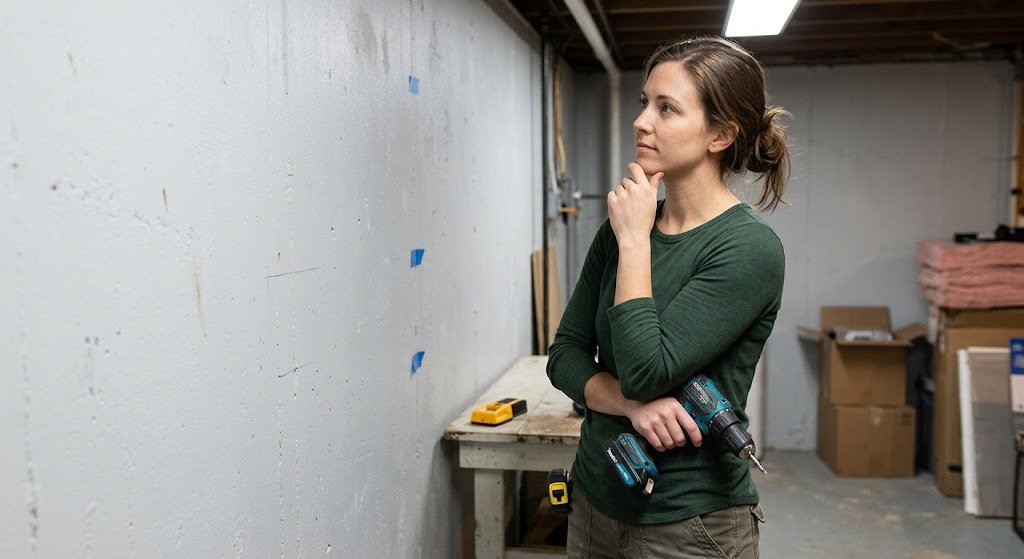
Not every wall deserves the television. The obvious spot — usually across from the sofa — isn’t automatically the right one, especially if it’s also your main source of natural light.
Glare will ruin your evenings
A wall facing a big window sounds fine until 4 p.m. hits and you can’t see a thing on screen. I redid this exact mistake twice for the same client because we picked the “logical” wall instead of testing it at different times of day.
Eye level isn’t a guess
Center of the screen should land around 42 inches from the floor when you’re seated — not standing, seated. Standing height leaves everyone craning their neck on the couch. Measure from your actual sofa cushion, not the doorway.
Making the TV Disappear When It’s Off
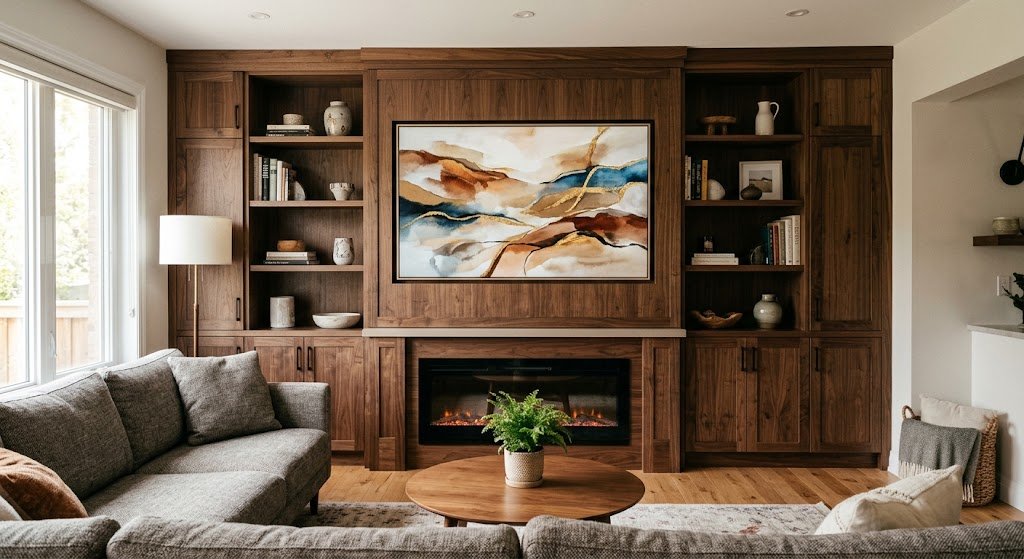
This is where I push back a little on popular advice. Everyone says “just paint it black and it’ll blend in.” Sometimes. On a dark wall, sure. On anything lighter, a black rectangle against beige just reads as a black rectangle.
If you actually want the screen to vanish, framed TVs, sliding art panels, or a gallery wall built around the screen work far better than paint alone. HGTV rounded up some genuinely useful entertainment units with barn doors and built-ins that swing closed to hide the television entirely — worth a look if concealment is your goal. There’s also a solid set of tricks for how designers use furniture and shelving to make the TV blend into a room’s existing backdrop instead of standing apart from it. HGTVHGTV
Turning It Into an Actual Living Room TV Wall Accent
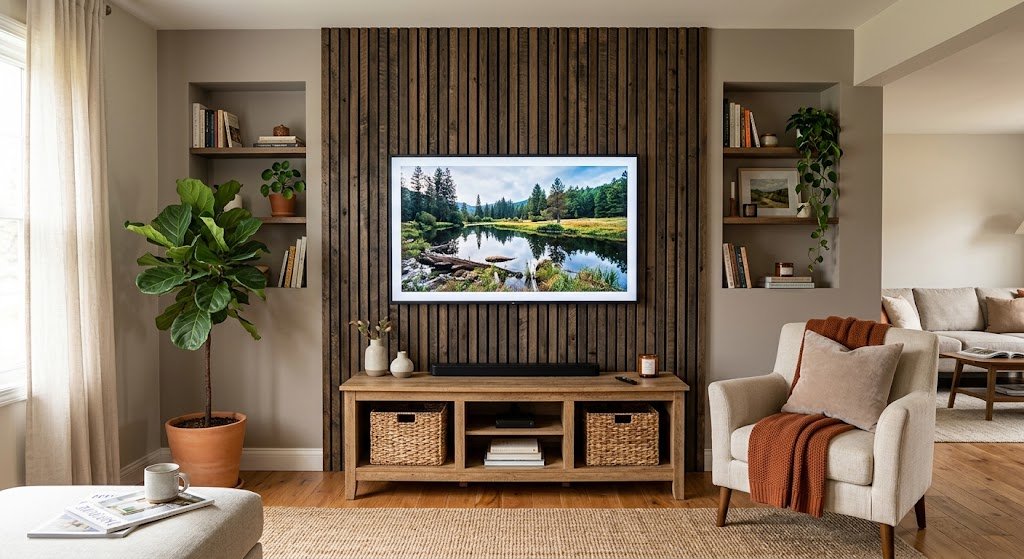
My favorite approach, hands down, is stopping the fight against the TV and just building the whole wall around it. Wood slats, a bold paint block, textured plaster — anything with enough visual weight that the screen becomes one element instead of the only element.
If you’re leaning this direction, there’s a whole world of accent wall ideas worth flipping through before you commit to a texture or material. Vertical wood paneling behind the TV is the one I recommend most often lately — it adds height to the room and makes a 65-inch screen feel intentional instead of dominant. Most living room tv wall ideas that people remember years later come down to this one move.
Color Choices for a TV Wall That Don’t Fight the Screen
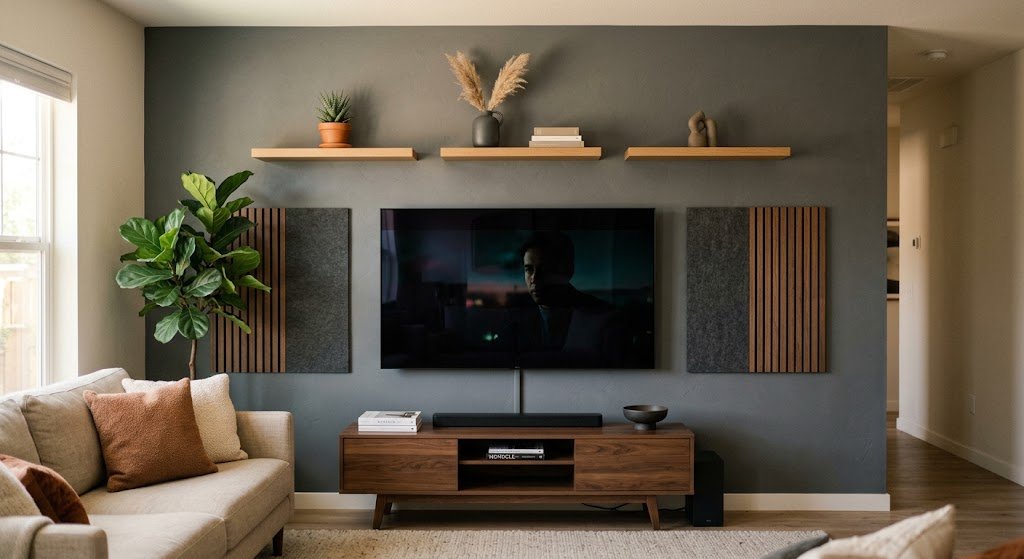
A lot of paint advice online is way too cautious. “Neutral is safest” — sure, but safe and forgettable are basically the same word. In my experience, a slightly darker wall color behind the TV actually helps the picture look sharper, because there’s less light bouncing around competing with the screen.
Charcoal, deep olive, even a muddy terracotta — these all read as sophisticated rather than moody once the room is lit properly. If you’re stuck between shades, this breakdown of living room wall colors is a decent starting point, though I’d still test swatches at night, when you’ll actually be watching TV.
Filling the Empty Space Around the Screen
A bare wall with nothing else on it always looks unfinished to me — like someone ran out of budget halfway through. Floating shelves on either side, a couple of framed prints staggered at different heights, even a single oversized piece of art off to one side — any of it beats a lone rectangle mounted dead center on blank drywall.
Don’t symmetrize everything either. Perfectly matched shelves on both sides of the TV look like a furniture showroom, not a home someone actually lives in. For more direction on layering pieces without it looking cluttered, wall decor styling has some good combinations to steal.
Lighting Ideas for a Living Room TV Wall That Actually Help
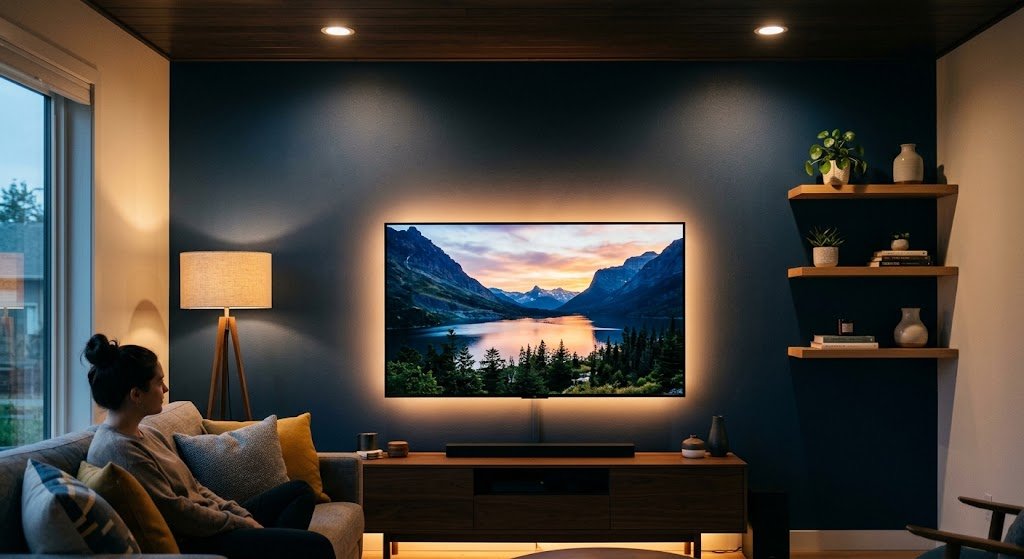
Overhead lighting is the enemy of a good TV wall — it throws glare straight onto the screen and washes out any texture you spent money on. What works instead is layered, lower light: wall sconces flanking the TV, a floor lamp in the corner, maybe a thin LED strip run behind the panel itself for bias lighting.
That bias-lighting trick sounds fussy but it reduces eye strain during long watch sessions. Homes & Gardens covers a similar point in their piece on TV walls that center around symmetry, often built out from a fireplace, which is worth reading if your TV and fireplace are fighting for the same wall. On the sconce side, wall sconces for living rooms is a good rabbit hole if you’re picky about fixture style like I am. Homes and Gardens
Small Living Room TV Wall Ideas Worth Knowing
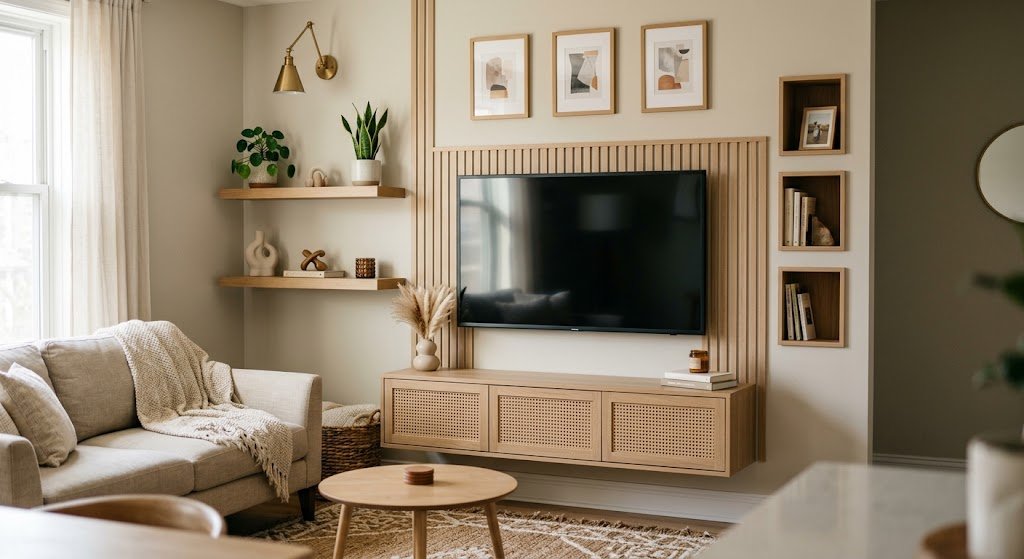
Smaller rooms need a slightly different playbook. A giant statement wall can swallow a tight space whole, so I usually scale down the drama — lighter wood tones instead of dark paneling, a smaller-format screen than you think you want, shelving that’s shallow enough not to eat into walking space.
Mirrors placed adjacent to (never directly across from) the TV wall can trick a small room into feeling twice its size, and they don’t compete with the screen for attention the way another piece of art might.
Where Most TV Wall Projects Quietly Go Wrong
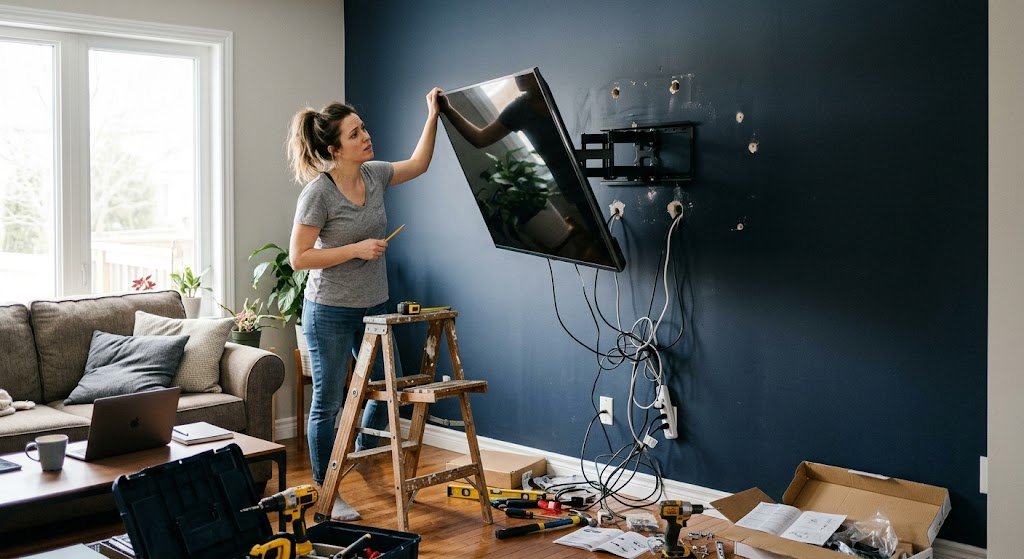
Cords hanging loose down the wall — still happening in 2026, somehow. An in-wall cord kit costs maybe thirty dollars and takes twenty minutes.
Mounting too high because “it looks more like a movie theater.” It doesn’t. It looks like your neck will hurt by episode three.
And skipping the return trip after furniture arrives — sofas get swapped, rugs change the seating distance, and suddenly that “perfect” mounting height from two years ago is wrong.
FAQs
How high should I mount my TV in a living room?
Aim for the screen’s center around 40–42 inches from the floor, measured while seated on your actual sofa. Standing-height measurements almost always end up too high once you’re sitting down to watch.
What’s the best wall color behind a TV?
Slightly darker tones — charcoal, deep green, espresso brown — tend to reduce glare and make the screen blend in better than pale neutrals do. Test the shade at night before committing.
Should I build shelves around the TV or leave it bare?
Shelves almost always look more finished, as long as you keep them asymmetrical rather than matched on both sides. A bare wall with just a screen tends to read as unfinished.
Is it worth hiding the TV completely?
Only if you genuinely dislike seeing it — sliding panels and cabinet doors work well but add cost and complexity. A styled wall that just makes peace with the TV is usually the simpler, cheaper route.
Do wall sconces work near a TV, or will they cause glare?
Sconces placed to the sides rather than directly above the screen add ambient light without throwing glare onto the panel. Skip anything positioned straight overhead.
Final Thoughts
At the end of the day, a TV wall is just a wall that happens to have a screen on it — treat it with the same care you’d give any other focal point and it stops looking like an afterthought. Start with placement and eye level, then let color, texture, and lighting do the rest. Out of all the living room tv wall ideas I’ve tried with clients, the ones that age well are always the simplest: one strong material, good lighting, and cords that stay hidden.
Pick one thing from this list — maybe the paneling, maybe the sconces — and start there. You don’t need to overhaul the whole room in a weekend.