

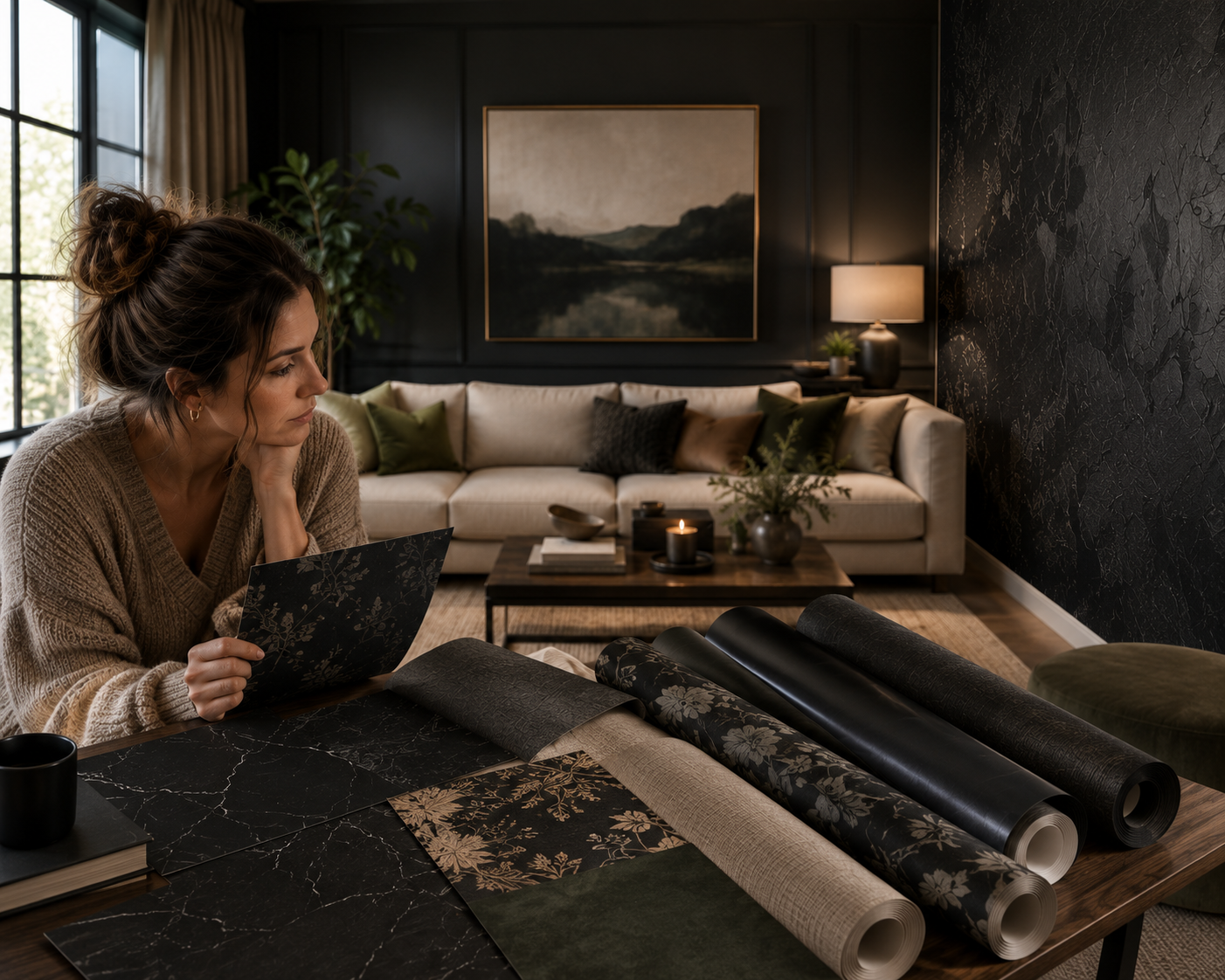
Learn how to choose wallpaper for living room walls without wasting money on the wrong roll — real steps, honest mistakes, and expert fixes worth knowing.
A client called me three weeks after hanging a bold botanical print. She was almost in tears. Not because the wallpaper was ugly — it wasn’t, it was gorgeous actually — but because it looked nothing like it did in the shop. Same roll. Completely different room. That’s the trap. People think how to choose wallpaper for living room walls is about finding a pattern you love. It’s not. It’s about whether your room can actually hold that pattern once the lights change and the furniture’s back in place.
Here’s what’s coming. Real answer for how to choose wallpaper for living room walls, no fluff. Three ways people usually approach this, ranked worst to best. And a checklist. Not a mood board you’ll forget about by Thursday — an actual process.
Why Most People Get This Decision Wrong First
Swatch cards lie. Not on purpose, they’re just designed wrong for the job. Six inches of paper under studio lighting tells you almost nothing about a full wall in your actual living room, with actual afternoon glare hitting one corner and a shadow behind the couch that never sees sun.
I say the same thing to basically every client who asks me how to choose wallpaper for living room walls. Stop trusting the tiny square. Bring a real sample home — full size if you can get one. Tape it up somewhere you’ll walk past a dozen times a day, not some forgotten corner. Give it 48 hours minimum. I’ve seen this exact mistake wreck good instincts more times than I can count — someone falls for a pattern under fluorescent store lights, orders the whole thing, and calls me a month later wondering what went wrong.
How to Choose Wallpaper for Living Room Walls: What It Really Means

It’s not one decision. People treat it like it is, but it’s really four smaller ones stacked on top of each other — color, scale, texture, and where the paper actually goes. Skip on any one of those four and the whole thing reads slightly wrong later, even if you can’t quite point to why. Take wallpaper for an accent wall as an example — hang the exact same roll on every wall in the room instead, and you’d swear it was a different pattern entirely.
Color carries most of the mood-setting on its own. Scale decides whether a pattern reads as intentional or just loud. Texture changes how light bounces around — matters even more in a room that’s already short on sun. And placement? That’s the one people forget about until it’s too late. One wall versus every wall isn’t a style choice. It’s a commitment level.
Three Approaches to Choosing Wallpaper, Ranked Worst to Best
Worst option first — chasing trends. Scroll through a “top wallpaper picks” list, grab whatever keeps showing up, done. Except now you’ve got a room that’ll look dated the second the trend cycle moves on, which happens fast.
Slightly better, still risky — falling hard for one swatch. At least it’s personal this time. But it skips the room completely. A deep emerald grasscloth can be stunning under showroom lights and genuinely oppressive on a wall with an 8-foot ceiling and one small window. I’ve seen that exact scenario play out.
Best approach — treat the room like a system. Start with what isn’t going anywhere. Flooring. Trim color. Furniture staying put. Let the wallpaper respond to those, not fight them. Takes longer. Worth it though — this is really the only version of how to choose wallpaper for living room walls that holds up five years out instead of five months.
The Room Factors That Should Drive Your Decision
Ceiling height matters more than people expect walking in. It’s the first thing I check, honestly, whenever someone brings me a question about how to choose wallpaper for living room walls. Low ceilings do better with vertical stripes, tight small prints — something pulling the eye up instead of squashing it down. Tall ceilings can carry a big loud floral or geometric without things tipping into chaos.
Light comes right after. North-facing rooms lose warmth fast, so cool blues and grays end up reading cold instead of calm — not what most people want. South-facing rooms flooded with sun? Those can handle darker, moodier tones just fine, because there’s enough brightness to keep the space from feeling shut in. Want something safer either way — beige wallpaper for a living room holds up across almost any lighting condition, which a saturated color simply can’t promise you.
And size. People forget size constantly. Wrap a genuinely small living room floor to ceiling in something dark and dense, and it won’t just look smaller. It’ll feel smaller. Every single day you’re sitting in it.
Pattern, Scale, and Color: How They Work Together
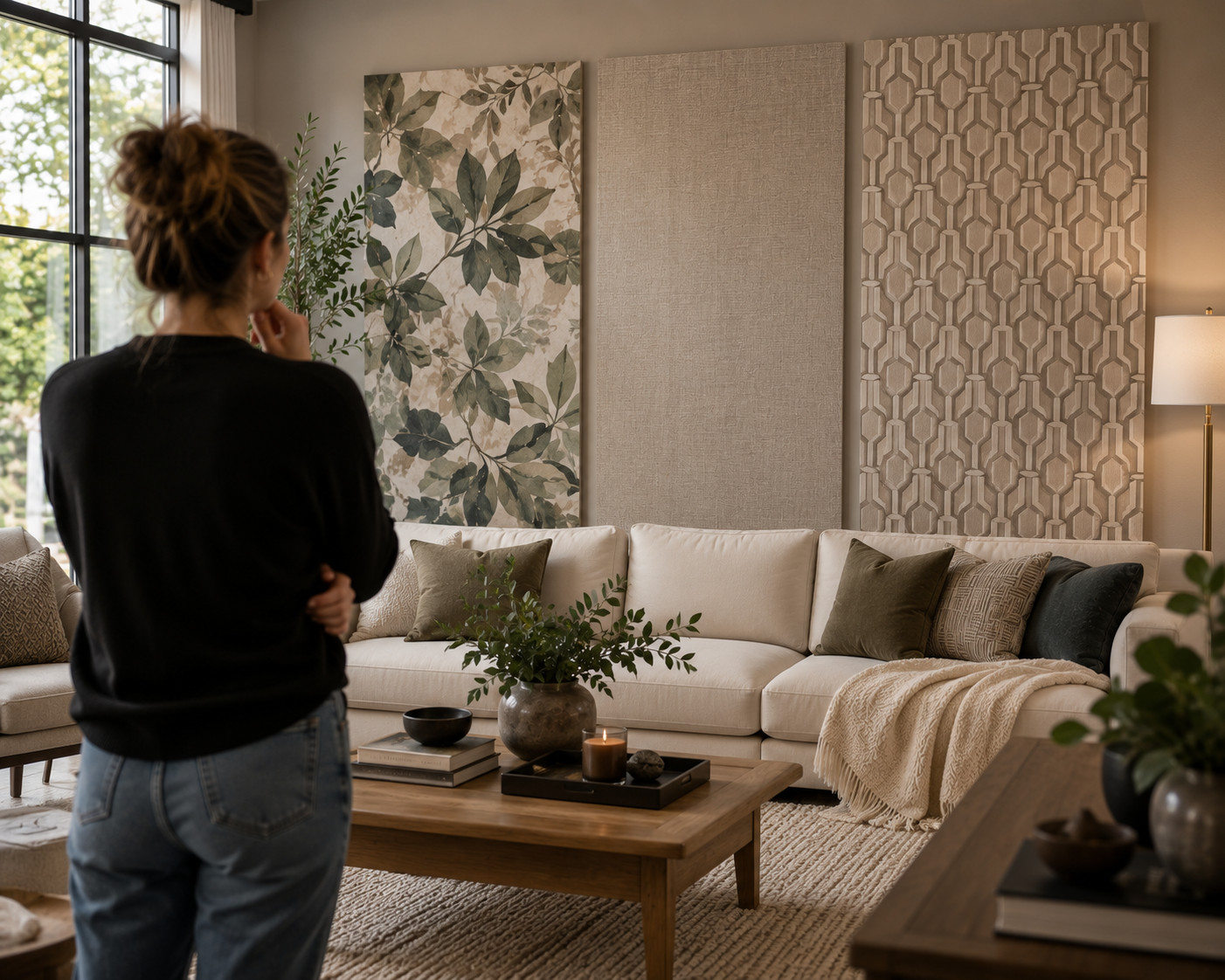
Here’s where it gets tricky. Pattern scale should usually run opposite your furniture — not match it. Big chunky sofas, oversized chairs? They can usually carry a bigger pattern, sometimes need one, or the wall behind them just looks washed out and flat. Slim, delicate furniture pairs better with something tighter, smaller-scale.
Color psychology matters more than most homeowners think going in. Design psychology experts note blues and greens tend to settle a room down; terracotta and ochre push things warmer, more social — which happens to be exactly the vibe most living rooms are chasing anyway. Not a footnote. This genuinely changes how a room feels to sit in for hours.
Texture’s the quiet one nobody talks about enough. Grasscloth and similar textured papers pull light in rather than throwing it back — makes a room feel warmer, more settled. Smooth vinyl throws light back into the room and reads sharper, more contemporary — the tradeoff being it’ll expose every dip, seam, or uneven patch on a wall that isn’t perfectly flat.
A Step-by-Step Method for How to Choose Wallpaper for Living Room Walls
Not a fan of winging it? Same. Here’s a repeatable way to work through how to choose wallpaper for living room walls without second-guessing every single step along the way.
Write down what’s staying. Flooring. Trim. Any big furniture that isn’t moving. That’s your anchor for everything after this.
Grab two or three samples. Not ten — more options just stall you out at this point. Tape each one directly to the wall. Leave them up across a couple of full days, different times, different light.
Check every sample under daylight and lamp light both. Something flawless at 2pm can go flat the second the lamps click on at night. This one step catches more bad decisions than anything else on this entire list.
Decide coverage before ordering. One accent wall eats roughly a fifth of what a full room needs — and it’s a much easier call to walk back later if it doesn’t age well.
Order more than the calculator says. Pattern repeats waste material fast. Dye lots shift slightly batch to batch. Running short mid-install is a genuinely miserable afternoon.
Real Examples From Rooms I’ve Actually Worked On
Narrow living room, barely any natural light. Client went with a soft sage botanical print on just the wall behind her couch — white trim around it. Room gained real depth without losing a single inch of floor space. That’s basically the whole goal for anyone asking how to choose wallpaper for living room spaces that don’t get much sun.
Different job entirely — wide open-plan room, tall ceilings, huge west-facing windows. Bold navy geometric across all four walls. Worked because the room had the scale and the light to actually back it up. Same paper in a cramped apartment? Would’ve felt like a closet within a week, easily.
One more — texture saved this project single-handedly. Plaster underneath was uneven, and smooth vinyl kept drawing the eye straight to every bump. Switched to grasscloth. Hid almost all of it. Honestly, the finished room looked more expensive because of that one swap. Proof that how to choose wallpaper for living room walls goes way beyond just picking a color.
Expert Tips Worth Stealing
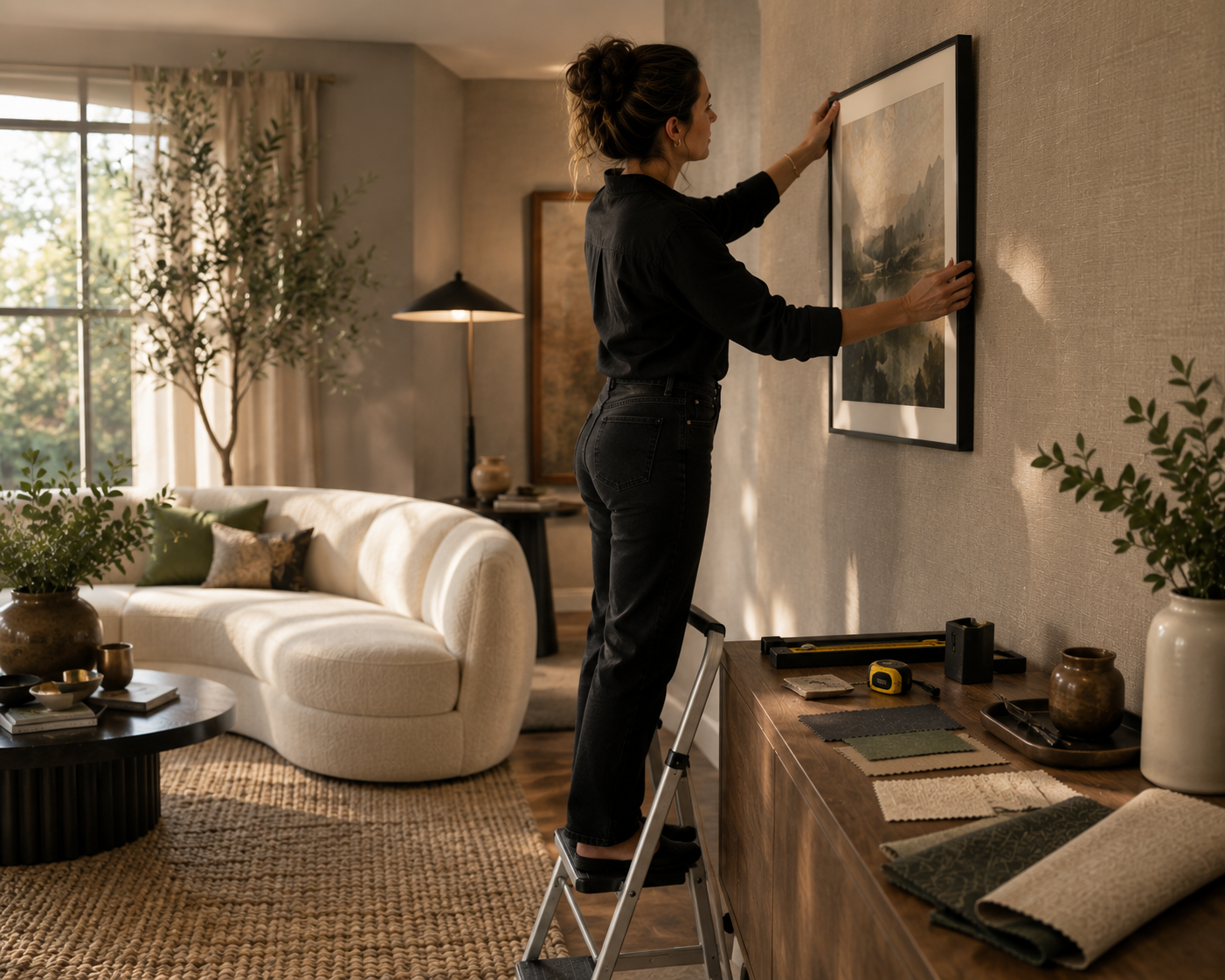
Pay for real swatches before you touch a full roll. Small fee, sure, but it’s nothing compared to reordering an entire pattern that flops once it’s actually up on the wall.
Match undertones to your trim first. Skip this and you’ll end up with a warm cream paper fighting stark cool-white trim — one of those subtle clashes that makes a finished room feel wrong without anyone being able to say exactly why.
Buy from one dye lot if you’re doing more than one wall. Later batches shift shade just enough to notice once it’s hung. Small detail. Matters a lot once you’re actually deep into how to choose wallpaper for living room walls and trying to get every piece right.
Where People Go Wrong Most Often
The lighting test — skipping it, specifically. Biggest one, by far. A wallpaper that looks incredible in a product photo can read completely different under your own bulbs — every time, practically.
People underestimate commitment too. Once all four walls are papered, swapping the rug or the sofa won’t undo that visual weight. It’s locked in now.
Buying off one tiny sample — never taping a full-size piece to the wall first — causes more returns than everything else on this list combined. And rushing the install itself? Skipped prep, sloppy seams — that’ll ruin even a genuinely great pattern choice, and fast.
FAQs
- What’s the giveaway that a wallpaper pattern is too big for my living room? Hold a full-size sample against the wall and back up to where you’d actually sit. If it reads loud from the couch, it’s oversized for the room.
- One wall or the whole room — which is the smarter call? One wall’s lower risk, easier to undo. Every wall creates a bigger, more immersive effect. Honestly, that trade-off is what how to choose wallpaper for living room walls really comes down to — matching commitment to confidence.
- Can wallpaper actually shrink how a small living room feels? Not always. Light colors and small prints can open a room up. Dark, dense patterns on every wall — those tend to shrink how the space feels.
- Does professional installation cost more than the wallpaper itself? Usually, yeah. Installation often adds more to the total bill than the paper does. Budget for labor and materials separately.
Final Thoughts
Short version — how to choose wallpaper for living room walls was never really about finding the prettiest roll on some shelf. It’s about reading your actual room first. Its light. Its proportions. The furniture that isn’t budging no matter what. Let the wallpaper respond to those specifics instead of ignoring them completely. The happiest outcomes I’ve seen almost never belong to whoever moved fastest.
Work outward from the room, not the pattern you’re excited about. Keep the sample pile small — two, maybe three. Tape them up. Actually live with them a couple of days before ordering anything. That one habit alone prevents most of the expensive regrets people end up with.
Don’t feel like you have to go big right away either. A single accent wall teaches you more about how a pattern behaves in real light than any showroom display ever could — and it leaves room to change course if it’s not quite right. Once that one wall works, you’ll know exactly what you’re looking for next time.
At the end of it, how to choose wallpaper for living room spaces comes down to patience more than taste. Plenty of people can point at a print they like. Harder skill — the one that actually pays off — is picking something that still looks right on some random Tuesday afternoon, six months after the installers packed up and all the excitement wore off.