

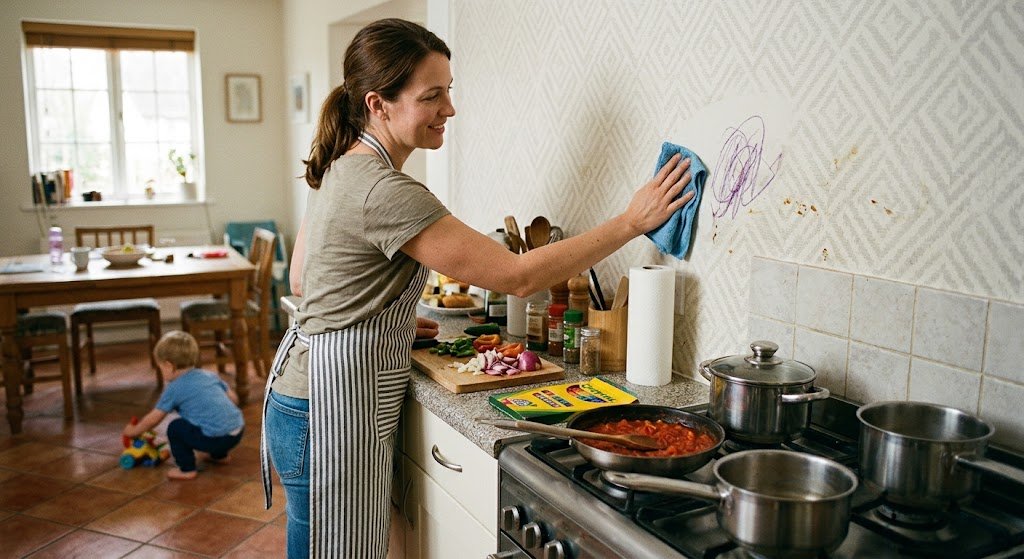
Curiosity about washable wallpaper didn’t come from a design magazine or a client meeting — it came from watching my cousin’s kitchen wall turn into a toddler’s canvas within a single afternoon. By the time dinner rolled around, she was already pricing out paint cans, convinced the damage was permanent. It wasn’t. A damp cloth and about ten minutes undid what looked like a lost cause, because the wall underneath that purple scribble happened to be covered in the real, properly-rated kind of washable wallpaper.
Years of picking wall materials for real, chaotic homes taught me one thing fast: grease near a stove, crayon on a hallway wall, a dog that constantly brushes against corners — none of that cares about your design vision. What follows is the practical side of washable wallpaper, gathered from actual jobs rather than spec sheets: the situations it rescues, the spots it can’t quite cover, and the shopping traps worth dodging.
The Word “Washable” Hides A Lot Of Variation
Nobody tells you this at the store: two rolls can both say “washable” and behave nothing alike once water touches them. One might survive a light sponge pass. Another can take a real scrub with soap and come out looking untouched.
I check the tiny wave symbols on the product card now instead of trusting the word alone. One wave — treat it like it’s fragile. Three waves — go ahead, it can handle real cleaning pressure. This detailed ratings breakdown matches what I’ve seen across dozens of installs: reaching that top wave tier is really what separates a genuinely tough washable wallpaper from something that’s just marketed well.
Vinyl-coated rolls sit at the sturdy end of that scale because the coating acts like armor rather than soaking anything in. A washable-rated paper wallpaper still outperforms an unrated one, no argument there — but ask it to handle what a vinyl surface handles daily, and it’ll fall short fast.
Paint Isn’t The Practical Choice People Think It Is
I’ll push back on something here. Paint gets praised constantly for being low-effort, and touch-ups genuinely are simple. But once a room sees daily abuse, washable wallpaper often wins by a wide margin — it disguises dents, seams, and texture flaws that flat paint puts on full display under bright kitchen lights.
Splashed oil by the stove, a rogue streak of sauce nowhere near the pan, a turmeric mark that’s practically tattooed itself into the wall — situations like these are exactly what separates a good washable wallpaper from an ordinary one. Bathrooms work differently since humidity isn’t the same enemy as grease, but a properly rated washable wallpaper still beats basic paper in a powder room that never catches a direct spray.
Worth repeating: washable does not mean waterproof. Showers need tile, no negotiating on that. Washable wallpaper is for splashes and wipe-downs, full stop. This expert cleaning guide makes the same point — scrubbable coverings should meet a damp sponge, never sit under running water.
Where Washable Wallpaper Actually Earns Its Cost
Some rooms benefit far more than others, based on every install I’ve been part of over the years.
Kitchens and backsplash areas — food mess and grease wipe away without leaving a trace behind.
Kids’ rooms and playrooms — crayon marks, sticky fingerprints, the occasional marker “masterpiece” all come off with minimal effort.
Entryways and mudrooms — muddy shoes and dragged backpacks are basically daily events, and a wipeable surface handles it.
Half-baths and powder rooms — a nice compromise for style-conscious spaces that still catch the odd splash.
Setting up a nursery? There’s a dedicated collection of nursery-friendly peel and stick wallpaper made from washable, low-VOC materials — something that genuinely matters when small hands and mouths are involved.
Peel-And-Stick Made Washable Wallpaper Genuinely Easy
This is the development that changed everything for renters and DIY-hesitant homeowners. A large share of today’s washable wallpaper comes in peel-and-stick form now, cutting out the paste bucket, the steamer, and the multi-day installation timeline entirely.
Most peel-and-stick washable wallpaper uses a vinyl or vinyl-blend top layer — the same material responsible for that easy wipe-clean surface. Brand quality varies a lot more than people assume in this category, which makes it worth browsing a proper comparison of peel and stick wallpaper before settling on the first roll that looks nice online.
Budget peel-and-stick rolls have a habit of bubbling right at the seams once they’ve been cleaned a handful of times, especially in a kitchen that gets warm and humid regularly. A slightly pricier, well-reviewed brand tends to avoid that headache entirely.
Color Choice Matters More Than You’d Guess
Something that rarely comes up in these conversations: the shade you choose ends up shaping how “clean” a washable wallpaper appears months down the line, almost as much as the material underneath it does. Light, flat colors show water spots and cleaning streaks fast. Darker tones hide the same marks almost completely.
Charcoal, forest green, deep navy — these camouflage minor imperfections without effort. Fans of earthy palettes might like this range of green wallpaper, which suits both kitchens and reading nooks, and darker greens in particular hide faint watermarks left behind after routine cleaning.
Pattern helps too, pulling the eye away from a stray smudge in a way flat color never manages. My advice: skip plain white washable wallpaper in kitchens. Gorgeous on install day, visibly grimy within three weeks — I’ve watched it happen more than once.
Comparing Washable And Regular Wallpaper Lifespan
Numbers tell the story better than vague claims. Regular wallpaper without a washable rating usually lasts five to ten years in low-traffic rooms — but that window shrinks fast in kitchens or humid areas, sometimes down to two or three years if the material was wrong for that room from the start.
Washable wallpaper regularly pushes past that ten-year mark, even under rough daily use, because the coated surface absorbs abuse that would otherwise wear plain paper thin. I’ve seen washable vinyl in a hectic family kitchen still holding its color after eight years straight, while the plain paper option down the hall needed two full replacements in that same stretch.
This wallpaper material comparison backs this pattern — vinyl and hybrid washable builds consistently outlast plain paper wherever spills, contact, or humidity swings are part of daily life.
Cleaning Washable Wallpaper Without Undoing Its Benefits

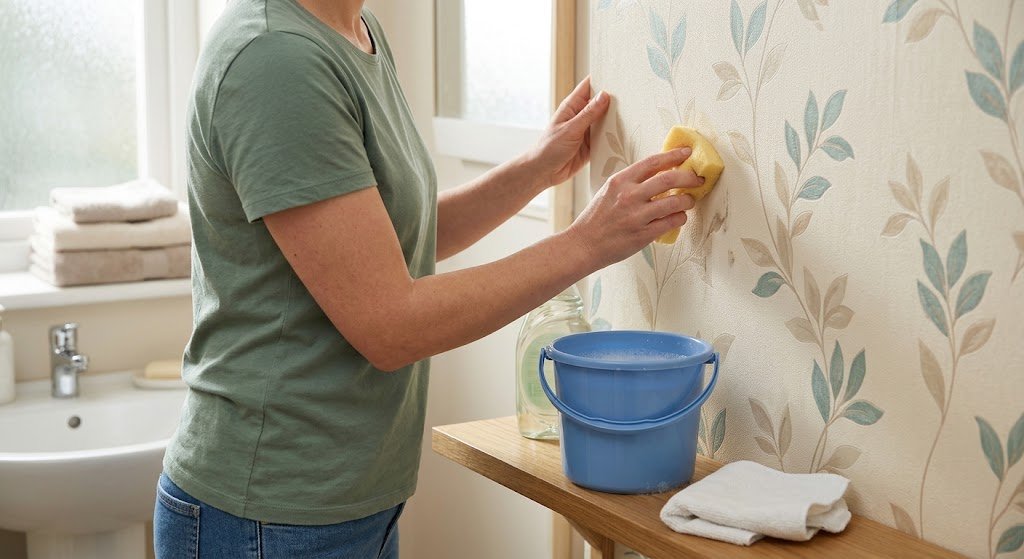
Cleaning it wrong cancels out the entire reason you bought washable wallpaper in the first place, so a few rules matter here.
Stick to water that’s just lukewarm, nothing hotter. Heat has a way of weakening the adhesive layer on peel-and-stick washable wallpaper sooner than you’d expect.
Go easy on soap. A small amount of dish soap in water does the job — skip bleach and anything ammonia-based.
Don’t skip wringing the sponge out properly. It’s rarely the wiping motion that causes damage — it’s leftover water sitting on the surface too long.
Unless the packaging specifically says otherwise, blotting beats scrubbing every time. Check the wave rating before treating a stubborn mark aggressively.
Test a hidden spot first, always. Even with a roll marketed as highly washable, this step isn’t optional.
This bathroom wallpaper resource echoes the same caution — sturdy washable vinyl still benefits from gentle handling rather than an aggressive scrub session.
Custom Washable Wallpaper For Rooms That Need Something Specific
Standard patterns don’t always fit an oddly shaped wall or a very particular vision, and that’s exactly where custom washable wallpaper justifies its price. A client of mine wanted a scaled mural-style washable wallpaper for her home office last year, printed to match exact wall measurements — the finished result looked closer to a magazine feature than a weekend project.
There’s a solid starting point for exploring this at custom wallpaper for walls, covering sizing, material choices, and how washable coatings get applied to custom prints without throwing off color accuracy.
Custom orders cost more, no question. But for a wall facing daily wear — a home gym, a busy hallway, a kid’s playroom — paying extra for washable-grade material tends to pay for itself.
Mistakes That Wreck Otherwise Good Washable Wallpaper
I’ve watched decent washable wallpaper fail early, and almost every time it traces back to skipped prep rather than the product itself.
Hanging it over uneven or greasy walls tops the list — any bump or residue underneath eventually shows through the surface no matter how washable the coating is. There’s also a common assumption that peel-and-stick removal is automatically clean and residue-free. It isn’t always. Pull a lower-cost washable wallpaper off too quickly, or leave it mounted for too long, and a sticky film often stays behind on the wall.
Sunlight gets overlooked constantly too. Washable coatings resist moisture and grime just fine, but UV rays can still fade a print over time, especially on south-facing walls. If that’s your situation, look for fade-resistant labeling alongside the washable rating — the two qualities don’t automatically come as a package deal.
Washable Wallpaper Built For Boys’ Rooms And Busy Kids
Kids’ rooms deserve their own category because the damage goes deeper than the occasional splash — sticker residue, crayon test runs, the inevitable juice box spill. Washable wallpaper isn’t optional here if the walls need to survive past year one.
There’s a fun set of wallpaper for boys’ rooms built around bold themes — sports, space, dinosaurs — that still keeps that wipeable, washable base fully intact. Patterned washable wallpaper in a kid’s space is one of my favorite recommendations to make, since parents get personality on the walls without giving up practicality.
Final Thoughts
Washable wallpaper won’t solve every household problem, but it handles something paint and plain paper both struggle with — staying presentable in a space that gets lived in every single day. Nearly every client who’s gone with a well-rated, quality washable wallpaper has circled back later with praise, not complaints.
If doubt is still lingering, test the waters literally — one wall, or even just a backsplash strip, before committing the whole room. Let washable wallpaper prove itself against your household’s particular mess first. Whoever’s holding a damp sponge instead of a paint tray a year from now will appreciate the smaller decision made today.
FAQs
Does washable wallpaper mean the same thing as waterproof?
Not quite — splashes and routine wiping are fine, but constant water contact, the kind a shower wall deals with, is a different demand entirely.
Is it okay to hang washable wallpaper in a shower stall?
Generally, no. Reserve washable wallpaper for the drier walls nearby, and leave direct water zones to tile instead.
Does washable wallpaper cost more than the standard kind?
Slightly more at checkout, most of the time, but it usually earns that difference back through a longer lifespan.
Can peel-and-stick washable wallpaper be reused once it’s removed?
Occasionally, and it comes down to brand and how gently the removal happens — not something worth counting on every single time.
What’s the gentlest way to deal with a stain on washable wallpaper?
A soft sponge, lukewarm water, and a touch of mild soap — and always test somewhere hidden before going near a visible mark.