

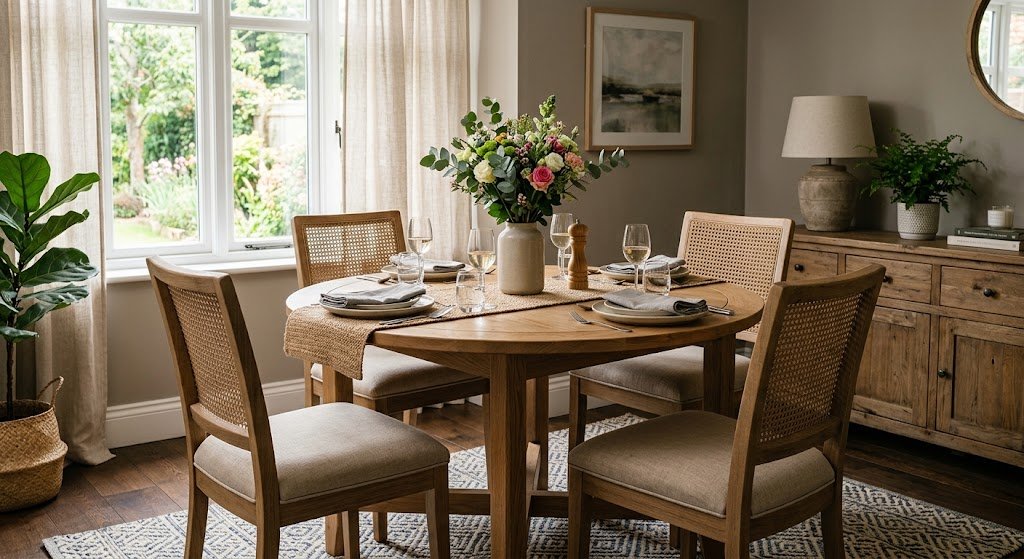
I’ve walked into more dining rooms than I can count over the years — some cramped, some sprawling, most somewhere awkward in between. What keeps pulling me back to this shape is simple — a round table and chairs dining room solves stuff you didn’t even know was broken, until you’ve actually lived with one.
More often than not, when someone tells me their dining space feels wrong somehow, the real problem is a boxy table wedged into a room that was never meant to hold sharp edges. Trade it for a round table and chairs dining room arrangement, and hips stop clipping the corner on the way to grab seconds. Sounds minor. Isn’t.
This isn’t a hype piece, though. A round table and chairs dining room isn’t automatically the right call for every home — I’ll get into where it falls short later. But for a huge chunk of the dining spaces I’ve worked on, it’s been the fix nobody asked for and everybody ends up thanking me for.
Why This Layout Feels So Different
Sit at a rectangular table for six and count how many actual conversations happen. Usually it’s two — one at each end, maybe a third mumbled across the middle if someone leans in. A round table and chairs dining room kills that problem dead. Nobody’s stuck at the “far end.” You’re not yelling across three heads just to reach the salt shaker.
It has an oddly fair quality to it — not a word I toss around when talking about furniture. No head of the table means no hierarchy. My grandmother’s dining room had an oval table with a very clear “important seat,” and as a kid, getting stuck at the opposite end felt like exile. Round tables don’t do that to people.
The conversation thing isn’t a myth. I’ve sat through enough awkward dinner parties to notice the pattern — round setups just talk more, easier, without anyone trying.
There’s also the traffic-flow piece, which sounds boring until you’ve lived with the alternative. Sharp edges catch chair backs, catch hips, catch a running toddler at exactly the wrong second. Shape is the first thing I settle with a client, way before wood tones or fabric samples come up — mostly because the room itself usually decides it for you anyway.
Getting The Size Right (This Is Where People Mess Up)

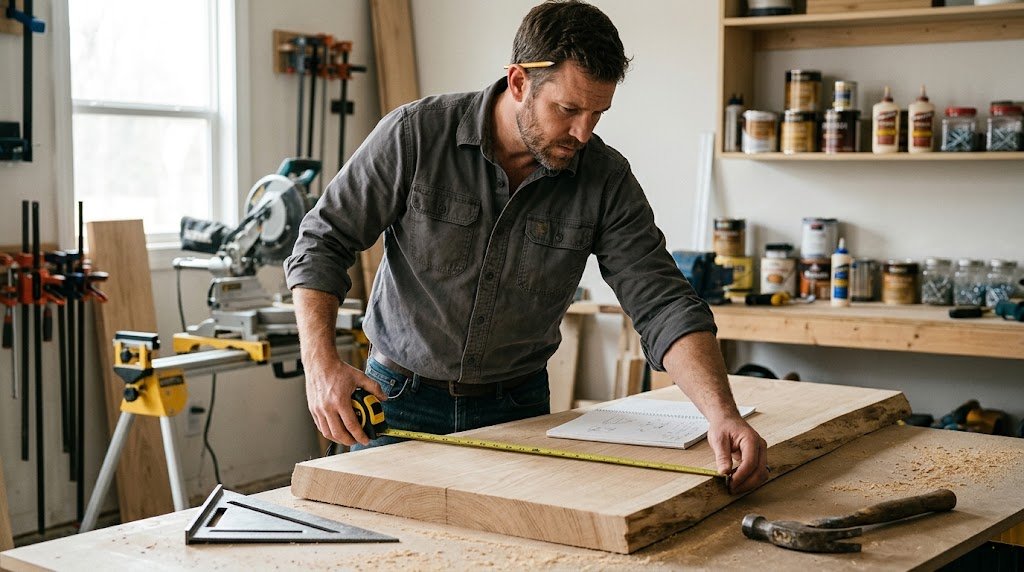
I’ll be blunt — most people buying a round table and chairs dining room set go too big or too small, and almost never land in the middle. There’s no shame in it. Diameters are weirdly hard to eyeball in a showroom.
Here’s roughly how it breaks down, and this tracks with what most furniture guides land on too — the sizing math behind popular round tables backs this up pretty closely:
- A 36-inch round comfortably seats four, tight for anything more.
- 48 inches gets you four with breathing room, six if everyone’s friendly.
- 54 to 60 inches is the sweet spot for six — this is what I recommend more than any other size.
- 72 inches and up starts creeping into eight-to-ten territory, but at that point you’re basically hosting Thanksgiving weekly.
In my experience, people underestimate how much elbow room actually matters. Thirty inches of table edge per person sounds like plenty until you’re passing a gravy boat mid-conversation and your neighbor’s fork is in your airspace.
A round table and chairs dining room only sings if you leave clearance around the perimeter — I push for at least three feet between the table’s edge and the nearest wall or cabinet. Skimp on that, and pulling out a chair turns into a whole production.
Picking Chairs That Actually Belong There
Here’s a mistake I see constantly: someone nails the table, then grabs whatever chairs were on sale. A round table and chairs dining room lives or dies on how the seating relates to the shape above it.
Curved-back chairs echo the table’s roundness without being matchy-matchy about it, and I’m a big fan of that softer visual rhyme. Straight ladder-back chairs work too, but they read more traditional — fine if that’s your vibe, less so if you’re going for something looser and more modern.
Armrests are the sneaky variable nobody thinks about. Arms add width, and around a curved table, that width eats into your per-person space fast. I usually mix — a couple of armchairs at “anchor” spots, side chairs filling the rest.
How many chairs you use ends up mattering more with a circle than with a rectangle, since seats spread around the whole ring instead of stacking along two sides. An odd count can throw the balance off just a touch; even numbers usually settle better, though I’ve watched five chairs work just fine in a snugger room.
Material-wise, I keep steering clients toward a mix rather than a matched set bought as one unit. A round table and chairs dining room with slightly varied chairs — same wood tone, different silhouettes — tends to look collected rather than showroom-staged.
Small Rooms, Same Big Payoff
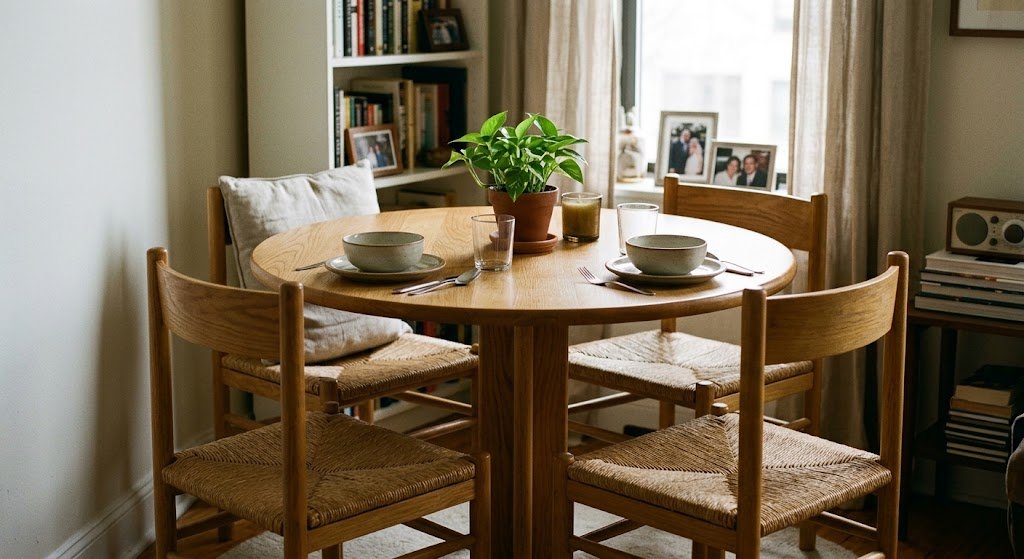
If your dining area is on the smaller side, this is genuinely where the format shines brightest. I’ve fit a 42-inch round comfortably into rooms where a rectangular table for the same headcount simply wouldn’t have worked — the geometry just cooperates better.
Corners are the enemy in tight spaces, full stop. Round tables tend to soften small square rooms in a way rectangular ones structurally can’t, mostly because there’s no sharp edge catching your eye — or your shin — on the way past.
When floor space is limited, a few things help a round table and chairs dining room punch above its weight:
- Swapping four legs for a single pedestal, which opens up knee space and lets seats slide in closer.
- A pale wood finish or a glass surface, keeping the piece from visually swallowing a compact room.
- Armless seating, which shaves off valuable inches around the whole circle.
I’ll also say this — don’t go smaller than you need just because the room is small. A 36-inch table crammed into a nook that could actually fit 42 inches is a missed opportunity. Measure twice, buy once, as the saying almost goes.
Materials, Finishes, And What Actually Ages Well
Wood is still king here, and for good reason — it takes daily abuse better than most alternatives. Oak and walnut show up constantly in the rooms I’ve styled, partly because they hide scratches decently and partly because they just look right regardless of trend cycles.
That said, I’ve grown fond of stone-topped rounds for households that entertain a lot. Marble and its more practical cousins (porcelain, quartz composites) shrug off wine rings in a way solid wood never quite does. Pricier, sure, but if you’re the type who hosts monthly, it pays for itself in reduced panic.
Glass tops get a bad rap for showing every fingerprint, and yeah, that’s fair. But visually, they make a round table and chairs dining room feel larger than it is — useful if your space is on the compact side and you want the illusion of more square footage.
On color: dark surfaces look stunning in photos but show every crumb and speck of dust within hours of real use. Go lighter if there are kids or pets in the house, or if wiping the table down three times daily just isn’t your idea of fun.
Slip-Ups Worth Avoiding
Let’s talk about what goes wrong, because plenty does.
The rug is almost always sized incorrectly. People buy a rug that matches the table’s footprint exactly, then chairs get pulled halfway off the edge every time someone sits down. Your rug needs to extend a solid two feet beyond the table on all sides, minimum.
Lighting gets ignored until it’s too late. A round table and chairs dining room begs for a round or circular pendant centered directly above it — a rectangular chandelier over a circular table just looks wrong, like the room is arguing with itself.
People also forget about the base shape entirely. A pedestal base under a round tabletop feels intentional. Four straight legs under the same tabletop can feel like someone just bolted a circle onto a square frame, because that’s essentially what happened.
And then there’s the classic — buying chairs before measuring the gap between them. Wide upholstered chairs around a smaller round table and chairs dining room setup means everyone’s shoulder-to-shoulder, which defeats half the point of going round in the first place.
Round Table And Chairs Dining Room Layout Tips Worth Stealing
Placing it dead-center is the default, and honestly, it’s the right call for most open-concept layouts. That said, nudging the table off-center toward a window or an accent wall works too, if the room’s proportions ask for it.
A few layout habits that consistently work:
- Give yourself a minimum of 36 inches of open space on every side so chairs can slide out without a fight.
- Anchor the whole setup with a rug, even in rooms with hardwood you love — it grounds the circle visually.
- Keep sightlines open; a round table and chairs dining room loses its conversational magic if a bulky sideboard blocks half the seats from each other.
I’ll also mention — mixing this layout with a nearby built-in bench along one wall is a trick I’ve used in smaller homes. You still get the round table’s social benefits, but gain flexible seating for guests without adding four more chairs permanently jammed into the room.
Final Thoughts
Look, I’m not going to pretend a round table and chairs dining room is the answer for every single home — long, narrow dining rooms genuinely do better with something elongated. But for square rooms, open-plan spaces, and anyone tired of shouting down a table to be heard, this shape solves real problems.
I’ve watched clients hesitate over this decision more than almost any other furniture choice, usually because “everyone has a rectangular table” and change feels risky. It’s not, though. Take real measurements, pick a diameter with room to breathe, and choose seating that plays nice with the shape overhead — do that, and you’ll land on a room people don’t rush to leave once dinner’s done.
Still unsure? Go park yourself at a round table in an actual showroom for ten minutes. You’ll notice the shift before you can even explain what changed.
FAQs
Is a round table and chairs dining room better for small spaces?
Generally, yes. The lack of corners makes tight rooms feel more open and easier to move through.
What size round table seats six people comfortably?
Aim for 54 to 60 inches in diameter — 60 inches gives the most breathing room per person.
Do round tables work in rectangular rooms?
They can, but they tend to leave awkward leftover space on the long sides. Square or near-square rooms suit them best.
Should chairs match the table exactly?
Not necessarily. A slightly mixed set with a shared wood tone often looks more intentional than a matched showroom package.
What base works best under a round tabletop?
A pedestal base, hands down — it frees up legroom and visually suits the circular shape far better than four straight legs.