

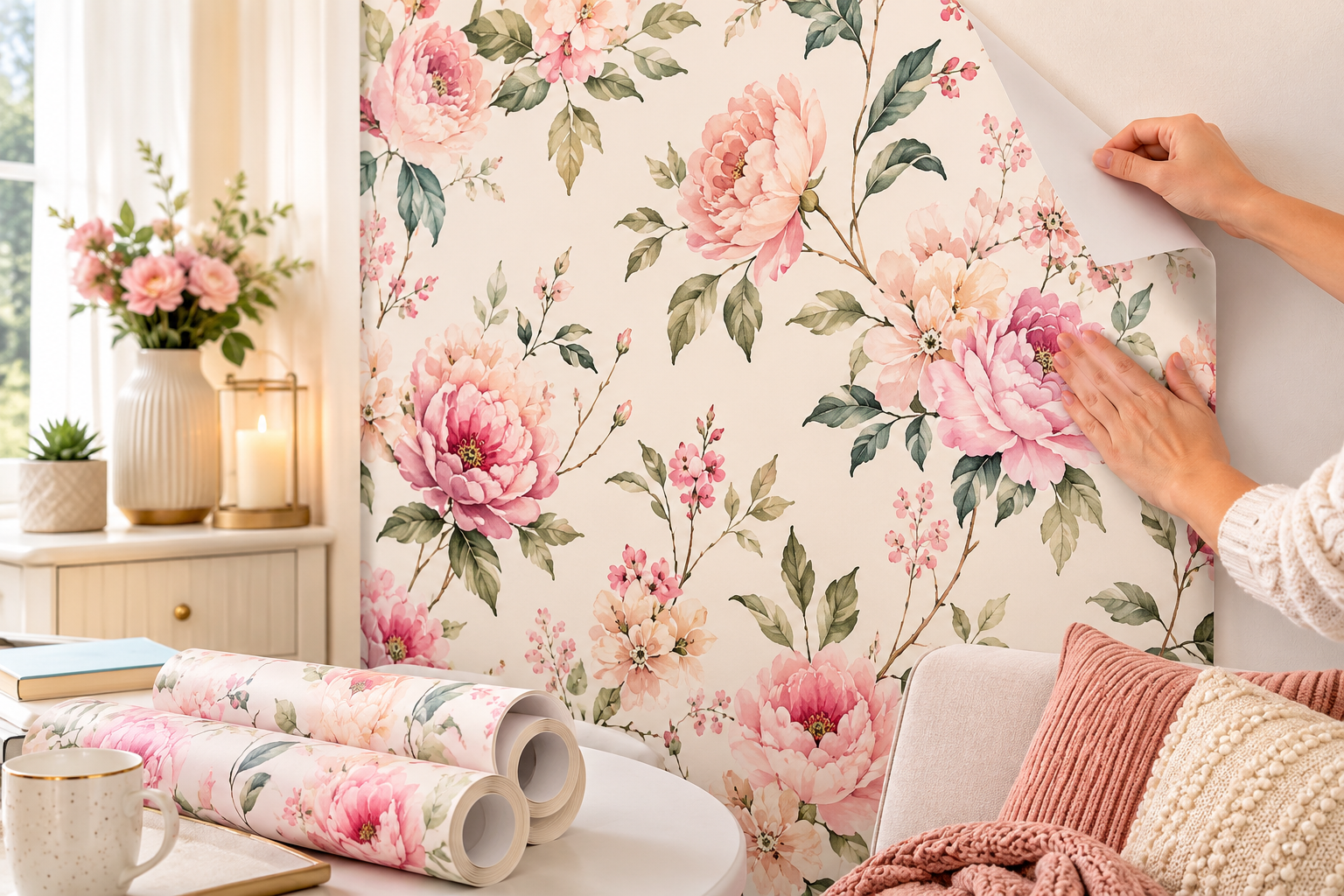
I’ve lost count of how many powder rooms I’ve walked into where someone tried floral peel and stick wallpaper on a whim and either loved it forever or ripped it down within a month. There’s rarely an in-between. That’s kind of the whole story with this stuff — it’s forgiving in some ways and brutally unforgiving in others, and nobody tells you which is which until you’re standing there with a bubble the size of a tennis ball staring back at you.
So let’s talk about it properly. Not the glossy “just peel and stick, easy peasy” version you see on packaging, but what actually happens on real walls in real houses.
Why floral peel and stick wallpaper refuses to fade out

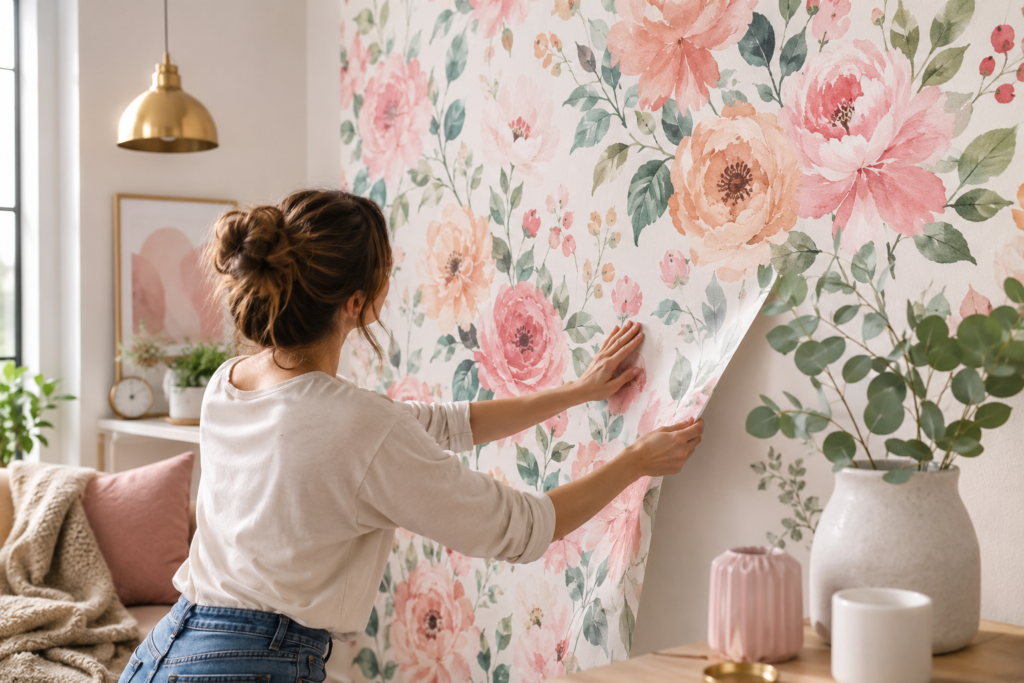
Floral wallpaper has been having a moment for a few years now, and honestly, I don’t think it’s a moment anymore — it’s just where design landed. Homes & Gardens recently pointed out how well delicate florals suit even the smallest, most awkward rooms, giving each one a personality that plain paint just can’t manage — and I’d argue that’s the real appeal here, not just nostalgia. A tiny hallway or an awkward nook suddenly has a personality instead of just being blank drywall.
What I like about floral peel and stick wallpaper specifically is that it lowers the stakes. You’re not committing to paste and primer and a weekend you’ll never get back. You’re committing to, what, an afternoon? Renters especially owe this format a thank-you note.
The renter factor nobody talks about enough
If you’ve ever lived somewhere you couldn’t paint, you know the particular sadness of white walls staring at you for two years straight. Floral peel and stick wallpaper fixes that without a security deposit fight. I’ve had clients in rentals do an entire bedroom wall in a soft botanical print and take it down clean when they moved — no drama, no landlord letters.
Picking a pattern that won’t bore you in six months
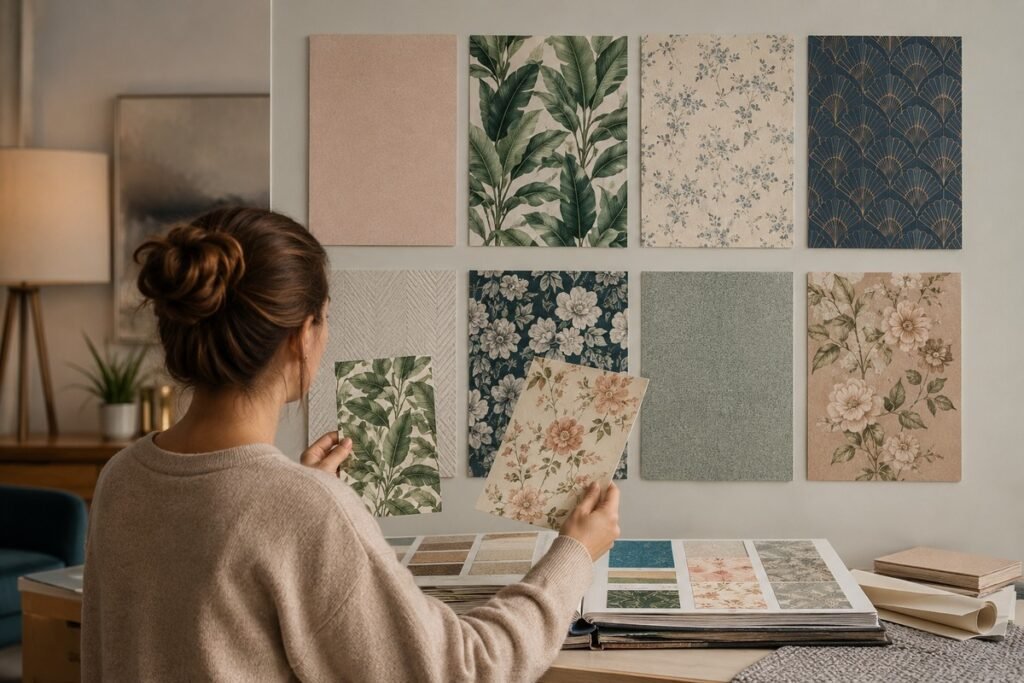
Here’s the thing most people miss: scale matters way more than color. A tiny ditsy floral print reads almost like texture from across the room, while an oversized bloom becomes the whole personality of the space whether you meant it to or not.
I usually steer people toward one of two lanes. Go quiet and layered, or go loud and singular. There’s not much of a happy medium — a medium-scale floral in a medium room tends to just look busy without feeling intentional. If you want proof that scale changes everything, browsing a set of classic floral patterns side by side makes the difference obvious almost instantly.
Color does its own heavy lifting too. Lighter, airier palettes tend to open a room up, which lines up with what most designers will tell you about small-space florals. Deeper, moodier tones do the opposite on purpose — they pull walls in and make a room feel wrapped, almost cocoon-like. Neither is “better.” It depends on whether you want the room to feel expansive or intimate, and that’s a personal call, not a design rule.
Reading the room before you buy the roll
Natural light changes everything about how a pattern reads. A print that looks soft and romantic in a sunlit bedroom can turn muddy and flat in a dim hallway. I always tell people to hold a sample up at the actual time of day they’ll mostly see that wall — morning light and evening lamp light are basically different rooms.
Where floral peel and stick wallpaper actually earns its keep
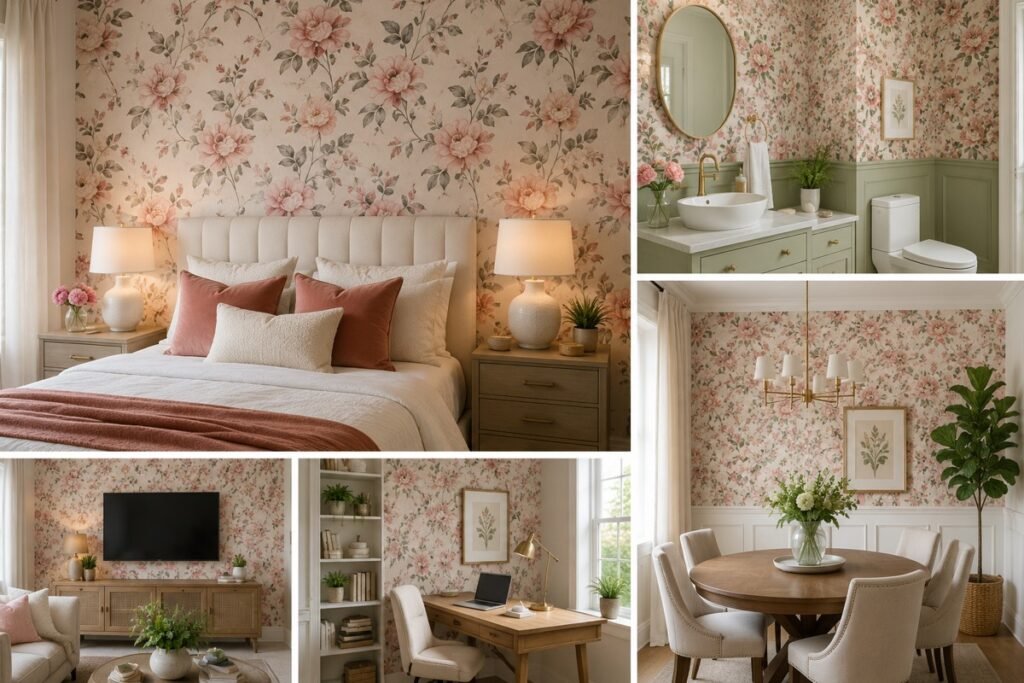
Powder rooms are the obvious answer, and for good reason — small square footage means even a pricier roll won’t wreck your budget, and the drama pays off disproportionately. But I’ve had just as much luck in closets, the backs of built-in bookshelves, and stair risers, which is a detail people forget exists until they see it done well.
Bedrooms work beautifully too, especially behind a headboard where you don’t need full wall coverage to get the effect. Kitchens are trickier — steam and grease are not floral wallpaper’s friends, so if you’re set on it there, keep it away from the stove and stick to a backsplash-adjacent accent instead of the whole wall.
Installing floral peel and stick wallpaper the right way
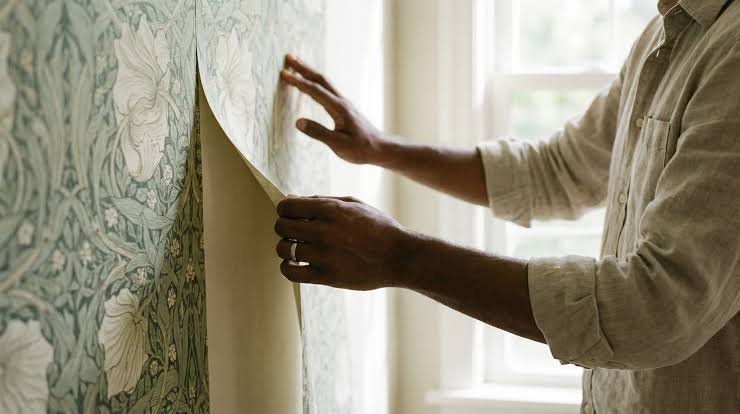
I’ll be blunt: floral peel and stick wallpaper is easier than traditional wallpaper, but “easier” isn’t “easy.” The single biggest technical mistake, according to HGTV’s own installation walkthrough, comes down to alignment — get the right edge squared against a true plumb line and leave a little slack near the ceiling before you commit to smoothing anything down flat. Skip that plumb line and you’ll spend the whole project chasing a crooked seam.
The overlap issue is a bigger deal than most first-timers realize, too. One HGTV columnist who tested peel-and-stick panels firsthand walked away with a clear lesson about ordering enough material, warning readers to order roughly fifteen percent more material than the math says you need, so you’re never stuck mid-wall waiting on a reorder that never quite matches the dye lot. That fifteen percent rule has saved more than one of my projects from an awkward seam-matching scramble.
Bubbles, seams, and other small dramas
Bubbles happen. They just do, even to people who’ve hung a dozen rolls. The fix is almost always patience, not force — smooth from the center outward, and if it’s really stubborn, a pin prick and a gentle press works better than fighting the whole panel off the wall. Seams are the other thing — a hairline overlap instead of a butt joint keeps humidity and temperature swings from eventually splitting your pattern apart at the edges.
Floral peel and stick wallpaper color stories worth considering
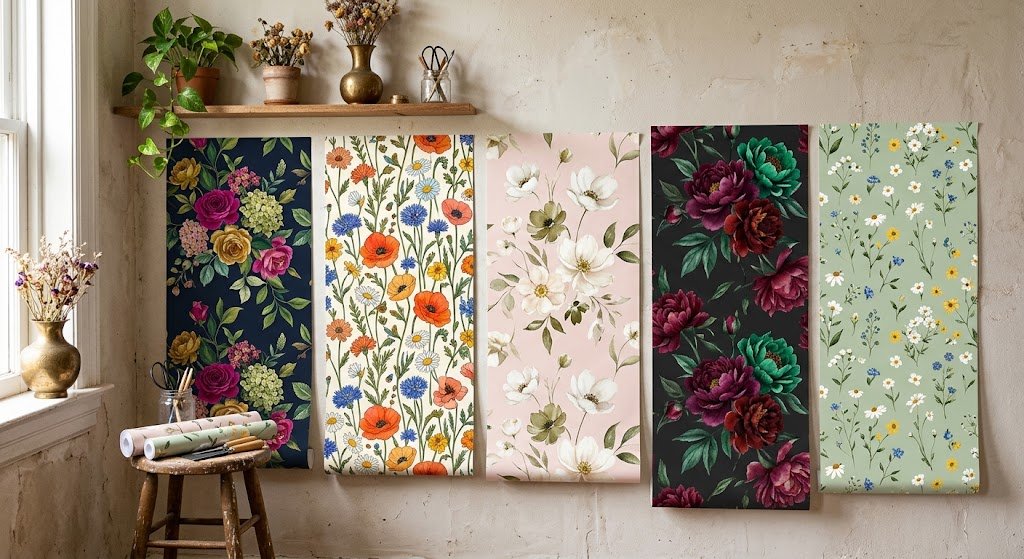
Pink florals get dismissed as “too sweet” way too often, and I think that’s a mistake — a dusty, muted pink reads sophisticated, not childish, especially against black hardware or walnut furniture. If you’re drawn to that softer palette, there’s a solid range of dusty pink patterns that lean grown-up rather than nursery.
Blue is the one I recommend most, honestly, because it plays well with almost every existing color scheme people already have. A collection built around cooler blue tones tends to work in everything from a coastal-leaning living room to a moodier study, which is rare for a single color family to pull off.
And then there’s the darker end of things — black and deep, saturated florals that read almost gothic-romantic. I’ll admit this is a personal favorite of mine for dining rooms specifically. A well-done moody black-and-bloom wall makes a dinner party feel like an occasion instead of just a Tuesday. If you want something a shade less severe but still moody, dark floral peel and stick wallpaper in forest green or burgundy tones gets you most of that drama without going full black.
A few honest opinions before you buy
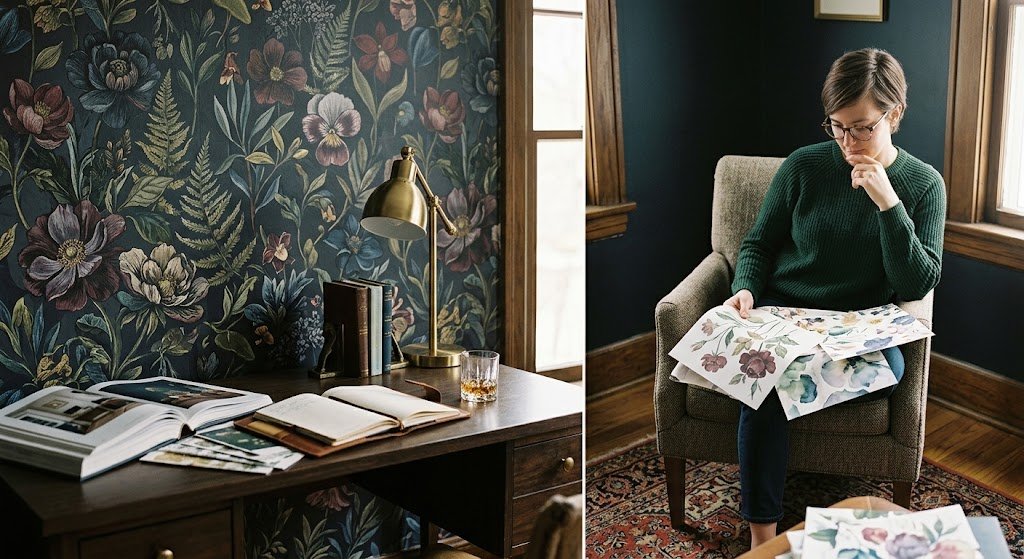
I’m not a fan of florals that try to look “realistic” in a photographic way — they tend to date fast and can feel more like a mural than a pattern. Illustrated or watercolor-style florals age better, in my experience, because they read as art rather than as a trend snapshot from whatever year you bought it.
I’d also gently push back on the idea that floral peel and stick wallpaper only belongs in “feminine” spaces. A dense, dark botanical print in a home office or study reads more moody library than flower shop, and it’s honestly one of the more underused moves I see in otherwise well-designed homes.
My take, after all this
Nobody warns you going in how forgiving floral peel and stick wallpaper actually is compared to the horror stories your aunt tells about wallpapering in the eighties. Grab a level, don’t skimp on the roll count, and let the pattern sit on the wall for a night before deciding you hate it — first impressions under bad lighting lie constantly. My own rule of thumb: if a print still excites you after staring at swatches for a week straight, buy it. If it doesn’t, keep looking. There’s a wider stash of flower patterns worth digging through if nothing here clicked, and honestly, the awkward little room you keep walking past without a plan? Start there.
Questions people keep asking me
Will taking it down leave marks on my wall?
Rarely, assuming the paint had time to cure before you stuck anything to it. Work slowly from a top corner, and warm, stubborn spots usually give up faster with a hairdryer pointed at them for a few seconds.
How many years can I expect out of one roll?
Somewhere in the two-to-five range for the decent brands, though a steamy bathroom or a west-facing window will chip away at that faster than you’d think. Fading happens before peeling, in most cases.
My walls have texture — can I still use this stuff?
You can, but I’d steer you elsewhere if there’s another option. Bumpy plaster telegraphs right through the pattern, and the adhesive struggles to grip evenly, which usually means bubbles show up within the first month.
Does it actually make sense for someone renting?
It’s arguably the best use case for the whole product. No damage deposit on the line, no landlord conversation, and the place stops feeling like a waiting room the second it’s up.
Where do beginners usually mess up first?
Two spots, almost every time: skipping the plumb line before the first strip goes up, and butting seams flush instead of overlapping them slightly. Fix those two habits and the rest tends to fall into place on its own.