

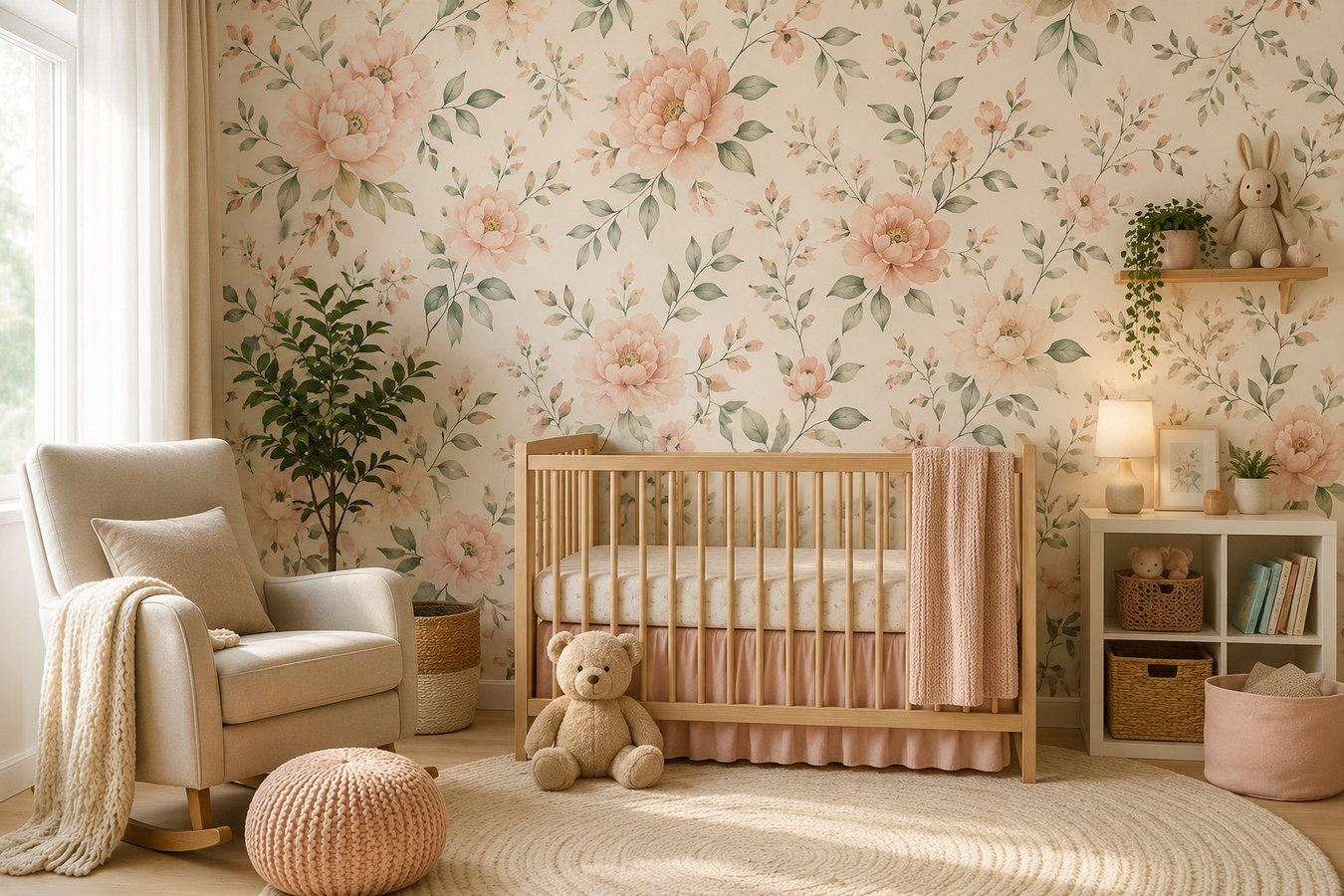
So my neighbor rings me at nine at night, half panicking, saying the sage green she’d ordered for the nursery looks “basically like a hospital wall” under her lamp. It didn’t. It just needed daylight. That’s peel and stick nursery wallpaper in a nutshell honestly — half the drama isn’t even about the product, it’s about lighting a swatch in the wrong room at the wrong hour and losing your mind over it. Anyway.
This is the guide I wish someone had handed me years ago before my first nursery job, back when I still thought all rolls were basically interchangeable. They’re not. Costs, safety stuff, the mistakes people make over and over — let’s get into it.
Why This Wallpaper Wins Over Parents
Mostly it comes down to timing. Nobody wants to be three coats of paint deep into a nursery with a due date looming, breathing in fumes they’d rather not think about. Peel and stick skips that whole problem.
Renting is the other big one. So many of the nurseries I’ve worked on belong to people who genuinely don’t know if they’ll still be in that apartment by the time the kid’s walking, and permanent wallpaper just isn’t worth the risk in that situation.
And honestly? An empty nursery wall just looks sad. I don’t know how else to put it. One patterned wall and suddenly the room feels like it’s actually meant for someone.
Peel And Stick Nursery Wallpaper Costs

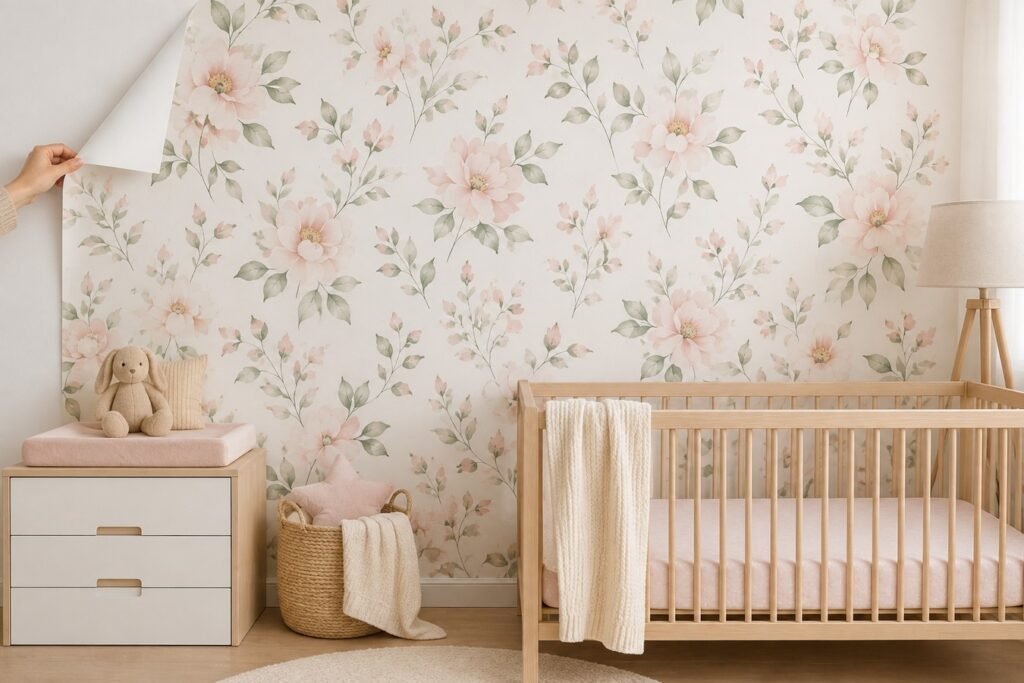
Let’s talk real numbers, because between the crib and the glider and fifteen other things eating your budget, wallpaper shouldn’t be a mystery line item. Rolls run $25 to $55 typically. Each one covers something like 28 to 35 square feet, though that number moves around depending on the brand.
Most nurseries only need one wall done — the crib wall, usually — which keeps things from getting expensive. That’s normally 2 to 4 rolls.
| Nursery Project | Rolls Needed | Estimated Cost |
| Crib accent wall only | 2–3 | $50–$150 |
| Full nursery (all walls) | 6–9 | $180–$480 |
| Half-wall wainscoting effect | 1–2 | $25–$90 |
| Ceiling accent | 2–3 | $60–$160 |
If you’ve fallen for one of those big botanical prints with a huge repeat, budget a bit more. Matching eats material fast and nobody warns you about that part until you’re already short a roll.
Peel And Stick Nursery Wallpaper Safety
This is the question I get first, before color, before pattern, before anything. Which, fair enough. The CDC’s environmental medicine program actually publishes guidance on this exact topic, pointing new and expecting parents toward low-VOC nursery materials and better airflow whenever there’s remodeling happening near a baby’s space.
Most of the bigger peel and stick brands have already switched to water-based, low-VOC adhesive. But — and this matters — that’s a brand thing, not an industry-wide guarantee. Check the listing. Takes thirty seconds.
Crack a window anyway, even with a low-odor product. Run a fan. Let the room sit for a day before the crib goes back against that wall. It’s a small thing but it’s an easy one.
Common Mistakes During Nursery Installation
Installing with the crib already in the room. That’s the big one. You end up wrestling a full strip around furniture and something always goes wrong — a crooked seam, a torn corner, take your pick.
Rushed measuring is a close second. Nursery walls somehow always pack an outlet, a closet door, and a window into one tight corner, and if you don’t measure carefully around all that you’ll waste more material than you’d think.
There’s a detailed hanging tutorial from Home Depot that’s actually worth reading before your first roll, especially the part on wall prep — everyone skips it and everyone regrets skipping it.
Peeling off the whole backing at once instead of a few inches at a time. That’s the last one, and it’s the one I still see experienced DIYers mess up. Small sections give you control. Rushing gives you a diagonal wrinkle you’ll be fighting for an hour.
Best Colors For A Small Nursery
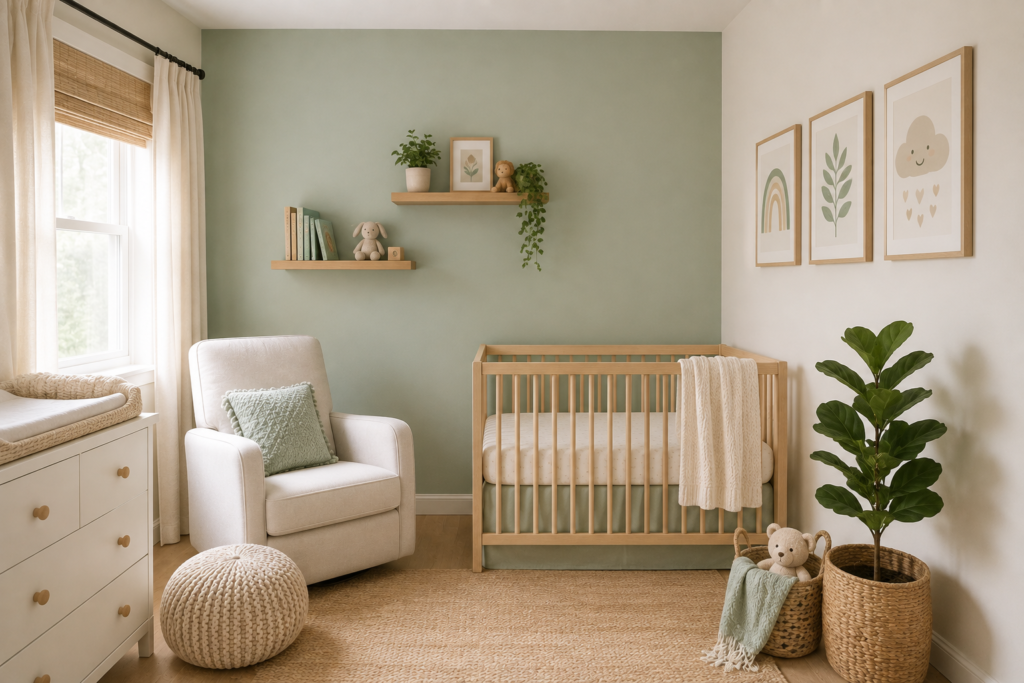
Lighter, cooler tones. Sage, blush, that pale ochre color that’s everywhere lately. A deep jewel tone might look gorgeous on the sample, but cram it into a small room and it just eats the light.
If a full solid wall feels like too big a commitment, there’s a botanical print alternative worth a look — pattern adds some depth without making a tiny room feel heavier.
Keep the ceiling white. I say this constantly and people still forget. A neutral ceiling makes even a genuinely small nursery read taller than it is.
Gender Neutral Versus Themed Patterns
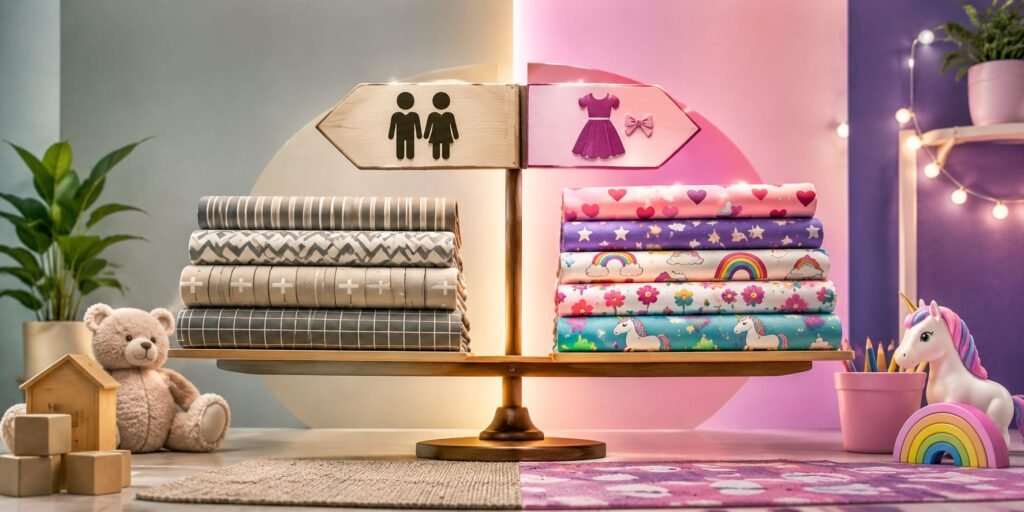 A lot of parents are decorating before they even know the baby’s sex, so neutral wins by default a lot of the time. Sage, warm cream, soft botanical prints — all of it lands neutral without going cold or generic.
Themed stuff — animals, little constellations, whatever — tends to happen once the room already has some personality decided. Cute, sure. But it ages out fast compared to something simpler.
If you’re leaning toward something softer and more traditionally feminine, there’s a pink nursery option that’s worth a browse, especially in a dusty, muted shade rather than anything too sweet.
Is It Rental And Landlord Friendly
Most landlords don’t blink at peel and stick, since it comes off clean instead of leaving a wall that needs repair before move-out. Still — check your lease. Save yourself the conversation.
Test a hidden patch first. Some old paint jobs just don’t play nice with adhesive removal, even from stuff marketed as damage-free, and you don’t want to find that out on the main wall.
There’s more on how removable wallpaper behaves generally over at peel and stick fundamentals, if you want the fuller picture before picking a pattern.
Budget Versus Premium Nursery Rolls
Cheaper rolls, under $30 usually, have thinner backing. Less room for error. If it’s your first time hanging wallpaper — and it usually is — that lack of forgiveness gets expensive fast in wasted material.
Premium rolls cost more but reposition better. Four or five tries before the adhesive gives up, instead of one or two. That extra ten or fifteen bucks a roll tends to pay for itself.
Worth comparing a few premium wallpaper picks before buying, honestly, just to see which brands are actually earning the higher price tag.
Frequently Asked Questions
Is peel and stick nursery wallpaper actually safe for babies?
Generally, yes — especially from brands using water-based, low-VOC adhesive. Still worth checking the specific listing.
How many rolls does a typical nursery accent wall need?
Usually 2 to 3 rolls for a crib-facing wall, more if the pattern repeat is large.
Can peel and stick nursery wallpaper come off without damaging the paint?
Usually, if the wall was prepped right to begin with. Test a hidden spot first to be sure.
Should nursery wallpaper go up before or after the crib arrives?
Before. Working around furniture makes clean seams way harder than they need to be.
Is matte or glossy finish safer for a nursery wall?
Matte, mostly — it hides fingerprints and scuffs a lot better once a toddler starts touching everything.
Does peel and stick wallpaper work well in a rented nursery?
Yes, it’s one of the safer bets for renters since it typically comes off without harming the paint.
How long does nursery wallpaper realistically last before it needs replacing?
Around 3 to 5 years, though a lot of nurseries get redone anyway once the kid outgrows the theme.
Is a themed pattern or a neutral one the better nursery choice?
Neutral ages better. Themed is fun but it’s more of a short-term look.
Final Thoughts
Peel and stick nursery wallpaper solves a real problem — no fumes, no drying time, comes down clean if you end up moving sooner than planned. That’s a lot of relief during a stretch of life that’s already stressful enough.
Take the safety questions seriously, though. Don’t just assume every roll on the shelf is fine for a baby’s room. Check the VOC rating, crack a window during install, and you’ve covered most of what actually matters.
My honest advice, after doing this more times than I can count: go a shade calmer than your first instinct. Something that felt exciting during pregnancy can start feeling like too much at 3am with the lights off and a crying baby in your arms. And buy one extra roll. Always. Nursery walls chew through material faster than the calculators ever admit.
Whatever you land on, peel and stick is still one of the more forgiving ways to make a nursery feel finished without locking yourself into one look for the next decade.