

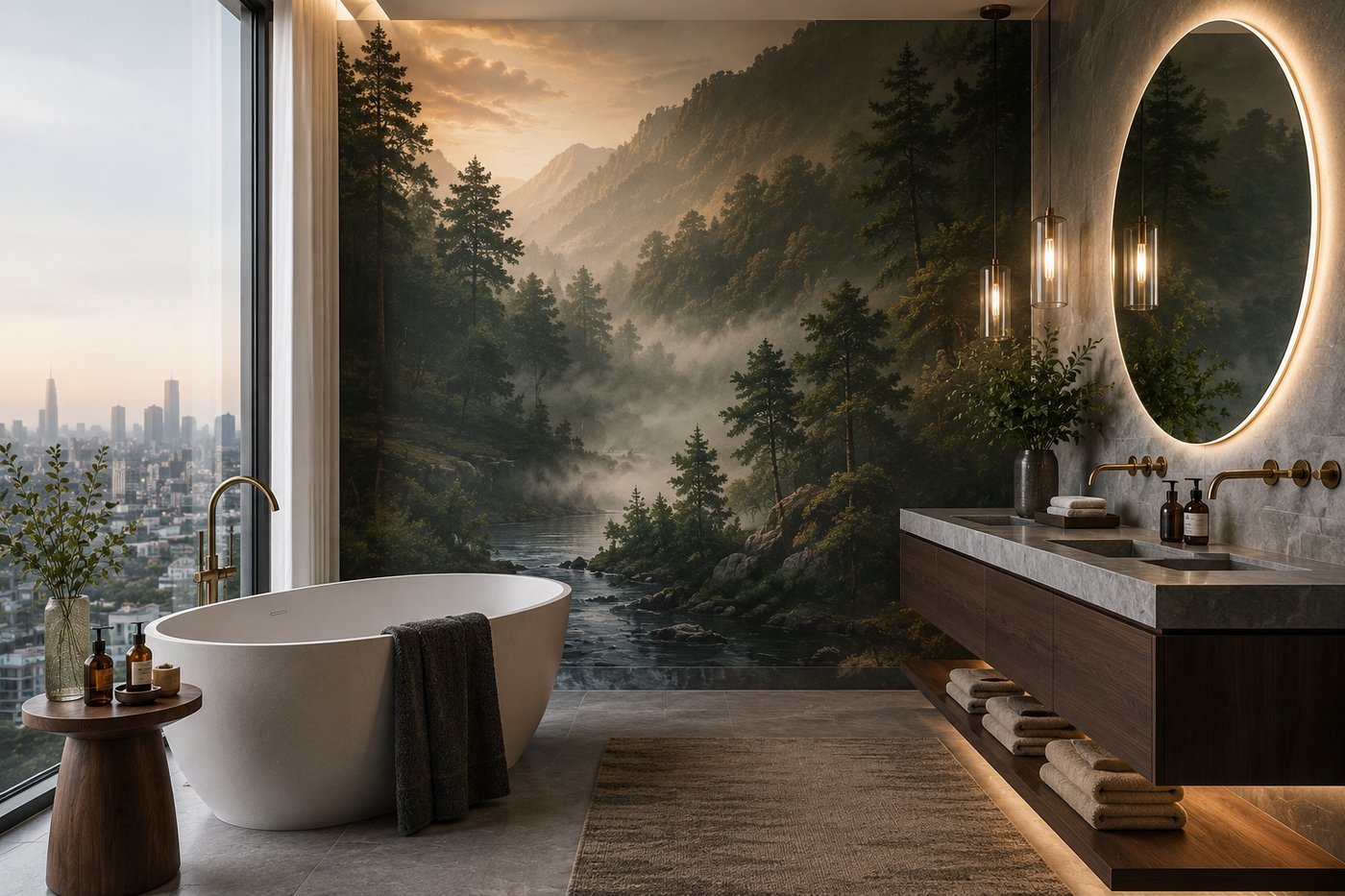
Three coats of paint. That’s what my cousin burned through before admitting defeat and switching to wallpaper. Steam kept winning the fight, every single time. This is the quiet story behind most ruined bathroom walls — the wrong material squaring off against a room built on humidity. Waterproof bathroom wallpaper isn’t a marketing buzzword somebody invented last year; it’s a blunt, practical answer to a problem paint has never solved well.
Get the right waterproof bathroom wallpaper on the wall and splash zones near the sink stop mattering, shower steam stops winning, and the pattern still looks crisp two winters later. Six picks below, chosen for durability first, looks second.
The Room That Fights Back
No other room in a house behaves like a bathroom. Heat rises, steam thickens, condensation settles onto whatever surface happens to be closest — usually the wall right behind the mirror. Ordinary wallpaper drinks that moisture in like a napkin left under a wet glass, then curls at the edges within a season.
That gap is exactly where waterproof bathroom wallpaper earns its keep. A sealed top layer — vinyl, or sometimes a PVC-free polymer film — makes water bead up and slide off rather than soak through. Per the EPA’s guidance on mold and moisture, tearing down old wallpaper in a damp bathroom can unleash a cloud of hidden spores that have been building up underneath for years. Reason enough to start with moisture-proof material rather than patch a failing one down the road.
Pick 1: Vinyl-Coated Rolls, for Bathrooms That Never Stop Steaming

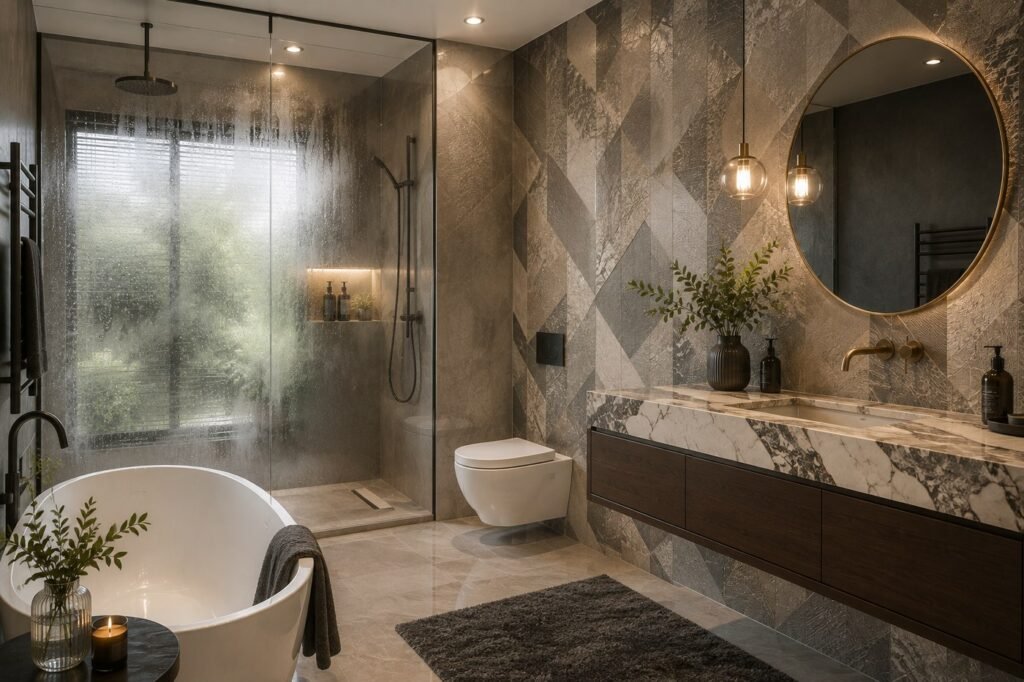
Poor airflow plus a twenty-minute hot shower routine? Start here. Vinyl-coated rolls carry a hard outer shell sitting above the printed pattern, and that shell does the heavy lifting.
Seams need more patience than the peel-and-stick alternative demands — get those wrong and moisture finds the gap eventually. Look for a vinyl-coated wall covering with a scrubbable surface, so soap film wipes away without dulling whatever’s printed beneath it.
| Wallpaper Type | Moisture Resistance | Best Placement | Typical Lifespan |
| Vinyl-coated rolls | Excellent | Full shower-adjacent walls | 8–12 years |
| Peel-and-stick vinyl | Good | Accent walls, powder rooms | 3–5 years |
| Textured vinyl composite | Excellent | High-traffic family bathrooms | 10–15 years |
| Foil-laminate wallpaper | Moderate | Low-splash zones only | 2–4 years |
Pick 2: Peel-and-Stick, Built for People Who Rent
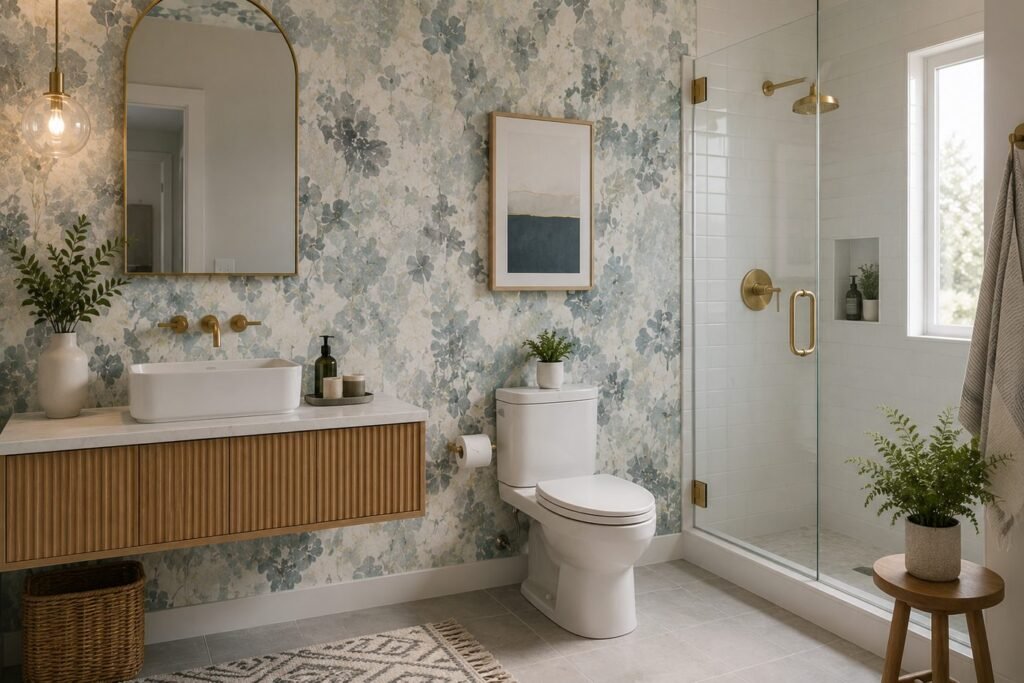
Try repainting a rented bathroom and watch a landlord’s face change. Peel-and-stick waterproof bathroom wallpaper sidesteps that entire argument — zero paste, zero residue, zero deposit anxiety when the lease ends.
It won’t outlast a full shower blast the way a vinyl-coated roll would, but for walls catching stray splashes instead of a direct stream, it holds up fine. Anyone stuck renting should check out this renter-friendly peel option before writing off wallpaper as a homeowner-only luxury.
Rented doesn’t have to mean beige forever. It just hasn’t, until now.
Pick 3: Stone-Textured Composite, for Anyone Bored of Flat Prints
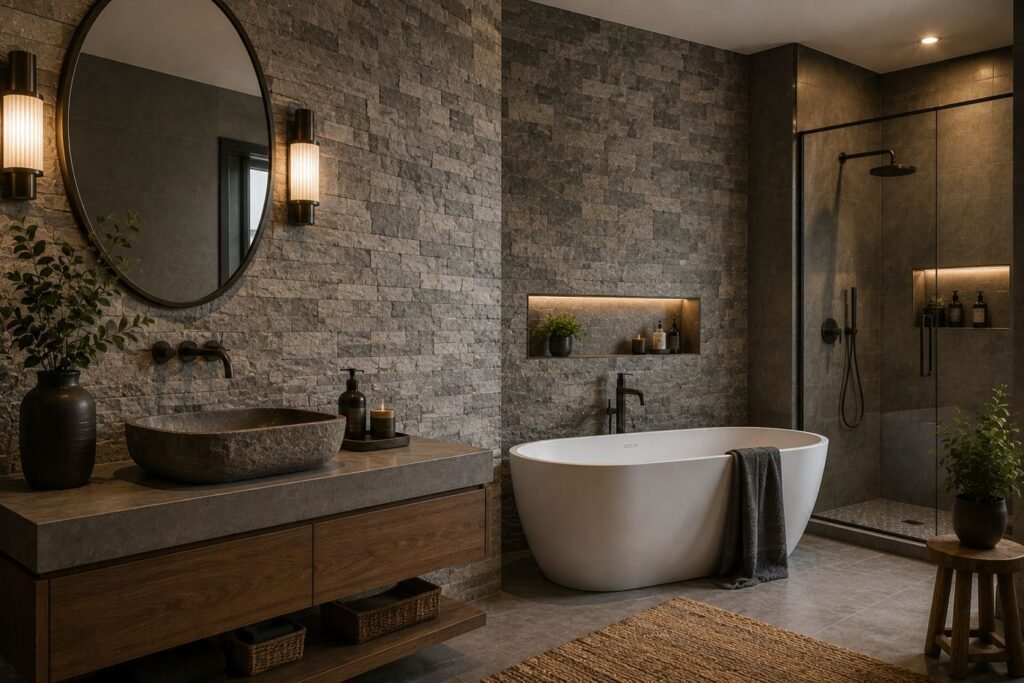
An opinion, unprompted: glossy flat prints get tired fast in a room you stand in every single morning. Textured composite panels mimic slate or raw limestone, and — bonus — they camouflage water spots far better than anything with a shine to it.
There’s a practical side too. That raised texture hides the small stuff — hairline cracks, old plaster dips, a drywall seam nobody sanded quite flat. Texture forgives what a smooth surface would broadcast.
Pick 4: Loud Pattern Vinyl, Reserved for Powder Rooms
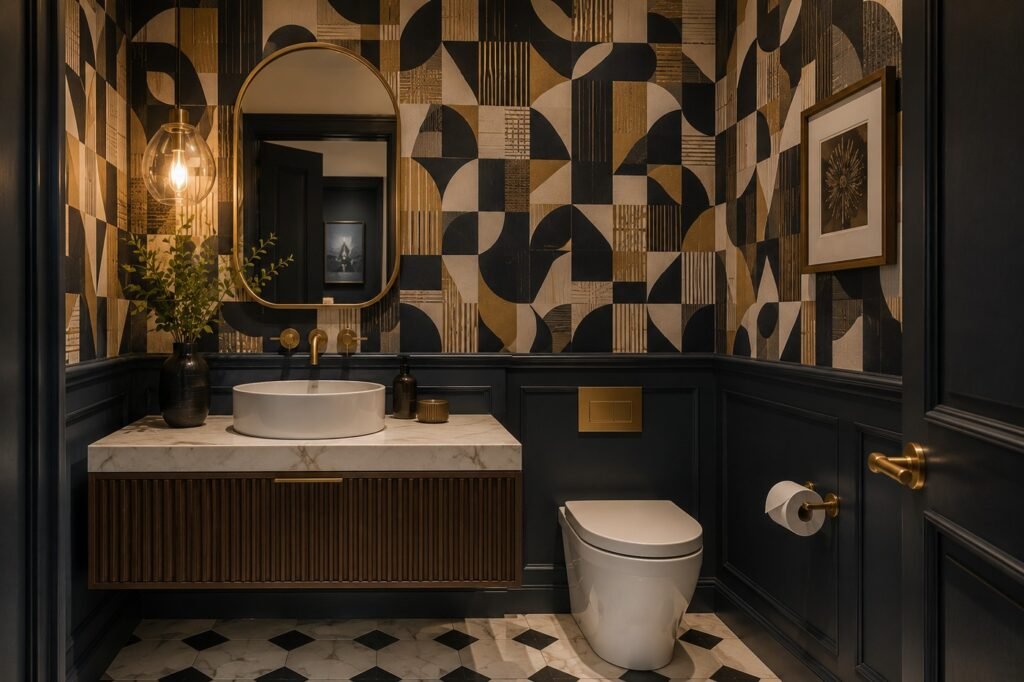
Steam barely touches a powder room, so go bold there. Deep botanicals, clashing geometry, whatever makes a dinner guest stop mid-sentence. Lower humidity means even a mid-tier waterproof vinyl performs just fine in that space.
Designers quoted in Forbes’ bathroom design roundup keep steering clients toward louder choices specifically for powder rooms — the moisture risk is low enough that boldness costs nothing.
Prefer something quieter instead? There’s an elegant pattern selection built for guests who actually notice detail work.
Pick 5: Matte Finish, for Bathrooms Drowning in Glare
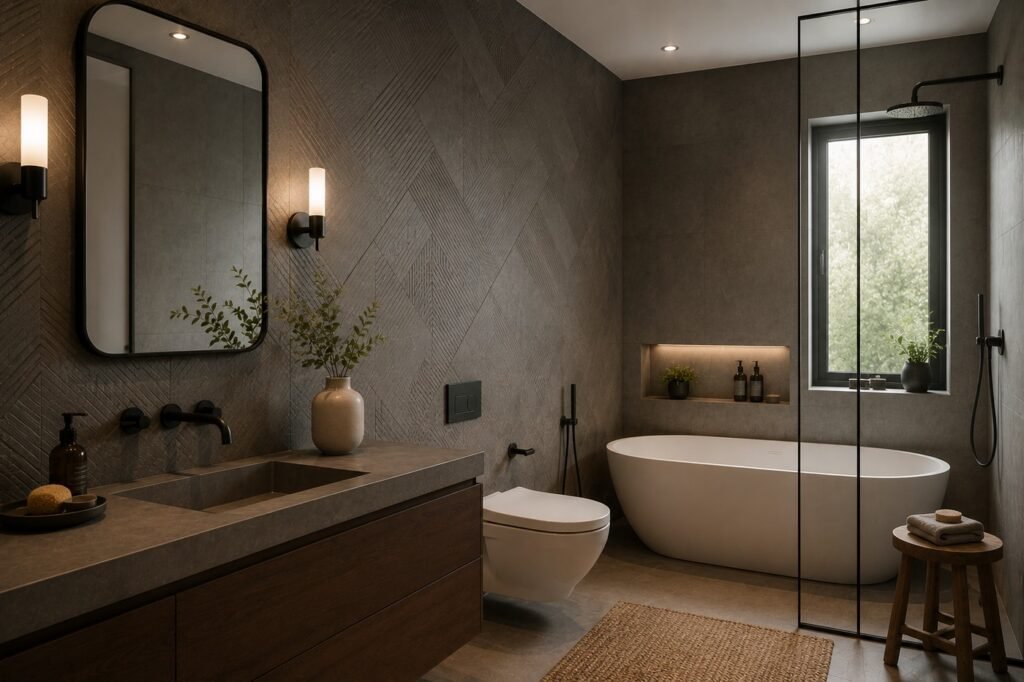
One overhead bulb, glossy vinyl, and suddenly the whole wall reflects light like a mirror nobody asked for. Matte waterproof options soften that glare while keeping the same sealed core underneath.
Water spots and fingerprints hide better on matte too — worth knowing if kids share the space. Fewer visible smudges means less scrubbing, and frankly, nobody’s got the bandwidth for extra scrubbing on a Tuesday.
Pick 6: Full Coverage, for the Fully Committed
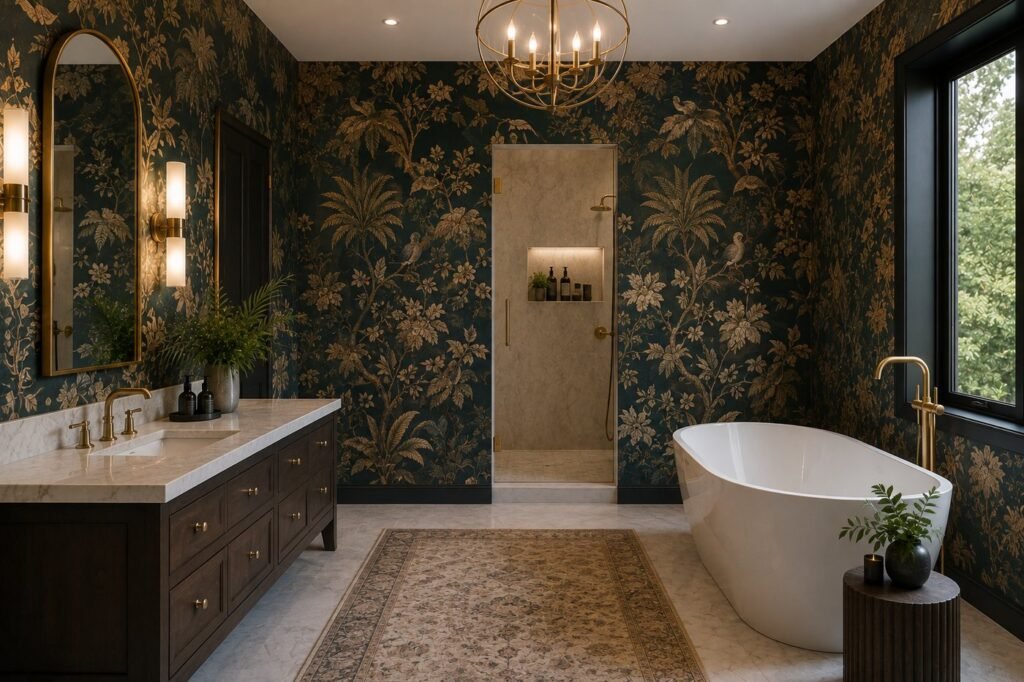
Some homeowners skip accent walls altogether and wrap every inch. Bigger spend upfront, sure, but it kills off the one weak spot that fails first — the seam where wallpaper meets bare, unprotected paint.
Going that route? This full wall coverage guide lays out exact material quantities and flags the tricky corners before they become a headache mid-install.
Where Installations Quietly Fall Apart
Even premium waterproof bathroom wallpaper fails on a poorly prepped wall. Skipped primer tops the list of culprits — adhesive needs a clean, sealed surface to actually bond, not just stick temporarily.
Rushed seams come next. Leave a gap and moisture slips behind the paper regardless of what the packaging promises. Twenty extra minutes smoothing every edge saves years of regret later.
Paint Versus Wallpaper: Running the Real Numbers
Paint wins on day one, no argument there. Tally up the repaint cycles, though — most bathroom paint jobs in humid climates need refreshing every eighteen to twenty-four months — and wallpaper pulls ahead by year three, quietly.
Waterproof bathroom wallpaper costs more per square foot at checkout, sure, but the maintenance math closes that gap fast. Fewer repaints. Less peeling. Fewer weekends lost scraping damp paint off drywall that should’ve been sealed properly the first time.
FAQs
Is waterproof bathroom wallpaper genuinely different from the vinyl wallpaper sold everywhere else?
Mostly yes — waterproof versions carry a fully sealed, non-porous outer layer meant for standing moisture, well beyond what regular vinyl wallpaper was designed to shrug off.
Can waterproof bathroom wallpaper go directly inside a shower enclosure?
Most manufacturers still say no — it handles steam and splashes admirably, but it was never meant to substitute for tile inside an active shower stall.
How long does peel-and-stick waterproof wallpaper actually survive in a steamy bathroom?
Roughly three to five years with careful installation — less if ventilation is weak or the seams weren’t pressed down tight from the start.
Does hanging waterproof bathroom wallpaper require a special kind of primer first?
A moisture-sealing primer built for bathrooms is the smart move; skipped primer is one of the fastest routes to an early, disappointing failure.
Could waterproof bathroom wallpaper trap moisture underneath and grow mold?
Only over an already-damp or poorly sealed wall — surfaces prepped correctly don’t hold water the way porous, old-school wallpaper used to.
Does textured waterproof wallpaper demand more effort to keep clean than a smooth glossy version?
A little — grooves in the texture collect more soap residue, though a soft brush with mild cleaner handles it without much fuss.
Are renters allowed to use waterproof bathroom wallpaper without breaking their lease?
Peel-and-stick versions are generally safe territory since they peel off clean, though checking with the landlord first costs nothing and avoids drama.
How far apart are budget and premium waterproof bathroom wallpaper on price?
Budget rolls start around a few dollars per square foot; premium textured or vinyl-coated composites run several times that, depending on the brand chosen.
Conclusion
Bathrooms wreck weak materials faster than any other room in a house, full stop. Steam, splashing, humidity that swings hour to hour — it’s a rough environment, and neither paint nor standard wallpaper were ever built to survive it long-term. That’s the whole argument for waterproof bathroom wallpaper in one line: not a passing trend, just a material that actually matches the conditions it has to live in.
Look across all six picks here and the real thread connecting them isn’t pattern or colorway — it’s the sealed, moisture-blocking layer sitting underneath everything else. Vinyl-coated rolls take on full shower exposure without flinching. Peel-and-stick versions solve the renter’s dilemma entirely. Textured composites disguise imperfections and water spots in one move. Bold prints thrive where humidity naturally runs lower, matte finishes cut down glare, and full-wall coverage removes the one seam that tends to give out first.
None of it holds, though, if installation gets rushed through. Primer isn’t optional. Sealed seams matter even more. Skip either step and even top-shelf waterproof bathroom wallpaper bubbles within a season — no label changes that outcome.
Zoom out and the real story is cost over years, not the number on day-one’s receipt. A bathroom repainted every eighteen months racks up labor, materials, and patience nobody has extra of. Wallpaper built for moisture from the start skips that entire cycle, often paying for itself well before year three arrives.
Choose based on the bathroom actually in front of you, not the prettiest photo scrolled past online. A steam-heavy shower room needs something different from a rarely-used powder room down the hall. Match the material to the humidity it’ll genuinely face, get the installation right on the first attempt, and this becomes the last wall decision that bathroom demands for a long stretch of years.