

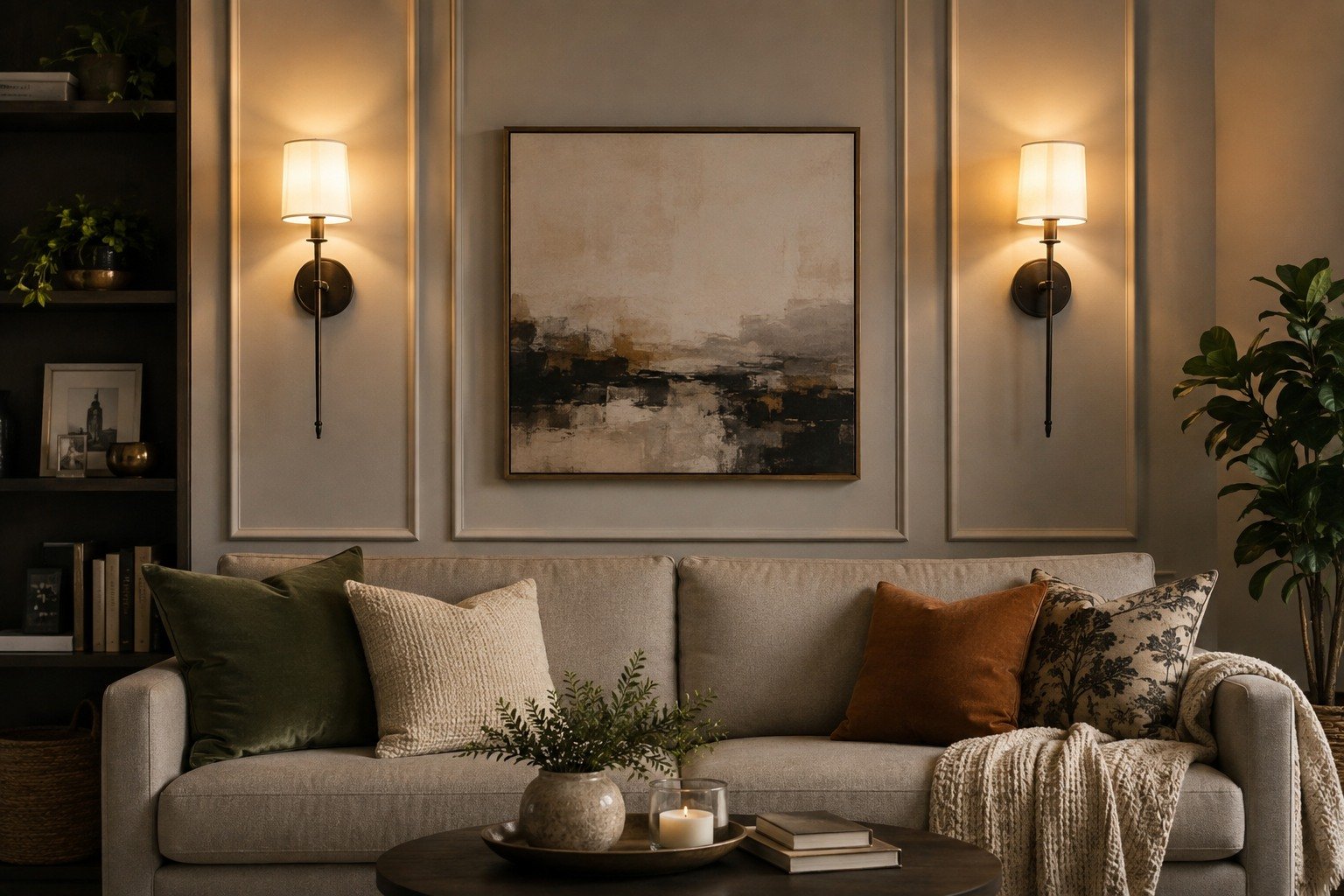
New cushions, a plant in the corner, the rug flipped around twice — none of it fixed the flatness. Turns out the gap was never a furniture problem. It came down to where the light actually sits, at eye height, instead of pouring straight down from a ceiling fixture. Table lamps used to be my default fix; sconces have quietly replaced most of them, and the shift in mood is rarely subtle.
So if wall sconces for living room walls are competing with a floor lamp or pendant in your head right now, here’s the unfiltered take: genuine ambient lighting, genuine eye-level glow, genuine installation know-how, zero showroom sales talk.
That Awkward Blank Wall? Here’s the Fix
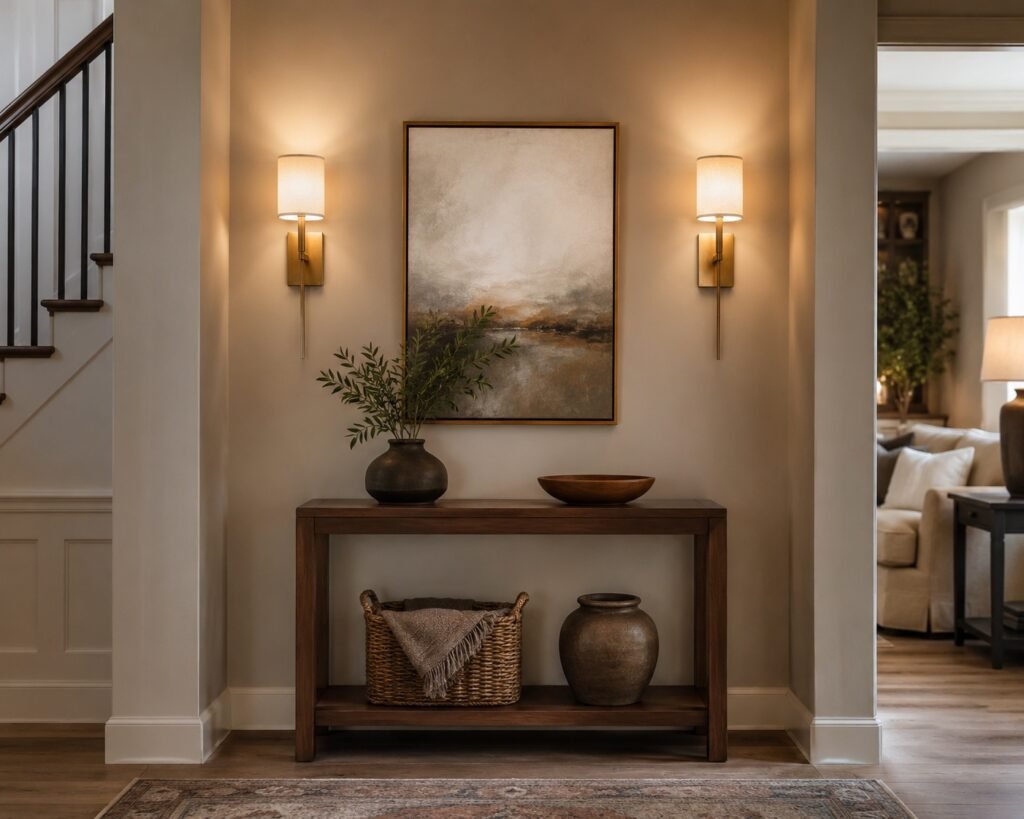
You know the wall I mean. It’s not big enough for a gallery, too visible for nothing, and a floor lamp there just blocks the walking path. This is exactly the gap sconces were built for.
Mount one on either side of it, and suddenly the wall has a job. It’s not empty anymore — it’s doing something.
Why Overhead Light Alone Never Works
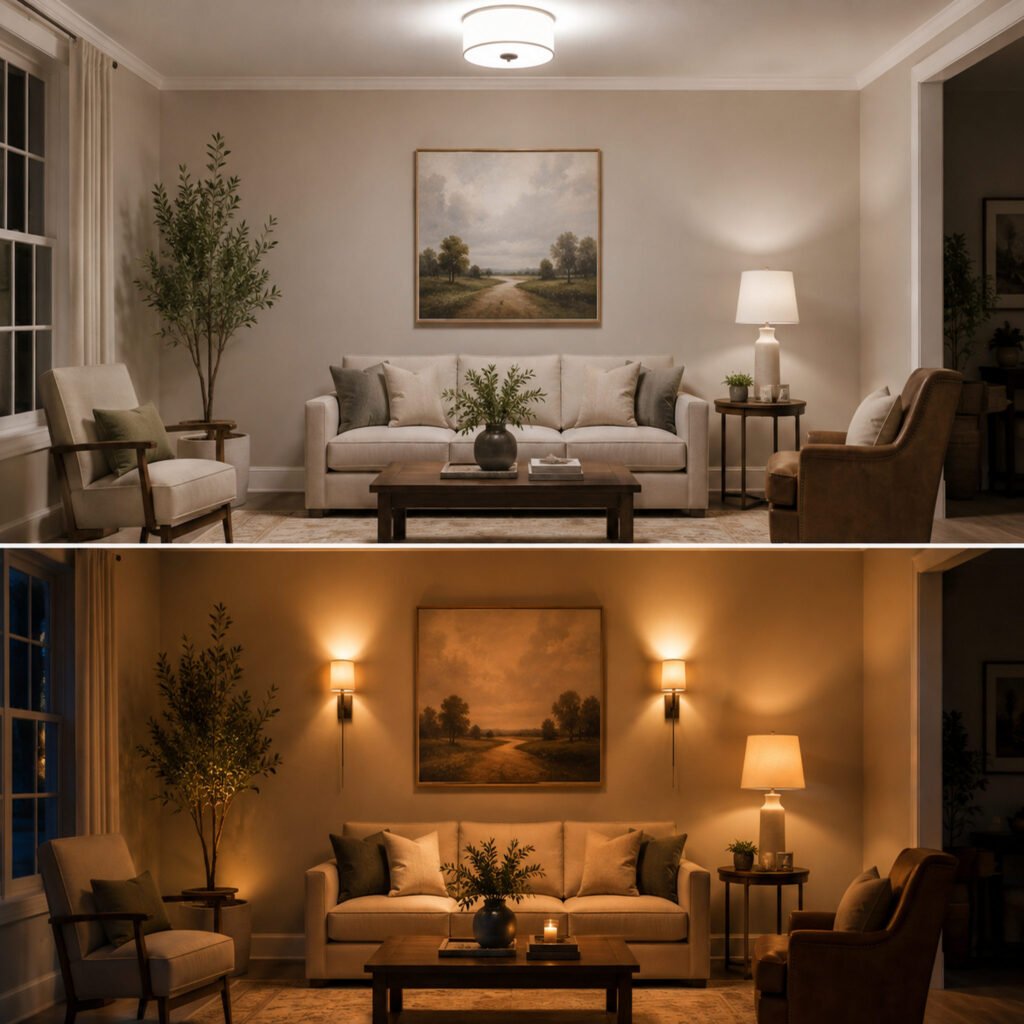
A single ceiling light tends to iron a room flat. Brightness spreads evenly everywhere, which sounds nice until you realize depth and shadow vanished along with it.
Sconces do the opposite. They pool light where you actually look — at sofa height, at artwork, at the mantel — and leave the rest of the room slightly dim, which is honestly what makes a living room feel like a living room and not an office.
Wall Sconces for Living Room Corners: Where They Actually Belong
Corners, fireplace flanks, and the dead space around a media console are the three spots that benefit most from wall sconces for living room layouts. Anywhere a lamp would fight for table space, a sconce wins by default.
I’d steer away from putting them directly above seating, though. Bump your head reaching for a remote once and you’ll understand why.
For a broader look at balancing color and light together, wallsbloom’s guide on living room wall colors is worth a detour before you commit to a finish.
Height Isn’t a Guess — It’s Math
Most people eyeball sconce height and regret it later. There’s an actual range that works, and it barely changes room to room.
| Placement | Recommended Height (from floor) | Notes |
| General living room wall | 60″–66″ | Roughly eye level, standing |
| Flanking a fireplace/mantel | 6″–12″ above mantel | Measure off the mantel, not a level |
| Beside artwork | Centered with piece | Adjust for frame size |
| Vaulted ceilings | 66″–72″ | Prevents fixture looking “lost” |
This isn’t a made-up range, either — This Old House’s installation height guidelines back up the 60″–66″ standard, and it’s held up in every project I’ve touched.
Styles That Don’t Scream “Builder Grade”
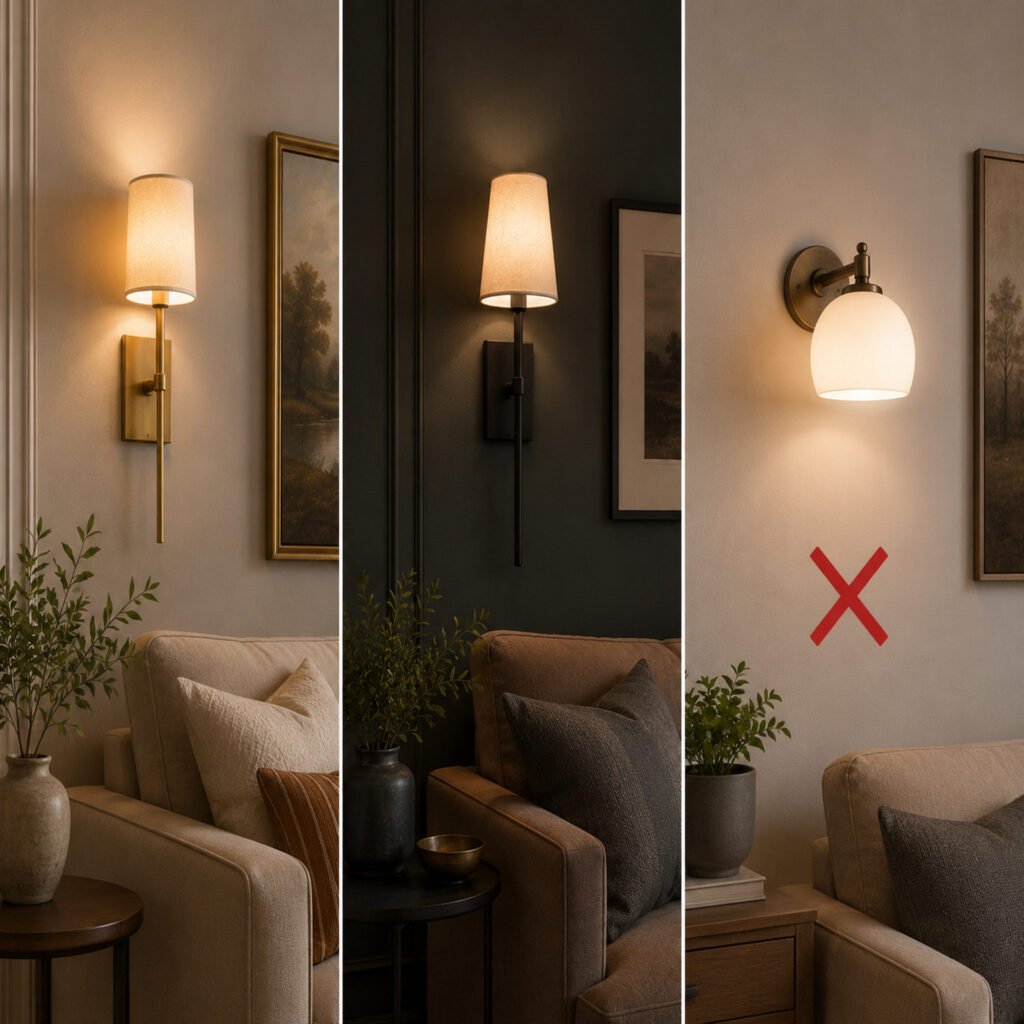
Brass and warm bronze have had a long moment, and honestly, they’ve earned it — they play well with almost any wall color. Matte black leans a bit colder but pairs beautifully with dark trim or exposed brick. Steer clear of the cheap frosted-glass domes sitting in the clearance aisle, though — that light comes out flat and oddly clinical, more waiting-room than living room, which defeats the entire reason you bothered with sconces to begin with.
For anyone leaning toward pattern over paint, wallsbloom’s accent wall walkthrough pairs naturally with this kind of styling — sconces tend to make a textured wall read even richer.
Plug-In vs Hardwired: The Real Trade-Off
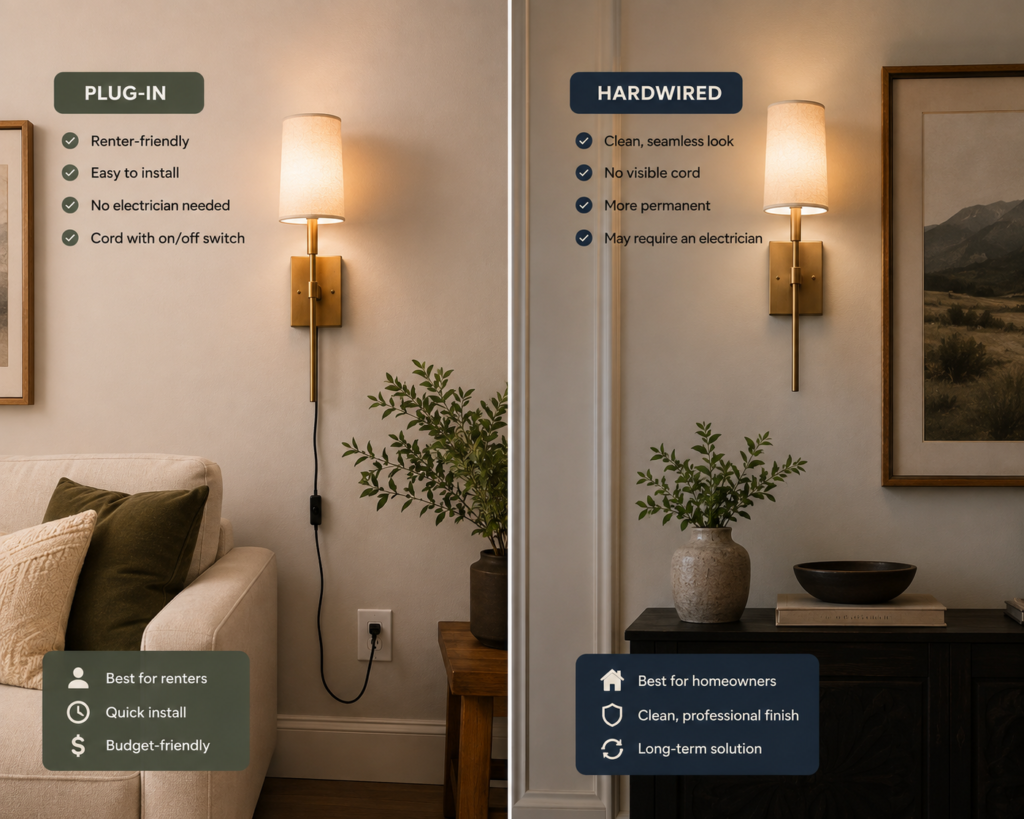
Renters, this section’s for you. Plug-in sconces exist specifically so you’re not drilling into walls you don’t own.
Hardwired options give a cleaner finish, no cord to hide, but that usually means calling an electrician unless wiring a junction box is already in your skill set.
Picking the Right Bulb Temperature

Warm white in the 2700K–3000K range is the safe zone here. Go cooler than that and the room starts feeling like a checkup at the dentist once evening hits.
Spend the extra couple of dollars on dimmable bulbs, too — it’s not a splurge. A room that can swing from lively to low-key with one twist of a dial simply earns its keep more than a fixture stuck at one brightness.
Pairing Sconces With Your Wall Colors and Decor
Brass, cream, aged gold — the warmer finishes — read best against darker wall tones, since the metal picks up just enough glow to stand apart without turning showy. Chrome and matte black flip that logic; they suit lighter, more neutral walls instead.
If your wall is doing something more decorative already — pattern, texture, an accent panel — keep the sconce simple. Two bold elements on one wall usually cancel each other out rather than complementing.
Common Mistakes I See Constantly
Mounting too high is the number one offender — people compensate for a low ceiling by going higher, and it backfires every time, pulling the eye straight to the gap it was meant to disguise. Close behind that: picking fixtures too small for the wall they’re meant to fill, which reads as an afterthought instead of an intentional choice.
Spacing trips people up more than expected, too. Even a couple of inches off between a matching pair, and it looks wrong to anyone glancing at it — even if they can’t pinpoint why.
Not sure where the wall itself still needs work? Wallsbloom’s finishing-touches roundup is a decent last stop once the sconces are up.
Budget Breakdown: What You’ll Actually Spend
Entry-level plug-in sconces start around 30–50 a pair. Mid-range hardwired fixtures with a decent finish run 80–150 each, and designer or brass-heavy pieces can climb past $300 apiece.
Labor, if you’re hiring an electrician for hardwired installs, typically adds another 150–300 depending on whether wiring already exists in the wall.
How Wall Sconces for Living Room Trends Are Shifting This Year
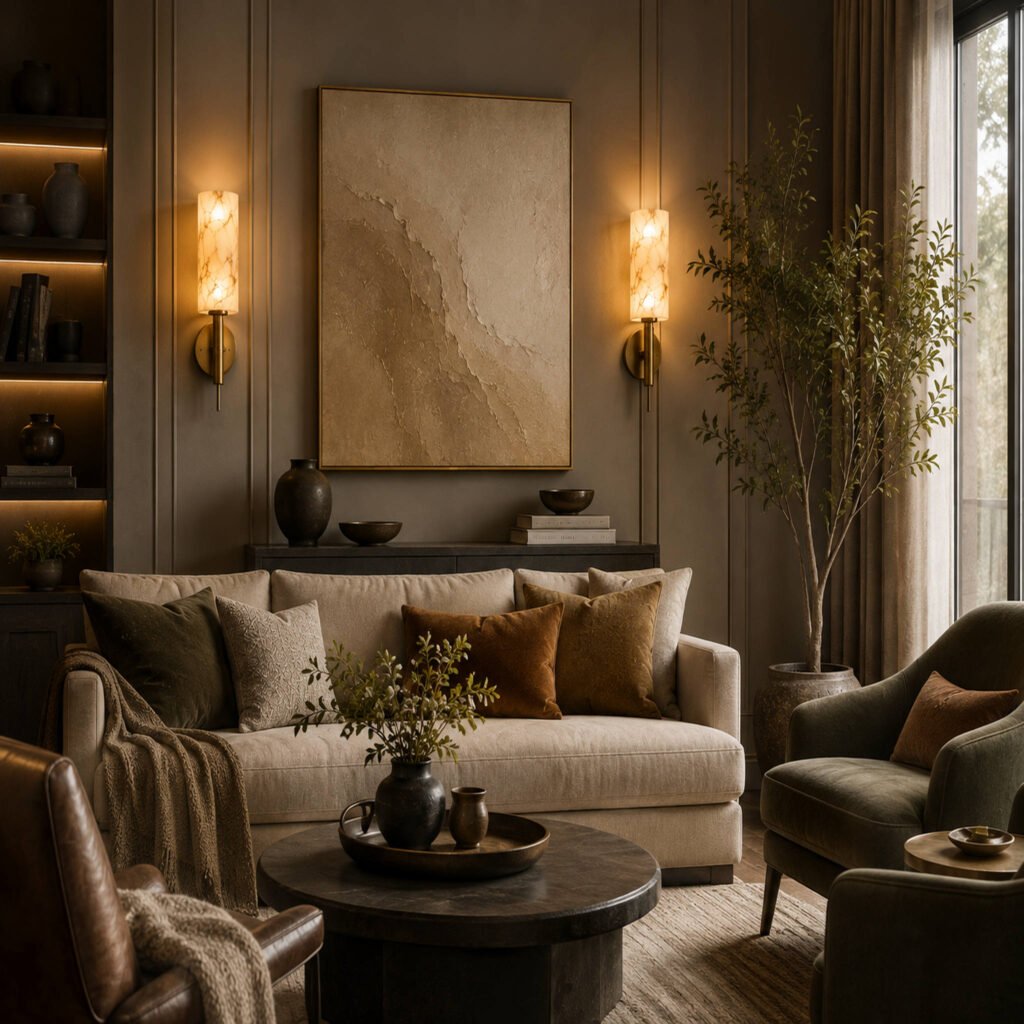
Textured materials — alabaster, ribbed glass, unlacquered brass — are pulling ahead of the glossy look that dominated a few years back. The appeal now leans toward pieces that look shaped by hand, not stamped out on a production line.
Layered lighting as a whole is trending right now, and wall sconces for living room spaces tend to be the connective piece — bridging a ceiling fixture and a floor lamp rather than fighting either one for attention. For a broader look at where lighting is headed, Homes & Gardens’ layered lighting feature rounds up a good cross-section of current styling.
FAQs
Do wall sconces for living room walls actually save money over floor lamps?
Usually not upfront, since fixtures and possible wiring cost more than a lamp. Over time, though, LED sconces sip far less power.
Can I install wall sconces without hiring an electrician?
Plug-in versions, yes — no wiring required. Hardwired sconces typically call for an electrician, unless you’re already comfortable handling wiring that’s in place.
What’s a reasonable number of sconces for a typical living room?
Two tends to be the default — usually flanking whatever wall serves as the focal point. Larger rooms sometimes use three or four spaced along a longer wall.
Will sconces provide enough light on their own?
Not usually as the sole light source. They work best layered with a ceiling fixture or lamp, adding mood rather than carrying the whole room.
What’s the biggest mistake people make with sconce height?
Mounting too high to compensate for a low ceiling. It backfires and draws attention to the gap instead of hiding it.
Are dimmable sconces worth the extra cost?
Almost always. The flexibility between bright and low-lit evenings makes a noticeably bigger difference than most people expect going in.
Do sconces work in small living rooms?
They’re arguably better suited to small rooms, since they free up floor and table space a lamp would otherwise take.
Conclusion
Here’s the thing nobody tells you upfront: sconces aren’t really about lighting a room brighter. They’re about lighting it better — at the height your eyes actually land, in the spots that matter, without eating into floor space you didn’t have to spare in the first place. That’s the whole appeal, once you strip away the showroom talk.
The height math isn’t complicated, either. Sixty to sixty-six inches covers most situations, and once you’ve measured one wall correctly, every future install gets faster. Style-wise, there’s no universal verdict — brass skews traditional, matte black skews modern, and both can misfire if the wall behind them is already making its own loud statement.
Set expectations on cost, too. A basic plug-in pair can handle it for under fifty dollars, while a hardwired setup with an electrician climbs into the hundreds. Neither choice is the “wrong” one — it comes down to whether you’re renting, settled in for the long haul, or just trying the idea out first.
If one takeaway sticks, let it be this: a living room almost never needs more light. It needs the right light, placed somewhere your eyes naturally rest. Get that part right, and the room stops feeling like it’s missing something — because it finally isn’t.