

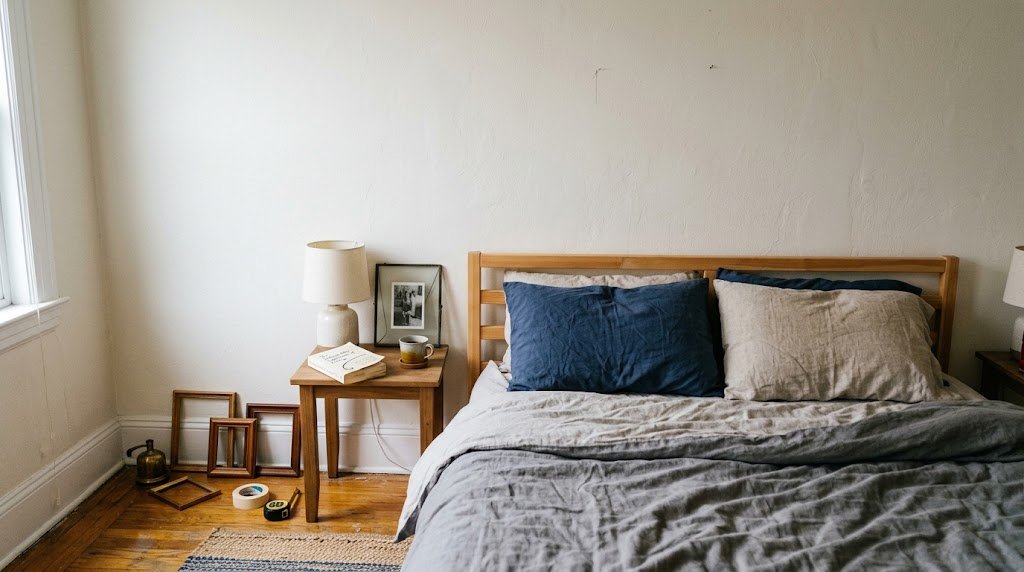
I spent almost a year with a completely bare bedroom wall after moving into my current place. Not because I liked it that way — I just couldn’t decide, so I did nothing, and “nothing” became the default for way longer than it should have. That’s usually how it goes with wall decor for bedroom spaces. People overthink the big commitment (the huge canvas, the accent wallpaper) and end up doing zero of the small things that actually make a room feel finished.
This isn’t a list of trends pulled from a mood board. It’s what I’ve learned from redoing three bedrooms in six years, reading way too many design forums at 1am, and making a couple of mistakes I’ll admit to later on. If you’re staring at a blank wall right now wondering where to even start, here’s the real answer on wall decor for bedroom rooms of pretty much any size or budget.
What Wall Decor for Bedroom Spaces Actually Means Today
A decade ago, wall decor for bedroom rooms basically meant one framed print above the headboard and maybe a mirror by the closet. That’s not really true anymore. The category has widened a lot — textiles, sculptural shelving, woven wall hangings, even leaning art that never touches a nail.
Here’s a rough breakdown of what actually falls under this umbrella now:
| Category | Examples | Best For |
| Framed art | Prints, paintings, photography | Renters, minimalists |
| Textiles | Tapestries, macrame, quilts | Warmth, texture, sound dampening |
| Mirrors | Round, arched, full-length leaning | Small rooms, light reflection |
| Wallpaper accents | Peel-and-stick, single-wall murals | Statement without full commitment |
| Shelving/objects | Floating shelves, sculptural pieces | Display + function combined |
| Lighting as decor | Wall sconces, LED strips, picture lights | Mood + visual interest at night |
I’d argue the biggest shift in wall decor for bedroom trends is that people stopped treating the wall behind the bed as sacred territory reserved for one “hero” piece. Mixing two or three categories from that table — say, a mirror plus a small textile plus a sconce — tends to look more considered than a single giant canvas ever does. It also costs less, which matters. If you want a broader starting point before narrowing down, this roundup of bedroom decor options covers a wider range than I have room for here.
Matching Your Style Instead of Copying Pinterest
Here’s an opinion that might annoy some people: most “bedroom inspiration” photos are staged for a camera, not for actually living in the room. What looks stunning in a flat-lay photo can feel cold or fussy at 11pm when you just want to sleep.
So instead of copying a look wholesale, figure out what mood you’re actually going for. A few honest categories worth considering before you buy a single piece of wall decor for bedroom use:
- Calm and quiet — muted tones, one or two pieces max, lots of negative space
- Maximalist and layered — gallery walls, mixed frame sizes, textiles stacked with art
- Warm and textural — wood, woven fiber, matte finishes, almost no glossy surfaces
- Moody and dramatic — dark walls, gold or brass accents, dramatic single statement piece
Color matters more than people give it credit for, too. There’s actual research suggesting the color surrounding you while you sleep can affect rest quality — this breakdown of bedroom color psychology gets into why cooler, muted tones tend to outperform bright or saturated ones for actual sleep. I’m not saying paint your whole room navy blue because a study told you to. But it’s worth factoring into your wall decor for bedroom choices, not just picking whatever looked good in a store.
If you’re drawn to pattern but scared of commitment, an accent wall is the compromise. One wall gets the bold wallpaper or mural, the rest stay neutral, and you get drama without redoing the whole room. There’s a decent range of ideas in this master bedroom wallpaper guide if that’s the direction you’re leaning.
Where to Actually Hang Things (Placement Rules Nobody Explains Well)
Placement is where most wall decor for bedroom projects quietly fall apart. People buy the right piece and then hang it too high, which is honestly the single most common mistake in home decorating, full stop.
The general standard used by galleries and interior designers is to center art around 57 inches from the floor — that’s roughly average eye level for a standing adult. Above furniture, though, this rule bends. When there’s a headboard involved, most designers recommend leaving 6 to 10 inches of space between the top of the headboard and the bottom of the frame, rather than sticking rigidly to the 57-inch center.
A few more placement notes I wish someone had told me before I started buying wall decor for bedroom walls on impulse:
- Leave at least 2-3 inches between pieces in a grouped arrangement — tighter than that and it reads cluttered, not curated
- Odd-numbered groupings (3, 5) tend to look more intentional than even ones
- Don’t center art on the wall itself if the bed is off-center — center it relative to the bed, not the room
- Mirrors work best either directly across from a window or at an angle that reflects light without bouncing it into your eyes at night
And one thing that’s easy to forget: nightstand-height sconces or small art pieces flanking the bed can matter more than the big piece above it, because that’s the zone you actually look at while reading or scrolling before sleep.
Small Bedrooms Change the Math Completely
If your bedroom is on the smaller side, the rules above still apply, but the scale shifts. A giant statement canvas that works in a spacious primary suite will just swallow a compact room whole.
What actually works better in tighter spaces:
- Vertical arrangements instead of wide horizontal ones — they draw the eye up and make ceilings feel taller
- Mirrors, always — a well-placed mirror does more for a small bedroom than almost any other single item
- Fewer, smaller pieces spaced with breathing room, rather than a dense gallery wall
- Light colors and thin frames — heavy black frames in a small room can feel like they’re closing in on you
I made this mistake in a studio apartment years ago — hung three large framed prints in a row above a twin bed, and the whole wall felt like it was pressing forward into the room. Swapping two of them for a single mirror and a slim shelf fixed it almost instantly. Wall decor for bedroom rooms under, say, 120 square feet really does need its own set of rules, not a shrunk-down version of what works in a big master bedroom.
What Wall Decor for Bedroom Projects Actually Cost
Budget varies wildly depending on whether you’re buying original art or printing something off Etsy, but here’s a rough sense of where money typically goes, based on current retail pricing at time of writing:
| Item | Budget Range | Mid-Range | High-End |
| Framed print (medium) | $20–$50 | $60–$150 | $200+ |
| Peel-and-stick wallpaper (per roll) | $25–$40 | $45–$70 | $80+ |
| Wall mirror (round, medium) | $30–$60 | $80–$150 | $200+ |
| Woven tapestry/textile | $15–$35 | $40–$80 | $100+ |
| Floating shelf set | $20–$45 | $50–$90 | $120+ |
| Wall sconce (pair) | $30–$60 | $70–$140 | $180+ |
You genuinely don’t need to spend a fortune to make a bedroom wall feel finished. A $30 mirror and a $25 print, hung correctly, will outperform a single $300 canvas hung at the wrong height. I’d rather someone spend less on wall decor for bedroom projects and get the placement right than blow the whole budget on one piece and mess up the basics.
The Mistake I Made (And What I’d Tell Past-Me)
A few years back I painted an entire bedroom wall matte black because I’d seen it look incredible in a design magazine spread. In that photo, the room had enormous windows and recessed lighting pulling every ounce of natural light in. My actual bedroom had one small window facing a brick wall next door.
The result was a room that felt like a cave by 4pm every afternoon, even in summer. It took about three weeks before I admitted defeat and painted over it. If you’re considering a dark accent wall as your next piece of wall decor for bedroom drama, please actually think about your room’s light situation first — I wrote up exactly what went wrong with that choice if you want the fuller story before committing to something similar.
The lesson wasn’t “don’t do dark walls.” Dark walls can look genuinely stunning. The lesson was that copying a photo without checking whether your room’s conditions match is how you end up repainting twice in one month.
Kids’ Rooms and Teen Rooms Need Their Own Approach
Wall decor for bedroom spaces belonging to kids or teenagers isn’t just a smaller version of adult decorating — the priorities are different, and honestly the turnover rate is faster too. A five-year-old’s favorite theme rarely survives past age nine.
A few things that actually hold up over time in kids’ rooms:
- Removable decals or peel-and-stick wallpaper instead of anything permanent, since tastes change fast
- Height-appropriate placement — hang things where a child can actually see and enjoy them, not just where it looks good from an adult’s eye level
- Growth charts or interactive wall elements that double as decor and function
- Neutral base color combined with removable, swappable accent pieces
For teens specifically, giving them actual input matters more than most parents expect. A room that reflects their own taste — even if it’s not yours — tends to get treated with more care than one that was fully decorated for them. There’s a decent color-pairing reference in this wall colour combination guide if you’re trying to find a base palette that won’t clash with whatever poster or print collection shows up next in their choice of wall decor for bedroom walls.
A Quick Word on Mixing Old and New
One thing I don’t see mentioned enough: you don’t need to buy everything at once, and honestly you probably shouldn’t. Some of the best bedroom walls I’ve seen were built up over a year or two — a mirror bought for practical reasons, a print from a trip, a shelf added later once someone figured out what else they wanted to display.
Rushing to fill a wall in one weekend often produces something that feels like a showroom rather than an actual bedroom. Let it breathe. Live with one or two pieces for a month before deciding what else the wall needs. If you’re stuck for actual art options rather than mirrors or textiles, this collection of bedroom-appropriate art is a reasonable place to browse for wall decor for bedroom walls without committing to anything yet.
FAQs
How high should I hang wall decor above my bed?
Aim for 6 to 10 inches above the headboard rather than a fixed measurement from the floor — headboards vary too much in height for one universal number to work well.
Is it okay to leave a bedroom wall completely empty?
Sure, if that’s an intentional minimalist choice. It’s the accidental blank wall — the one you meant to decorate but never got around to — that tends to make a room feel unfinished rather than calm.
What’s the cheapest way to add wall decor for bedroom rooms on a tight budget?
Peel-and-stick wallpaper on a single wall, paired with one inexpensive framed print, usually beats buying several small cheap items scattered around.
Should I match my wall decor to my bedding?
Loosely, not exactly. Matching too precisely can look like a matched hotel set rather than a lived-in room — pick a shared color family instead of identical patterns.
Do renters have decent options for wall decor for bedroom walls?
Yes — removable adhesive strips, peel-and-stick wallpaper, and leaning mirrors or art (skipping nails entirely) all work well without risking a deposit.
Final Thoughts
Wall decor for bedroom spaces doesn’t need to be complicated or expensive to actually work. Start with placement, pick a mood you genuinely like rather than one you think you should like, and give yourself permission to add things gradually instead of all at once. The wall I left bare for a year eventually became my favorite part of the room — once I stopped waiting for the “perfect” single wall decor for bedroom answer and just started hanging things.