

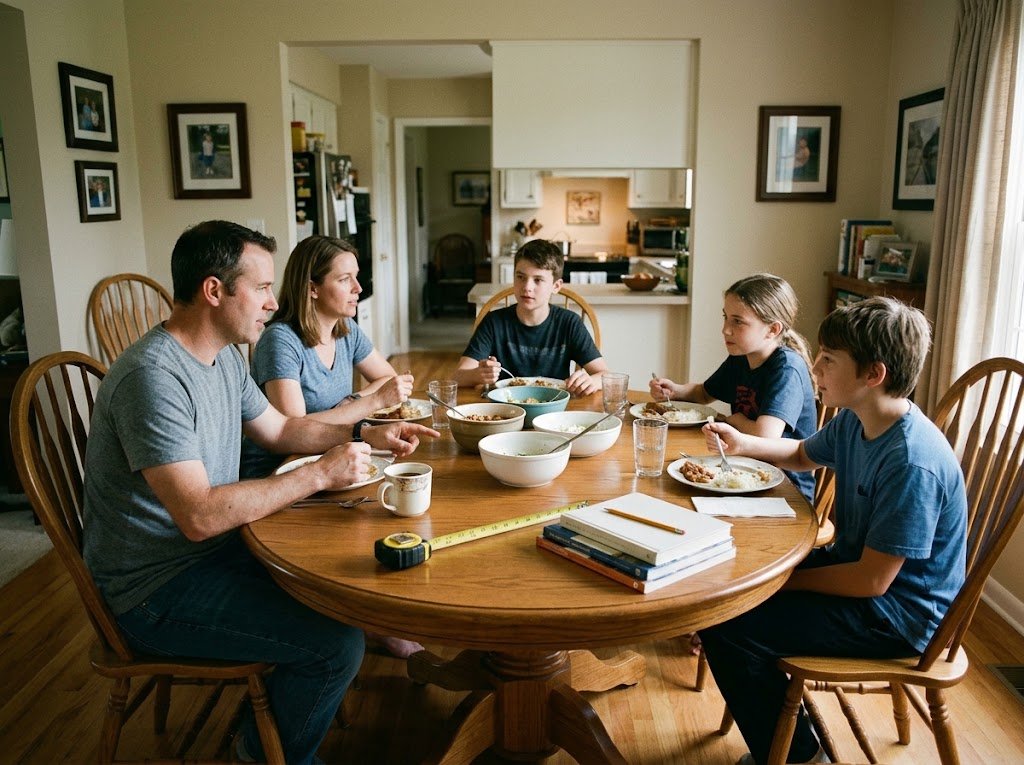
I get asked about this size table more than almost any other, usually from someone standing in an empty dining room with a tape measure and a half-finished cup of coffee.
A round dining room table 60 inches across sits in a strange spot. It’s too big to call small, too small to call a showpiece. And that middle ground is exactly why I end up recommending it constantly — clients want something that seats a real family plus a couple stragglers on Thanksgiving, without turning the room into a banquet hall.
I’ll walk through the actual numbers below, but let me say this first: online photos are the worst way to judge scale on a round dining room table 60 inches in diameter. A wide-angle lens in a staged loft makes everything look smaller than it is. Grab a tape measure before you fall for a listing.
The Case For Going With 60
Six people fit around a round dining room table 60 inches wide without anyone’s elbow ending up in someone else’s plate. Push it to seven or eight for a holiday meal and it gets snug, sure, but workable — nobody’s climbing over a chair to reach the gravy.
What surprises clients is the social shift that happens with round shapes. There’s no “head” seat, no corner nobody wants. I’ve watched families rearrange their whole dinner routine after switching from a rectangle to a round dining room table 60 inches across — kids stop fighting over who sits where because, functionally, every seat is the same seat.
None of that means it’s the right call for every room, though. Long, narrow spaces sometimes fight against a circle. Shape of the room matters just as much as its square footage, maybe more.
Round Dining Room Table 60 Seating By The Numbers


People always want a straight answer to “how many will this actually seat,” so here’s the breakdown I use with clients, built on the standard 24-to-30-inch-per-person spacing rule designers lean on:
| Diameter | Seats Comfortably | Seats In A Pinch | Works Best For |
| 48″ | 4 | 5 | Small households, apartments |
| 54″ | 5-6 | 6 | Everyday five-person families |
| 60″ | 6 | 7-8 | Flexible everyday-plus-entertaining use |
| 72″ | 8 | 9-10 | Dedicated, larger dining rooms |
Look at that 60-inch line for a second. It’s the only size on this chart where “comfortable” and “squeeze it in” both land somewhere realistic — a 48-inch table claiming to seat six is stretching the truth. A round dining room table 60 inches wide is, in my book, the largest circular table that still reads as everyday furniture rather than a conversation piece.
Measuring Your Room Before You Buy
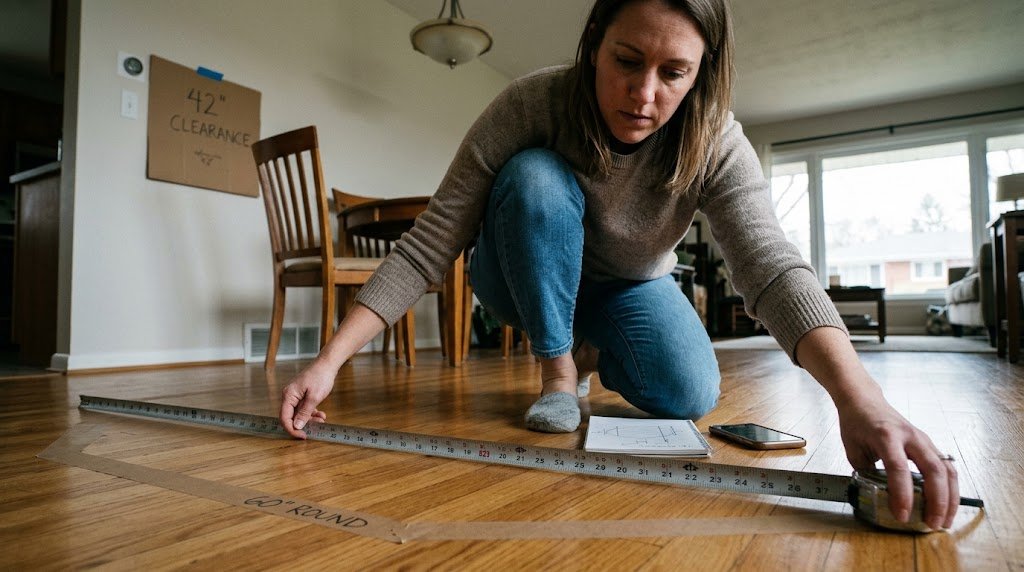
This is where I’ve watched more purchases go sideways than anywhere else. A round dining room table 60 inches in diameter demands space beyond just its own footprint — you need room for chairs pulled out and for someone to squeeze past a seated guest without knocking their wine over.
My rule of thumb: 36 inches minimum from the table edge to the nearest wall, closer to 42-48 inches if you want people walking freely while others eat. Do that math for a round dining room table 60 inches across, and you’re looking at needing roughly 11 to 12 feet in the room’s shortest direction. Skip this step and even a gorgeous table ends up feeling like it’s fighting the walls. If you want to sanity-check your own measurements, Wayfair’s round table sizing guide lays out the clearance math clearly.
Three things people forget to check before ordering:
- Where the door swings open — it can steal clearance you thought you had
- Whether the existing light fixture will actually center over the new table
- The path to the kitchen, because that’s the traffic pattern you’ll fight every single day
Round Or Rectangular — Which One Wins?
I’ll say something a little contrarian here: at 60 inches, round beats rectangular for most four-to-six-person households, full stop. A comparable rectangular table — something like 72×36 — eats more linear floor space and reintroduces that head-of-the-table hierarchy plenty of families are trying to escape.
Rectangular still has one real edge, though. A round dining room table 60 inches wide can look stranded in a long, skinny room, leaving dead space at both ends that nothing else quite fills. A rectangle hugs that long wall and looks like it belongs there.
I had a client a while back who inherited a beautiful round table from the previous homeowner’s staging setup, sight unseen. Once it landed in their actual space — a narrow galley-style dining area off the kitchen — it looked like a manhole cover dropped into a hallway. They swapped it for a rectangle within a month and never looked back. The room’s proportions decided that one, not the table’s quality.
Chairs That Actually Work With This Size
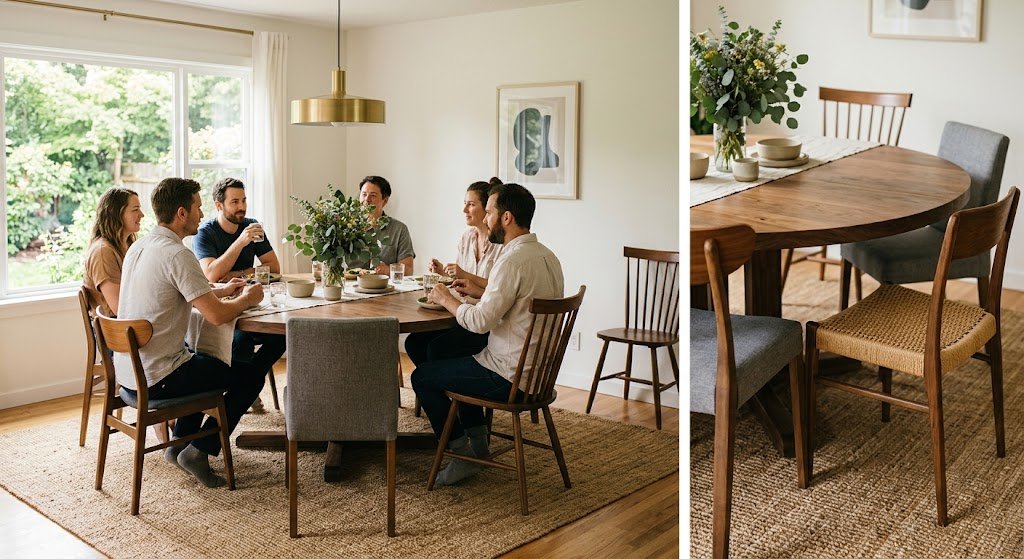
Chair choice is where the whole setup either comes together or falls apart, and it’s usually the last thing people think about after exhausting themselves picking the table. A round dining room table 60 inches wide typically holds six standard chairs — around 18 to 20 inches wide each — with space for two more if guests don’t mind sitting shoulder to shoulder.
Height matters as much as width. Leave 10 to 12 inches between the chair seat and the underside of the tabletop; tighter than that and anyone over six feet tall will spend dinner with their knees at an odd angle. Mixing chair styles from different sets works beautifully around a round table — it looks curated instead of matchy — but measure every single chair first, because “standard” seat heights vary more than manufacturers admit.
For more on pairing chairs specifically with this table shape, check our round table and chairs guide.
Skip the armchairs at “the head.” There isn’t one. Save those for a reading nook instead.
Base And Material Choices Worth Your Money
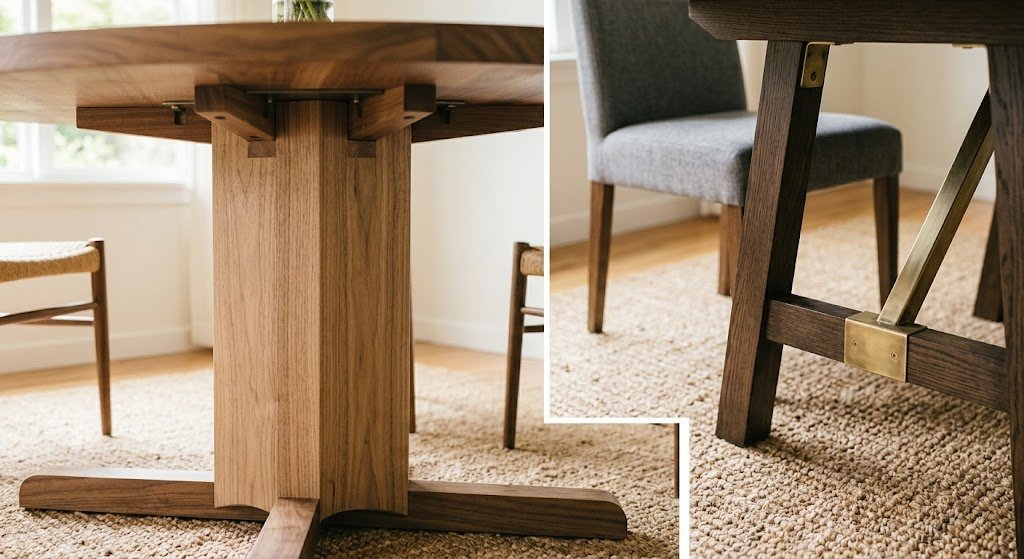
A round dining room table 60 inches in diameter puts more strain on its base than smaller tables do, simply because of the added weight and span, so this isn’t where I’d cut corners. Pedestal bases are usually my first suggestion for this size — they get rid of the leg-in-the-knee problem that four-legged bases create once you’re seating people all the way around a circle.
Here’s roughly how the common options stack up:
- Solid wood pedestal — most durable over time, pricier upfront, ages well
- Engineered wood with veneer — solid middle-ground cost, keep it away from standing water at the edges
- Metal trestle base — modern look, generally cheaper, occasionally wobbles if poorly made
- Stone or marble top — striking, heavy enough to need two people moving it, resists scratches better than expected but stains easier
Glass tops get requested a lot, and I usually steer clients away from them for a round dining room table 60 inches wide specifically — smudges and fingerprints are relentless on a table seeing daily family use, no matter how sleek it looks in a showroom.
Mistakes That Keep Showing Up
After walking through dozens of finished dining rooms, the same handful of errors keep repeating. Watch for these before committing to a round dining room table 60 inches across:
- Judging fit by total room square footage instead of the room’s actual shape
- Skipping chair clearance math, then discovering a buffet drawer won’t open
- Choosing a rug too small — it should reach at least 24 inches past the table’s edge on every side
- Not measuring doorways or stairwells for delivery day
- Trusting “seats 6” marketing copy without checking the real diameter behind it
When 60 Inches Is Just Too Much Table
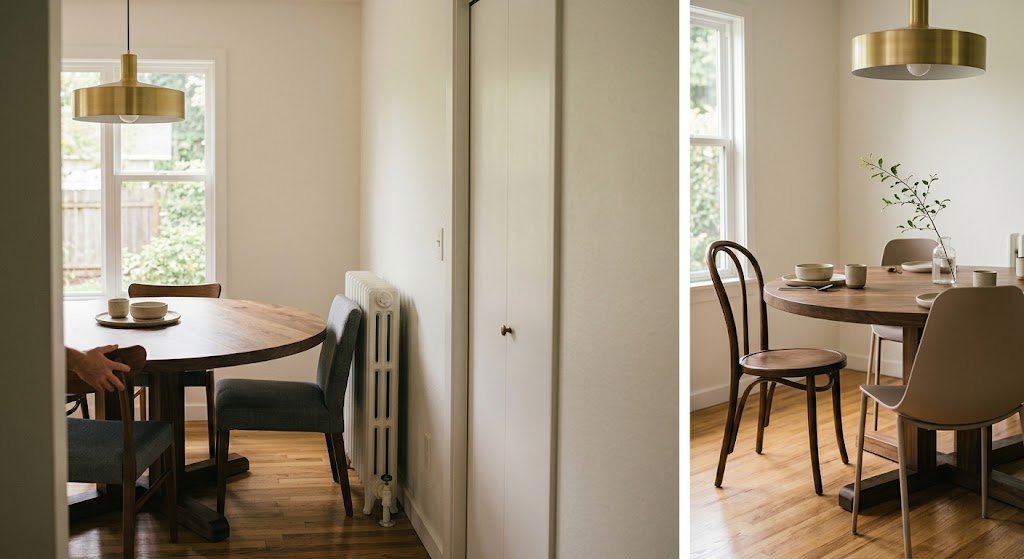
Sometimes it is, and I’d rather tell a client that upfront than let them buy something they’ll resent in six months. A round dining room table 60 inches wide really wants an 11×11 foot room minimum to breathe. Squeeze it into a 9×10 space and you’ll be bumping chairs into the wall at every meal.
That’s not always a dealbreaker, though. Wayfair’s dining table size guide points out that chair style shifts how cramped a room feels even with fixed table dimensions — a slim, armless chair buys back real space compared to a bulky upholstered one. If your room’s borderline, swapping chair style is often the cheaper fix before downsizing the table.
Measure your actual usable floor, too — not the number on the listing. A radiator jutting from one wall or an awkward closet corner eats real space a floor plan won’t show you.
What This Size Table Usually Costs
I won’t throw out exact dollar figures since furniture pricing shifts constantly and stale numbers do nobody any favors. What I can say: solid wood pedestal versions sit toward the higher end of mid-range pricing, engineered wood comes in noticeably lower, and stone or marble tops push into premium territory fast. Pick your material budget first, then shop inside that category — it saves you from falling for a table before checking what it’s actually built from.
Frequently Asked Questions
How many people fit around a round dining room table 60 inches wide?
Six comfortably, with room to squeeze in seven or eight for occasional bigger gatherings.
What room size do I need for a round dining room table 60 inches in diameter?
Plan for at least 11×11 feet so chairs can pull out and someone can walk behind seated guests.
Round or rectangular — which fits better at this size?
Round generally suits square-ish rooms and four-to-six-person households; rectangular works better in long, narrow dining spaces.
What base holds up best under a table this size?
Pedestal bases tend to win — they avoid the leg-bumping issue four-legged bases create once you’re seating a full circle of people.
Will a rug actually work under a table this big?
Yes, as long as it extends 24 inches past the table’s edge on all sides, so pulled-out chairs don’t catch on the border.
Final Thoughts
A round dining room table 60 inches wide is one of the more forgiving sizes I recommend, flexing between an ordinary Tuesday dinner and a full holiday table without feeling like a compromise either way. The real variable is your room’s shape, not just its square footage, so measure before you order rather than after.
Get clearance and chair height right, and this table earns its keep for years. Still unsure? Tape off a 60-inch circle on your actual floor before buying — it’s a five-minute step that’s saved more than one client from a costly return.
Written by Maren Colby.
A home interior consultant who spends most of her working hours helping people get furniture scale right on the first try, with a soft spot for dining rooms specifically.