

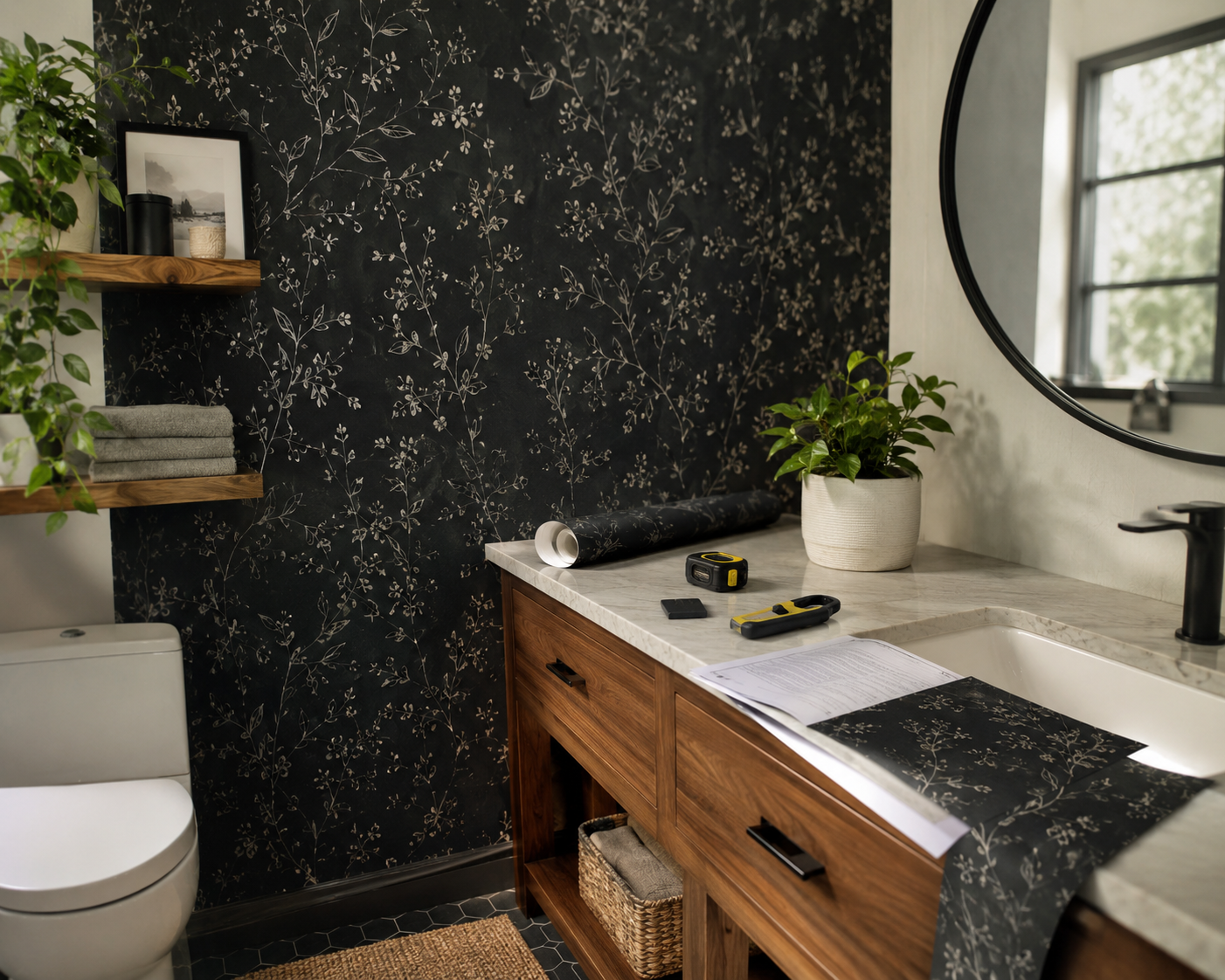
Weighing black peel and stick wallpaper for a room? This breaks down where it earns its keep, where it flops, and how to stop a space from looking tighter than it really is.
Black used to live on one accent wall at most, and plenty of homes skipped it entirely. Not anymore. Black peel and stick wallpaper is turning up in bedrooms, powder rooms, even kitchens, usually next to brass fixtures, warm bulbs, or a subtle pattern that stops it from reading as flat. It’s a bolder move than beige ever was — and one that can go wrong just as fast as it can look great.
Black Peel and Stick Wallpaper Won’t Read the Same in Every Room
A black that feels grounded and rich under a bedside lamp can feel like a hole in the wall down a windowless hallway. Color researchers note that reactions to it vary widely, according to color psychology research, and lighting, texture, and surrounding decor all shift which way it lands.
Texture carries a lot of the weight. A matte black with a faint pattern — botanical, geometric, whatever suits the room — tends to read as deliberate. A glossy black finish on a wall that gets little sun tends to disappear into shadow rather than stand out as a style choice.
Using It in a Compact Room
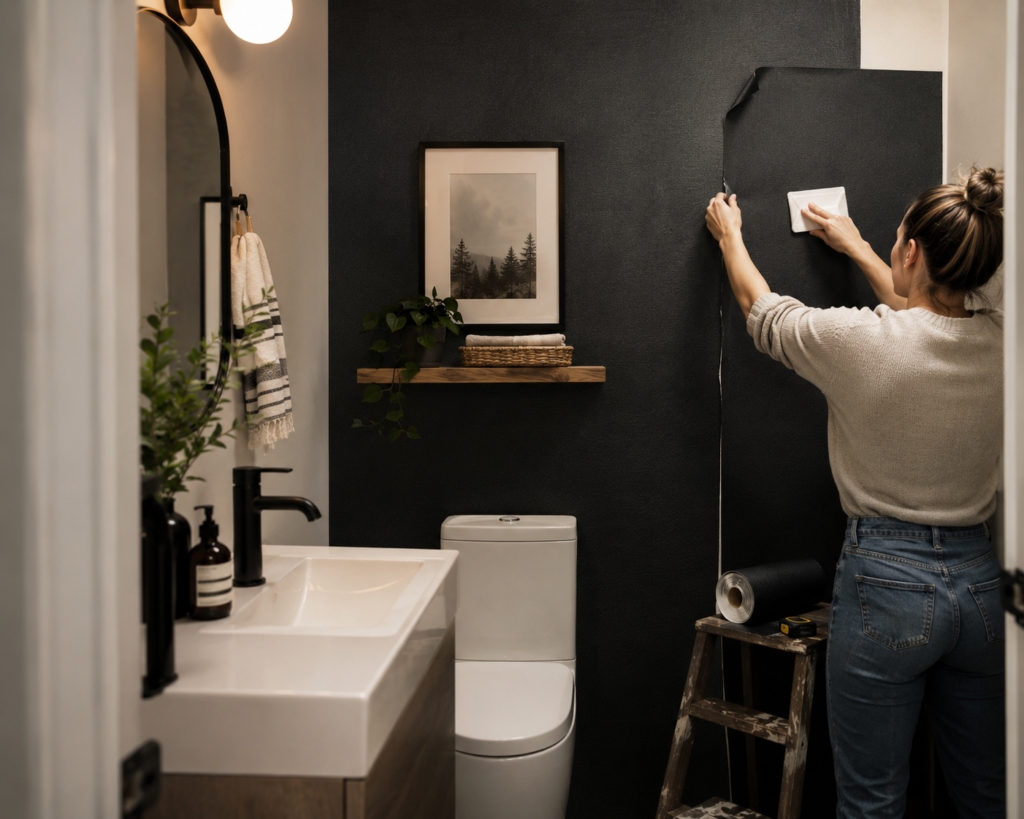
Simply put: dark colors keep light rather than send it back out, which explains why a black wall can leave an already-dim room feeling more boxed in than it was before. This gets measured on a scale called light reflectance value, and black sits at the very bottom of it, according to light reflectance value data — pulling in almost all the light that touches it rather than sending it back out the way a pale gray or white would.
That’s not a reason to avoid black in a smaller space — it just means the approach needs adjusting. There’s a fix for this, though. Pair one darker wall with lighter surfaces elsewhere in the room, add real artificial light, and the effect shifts from cramped to intentional. Where people go wrong is doing the opposite — covering all four walls of a tight room in a color that eats light, without ever adding a lamp to compensate.
Which Rooms Actually Suit This Look
| Space | Why It Suits the Look | Keep In Mind |
| Powder rooms | Compact, only used briefly, easy to go bold | Add real light so it doesn’t feel like a cave |
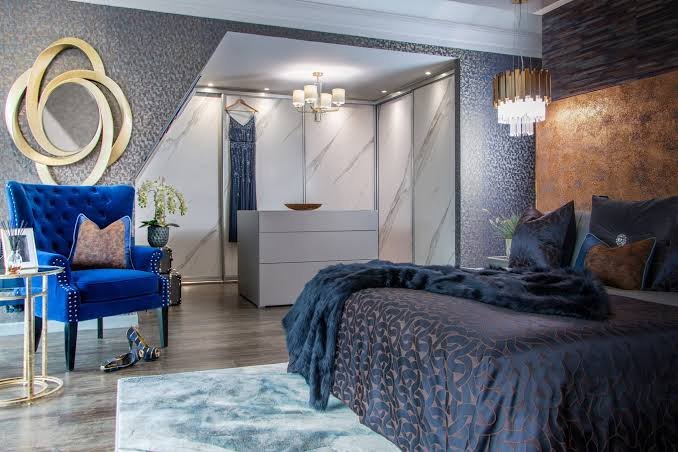
| Bedroom accent wall | Plays well with warm lamps and wood furniture | Test light levels before covering every wall |
| Home office | Comes across as focused and calm | Skip glossy near a window to avoid monitor glare |
| Entryway | Makes a strong first impression | Needs a nearby light source or it vanishes after dark |
| Kitchen backsplash | Modern feel, hides splashes well | Stick to matte or textured over high-gloss |
Finish and Pattern Carry More Weight With Black Peel and Stick Wallpaper Than With Any Other Color
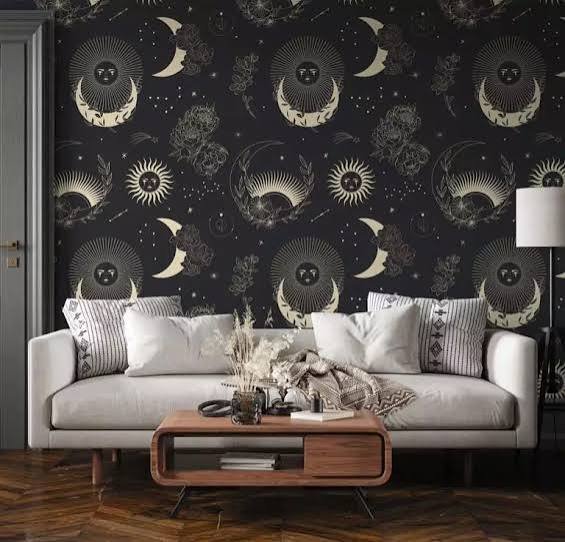
A solid black wall with nothing else going on can end up feeling flat. A bit of texture — a soft floral, a marbled look, a fine geometric line — gives the eye somewhere to land instead of reading as one dark slab. Matte is the practical pick for daily life. It just doesn’t show smudges and dust the way a shiny surface does. Save gloss and metallic-fleck finishes for small doses instead — think one powder room, or a single wall near open shelving. That’s plenty of room for a little shine to add personality without running the whole show.
A Few Installation Details Worth Knowing
Putting up black peel and stick wallpaper doesn’t differ much from any other color: wipe down the wall, make sure it’s bone dry, get the opening panel perfectly level, then press outward to chase out any trapped air. There’s one extra habit worth building in — run a hand across the wall first and feel for tiny dents or high spots most people would never spot with black wallpaper. Dark finishes, glossy ones especially, show every imperfection that a lighter color would easily hide.
For a broader walkthrough of technique that applies here too, check out peel and stick wallpaper picks, and for panel alignment and seam work in more depth, see this stick and peel installation guide.
What Makes Black Peel and Stick Wallpaper Work Better
- Warm bulbs over cool white ones — cool light can make black feel sterile, warm light keeps it inviting.
- Nearby brass, gold, or wood tones — they warm black up rather than compete with it.
- A couple of light-colored surfaces in the room — a pale ceiling, light floor, or sheer curtain stops things from feeling closed off.
- A bit of texture rather than a flat finish — a subtle print looks purposeful, while four bare matte black walls can come across as half-finished.
Where Black Peel and Stick Wallpaper Tends to Go Wrong
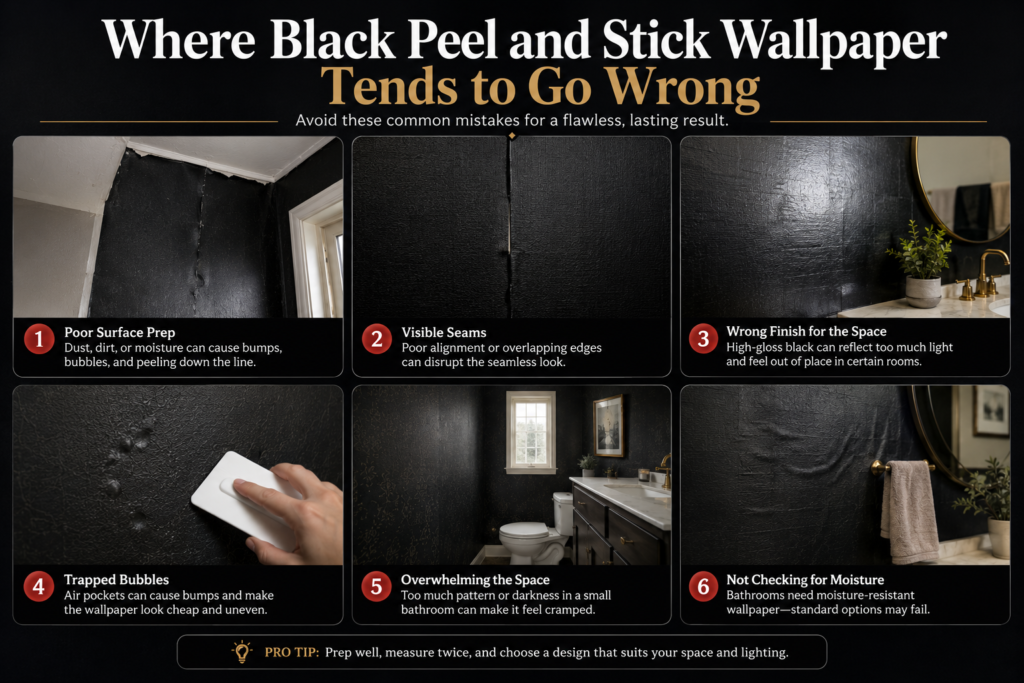
Covering a small, dim room entirely in black without adding more light first is the regret that comes up most often. Choosing a high-gloss black for a large, sun-facing wall is another — glare and streaking show up quickly on glossy dark surfaces in direct light. Skipping a close look at the wall before installing is a mistake unique to dark colors, since every dent and seam stands out far more under black than under something lighter.
Conclusion
Black peel and stick wallpaper isn’t inherently a risky choice — it just asks for more planning than a pale neutral would. Three things settle it: fix the lighting before anything else, choose a finish that suits how sunny the room really is, and put black peel and stick wallpaper somewhere it can shine on its own instead of taking over every surface. Get those three right, and there’s little downside — it comes off just as easily as it went on.