

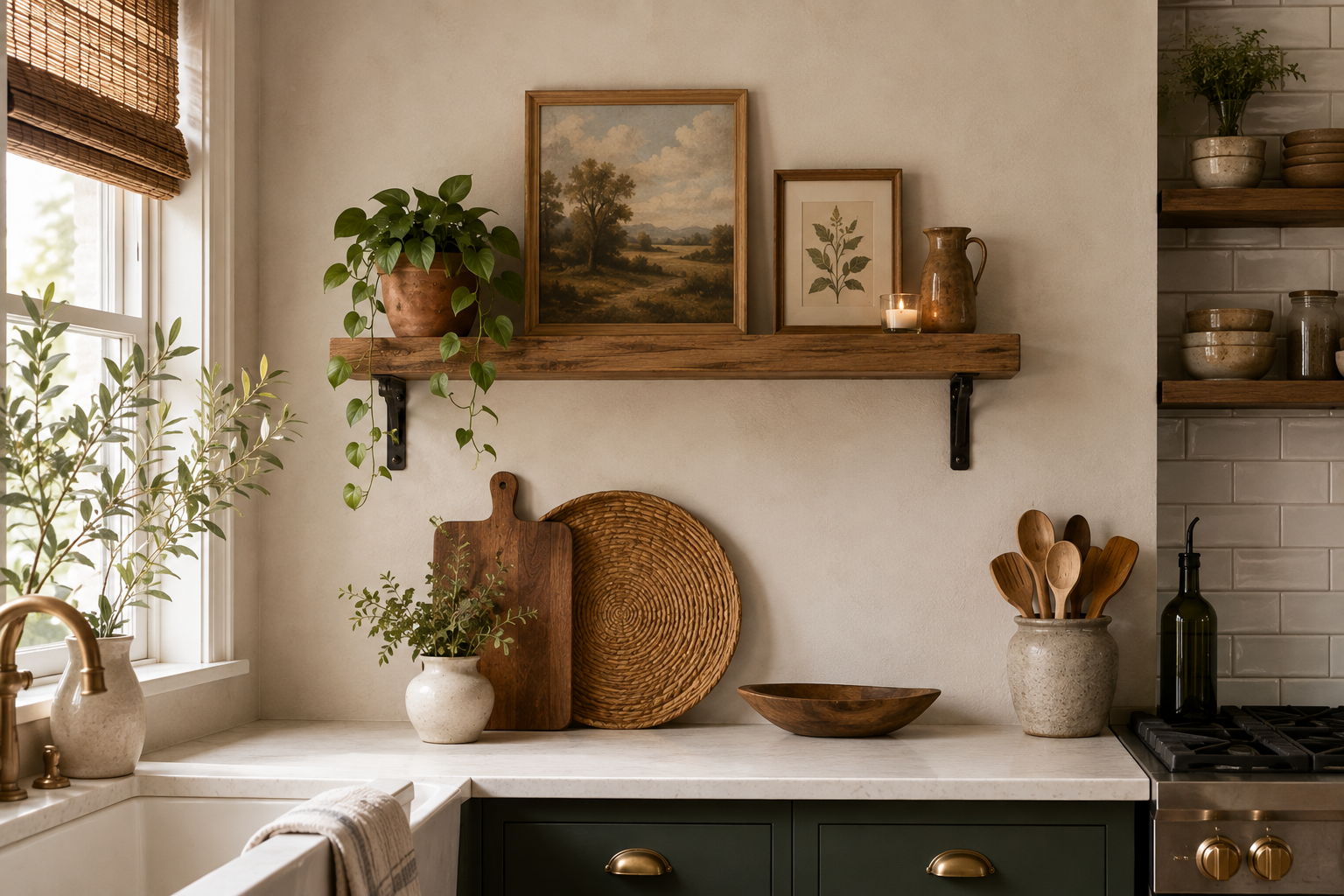
I spent two years staring at four bare walls in my own kitchen before it hit me: kitchen wall decor was the missing piece, not the backsplash, not the cabinet color. Everyone pours money into countertops and appliances, then walks straight past the walls like they don’t exist. You don’t need a contractor or a second mortgage to fix this.
What you need is patience, plus the guts to skip whatever canvas print the big-box store is pushing this month. Picture open shelving loaded with plates that don’t match on purpose, a scrappy little gallery wall pulled together from flea-market finds, or one loud statement piece hung right over the stove. That’s what kitchen wall decor looks like when it’s done with some personality — a little rough around the edges, genuinely lived in.
The Walls Nobody Plans For
Nobody sits down during a kitchen remodel and asks, “what goes on the walls?” Appliances come first. Countertops next. If there’s leftover budget, maybe a rug gets picked. The walls just sit there, forgotten, until some random Tuesday morning when the coffee’s dripping and the room suddenly feels off.
That’s the exact moment kitchen wall decor stops being optional. It isn’t about vanity, either — a blank wall makes even a gorgeous kitchen look unfinished, half-built somehow. Guests clock it before they can even say why.
I’ve toured six-figure renovations that still felt like a hotel lobby, purely because nobody bothered hanging a single thing above the counter. Throwing more money at cabinetry won’t solve that gap. A few well-picked pieces will.
Redefining What Counts As Decor Here
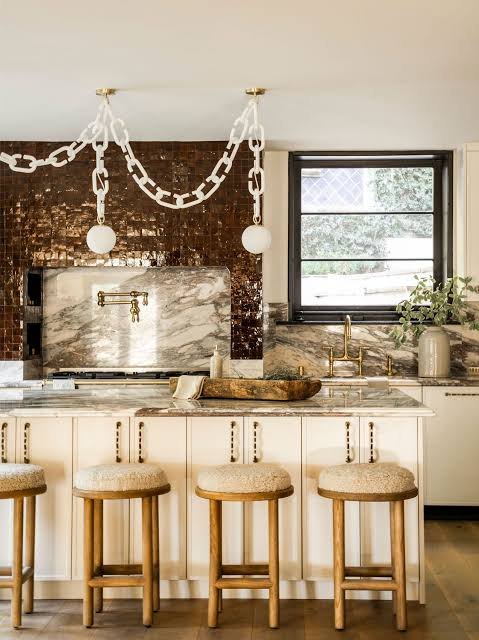
Most people picture framed prints the second you mention wall decor, and that’s a narrow way to think about it. Kitchen wall decor stretches across anything living on those vertical surfaces — shelving, hanging greenery, an old clock, cutting boards propped up like sculpture, even a chalkboard scrawled with someone’s grocery list in bad handwriting.
The kitchens that actually pull it off mix categories instead of committing to just one. A lone open shelf sitting beside a cluster of framed botanicals reads as far more “collected” than either would alone. Function and decoration aren’t competing goals in a kitchen — they’re the same job wearing two different outfits.
Widen your definition before you shop for anything. Half the best-looking decor in a great kitchen was never bought as decor in the first place.
Commit To A Direction Before Spending A Rupee
Here’s where things usually fall apart. Someone buys three unrelated pieces across three separate shopping trips, hangs them all, then wonders why the wall looks like chaos instead of something curated.
Pick a lane first, seriously. Farmhouse-leaning kitchens want warm wood tones, hand-thrown ceramics, slightly worn typographic prints with visible imperfection baked in. Minimalist and Scandi kitchens crave negative space — one or two pieces max, room to breathe, nothing crammed together. Maximalist kitchens can handle a packed gallery wall, though even that needs some loose color thread running through it to avoid looking random.
None of this is gospel carved into stone somewhere. Think of it as a starting line you’re allowed to cross once you understand why it existed at all.
Reading Your Wall’s Light And Your Cabinet’s Color
A kitchen with one small north-facing window behaves nothing like a sun-flooded one with skylights cut into the ceiling. Dark, brooding artwork can swallow a dim kitchen whole, while that exact same piece might look deliberate and cozy somewhere brighter.
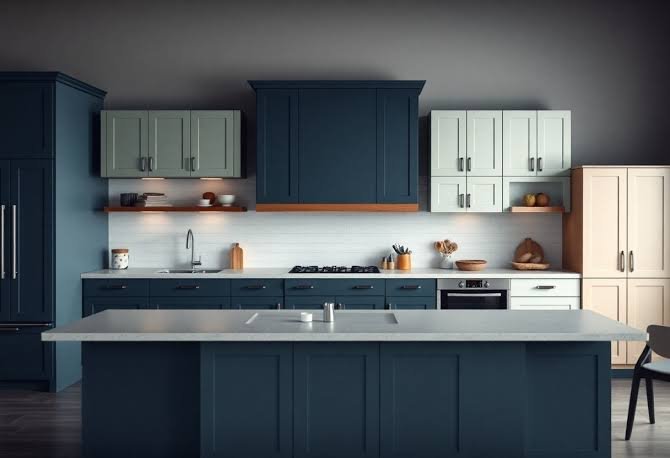
Cabinet color plays a bigger role here than most people give it credit for. Loud, punchy cabinetry needs quieter wall decor around it, or the whole room ends up arguing with itself visually. Better Homes & Gardens has noted that bold cabinet colors tend to work best when the surrounding walls stay restrained — matches what I’ve seen walking through real homes more than once.
Neutral kitchen already? White cabinets, pale counters, the whole calm palette? That’s your green light, honestly. Go bolder with wall pieces there. A neutral room can absorb color choices that would completely overwhelm a busier one.
Shelving, Framed Pieces, Or Just Both
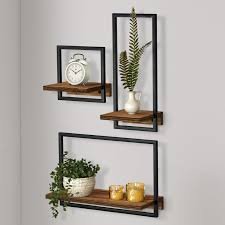
Open shelving gets romanticized to death on design accounts, then abandoned within a year once nobody mentions the dusting involved. That’s the trade-off nobody’s honest about. It photographs beautifully and demands way more upkeep than a closed cabinet ever asks for.
Framed art asks less of your time day to day. Hang it, forget it exists, wipe it down occasionally. The downside? It can feel flat as the only feature on a wall — no texture, no depth, just a rectangle staring back at you.
My honest opinion: don’t choose one, blend them. One stretch of open shelving for everyday mugs and plates, balanced against two or three framed pieces on the opposite wall. Neither element has to shoulder the whole room by itself.
Where Wallpaper Actually Fits In
Wallpaper used to feel like a reckless commitment in a kitchen — too much steam, too much grease risk, too permanent. That reputation is outdated now. Peel-and-stick versions built for kitchen humidity turned this into a genuinely low-risk way to layer in pattern without touching paint or retiling anything.
One accent wall tucked behind open shelving, or inside a breakfast nook, honestly does more visual heavy lifting than three separate art pieces combined. Before locking in anything else from this list, it’s worth scrolling slowly through these kitchen wallpaper options first.
Just test a physical sample against your actual wall before committing. Showroom lighting lies, constantly and shamelessly.
A Short List Of Ideas Worth Stealing
A handful of moves keep showing up in kitchens that feel genuinely finished, not staged for a photo:
- A plate rack mixing inherited china with cheap newer pieces, deliberately mismatched
- Dried herb bundles, or a trailing pothos on a small wall-mounted planter
- Vintage cutting boards clustered by size, treated less like tools and more like art
- One oversized botanical print centered above the stove, nothing else competing nearby
- A magnetic knife strip pulling double duty as storage and a clean visual line
None of these need a big spend. Most just use things already sitting in a drawer somewhere, arranged with slightly more intention than before.
Small Kitchens Play By Different Rules
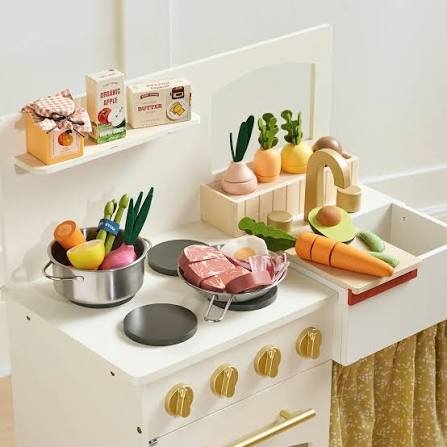
Cramped kitchens punish clutter almost instantly. What reads as “collected” in a spacious room reads as “messy” the second you’re working with twelve square feet of wall space and nothing more.
Scale everything down rather than skipping decor altogether. A narrow vertical shelf, one modest framed print, a single hook holding a favorite mug — often that’s genuinely enough. Mirrors help too, bouncing light around and tricking a tight room into feeling less boxed in than it actually is.
Fight the urge to fill every last inch just because the space is small. Restraint reads as intentional here. Clutter, even tiny clutter, reads as an accident nobody meant to happen.
The Mistakes That Keep Repeating
Biggest one: hanging things too high, chasing some imagined “gallery height” that ignores how kitchens genuinely get used day to day. Eye level in a kitchen sits lower than in a living room, since most looking happens standing at the counter or stove, not lounging on a sofa.
Second mistake: buying decor before ever measuring the wall. A piece that looked substantial in a product photo can show up looking swallowed by eight feet of blank drywall.
Third — and this one’s personal, I learned it the expensive way — people forget humidity exists. Paper prints without glass or a sealed finish will warp near a stove within a year, guaranteed.
Keeping It Looking Good Down The Road
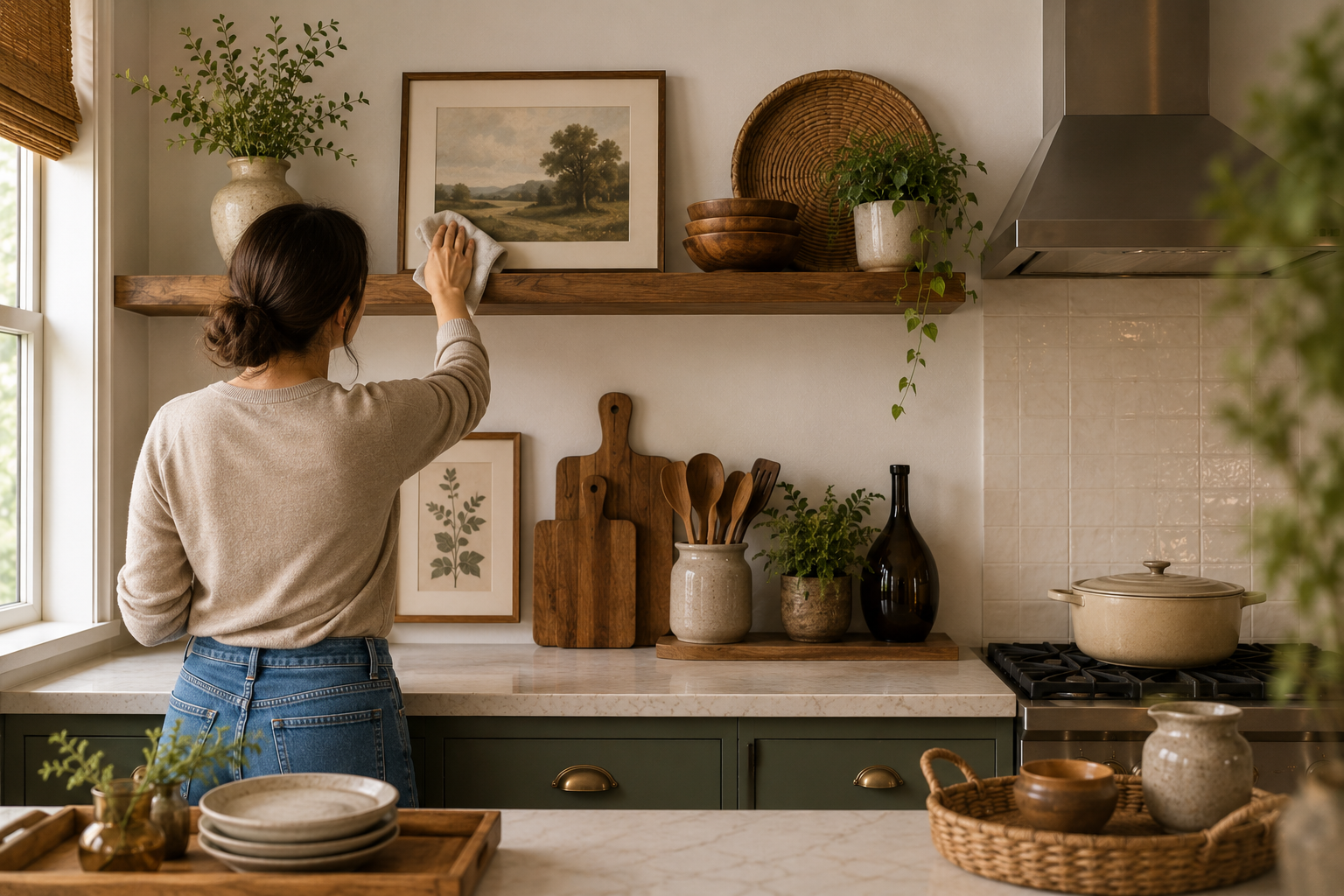
Grease drifts further than people expect it to. Anything within a few feet of the stove needs occasional wiping, especially glass-covered frames, or a hazy film builds up within months without anyone noticing at first.
Rotate seasonal pieces when you can manage it. Swapping one or two items every few months keeps a kitchen feeling current, without the cost of redecorating from zero every time. Fewer things to clean at once, too, as a side benefit.
Thrifted or inherited pieces heading onto a kitchen wall? Better Homes & Gardens breaks down how to check secondhand decor for durability first — worth a read before committing any vintage find to a genuinely humid spot.
Frequently Asked Questions
Is kitchen wall decor worth bothering with in a rental?
Definitely — removable hooks, peel-and-stick wallpaper samples, and lightweight shelving let renters personalize walls without damaging anything, and most pieces travel easily to whatever place comes next.
How much should kitchen wall decor realistically cost?
There’s no fixed number here. Thrifted plates and DIY shelving often outshine pricier art when arranged with thought, so budget for intention over price tags whenever that’s possible.
Does kitchen wall decor need to match the cabinets exactly?
No, and matching too precisely usually looks flat and lifeless. Aim for a loose color thread instead — one or two shared tones — rather than forcing an exact cabinet match.
What’s the real risk with open shelving as kitchen wall decor?
Grease and dust accumulate faster than closed cabinets allow, so open shelving demands more frequent wiping, particularly near the stove, if you want it staying sharp-looking long-term.
Can several styles of kitchen wall decor share one wall?
Yes, provided something ties the mix together — a repeated color, matching frame tones, a shared theme of some kind — otherwise the wall risks reading as cluttered rather than curated.
Conclusion
Kitchen wall decor was never supposed to demand a grand plan or a weekend spent gutting a room down to studs. It asks for a handful of honest, small choices instead — a shelf here, a print there, maybe a wallpaper panel tucked behind open shelving once you’re feeling a bit braver. Kitchens that end up feeling warm and genuinely finished rarely got there through one enormous purchase. They got there slowly, piece by piece, through small additions that actually meant something to whoever lives there.
Start with what’s already sitting in your cupboards before buying a single new thing. That mismatched stack of plates, those cutting boards nobody uses anymore, a jar of dried herbs on the counter — all of it counts as decor once it’s arranged with some intention behind it. Add one new piece at a time rather than filling the entire wall in a single weekend, and give yourself permission to live with a half-finished wall for a few weeks while the right direction becomes clear.
The mistakes here are cheap to undo, too, which honestly makes this whole process low-stakes. Hung something too high? Bring it down a few inches. Bought a print that warped near the stove? Swap it for something sealed behind glass next round. None of it is permanent, and that’s the real upside of decorating walls instead of gutting an entire kitchen — low risk, real visible impact, and a room that finally feels like someone actually cooks and lives in it, not a showroom nobody touches.