

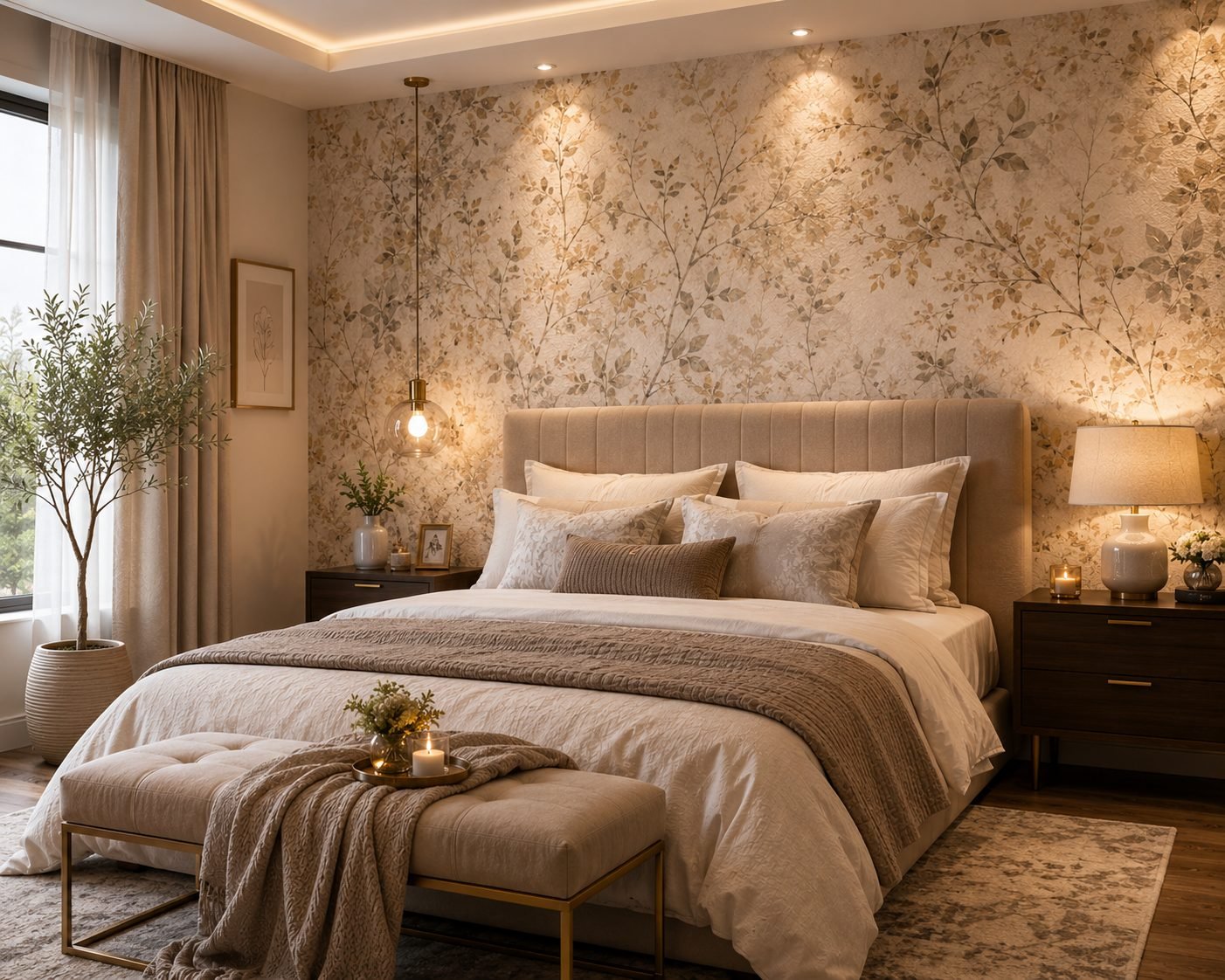
I was twenty-two, standing in this tiny paint shop with three sample books stacked on my arm, no clue what I was doing. That’s genuinely where most people start with master bedroom wallpaper.
Nobody teaches this stuff — you just pick wrong a couple times and slowly figure out the difference between what looks good on a phone screen and what actually belongs on a wall you’ll stare at every night. So here’s what I’ve picked up. Styles, prep, pricing, the small stuff that ruins a good master bedroom wallpaper job if you’re not paying attention.
The Room That Should Have Looked Finished
My friend redid her bedroom last spring. New bedding. New curtains. Fresh paint. And she kept saying something was still missing, and honestly? I couldn’t figure it out either, at first.
It was the walls. Just… flat. A single color, and it read cold even with everything else in the room dressed up nicely. She put up a pale floral master bedroom wallpaper behind the headboard and that was it, the room suddenly worked.
Paint gives you color, that’s all it gives you. Wallpaper gives depth. A little bit of story on the wall. Bedrooms need that more than people think.
I Used To Hate Wallpaper, For The Record
For years I thought of it as something your grandmother had in her hallway — dated, a bit much, not for a real bedroom. Then I lived with it for a year and just… changed my mind. Completely.
Modern wallpaper doesn’t behave like the old stuff at all. Thinner. More forgiving adhesive. A lot of it peels straight off the wall when you’re done with it, no drywall damage.
There’s also this psychological thing, which sounds made up but isn’t. A patterned wall behind the bed pulls the room in slightly, gives it a cocooned feeling. Small effect on paper. Noticeable at eleven at night when you’re finally lying down.
Pick The Print For Your Room, Not For Pinterest
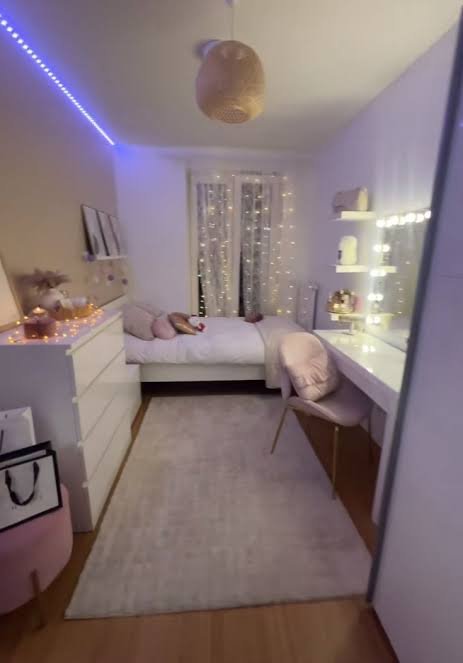
A lot of people choose a pattern because it looked amazing online and never ask whether it fits the actual room they sleep in. This decision matters more than price or brand, and it’s the one people rush through fastest.
Botanical, leaf prints — close to foolproof. Calm, doesn’t demand attention, sits fine next to whatever bedding you already own.
Damask and other traditional prints work in a more formal bedroom. Upholstered headboard, brass fixtures, that whole look. If you’re after something softer and more layered, romantic bedroom wallpaper is worth flipping through — it shows what “intimate” actually looks like on a wall instead of just sounding nice in a description.
Murals and scenic panels are the bold choice. Not for everyone. But with a big blank wall and some nerve, scene bedroom wallpaper is worth a browse — some of the newer landscape ones have shaken off that cartoonish quality older murals had.
Just Do One Wall
There’s a middle option for people who like wallpaper but aren’t ready to commit an entire room to it. Paper one wall. Usually the headboard wall.
You still get the payoff — color, texture, personality — minus the cost and minus the risk of getting tired of a busy pattern surrounding you on all four sides. Wallpaper in bedroom on one wall has a decent rundown on where to stop the paper and how to handle the corners so it doesn’t look half-done.
Measure twice, though. Seriously. Most accent-wall failures come from bad measuring, not bad pattern choices.
Paint vs. Paper — Quick And Honest
Paint’s cheaper. Faster. Way easier to undo if you change your mind in a year. Wallpaper costs more and takes longer, no getting around that part.
But paint can’t do texture. Can’t give you that slightly dimensional look under lamp light at night. Stand in a room with grasscloth on one wall and you’ll know exactly what I mean immediately.
My take — and it’s just my take — paint most of the room neutral, then let wallpaper do one job. The headboard wall. You get most of the benefit without papering a whole box.
Ceiling Height Changes Things More Than You’d Guess
A designer I know pointed this out once and it stuck with me. Same wallpaper, different ceiling height, completely different result. Barely anyone accounts for this before buying.
Eight-foot ceilings usually want smaller, tighter patterns. Big florals or sprawling murals can flatten a room, make it feel shorter than it is. Got nine-foot or vaulted ceilings? More room to play. Bigger prints start looking deliberate instead of excessive.
Rough rule I use — check your wall height, skip anything where a single pattern repeat is bigger than roughly a third of that number. Not a law. Just a gut check that’s saved me from a couple bad orders.
Color And Sleep — This One’s Actually Backed By Research

Didn’t take this seriously until I looked into it properly. Color affects sleep. Warm, saturated reds and oranges keep your brain a touch more alert. Cool blues, soft greens — opposite direction, toward rest.
Sherwin-Williams’ color research puts neutrals and soft greens among the calmer bedroom tones, with warmer reds suited more to energetic or intimate spaces than restful ones. Worth knowing before you fall for a loud, saturated print in a room built for sleeping.
Terracotta, sage, dusty blue, warm taupe. Those four come up constantly when people ask me where to start.
The Wallpaper Types, Side By Side
Not all wallpaper acts the same once it’s on your wall — trips up a lot of first-timers. Table below is basically the cheat sheet I wish I’d had.
| Wallpaper Type | Best For | Ease Of Removal | Rough Price Range |
| Peel-and-stick | Renters, first-timers | Very easy | $1–$4 per sq ft |
| Non-woven | Most bedrooms, breathable | Moderate | $2–$6 per sq ft |
| Traditional vinyl | High-durability walls | Harder | $1.50–$5 per sq ft |
| Grasscloth | Texture lovers, natural look | Difficult | $6–$12 per sq ft |
| Mural panels | Statement accent walls | Moderate | $8–$20+ per sq ft |
Not sure which type fits? Wallpaper decor for bedroom is a decent starting point before you lock in a roll.
Prep Work. Boring, Yes. Skip It And You’ll Regret It
Nobody enjoys prepping a wall, and that’s exactly why so many wallpaper jobs bubble at the seams six months later. People rush it.
Walls need to be clean. Fully dry. Smooth. Small nail holes, old flaking paint, tiny bumps — all of it shows through eventually, sometimes not for weeks. Patch. Sand. Let it cure. Don’t touch it with paper until it’s actually ready.
This Old House has a solid walkthrough on proper wallpaper hanging technique, including how seams should line up — that’s where most DIY jobs fall apart visually. Skip it and even gorgeous master bedroom wallpaper starts looking sloppy fast.
One tip from my own trial and error: hang the first strip somewhere hidden. Behind a dresser, say. You will mess up the first one. Everyone does, no exceptions that I’ve seen.
Small Bedroom? You’ve Got Fewer Options, Not Zero
Cramped room doesn’t mean wallpaper’s off the table, it just narrows what works. The idea that small bedrooms can’t handle it isn’t really true.
Vertical stripes, stretched-out botanical prints — tricks the eye into reading a taller ceiling. Lighter backgrounds keep things from closing in. Dark, oversized, busy patterns are the actual issue in tight spaces. Not wallpaper as a category.
Working with a smaller master bedroom? Wallpaper for bedroom walls built around scale can keep you from picking something that swallows the whole room.
Making It Sit Well With Furniture You Already Have
Wallpaper doesn’t exist alone. It has to hold up next to your bedding, your rug, curtains, whatever furniture isn’t getting replaced anytime soon.
Habit I’ve kept: pull one dominant color from the wallpaper, repeat it in exactly one other spot. Pillow. Lampshade. Something small. Chase a perfect match everywhere and the room starts looking like a showroom, not somewhere you actually live.
Wood tones get along with almost any master bedroom wallpaper pattern — part of why mid-century and Scandinavian bedrooms tolerate bold prints so well. The furniture keeps things grounded.
Timing It Better Than I Did The First Time
Adhesive cures differently depending on humidity and temperature. Late spring or early fall tend to be the more forgiving windows in most climates. Not too dry, not too damp.
Hiring someone? Late spring through summer is their busiest stretch usually, overlaps with general renovation season. Book a few weeks out instead of the week you finally decide to commit — better scheduling, sometimes a better price too.
Doing it yourself — block off a whole weekend. Don’t try to squeeze it into one evening after work. Rushed hanging is where most visible mistakes happen. Impatience shows up in crooked seams way more than lack of skill ever does.
Real Numbers, Not Vague Ranges
Budgeting surprises people, so here’s roughly what to expect for a typical accent wall — around 120 to 150 square feet, waste included.
Peel-and-stick usually lands between $150 and $500 total if you’re doing it yourself, materials and all. Hiring someone for mid-range non-woven paper runs $600 to $1,500 depending on region and how complicated the wall is. Windows, closets, tight corners — all of it adds labor time.
Grasscloth and mural panels sit at the top, often $1,000 to $2,500 with installation, mostly because they need real skill to hang without visible seams showing.
Mistakes I’ve Watched People Make, More Than Once
Ordering too little paper — the classic. Build in 10 to 15 percent extra for pattern matching and mess-ups. Ignoring wall texture is a close second; heavily textured walls rarely hold wallpaper well without a skim coat first.
Lighting gets underestimated constantly too. A print that looks subtle in store lighting can feel a lot more intense under warm bedroom lamps at night. Test it on your actual wall, at night, before you order the full amount.
Rushing the drying window matters too — freshly patched drywall needs a full day or two before it’s ready, longer in humid climates. Hang too soon and you trap moisture underneath. Shows up as bubbling within a month, pretty much guaranteed.
And a smaller one, easy to miss — check the return policy before ordering. Wallpaper color shifts between a digital swatch and the actual printed roll more than you’d expect. A five-minute check up front can save you from a stack of rolls you can’t use.
Working Wallpaper Into A Room You’ve Already Furnished
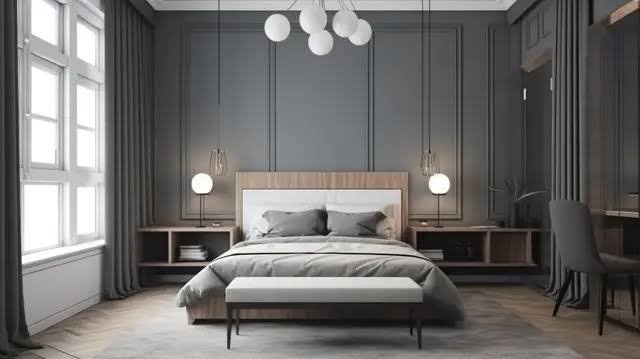
Not everyone starts from scratch. Plenty of people already have the bed, the rug, curtains they like, and just want the walls to catch up.
Bring an actual fabric swatch if you’re shopping in person. Sounds old-fashioned, I know, but screens distort color constantly, and matching undertones from memory basically never works out.
Dark, heavy furniture pairs better with lighter wallpaper backgrounds. Room already light and airy? A richer, more saturated master bedroom wallpaper adds depth without fighting anything currently in the space.
Looking After It Once It’s Up
Maintenance almost never comes up in these conversations, which is a shame, because a little care stretches the life of master bedroom wallpaper quite a bit.
Dust builds up faster than you’d think, especially on textured surfaces like grasscloth or embossed prints. Dry microfiber cloth, every couple weeks, keeps it looking fresh without risking the surface. Skip anything wet unless the label says the paper’s washable — moisture is the main threat to seams lifting over time.
Humidity swings matter too, especially near a bathroom or in a room without much airflow. Small dehumidifier, or just cracking a window during muggy months, can head off the slow curling that sometimes shows up at seams a year or two in.
Sun fades things quietly. South-facing bedrooms with a lot of direct light will see rich, dark prints mellow out faster than muted ones. Room gets serious sun for hours a day? Factor that into the color choice up front, not after.
Frequently Asked Questions
Is master bedroom wallpaper still considered a good design choice in 2026?
Yes — it’s genuinely trending back up. Designers are leaning on it for texture and warmth, especially on accent walls, moving away from the flat, minimal bedrooms that were everywhere a few years ago.
Does master bedroom wallpaper make a small room feel more cramped?
Not really. Lighter tones, vertical patterns, one-wall applications — these tend to open a small room up rather than shrink it, as long as the pattern scale actually suits the space.
How long does master bedroom wallpaper typically last before needing replacement?
Decent non-woven or vinyl wallpaper usually holds up 10 to 15 years with normal care. Peel-and-stick has a shorter run, closer to 3 to 5 years depending on local humidity.
Can I install master bedroom wallpaper myself without hiring a professional?
Peel-and-stick, sure, that’s genuinely beginner-friendly. Traditional pasted wallpaper with pattern matching is trickier and often worth hiring out, unless you’re okay redoing a strip or two.
What’s the safest wallpaper pattern choice if I’m worried about regretting it later?
Botanical prints, textured neutrals, understated geometrics — these tend to age well. Bold, trend-driven prints are more fun in the short term but riskier long-term.
Does master bedroom wallpaper work well behind a bed with a tall headboard?
Yes, honestly one of the best placements there is. Tall headboards frame the paper nicely and limit how much pattern you’re actually committing to overall.
Is peel-and-stick wallpaper durable enough for a primary bedroom wall?
For most bedrooms, yes. Handles normal humidity and daily wear fine. Less ideal for walls under constant direct sunlight for years, since some adhesives soften under prolonged heat.
Should master bedroom wallpaper match the rest of the house’s color scheme?
Not strictly, no. A bedroom’s a private space, so some contrast from the rest of the house is fine — as long as the shift between rooms doesn’t feel jarring.
Wrapping This Up
If there’s one thing worth taking from all this, it’s that master bedroom wallpaper isn’t the intimidating, permanent-feeling decision it used to be. The materials changed. Removal changed. Even pricing got more reasonable, especially with peel-and-stick opening things up for people who aren’t ready to hire an installer.
What matters more than the exact pattern is whether it fits how the room actually gets used. A bedroom isn’t performing for guests walking through the front door — it’s where you’re supposed to unwind, sleep properly, feel like the space is yours. That’s why color psychology and scale and placement deserve just as much thought as the print itself. Maybe more, honestly.
Start small if you’re not sure. One wall. A modest peel-and-stick sample. Test it under your real bedroom lighting, at night, before deciding anything. You’ll usually know within a week. Works out? Expand from there — full coverage, a second wall, maybe carry a matching pattern into a hallway or reading nook nearby.
Doesn’t work out? Peel it off, patch the wall, try again. That’s honestly the best part of where wallpaper’s landed as a product these days — the risk is lower than it’s ever been, and a bedroom that finally feels done is worth the small bit of trial and error it usually takes to get there.