

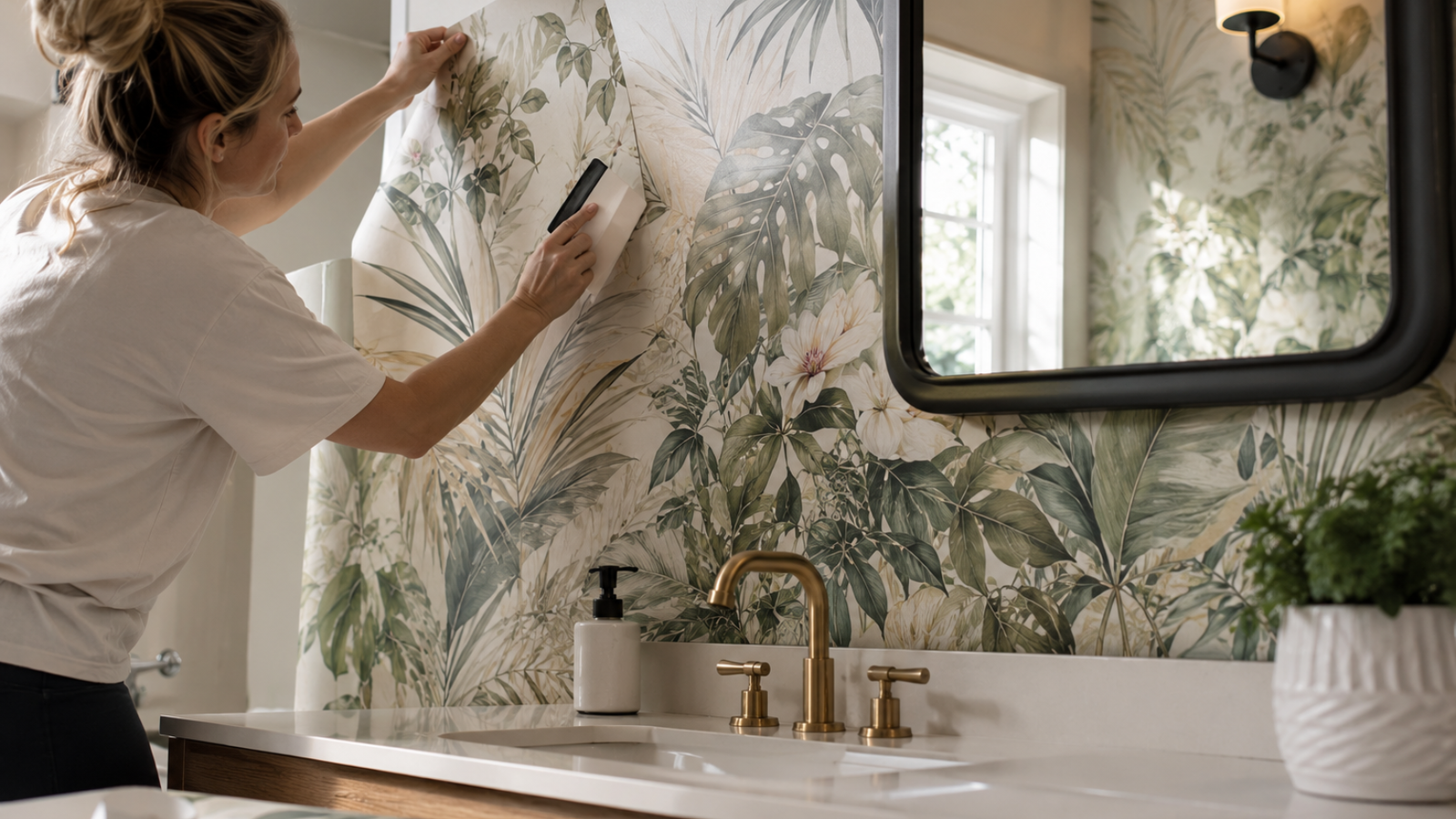
Thinking about peel and stick wallpaper for bathroom walls? These 7 practical points cover where it holds up, where it fails, and how to install it right.
Bathroom makeovers tend to stall out. Paint feels temporary, tile feels expensive, and nobody wants a project that means tearing walls apart. Peel and stick wallpaper solves that problem — it’s affordable, removable, and doesn’t need a contractor. But bathrooms are harder on wallpaper than most rooms. Here are seven things worth knowing before buying any.
Bathrooms Test Wallpaper Differently Than Other Rooms
A living room wall only has to deal with dust. A bathroom wall deals with steam, splashing, and humidity that hangs around long after a shower ends. Ordinary peel and stick wallpaper — built for a kid’s bedroom or a kitchen backsplash — usually can’t handle that. A few humid months in, the seams start to lift, and the corners follow soon after.
Bathroom-Rated Versions Are a Separate Product
Wallpaper made specifically for bathrooms isn’t just a marketing label. It’s typically a thicker, moisture-resistant vinyl, paired with an adhesive designed to hold up in damp air instead of dry air.
Some Spots Are Safe, Others Aren’t
Certain areas carry little risk — a vanity backdrop, an accent wall facing the tub, or every wall in a powder room that skips the shower entirely. A powder room tends to be the easiest win here, since it only faces quick moisture spikes rather than dampness that hangs around for hours.
Steer clear of a shower enclosure or the wall right behind a bathtub, where water contact happens often and directly. Even wallpaper labeled “moisture-resistant” isn’t built for that kind of repeated contact — tile is still the more reliable option there.
Read the Product Details Carefully
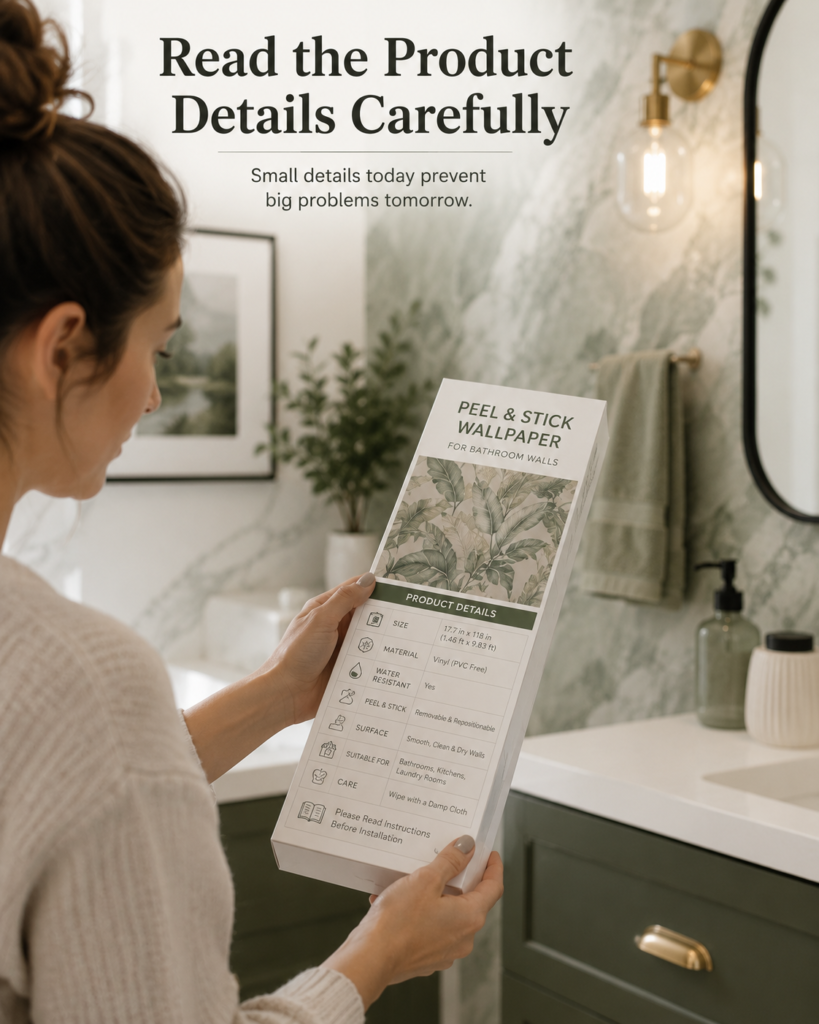
A few details are worth checking before ordering:
- Vinyl thickness — thin vinyl warps faster in humid conditions.
- A stated moisture rating — if none is listed, assume it wasn’t made for bathrooms.
- Bathroom-specific reviews — general reviews won’t reflect how it holds up in steam.
- Finish — matte hides condensation streaks better than glossy.
For a comparison of products built with this in mind, this roundup of the best peel and stick wallpaper is a useful starting point.
Wall Prep Matters More Here Than Anywhere Else
- Wash the wall down and give it time to dry all the way through — surface-dry isn’t the same as actually dry.
- Small dents or holes need a dab of filler, then a light sanding once it hardens so the spot sits level with the rest of the wall.
- Flip the exhaust fan on well before starting — a couple of hours gives any trapped moisture room to escape.
- A freshly painted wall needs two days minimum before wallpaper goes over it, so the paint can finish curing.
Installation Has a Few Bathroom-Specific Tweaks
- Begin at a corner and check the first panel with a level — every other panel takes its cue from this one.
- Lift the backing off in stages rather than all at once — that way, if a panel goes on crooked, it’s caught before it’s fully stuck.
- Working from the middle of the panel toward its edges helps push any trapped air out instead of sealing it in.
- Let the seams sit with a hair of overlap rather than lining up edge-to-edge — bathroom moisture tends to shrink the vinyl slightly with time, and a flush seam won’t hide that.
- Cut away the extra material around outlets and along the ceiling using a sharp blade.
- Hold off on showering for a full day once the panels are up.
For a closer, step-by-step look, this guide to stick and peel wallpaper installation walks through the process in more depth.
How Long It Holds Up Comes Down to Airflow
Kept clear of direct splashing, decent bathroom-grade wallpaper generally makes it through 2 to 4 years without trouble. Closer to a tub or shower, expect the shorter end of that range.
A working exhaust fan and a window that actually gets opened make a real difference here. Public health guidance on indoor moisture recommends running a bathroom fan or opening a window during and after every shower — a habit that protects wallpaper just as much as it protects against mold.
A Few Regrets to Steer Clear Of
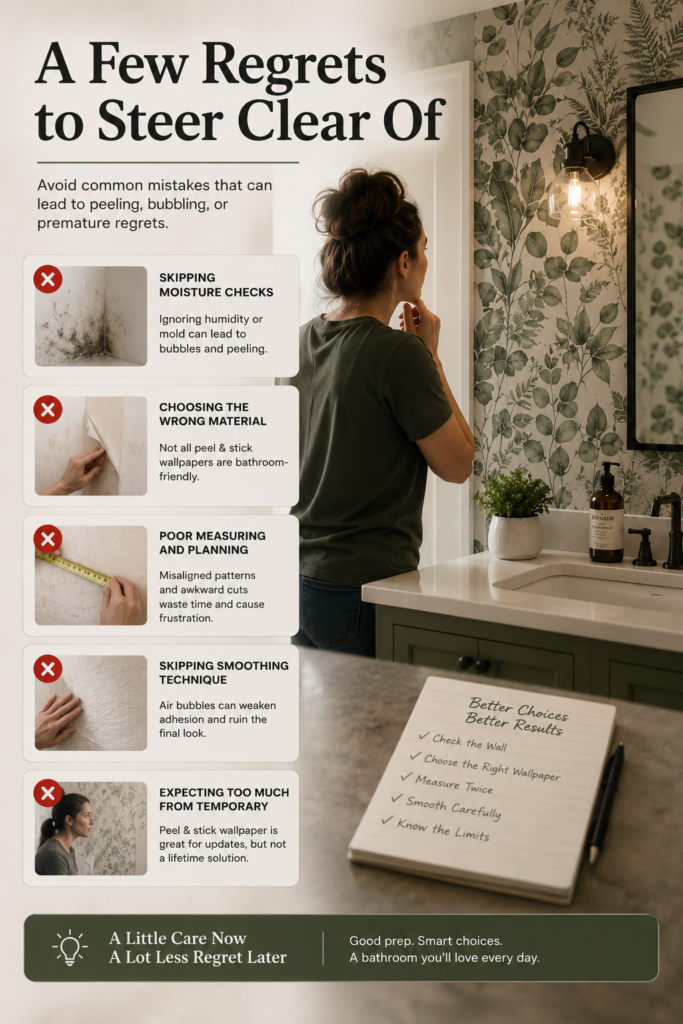
- Hanging it inside a shower stall — “moisture-resistant” isn’t the same claim as built for nonstop water.
- Sticking panels onto a wall that’s still damp underneath — the adhesive simply won’t hold on a surface that hasn’t finished drying.
- Going with whatever roll is cheapest and thinnest, which frequently means doing the whole job over again inside of a year.